Support WBUR
Essay
'The Life a Showgirl' is pure fun. That's all it needs to be
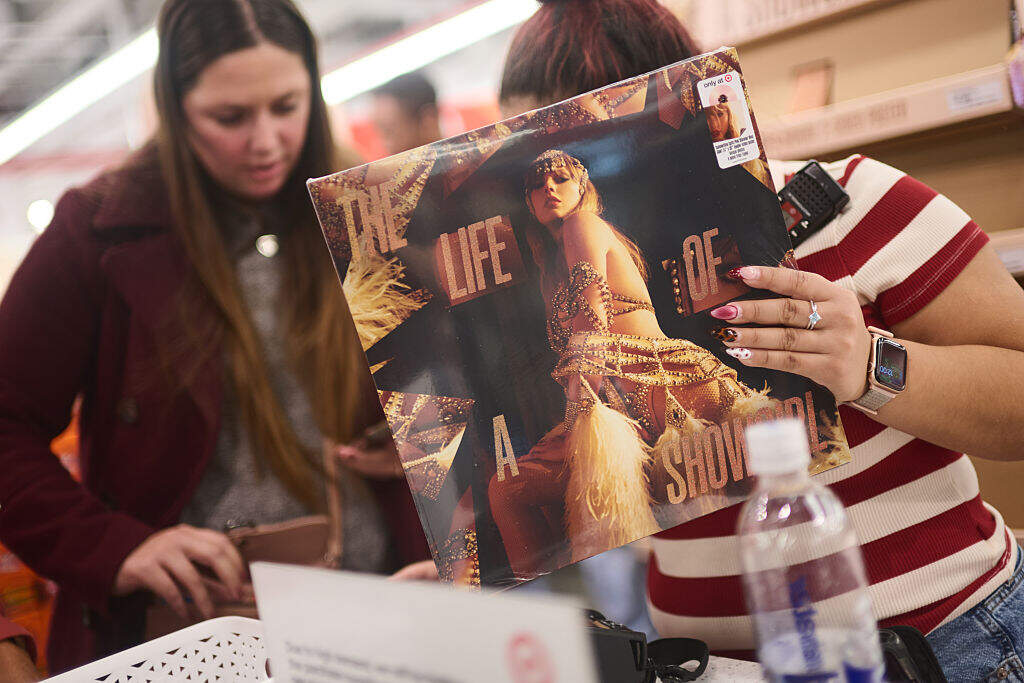
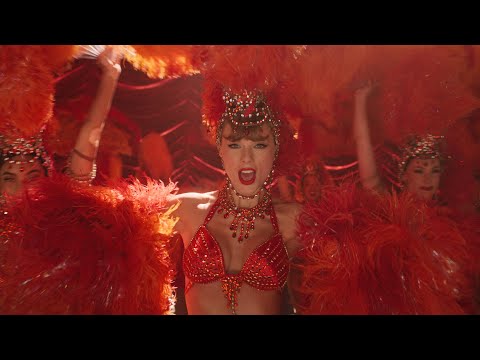
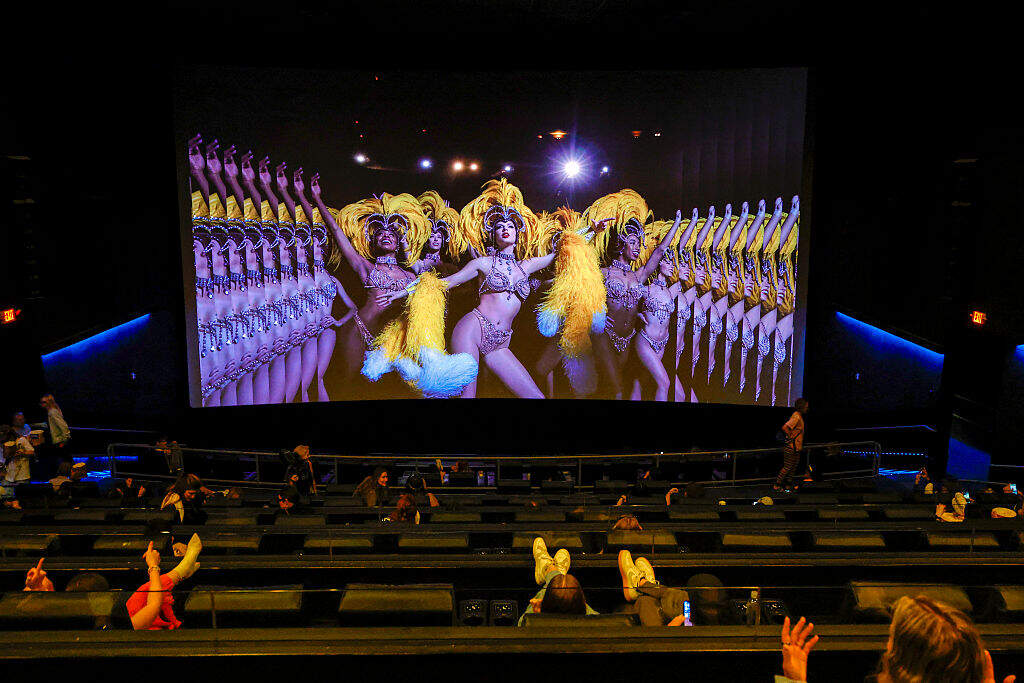
You may occupy a world where your consciousness has not been overtaken by “The Life of a Showgirl,” but that probably means you’re living in a soundproofed cave. Thirty-six hours after Taylor Swift’s new album came out, I found myself in a yoga class doing cat-cows to “CANCELLED!” and shavasana to “Eldest Daughter.” In New York City last weekend, I couldn’t walk three blocks without hearing “Opalite” blasting from a car window. My Instagram feed is 98% random people reproducing the dance from the “Fate of Ophelia” video.
This is to be expected for a Taylor Swift album drop, particularly in the post-Eras Tour era, when her cultural dominance has extended well beyond teenage and 20-something girls to their parents, their great-aunts and uncles, their teachers, their baristas, their soccer mascots.
So I was shocked, after a few days of living with “Showgirl” tracks embedded in my brain, to learn that among a sizable subset of hardcore Swifties, this album is hated. Hated! “I have nothing nice to say about ‘The Life of a Showgirl,’” wrote a die-hard fan named Scarlett on Medium. “The year’s most disappointing blockbuster pop record,” declared a superfan named Leah on a website called The Alternative.
It seems that the less you know about Taylor Swift, the more likely you are to adore “The Life of a Showgirl.” And that could be as much about Taylor’s marketing as it is about her art.
Some of the Swifties’ critiques, to be fair, have musical substance: A few lyrics seem half-baked at best (rhyming “eyes” and “thighs” for one); a few lines of music feel deeply unoriginal. But many of the complaints are, at their core, about the meaning of her songs in conversation with her life.
Unlike the distant, moody artists who have fueled her breakup songs in the past, some gripe her fiancé Travis Kelce is an uncomplicated muse. (Leah puts it less kindly: “It seems as though Taylor has contracted a rare case of CTE by proxy.”) Others note that, in songs that seem partially crafted to settle a score, Taylor — now at the absolute peak of her power in the music industry — is by definition punching down.
This presupposes, though, that you know precisely who she’s punching — which perceived past slight made her sting enough to put it into song, which relationship she’s willing to burn for a hit. In short, you’re viewing this album, not just as a work of art, but as a primary-source artifact in the Personal History of Taylor Swift.
Disclosure: I am nominally an expert in some of this history. I recently co-authored a new book about Swift’s discography and cultural impact, a feat that required me to learn the intricacies of music industry contracting and listen to “Lover” approximately 1,200 times in the car (to the dismay of my teenage son). My co-authors, far-more-committed Swifties, patiently schooled me in Swiftian lore and the related internet chatter, but as much as I learned, it’s still hard to keep up.
The origin might well be some specific, real-life moment. But it quickly spins off into the universal.
I will leave it to you, Google and the sands of time to figure out how much you want or need to know about Taylor’s supposed beef with Charli XCX or her evolving relationship with Olivia Rodrigo. I will only say that if you’re willing to go down those rabbit holes, you’re tempted to attach every line of lyric to a moment in her personal life, and to think of Taylor — to use her own go-to metaphor — as a high school queen bee who’s tormenting the wannabes.
Taylor largely did this to herself, turning her mostly one-sided dialogue with her fans into the apotheosis of the parasocial relationship. She’s the one who keeps telling us that her music reflects her life experiences, hinting that she’s letting us into her inner sanctum. The deluxe CD editions of “Lover,” released in 2019, included reproductions of her actual diaries from over the years — or so we had to believe, and why wouldn’t we?
And yet, what Swift really does is write fiction. Sometimes it’s explicit, like the teenage love triangle she created out of whole cloth on her album “Folklore.” Sometimes it’s simply the way a poem or a song is never really a documentary, because it’s an entirely different medium.
Swift’s true skill — aside from crafting a world-dominating album roll-out and writing earworm hooks — is capturing a discrete emotion that nearly everyone can relate to, then extrapolating into a three-and-a-half-minute nugget of a story in song. The origin might well be some specific, real-life moment. But it quickly spins off into the universal.
This is, you might say, how literature works, and it seems reasonable to think it’s the standard method for a prolific songwriter who has described herself as “your English teacher.” (I am, for the record, going to assume that “Wood” is pretty literal, and leave it at that.)
We always struggle to separate the art from the artist, and it’s neither possible nor advisable to do that completely. One of the enjoyable things about following Swift’s career has been seeing her evolve through the self-absorbed cocoon of teenage-dom to the experience of a young woman in the music industry, to the existence of a human on the internet. Art does reflect its maker and its time.
But, done right, it also moves us — metaphorically and, if you’re a pop craftsperson worth her salt, literally, too. If your full body is committed to Taylor’s description of “the land, the sea, the sky,” you’re willing to allow an occasional clunker of a lyric (“welcome to my underworld, where it gets quite dark”), skip over the very-online complaints, and stop worrying about whether your musical idol is a perfect person. You can accept that, at the very least, she’s not a normal person. She’s a superstar. By definition she cannot be your friend.
Taylor Swift understands that well; the flip side of her status as a marketing mastermind is that the haters serve her purposes, too. In an interview with Apple Music on the day of the album’s release, she had a message for the critics, delivered in the lighthearted tone of someone who has walked through the fire and come out the other side with her bank account bulging: “If it’s the first week of my album release and you are saying either my name or my album title, you are helping.”
In other words, she knows how to shake it off. And if shaking to the beat of a Swedish-produced, bop-filled, earworm-heavy puffer of an album is a welcome escape from literal life, then she’s helping us, too. That’s what pop music is for.