Support WBUR
Essay
Ghosts, heroes and Mark Twain
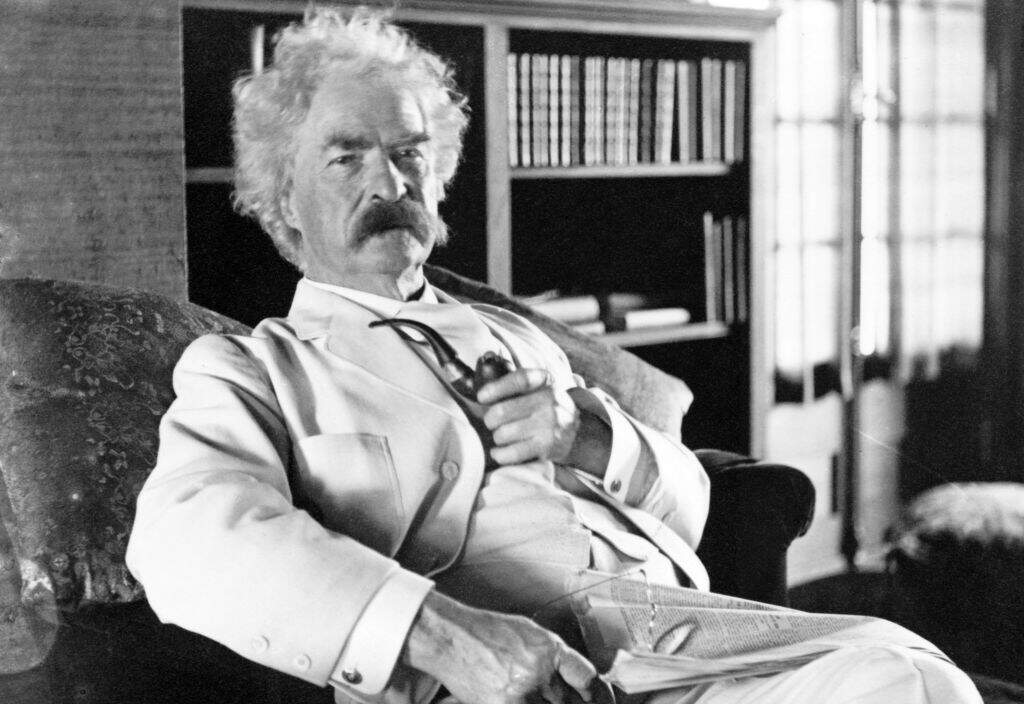
In the spring of 2019, while researching my book on Mark Twain, I came across a reference to a Twain novel, “Jap Herron,” written in 1917. This was a surprising discovery since I have been studying Twain for decades and never heard of it; it was even more surprising since he died in 1910. I always thought of Twain as an artist who crossed barriers, but this seemed to be a pretty spectacular accomplishment.
The subtitle cleared things up: “Jap Herron: A Novel Written from the Ouija Board.” According to aspiring writer Emily Hutchings and psychic Lola Hays, both of whom “assisted” in writing this book, Mark Twain had been waiting in the afterlife for just the right moment to stage a comeback—and he chose these two feckless psychics to channel his genius.
Some additional research revealed that Hays and Hutchings were not alone in conjuring the ghost of Mark Twain. In the decades following Twain’s death, a number of psychics and mediums claimed not only to be in contact with Twain, but to be in intimate, even familial relationships with him. And no matter where or to whom it appeared, this ghost was uncannily the same. Twain arrived from the netherworld as a patient, sweet-tempered father figure, a devout Christian and a writer happy to share the spotlight, a benign humanitarian with no racial animus who preferred folksy quips to biting satire. In other words: he was nothing like the actual Mark Twain.
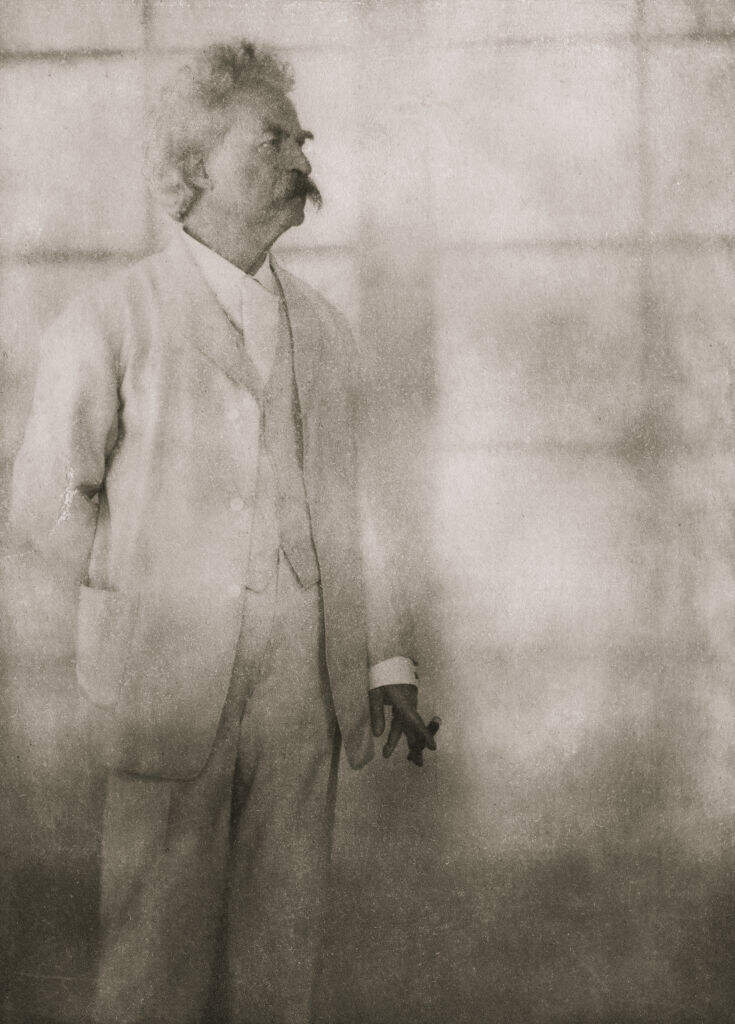
This year marks Twain's 190th birthday. As I read about President Donald Trump’s plan to include Mark Twain in his proposed “Garden of Heroes,” I couldn’t help but think that Hays and Hutchison are still on the job, conjuring a Twain who never lived, in order to represent myths of American exceptionalism that he spent a lifetime satirizing.
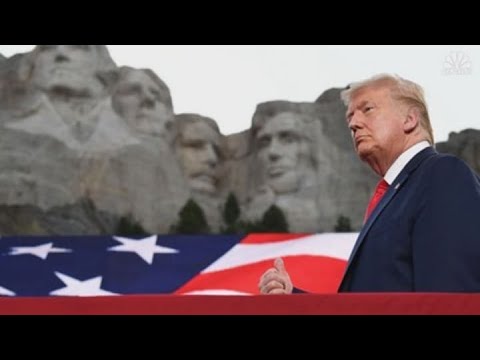
During a speech given beneath the colossus of Mount Rushmore in 2020, Trump reacted to the removal of confederate statues across the United States, which he described as “a merciless campaign to wipe out our history.” Despite the looming presence of Abraham Lincoln, Trump didn’t seem to realize that “we” were not part of the Confederacy and so “our” history was not being “wiped out.” No matter, in response he proposed building “a vast outdoor park that will feature the statues of the greatest Americans to ever live.” What began with 31 statues has now grown to 244 at a cost of $40 million dollars, funds made available after the administration cancelled N.E.H. grants that supported museums and historical sites across the country. The “Garden of Heroes” has faced little opposition and is safely ensconced in the Big Beautiful Bill—nestled between cuts to Medicaid and tax breaks for billionaires.
The original list of Trump’s “greatest Americans” did not include Twain, who apparently was not as great as Antonin Scalia, Davy Crocket or Daniel Boone. However, as the list grew, Twain made the cut, joining American “heroes” such as Lauren Bacall, Kobe Bryant, and Alex Trebeck—who was so great it doesn’t seem to matter that he was Canadian. Some of the figures proposed for this site risked their lives to “secure the blessings of liberty;” however, many more were simply wealthy, famous or glamorous. Twain loved acclaim as much as he loved the limelight, and so he would have relished the idea of a statue being erected in his honor. And yet, he would also have recoiled at the values promoting the “Garden of Heroes”—recognizing immediately how much “fertilizer” it would take to make this garden grow.
Twain didn’t trust self-proclaimed patriots or wannabe heroes, and he especially loathed the brand of puffed-up, preening masculinity that longs for applause and parades. In “The Adventures of Tom Sawyer,” Tom dreams of being a hero and orchestrates games of conquest. Yet, Twain understood the deadly consequences when grown men continue to play little boys’ games. We can hear this pretense of heroism in Pete Hegseth’s adolescent, vulgar crowing about the violence of the American “warrior.” We can see its costume in the black masks and tactical armor of ICE agents as they strut and flex their way through American cities, zip ties in hand.
Acts of heroism in the fiction of Mark Twain are rare. When they occur—as in Huckleberry Finn’s decision to save the enslaved Jim—they’re quiet moments of conscience, inspired by empathy and punctuated by the realization that we live in a fallen world. The child Huck becomes a student of American violence, both a victim of it and witness to it, and often that violence is the work of grown men who crave power and acclaim. After one of many savage moments in the novel, Huck declares, “Humans can be awful cruel to one another.” Cruelty and compassion, sin and forgiveness, cowardice and heroism, these are the conjoined twins that, for Mark Twain, structure the rhythms of American history.
At the beginning of the novel, Huck sits alone in the dark, listening to “the kind of a sound that a ghost makes when it wants to tell about something that’s on its mind and can’t make itself understood, and so can’t rest easy in its grave.” Twain once described himself as a writer with a “pen warmed up in hell.” If there is a ghost of Mark Twain, he’s not whispering in the ears of lady psychics; he’s waiting in the dark, ready to tell us stories that we don’t want to hear, stories without many heroes. What Twain understood about himself is what he also knew to be true about the nation: that we are a flawed, fractured, haunted people, that our scars have the power to inspire our humanity; and that we would be better served by listening to the ghosts of our history, instead of carving monuments to our greatness.