Support WBUR
Essay
‘You are not forgotten’: How teaching AIDS literature honors my father, and so many others
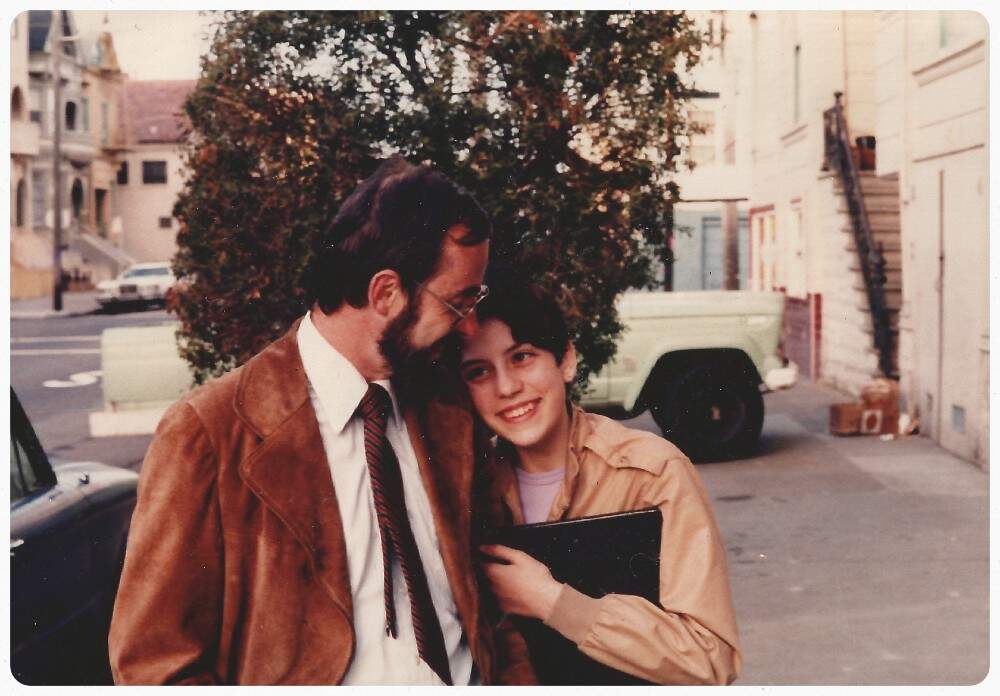
The first World AIDS Day was observed on December 1, 1988. George H. W. Bush was newly elected president, and I was a freshman at NYU about to turn 18 years old. The World Health Organization had established World AIDS Day to raise awareness about HIV/AIDS, which had then killed 46,000 in the United States and over 300,000 worldwide. Having grown up in San Francisco, I was aware of the disease. In fact, I was terrified my gay father would get it. But I didn't tell anyone about this fear, not even my dad.
AIDS was something we didn't talk about; it was both too far away and too close to face head-on. And most of the people who were sick, or caring for someone sick, were doing it behind closed doors. In that era, if you weren't in someone’s inner circle, you might never know they were ill at all. Friends and acquaintances would just disappear. You wouldn't see someone for a while — shopkeepers on Haight Street, baristas in the Castro, friends of my dad's — then you'd ask, “Where's Tommy?” Or, “I've not seen Sam in a while.” Then someone would say, “Oh, he died of AIDS.” The ACT UP poster declaring “silence = death” spoke the truth.
In the summer of 1989, when my dad started to write to me about his falling T-cell count and his hope to get on experimental drugs, I still didn't tell any one of my friends he was HIV positive. I hadn't even told my childhood friends he was gay. (As if they didn't already know.) And I felt utterly alone with my worry, far away from San Francisco and anyone who knew my dad.
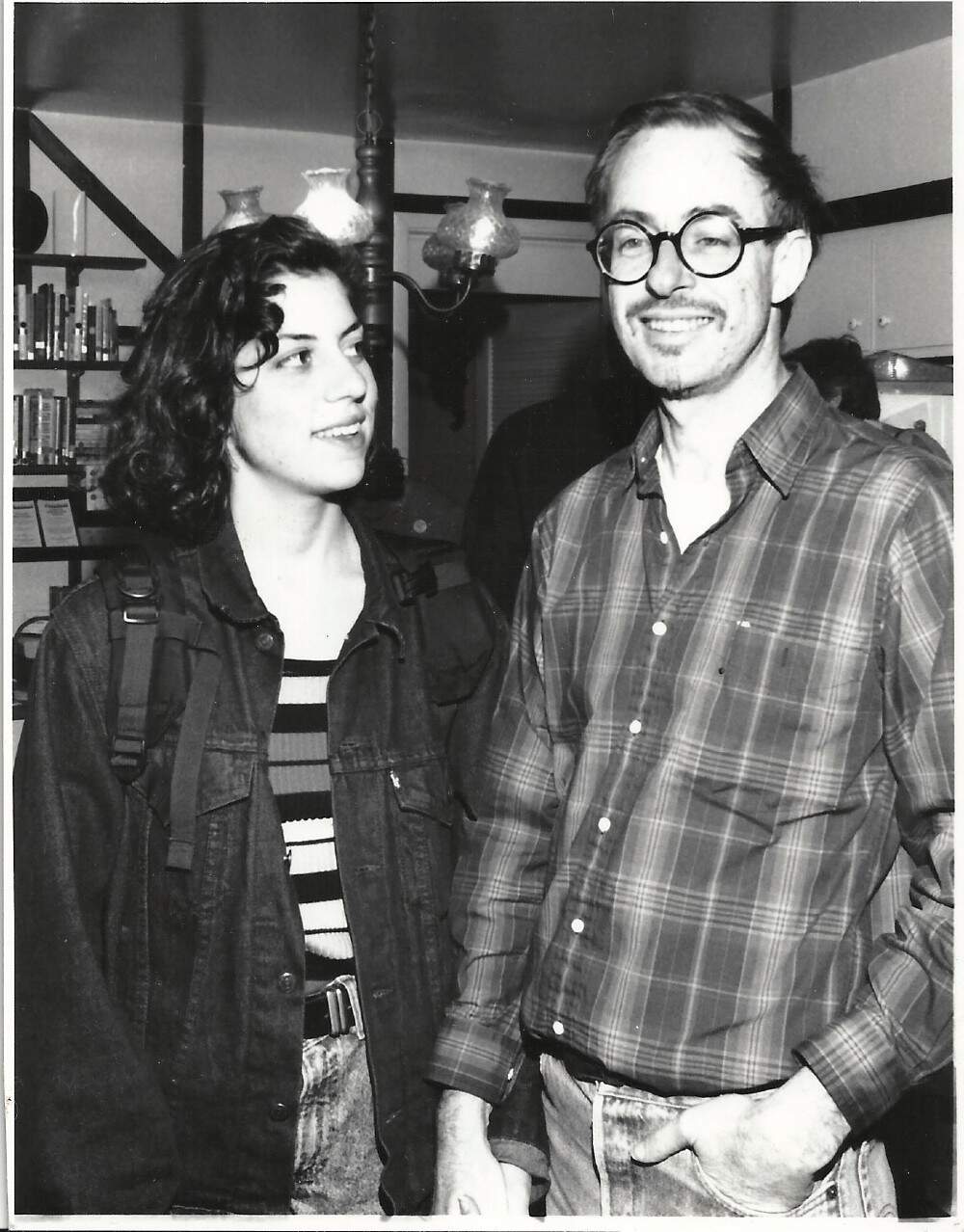
By Christmas 1991, I’d arranged to graduate college a semester early in order to move back home to San Francisco. My dad wasn’t partnered, and he wasn’t close to his family of origin. He needed me and asked me to return. At first, this made me angry. I didn't know how long I'd have to pause my adult life to take care of my father. I had an internship at a record label, an apartment downtown. I wanted to be anyone other than the daughter of a dying man. But less than a year later, on December 2, 1992 (three years and a day after the first World AIDS Day), my dad was gone. Looking back now, I can't believe how little time we had together.
Now, I'm teaching AIDS literature and AIDS history to students who are the same age I was when my dad first got sick. Where I experienced the disease in a sort of vacuum — a cone of silence I put myself in to avoid feeling — my students and I read poetry and prose by, and about, people with AIDS every week. Our syllabus includes memoirs by Edmund White, poems by Essex Hemphill and Cookie Mueller, essays by David Wojarnowicz and Alexander Chee, documentaries by Marlon Riggs and David Weissman and criticism by Susan Sontag and Sarah Schulman.
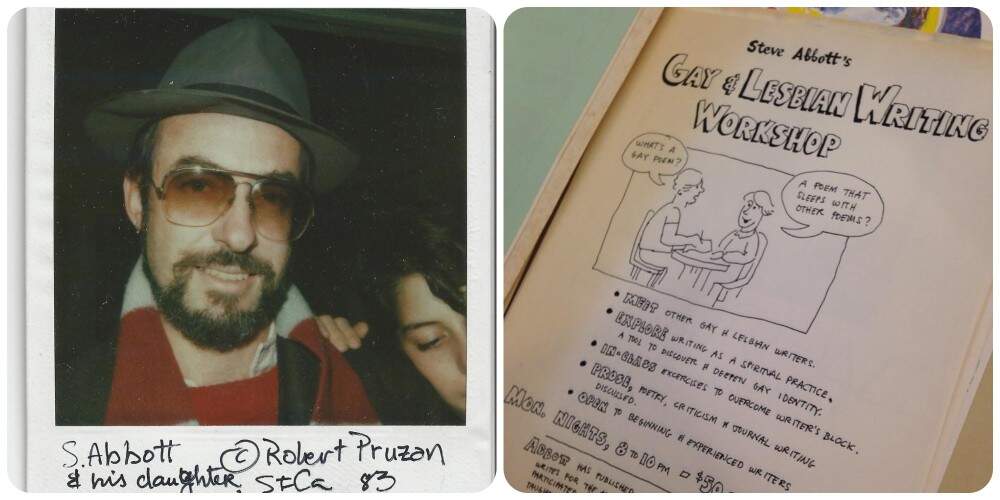
And I have to say, teaching this class is probably one of the most satisfying jobs I've ever had. My father was also a teacher. He taught writing at the University of San Francisco and the Naropa Institute in Colorado. He even taught poetry workshops in our Haight-Ashbury living room, which he advertised with handmade posters. But he didn’t live long enough to see my career take shape. He died four days before my 22nd birthday. In doing this work, I feel closer to him, to his searching intellect and to his heart.
Furthermore, AIDS history and AIDS literature is not remote, it's not "retro," but rather incredibly relevant to our present moment, a moment when queer history is being erased, when trans people are being targeted and when people are still living with HIV and dying of AIDS.
Together we can try to make sure these voices don’t go silent again.
Last February, the Trump administration terminated funding to USAID, which includes the President’s Emergency Plan for AIDS Relief (PEPFAR), an HIV prevention program that has operated through USAID since 2003. While PEPFAR’s funding was removed from the rescission package in July, operations and clinics were already severely affected, and the future of funding remains uncertain. According to researchers at Boston University, nearly 150,000 people have died of AIDS because of these and other healthcare cuts.
In the midst of this reality, the administration announced that it would not observe World AIDS Day at all. No quilts on the White House lawn. No red ribbons to honor the dead. Instead, on December 1, the White House Facebook account reported on the president’s imaging results, with a picture of a doctor’s note and an all-caps pull quote: “Excellent Health.”
On Tuesday, December 2, the 33rd anniversary of my father’s death, I was in the classroom talking about the work of remembrance and memorial. What can we do to honor those who suffered the consequences of government indifference during the worst years of the AIDS crisis? How do we remember? I think our first job is to talk, to break the silence. This week, a student presented the work of Manual Ramos Otero, a Puerto Rican writer he’d researched who died of AIDS in 1990, and together we read one of Otero’s poems.
I try to read something aloud every class. In this way, the voice of the writer enters the room and comes to life. The decades between their passing and the present collapse, and you hear vitality, pumping blood, sweat, tears and the sort of urgency known only to the dying. I open a dialogue, asking: What does this remind you of? How does this work feel relevant at this moment? Or, how does it relate to being queer today? The students answer, I listen, and they teach me. In this routine, we also say to each writer, “You are not forgotten. Your life mattered.”
My hope is that these young people will take AIDS history and literature into their conversations with friends and family and into their future lives and careers, maybe in the ways that I have. Together we can try to make sure these voices don’t go silent again.
Teaching AIDS literature is my own living memorial to my father, a way of mourning a collective loss in a collective space, in a way I couldn’t when I was the age of these kids. I teach to fight the erasure. I teach to fight despair. I teach to feel alive.