Support WBUR
Essay
'Gilmore Girls' is more than a comfort watch
One night this past September, after my family had gone to sleep, I settled in on the soft couch in my living room, opened my laptop, and began watching “Gilmore Girls” from the very beginning. This was not my first trip to Stars’ Hollow. I’ve watched the show in its entirety perhaps seven times — the first during its fall 2000 — and for two full decades I felt a bit like a lone voice in the wilderness, lobbying for its brilliance at literary parties and faculty receptions and family reunions. “The writing,” I cried, again and again. “The dialogue! It’s not like anything else on television. It’s like a screwball comedy from the Golden Age of Hollywood. It’s like ‘His Girl Friday’ or ‘The Philadelphia Story.’”
And it’s true. The show’s creator, Amy Sherman-Palladino, was deeply influenced by those 1930s and '40s comedies, which she grew up watching, just as I did.
But for me, it was so much more: It was a key that unlocked the door to my actual self.
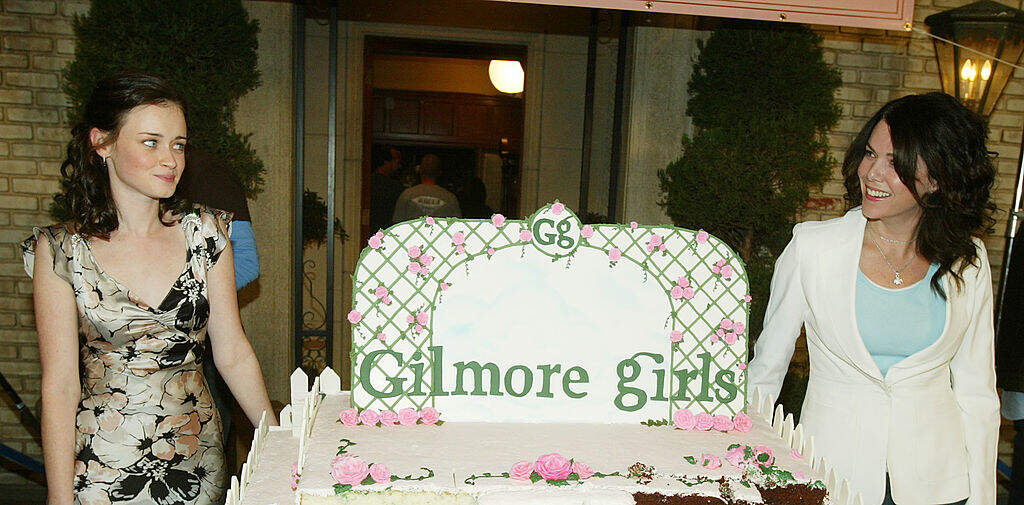
And this fall, when I sat down to watch it again, I told myself that I was doing so --sneaking moments when my husband and kids were occupied with other things — in celebration of the show’s 25th anniversary, a milestone celebrated with such fervor it nearly sank the Internet under the sheer volume of Gilmore Girls think pieces (“The Class Problem in Gilmore Girls”) and brand collaborations: Gilmore Girls-themed pajamas, candles, luggage, makeup, $400 cashmere sweaters from the luxury line Lingua Franca, Owallas, sets of MAC lip balm, varsity jackets from the fictional Stars’ Hollow High School, and, of course, Lorelai’s beloved coffee, and mugs to drink it in.
For in the quarter century since I first tuned in, the show has morphed from a cult favorite to a cultural phenomenon, among the most-streamed shows in the U.S., with 50-plus podcasts devoted to dissecting every word uttered on it.
Those podcasts and think pieces tend to characterize “Gilmore Girls” as a “comfort watch.” And I get this. I do. The show’s setting alone offers a respite from the impersonal brutality of contemporary life: Stars Hollow, a fictional Connecticut town, is lined with bustling local shops, redolent with local festivals and traditions, and stocked with kind, if quirky, characters, who convene every Sunday for a town meeting straight out of Thornton Wilder. And Lorelai and Rory, despite their sometime clashes, offer an impossibly moving depiction of unconditional love.
And that night, in September, amid the terrifying tumult of ICE raids and the ongoing revelations about Jeffrey Epstein, I told myself that I was watching, again, for the seventh (okay, maybe 10th) time, for comfort. But the truth is: I returned to “Gilmore Girls” for the same reason I always do. Not to be distracted from the world around me, but to better understand it. Not to staunch my thoughts, but to sharpen them.
I return to “Gilmore Girls” for the same reason I turn to my favorite novels – “Middlemarch” and “The Goldfinch,” “The Age of Innocence” and “Foreign Affairs” — to remind myself of what truly matters to me. Of who I truly am.
“Gilmore Girls" premiered the fall I was 27. Two years out of my poetry MFA program, I’d long eschewed television for loftier pursuits — provocations rather than entertainments — like reading and writing, and, of course, attending those literary parties. I’d held onto my childhood television, a pink Sony cube from the 1980s, largely for kitsch value. But one icy, lonely night, I flipped the switch — unsure of it even worked — and found myself face to face with a girl — a brunette, no less — holding a book. Not just any book. Virginia Woolf’s “A Room of One’s Own.”
What on earth? I thought — and settled in to find out.
That girl, of course, was Rory Gilmore, the first television character to traverse the world as an unapologetic reader, a girl who carries a book in her bag everywhere, even to prom (okay, the fiction issue of The New Yorker, but still), who makes sense of her life through literature, and spends whole days in a bookshop. Just as I did and still do.
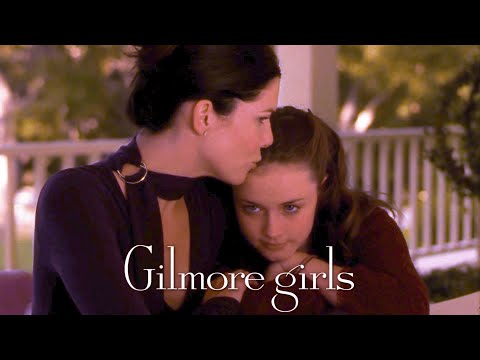
But she’s also the first small screen heroine to be celebrated, rather than mercilessly mocked for her intellectual proclivities. Her bookishness doesn’t relegate her to the realm of miserable social outcasts, a sign of terminal nerdiness or social awkwardness; it’s simply accepted as part and parcel of her person. Nor does, perhaps more importantly, her ambition. Her unapologetic ambition. Ambition that looked unlike anything else on the small screen, rooted in kindness and curiosity and intellect rather than ruthlessness. Rory longs to — no, plans to — become a writer, a journalist, a foreign correspondent. She wants to travel the world, reporting on stories, and people, that matter.
I wanted something similar: to write for novels and essays, to be part of the cultural conversation, to be a force for good in the world. But until that cold night when she popped up on my screen, my ambition confused and ashamed me. It struck me as unseemly, at odds with my sense of myself as a “good girl,” a nice person, devoted to her family and its traditions and values.
Rory, more than any real person in my life, showed me the foolishness of that shame, the internalized misogyny. And over the course of that first season, it dissipated. I began writing a novel and didn’t stop. As the show drew to a close, in 2007, I finished and sold it. Along the way, I wrote for larger and larger outlets, transforming from a person who attended literary parties to one who had them thrown for her.
And so, you see, “Gilmore Girls,” for me, is actually the opposite of a comfort watch. Rather than subdue or calm me, the show stirs up something in me, reminding me of my values and ethics, reminding me that it’s okay to want, to search; that it’s okay to be myself. It reminds me, too, of my taste and predilections as an artist.
I wonder, sometimes, if therein might, in truth, lie the appeal for all those millions of others, too? That maybe we’re all seeking something more complex than comfort? That maybe we’re all Rory at heart?