Support WBUR
Commentary
A spectacular act of self-sabotage
The North Atlantic Treaty Organization died this week. The alliance appears to have avoided the United States going to war with Denmark and other member states over President Donald Trump’s stated desire to annex Greenland by any means necessary, including force. But the fatal damage is done.
If a friend told you their spouse or partner threatened them with violence and publicly insulted them, you might advise them to move out or seek protection. Once specters of violence and disrespect enter any relationship, the dynamic is never the same.
There is no good reason for America to seize Greenland. The U.S. enjoys virtually unlimited basing rights there, which we do not now fully exercise. Conspiracy to wage aggressive war violates the United Nations Charter — we hanged Nazi generals for that at the Nuremberg Trials — as well as in this case, members’ mutual defense obligations under the North Atlantic Treaty and bilateral agreements between America and Denmark, all of which bear the force of law.
No one is quite sure why Trump has decided he wants to acquire Greenland. Sen. Thom Tillis, (R-NC), who was one member of a recent bipartisan congressional delegation on a mission to reassure Denmark of U.S. support, said "The fact that a small handful of 'advisors' are actively pushing for coercive action to seize the territory of an ally is beyond stupid.” Beyond the irrationality, illegality and (per the U.S. Conference of Catholic Bishops’ Archbishop Timothy P. Broglio) immorality of such an attack, consider what America gained through NATO, and what she has now irretrievably lost.
NATO was founded in 1949, after World War II, and in the words of its first secretary general, Lord Hastings Ismay, to “keep the Americans in, the Russians out, and the Germans down.” NATO deterred a devastating World War III resulting from the Soviet Union’s evident wish to conquer western Europe. Preserving the peace and freedom of 400 million Europeans through 1989 is no small feat. Furthermore, Pentagon war games during the Cold War consistently showed that a Soviet invasion would inevitably lead to nuclear escalation destroying targets within the U.S.
Beyond the irrationality, illegality and ... immorality of such an attack, consider what America gained through NATO, and what she has now irretrievably lost.
NATO enforced the Dayton Peace Accords in 1995, ending the civil war in the former Yugoslavia that killed 200,000 and displaced 2 million more. As a lieutenant I led a target acquisition platoon on the initial implementation force to keep the peace. NATO also defended Macedonia and ended the war in Kosovo from 1998 to 1999.
NATO has invoked its mutual defense obligations only once — on behalf of America, on Sept. 11, 2001. I teared up upon hearing that news in Manhattan that day. NATO immediately deployed troops to Afghanistan: virtually all member states contributed service members. I served in Afghanistan as captain and intelligence analyst in 2003 and as a major and case officer in 2010. Once I saw a Norwegian patrol with “I [heart] NY” bumper stickers on their vehicles, putting a lump in this New Yorker’s throat.
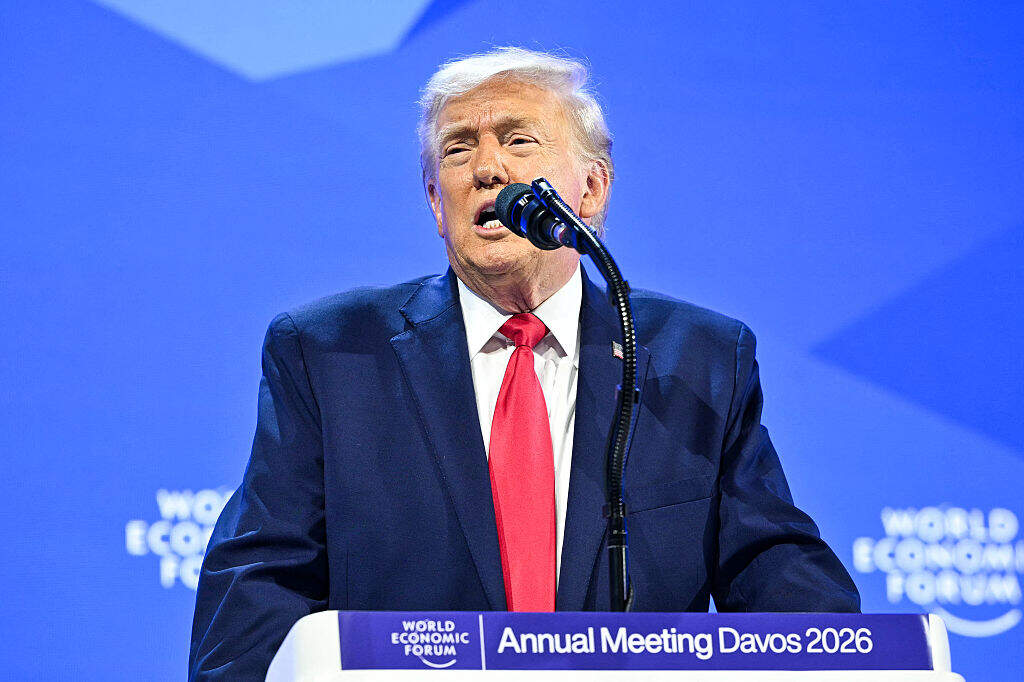
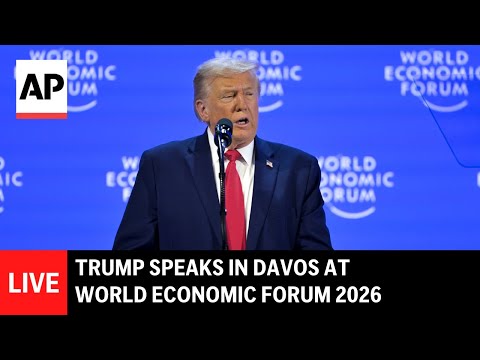
Troops from non-U.S. NATO members accounted for one-third of coalition fatalities in Afghanistan, 1072 of 3621 lives lost. Danish troops served meaningfully on all these NATO “out of area” missions. In Afghanistan the Danes suffered the third-highest percentage of soldiers killed in action, 43, compared to their small population. (Denmark also followed us into Iraq, losing another nine service members.) America owes a blood debt to NATO, and to Denmark in particular. Trump’s remarks to European leaders at the World Economic Forum in Davos, Switzerland that we have “gotten absolutely nothing” from NATO, and he’s “not sure that they’d be there for us” if America is attacked, are stunning in either their dishonesty or ignorance. The president made us look ungrateful and/or stupid before our allies.
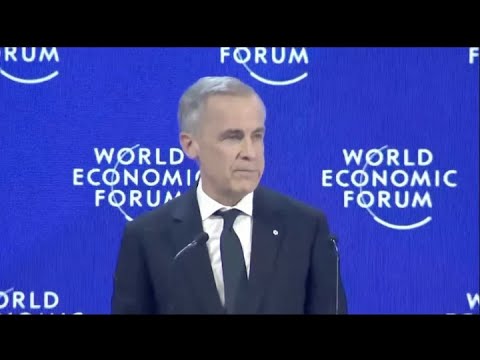
Also in Davos, the leader of our neighbor and NATO ally Canada, Prime Minister Mark Carney, spoke of “a rupture in the world order, the end of a pleasant fiction and the beginning of a harsh reality” after Trump’s earlier crude remarks about Greenland and Denmark. The security impacts on the U.S. of separation from the western alliance will be grave.
Signals and communications intelligence gathered and disseminated among the U.S., United Kingdom, Canada, Australia and New Zealand—the “Five Eyes”—will dry up. Given Trump’s willingness to leak the personal correspondence of French President Emanuel Macron, Norwegian Prime Minister Jonas Gahr Støre and NATO Secretary General Mark Rutte, it’s hard to see why a NATO member’s human intelligence service would share sensitive reporting with the U.S. Neither will these countries be inclined to extend diplomatic and other courtesies to the U.S. in hostile capitals with which they maintain relations, but America lacks an embassy, such as Pyongyang or Tehran.
A huge portion of America’s nuclear missile launch warning capability comes from facilities located in Britain, Canada and, yes, Greenland. The U.S. maintains nuclear weapons in Belgium, Germany, Holland, Italy and Turkey. Meanwhile, absent confidence in the “extended deterrent” of our nuclear umbrella, front-line NATO allies such as Poland may develop their own nuclear capabilities, undermining decades of counterproliferation policy. Former French President Charles DeGaulle once asked if America would trade New York for Paris in a nuclear war; the answer under Trump is “no.”
Since 1942, the U.S. has spent hundreds of billions of dollars (at least) on air, military and naval bases in Europe. These bases supported post-Cold War U.S. combat operations in Libya, Lebanon, Afghanistan, Iraq and Syria. Allied acquiescence to their use in American conflicts going forward is now uncertain. In extremis, if the U.S. does seize Greenland, our ability to retain these assets — including artillery, tanks and ammunition stores in Germany — is unclear, though American aircraft and ships could probably get away.
In 1949, when the U.S. became a founding member of NATO, then-President Harry Truman, Secretary of State Dean Acheson, Secretary of Defense James Forrestal and Chairman of the Joint Chiefs Omar Bradley knew America’s interests well. Trump’s remarks about Greenland and NATO represent some of the most spectacularly unnecessary acts of national self-sabotage in U.S history. We’ll count the costs for years to come.
Colonel Kevin Carroll retired after 30 years in the U.S. Army and reserve, serving in Bosnia, Afghanistan, Iraq and Yemen, in the Office of the Secretary of Defense and on the Joint Staff.