Support WBUR
Essay
Some friends do lunch. We donate blood
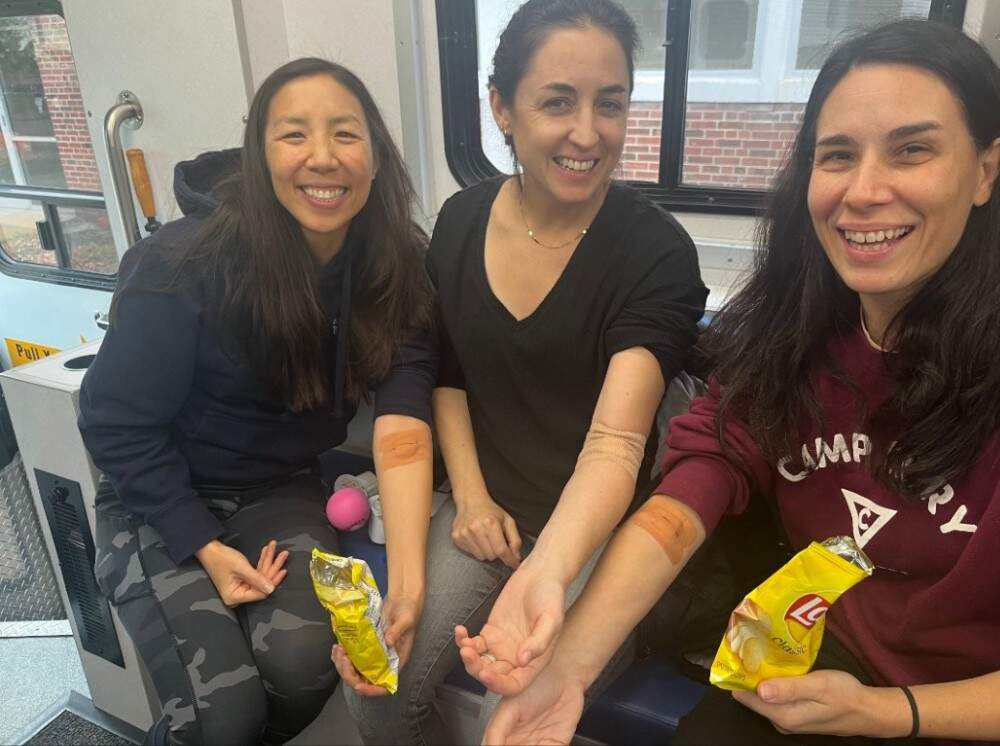
The clock read 8:25 a.m. as I pulled into the Red Cross parking lot, 20 minutes early for my appointment. Despite my nerves, I couldn’t wait to get inside. One of my friends, Marybeth, had already arrived. I was the second, and our third, Rebecca, was right behind me. This was our third blood donation together, and I’d been looking forward to it for weeks.
We’d chosen the American Red Cross Donation Center in Dedham, Massachusetts: a perfect meet-in-the-middle location for the three of us driving from different directions. Months ago, Marybeth told Rebecca and me how she and her husband donated blood as part of their date night. But “spouse date night” quickly turned into friend dates once she invited Rebecca and I to join her. Our first blood donation friend date took place in March.
As a kid, I’d watch my father come home from work every few months with a sticker on his jacket that read, “I gave blood today.” I admired his altruism and what I imagined was true bravery, and I hoped I’d become a blood donor like him when I got old enough. Decades later, I earned my own sticker.
I wish I could say it had been no big deal to begin, but the truth is, I was mildly terrified. The night before that first donation, I Googled every “how to prepare” tip I could find. The needle stick didn’t scare me so much as the unknown of what might come after. Would I feel faint? What if I passed out? I learned that proper hydration was the key: drink enough water, and it’s easier to find a vein and less likely you’ll get lightheaded. The next morning I guzzled so much water that, by the time I arrived, I needed the bathroom three times.
Our first appointment took place in one of Massachusetts General Hospital’s “bloodmobiles” — a converted bus set up with beds that reminded me of the one Michael Scott visited in an episode of “The Office.” Inside, there was just enough space for three technicians and the three of us. We watched each other’s blood bags fill, distracting ourselves with conversation, laughing at how nervous we were over something that suddenly felt so easy. We took pictures, and within minutes, the donation was over.
The technicians remarked that we seemed like the happiest, most giggly donors they’d ever seen. That tracked. Most people come alone, not with friends they’ve known since childhood.
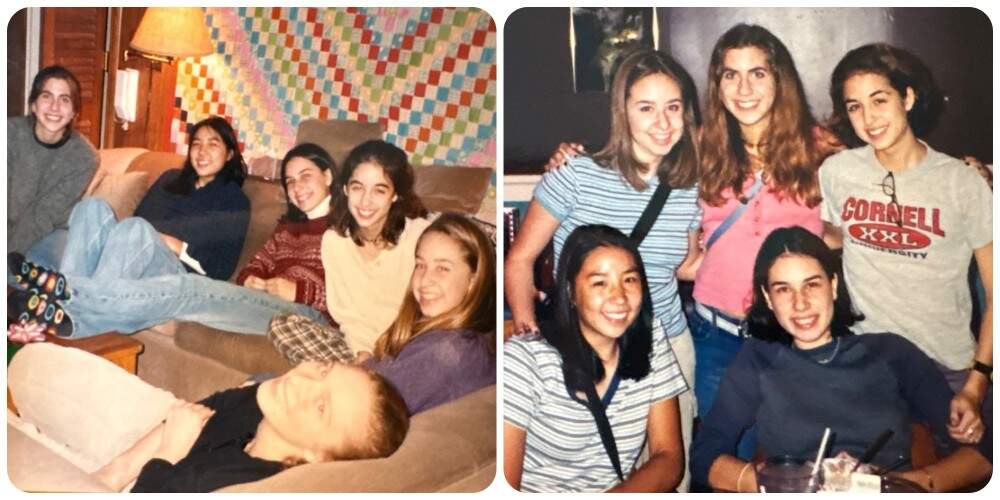
Marybeth, Rebecca and I have been friends for so long, I can’t picture my favorite childhood memories without their faces: Marybeth beating me at endless games of ping pong in her basement, Dave Matthews Band’s “Crash Into Me” playing on repeat. Rebecca beside me in Hebrew School, us laughing at our private jokes while the rabbi taught Talmud. The three of us in French class, in band, shelving books at the local library where we worked, racing to see who could empty a cart first, then hiding in the stacks with “Where’s Waldo.”
Now that we’re adults, making plans is harder than just showing up to class and sitting next to each other. Adult friendship requires logistics: we live in three different towns, have three different schedules. So to make sure we see each other, we’ve added a civic ritual with an appointment time. We pick a date weeks in advance, and we put it on the calendar.
And since that first time went well, I don’t get as nervous anymore. As I walked through the Red Cross entrance in Dedham and checked in, I reminded myself, I’m here. We’re doing this.
I was escorted into a private room to test my hemoglobin, blood pressure and pulse. My phone buzzed: Marybeth cleared. Another buzz: Rebecca had arrived and was in her own pre-testing room. Eventually all of us made it through and were led into a large open room with several beds, a slightly different experience from our first blood donation “date” in the bloodmobile.
There were still jitters as the phlebotomist tied a tourniquet around my arm, and for a moment, I thought it would’ve been easier if we’d just made lunch plans like normal people. But within seconds, the needle was in, and I was back to chatting with my friends.
When we’re lying on the vinyl recliners reminiscing I almost forget we’re not 15 anymore — if it weren’t for the blood bags slowly filling beside us.
The technicians remarked that we seemed like the happiest, most giggly donors they’d ever seen.
Sure, we could have made a casual plan to meet somewhere. We could agree on a restaurant for lunch, or meet for a walk. But this appointment locked us in. We’re committed. Canceling is harder when you know others are counting on you, and I don’t just mean my friends. One in seven people entering a hospital requires blood, but only 3% of Americans donate. Planning friend dates around blood donation lets us keep our promises to each other — and to the strangers who receive our blood.
When the donation was over, we compared stats: whose hemoglobin was highest (Marybeth’s), whose blood pressure won (Rebecca’s) and whose pint filled fastest (mine, thanks to all that water). Then we migrated to the snack table for the required 15 minutes of post-donation loitering that easily turned into a half hour. We ate Cheez-Its, pretzels and chocolate chip cookies and sipped sugary fruit drinks from tiny juice boxes.
Eventually, it was time to go, so we hugged in the parking lot and made plans to get together again soon. (Rebecca is going to teach us mahjong.) A few days later, I took a screenshot of an email from the American Red Cross and sent it to our group chat: “Thanks to you, somewhere soon, a patient will likely get a boost of strength from your generous A+ blood donation.”
Rebecca and Marybeth replied with comments about my “realllly excellent” blood donation and my top grade/blood type, peppered with a good dose of emoji laughs. What I hope to see soon, though, is an email like the one I received last May, from Mass General. It read: “We just wanted to let you know that your donation is on its way to help save a life in need. Thank you for being an awesome blood donor. We look forward to seeing you again soon!”
I’m lucky to have had friends like these for so many years. Maybe that’s part of why this kind of meet up has been so appealing to me, to all three of us. Being able to do something meaningful, with people who mean a lot to me, is something I don’t take for granted. Add in the free snacks, and I’m already checking my calendar for our next blood bank friend date.