Support WBUR
Commentary
ICE’s deployment of tech tools should be a wake-up call
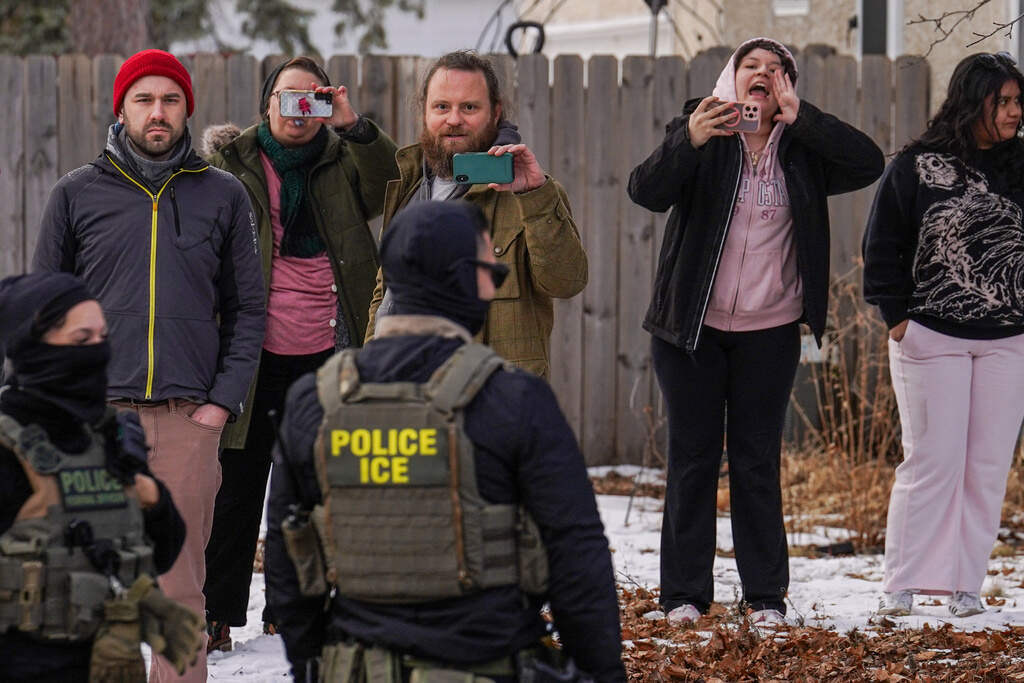
The United States is embroiled in a civil conflict, and much of the battlefield is invisible.
Like so many others, I have seen the images coming out of Chicago, Los Angeles, Minneapolis and elsewhere: federal officers in camouflage and masks, carrying military-grade weapons, and deploying tear gas into neighborhoods. Protesters, some in gas masks, stand together, banging on trash cans, blowing whistles and building barricades with their cars to protect their neighbors. Many also wield the most powerful weapon at their disposal: their cellphone cameras.
But the tools available to each side are not equal and the most powerful tool in this conflict — artificial intelligence — is largely unseen.
As protestors continue to exercise their First Amendment rights, often using technology to warn their neighbors of ICE activity or document acts of violence, ICE is dramatically expanding its own tech arsenal, backed by a budget of nearly $85 billion, $75 billion of which they can spend over the next four years. And they’re using these digital tools not only to track undocumented immigrants, but to monitor U.S. citizens as well.
Facial recognition technology can scan image databases, returning matches in real time. License plate readers can retrieve a history of your vehicle’s movements. Cell-site simulators can force nearby phones to connect, allowing their locations to be tracked in real-time. ICE has also resumed purchasing access to commercial databases that allow it to track any phone within a specific area without a warrant. These tactics are clear violations of our Fourth Amendment right to privacy, giving out sensitive information such as doctors we may visit, or protests we may participate in, potentially discouraging people from exercising their First Amendment right to free speech. (The issue of bias, of course, deserves far more attention than I can give it here. )
Many of us would argue that this level of surveillance violates core civil liberties. Yet we have, in many ways, signed away those liberties through terms of service, data-sharing agreements and the routine use of devices designed to extract far more information than the average citizen realizes. Every time you use a cellphone to get directions, post on social media or make an online purchase, you leave breadcrumbs for data brokers to sell to federal agencies — breadcrumbs that reveal everything from your interests and habits to medical conditions. This is not accidental.
For decades, we’ve been sold a single story about technology: It is smart, neutral, innovative and designed to improve our lives. But our devices’ default modus operandi is not the user’s best interest. In reality, these tools are built to serve corporate profit models and, increasingly, state power. We’ve been trained to view phones, watches, cameras and smart speakers as tools for convenience. But we’ve also opened our private lives to the collection, analysis and sale of our data, often to the highest bidder, including our own government.
I have studied the societal impact of AI for several years, but in recent weeks, as I have watched the erosion of our rights accelerate, that knowledge has become deeply personal. My smart watch, the phone in my pocket and the laptop I am using now are all continuously collecting information that could be used against me.
I call this deeply personal awareness technoconsciousness, and it’s something we urgently need.
Technoconsciousness is the critical awareness of how technological systems, especially AI, organize power, sustain inequality and erode our rights to privacy, free speech and due process. It recognizes that while technology has advanced rapidly, regulatory frameworks to protect us and our democratic values have not. Technoconsciousness forces us to confront an uncomfortable truth: The centralization of power through technology is fundamentally anti-democratic. Yet, we have allowed technological power to consolidate for the sake of convenience, efficiency and a stronger economy, leading us to this moment.
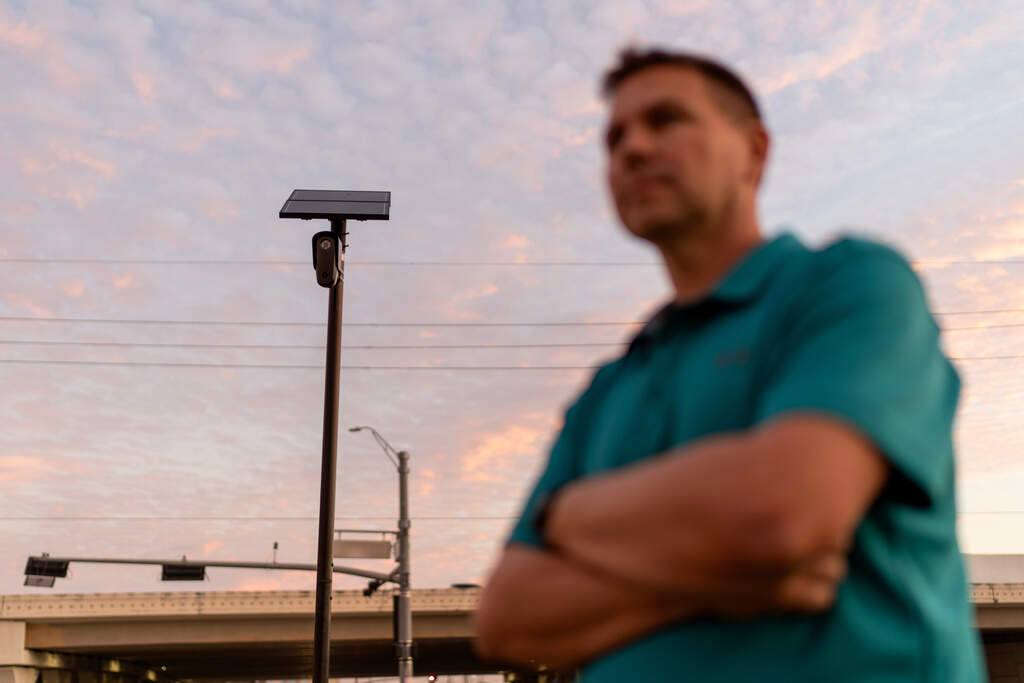
What we are witnessing now is a test.
Over the past several years, the conversations on Capitol Hill quietly shifted away from meaningful AI regulation toward ‘risk management.’ This framing stripped technology from its political and moral dimensions and reduced it to a technical problem best left to experts. Public debate and democratic deliberation regarding meaningful AI regulation were replaced by talk of innovation. And many of us, especially those insulated by privilege, didn’t object. We never imagined the absence of regulation might eventually be used against us.
Historically, the federal government has tested the expansion of its power on those with the fewest protections, and this moment is no different. Undocumented people are especially vulnerable. What we are seeing with ICE’s deployment of tech tools now is a harbinger of the federalization of technological power.
But the scope will expand. And even if political tides shift, the surveillance infrastructure will not disappear; it will only find a new target.
Being technoconscious does not mean rejecting technology altogether. It means rejecting neutrality, reclaiming agency and refusing to accept the inevitability of a surveillance state. Individually, it requires us to think critically before giving away our data, to better understand how our devices function, and to recognize our role in our algorithmic environment. Collectively, it requires something more difficult: political action.
We can start by demanding that every elected official take a clear, public stance on their commitment to protecting all people in the U.S. through AI policy. No vague commitments to safety: We need laws that require warrants, mandate transparency and eliminate warrantless surveillance. This is not abstract. The tactics ICE uses today, if left unchecked, will be normalized tomorrow.
Technoconsciousness enables us to imagine alternatives. As historian and writer Donna Haraway reminds us, progress does not come from accepting what is inevitable, but from engaging with what is possible. The images coming out of cities across the U.S., show communities standing together, protecting one another, documenting injustice and refusing the quiet disappearance of their rights. They remind us that together we are stronger.
The battlefield remains invisible only if we fail to name it. Now that we can recognize it clearly, we must fight back together.