Support WBUR
Essay
Artemis II brought us 'full moon joy'
My dad started working at NASA in 1966, right out of college. He spent the next 40 years there, as an electrical engineer. He worked on projects involving microwave remote sensing, like Seasat, an early satellite used to measure winds on the ocean’s surface, and later, HIRAD, a hurricane imaging radiometer. He didn’t work on human space missions, but near the end of his career, he led a research study for the Space Station Program (now the International Space Station, or ISS) studying how large structural objects behave in space.
I know these technical descriptors now, but as a kid, in the ‘80s and ‘90s, I just knew he worked on “space stuff.” He’d take work trips to space centers and to JPL, Jet Propulsion Laboratory, in California. I was well-versed in the logos: the “meatball” and “the worm,” and I knew my dad had an orange NASA jumpsuit that he’d zip up to do work under the house. (It kept his clothes clean. Peak engineer.)
Last month, I took my 9-year-old to Kennedy Space Center in Florida, and we talked a lot about my dad, who we lost almost two years ago. We saw the Atlantis Shuttle, the Saturn V Rocket and the enormous Vehicle Assembly Building — the VAB — which held the Artemis II rocket as it underwent final preparations for its April 1 launch.
Still, I didn’t realize how special this mission was going to be until I started watching at home — when Charlie Blackwell-Thompson, NASA’s first female launch director, cleared the crew for launch from Mission Control in Houston, and they responded with:
“This is Victor: We are going for our families.”
“This is Christina: We are going for our teammates.”
“This is Jeremy: We are going for all of humanity.”
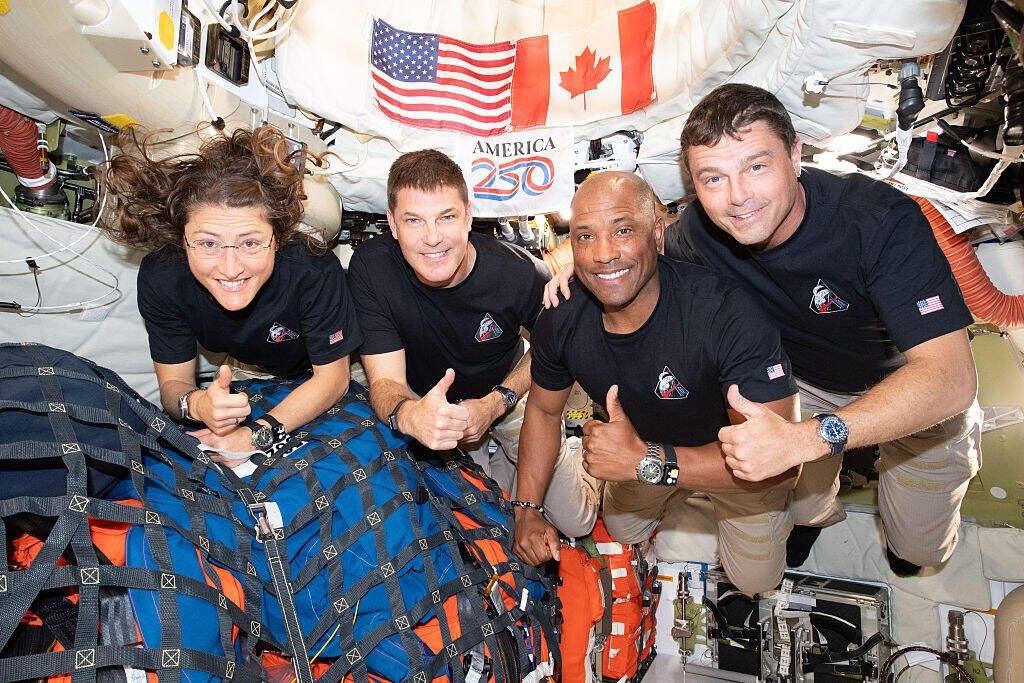
NASA’s been livestreaming from cameras stationed inside the spacecraft, on its wings and at Mission Control, and for the past 10 days I’ve been referring to the crewmembers of Integrity as “my astronauts,” along with “my space” as in, “Put my space back on the TV.”
The astronauts themselves are extraordinary. Commander Reid Wiseman is a pilot and engineer and, since losing his wife to cancer in 2020, a single father of two daughters. Pilot Victor Glover is the first Black astronaut to orbit the moon, and Mission Specialist Christina Koch is the first woman to do so. Mission Specialist Jeremy Hansen grew up on a farm in Ontario, Canada, and in addition to being the first Canadian to travel this far into space, this was his first space flight.
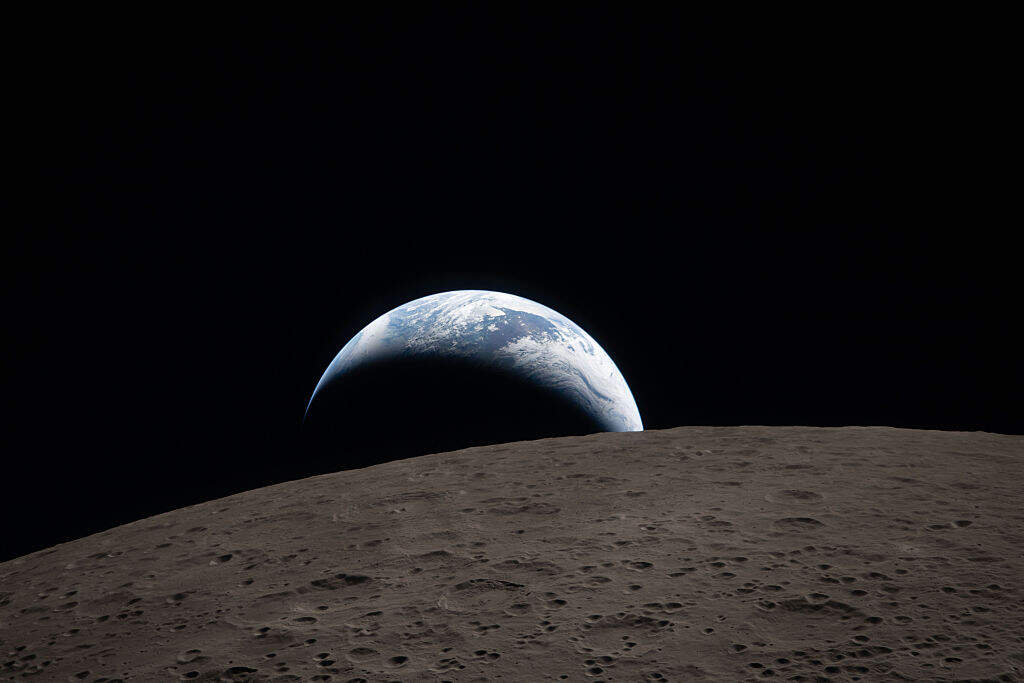
On Monday, April 6, the crew of Integrity traveled farther from Earth than any humans — ever. For context, the ISS is in lower Earth orbit, about 250 miles away, and Integrity reached 252,756 miles. At their closest approach, they were just over 4,000 miles from the lunar surface.
In pre-launch coverage, I listened as each astronaut discussed not just their goals but the fears and doubts that are a part of being human. And for me, that’s been the most astounding takeaway — how very human this mission is.
In all of this record-breaking progress and scientific discovery, NASA and the crew of Integrity invited us in. I’ve followed along for daily wake-up songs and updates on the malfunctioning toilet. On Easter, they hid packets of dehydrated scrambled eggs. I loved hearing how early on in the mission, Jeremy Hansen asked for guidance on cleaning the capsule’s interior windows — the crew couldn’t get enough of the view, and they were covered in fingerprints.
On the day of the lunar flyby, Christina Koch reflected on how one moment, you’re looking at the dark side of the moon, and the next, you’re remembering to change your socks. She said it’s the “dichotomy of human space flight” — and one of the coolest parts of the mission. Shortly after, in a beautiful on-the-spot reflection, Victor Glover remarked on how seeing Earth surrounded by so much space, “a whole bunch of nothing,” reminds him of how lucky we are, how improbable it is to have a place like Earth to exist, together.
During the lunar flyby the crew sighted two craters. They asked to name one Integrity and the other Carroll, after Wiseman’s late wife — noting it’s “a bright spot on the moon.” In conveying this to Jenni Gibbons (a fellow astronaut serving as CapCom in Houston), Hansen’s voice wavered, then the crewmates embraced in zero gravity, wiping their eyes. I did the same from on my couch at home. On the radio Gibbons said, “Artemis and Carroll crater. Loud and clear.” In the course of this enormous astrological achievement, this is the moment folks at NASA — from the crew to colleagues on the ground — say will stick with them.
For the lunar observation period, the astronauts worked in pairs stationed at the capsule’s windows and in direct communication with the Science team. At its closest, the moon appeared to the crew as the size of a basketball held at arm’s length, and their eyes could pick up subtle changes in color and surface texture. Glover noted, with gratitude, how their discussion led not only to better science but better human connection. When Hansen described an imagined exploration, Dr. Kelsey Young, a lunar geologist replied, “We all just went on that moonwalk with you.” The crew spent years training with lunar scientists to learn how to best describe the moon’s surface — the craters, the impact flashes that had the science team beaming — in ways that can only be done by first-hand observation.
Out of all the remarkable feats of engineering and technology that make space travel a reality, the greatest tool these astronauts have is being human.
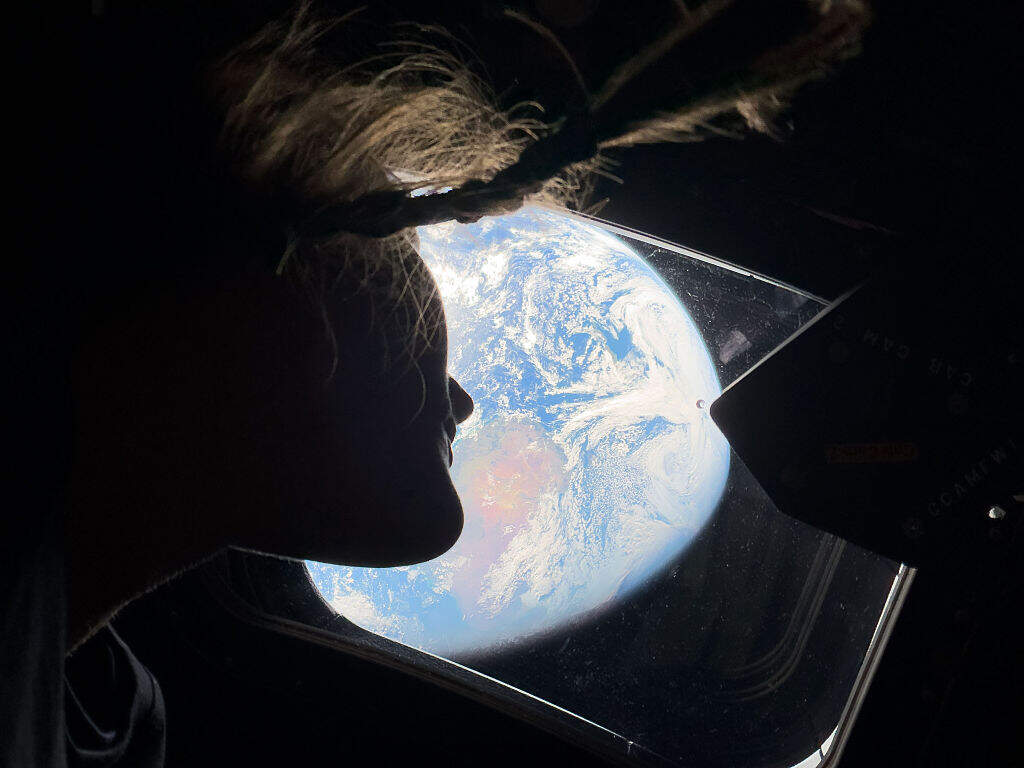
The evening before the lunar flyby, Wiseman said: “The four of us have looked at this moon our entire lives, and the way we’re responding to what we’re seeing out the window — it’s like we’re a bunch of little kids up here. We cannot get enough of this. It’s amazing. Thank you for the privilege.”
When Marc Reagan, on CapCom, replied, “Thank you for sharing that special perspective you have with all of us back here,” he was speaking for all of us.
As I stood in my living room watching the lunar eclipse on the live-stream, and, again, called my kids downstairs to watch “my space,” I texted with my mom, and I thought about my dad, but not so much about the work he did, or even how proud he was to work at NASA. What my dad would most appreciate is how smart, and how kind, these men and women are.
The splashdown into the Pacific Ocean is scheduled for Friday evening. I’ll be watching, thinking about how throughout this mission the crew has expressed gratitude for those who came before them, as well as anticipation for those who will come after. People like my dad, his colleagues and friends, the heroes I’ve cheered for this week, and maybe, in the not-too-distant future, my kids.