Support WBUR
Essay
'When breastfeeding stopped working, it felt like I stopped working'
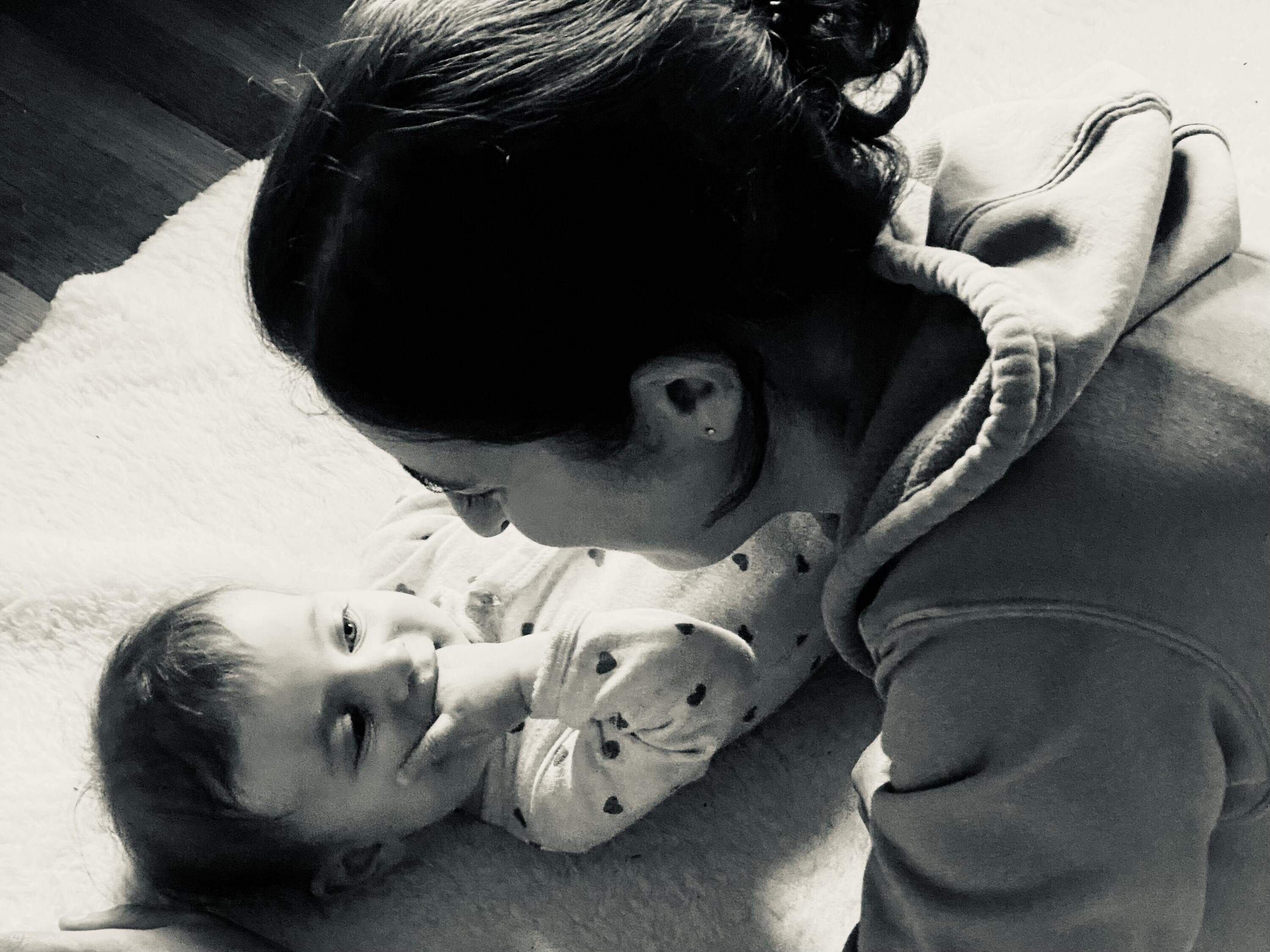
Editor’s note: Miriam Wasser’s daughter, River, nursed for the first time about 30 minutes after she was born. Like any new-mom/baby duo, breastfeeding took some practice, but it was mostly working. Then, when River was 6 weeks old, she suddenly refused to do it. For the next several months, whenever Wasser brought her baby to her breast, she’d scream. Sometimes she'd recoil. “Please, please, please, I'd beg, as if I could will — or guilt — her into nursing,” Wasser writes. “But I couldn't. She wouldn't. And I completely fell apart.”
The following is excerpted from the Delacorte Review, a quarterly journal published in collaboration with Columbia Journalism School. The original essay was published with the title, "Breastfeeding Grief."
Of all the unexpected things I experienced as a first-time mom, not being able to breastfeed was the biggest surprise. I was unprepared for how I reacted and how River's refusal to do it took over my life.
Obviously, some women can't breastfeed their babies, or choose not to, and these mothers and their babies are just fine. But I did not choose to stop breastfeeding. In fact, it never occurred to me that my baby would have an opinion in the matter.
The shock I initially felt gave way to devastation, and I was consumed by an unrelenting sadness I couldn't understand. I was also embarrassed to be this upset about breastfeeding — breastfeeding!? — and yet, there were days when my inability to do it felt like the worst thing that had ever happened to me.
This has, of course, happened to other mothers. In the past, experts used the term "nipple confusion" to describe babies who struggled to switch between bottles and the breast, and who got fussy or refused to nurse. Today, this behavior is more accurately called a "flow preference" or "bottle preference." And in River's case, that's exactly what it was. Nursing isn't like sucking milk from a straw. It takes work and the milk doesn't flow out immediately. Drinking from a bottle, by contrast, can be easier and instantly gratifying.
I have many theories about why River developed a bottle preference, ranging from anatomical explanations to my mistakes as an exhausted new mother. And while I'll never know why it happened, I think there will always be a part of me that wonders if I could have prevented it.
Looking back, it's tempting to say that I lost my mind for the better part of a year because all I thought about was getting River to nurse again. My obsession strained my marriage. It kept me from wanting to be around other moms. It made me hate my body in an entirely new way. And worst of all, there were days when I resented River for putting me through this.
That I felt, and that those around me felt, that my response to the situation was disproportionate — if not outright irrational — only made me feel worse.
Some mornings I would wake up determined to stay positive. But inevitably, I would find myself watching the clock as River napped or flailed happily on the floor, knowing she'd need to eat soon and that we'd probably both end up crying before I'd give in and pour some breastmilk I'd pumped earlier into a bottle.
Especially in the early days, my breasts were constantly full, constantly uncomfortable. I would start leaking when she cried. In those moments, I felt disgusting — covered in milk, awkward in my postpartum body, sleep deprived, likely unshowered. Of course she doesn't like me, I thought.
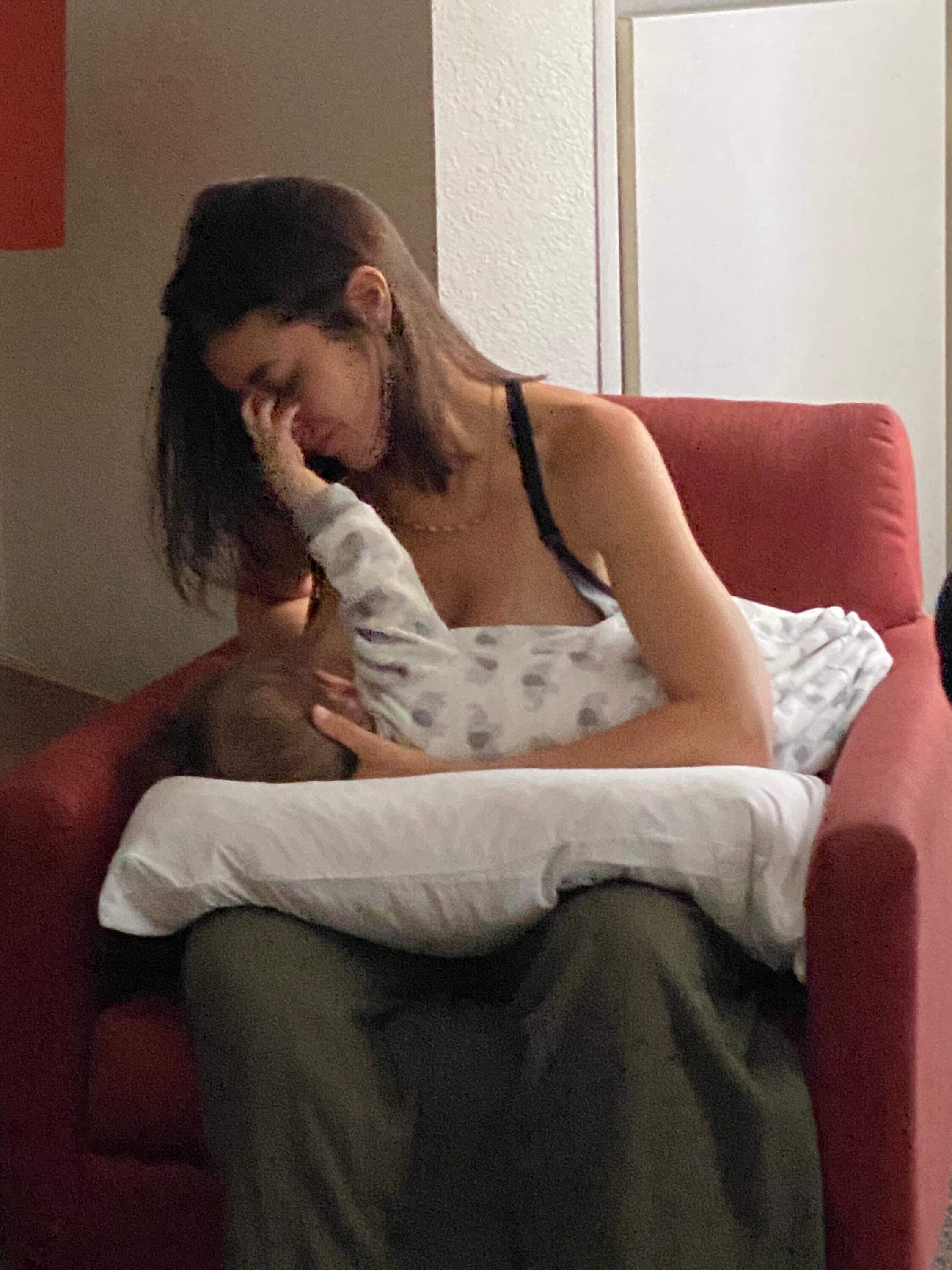
It was a rejection that, to this day, still makes me nauseous to think about. But it was also more complicated than that.
After I gave birth to River, my world got really small. I was aware of things happening in the news — the new omicron variant of COVID, devastating tornados in Kentucky and Tennessee — but all I could focus on was what was right in front of me. A hungry blue-eyed baby. Diapers. Ungodly amounts of laundry.
Don't get me wrong, I loved this smallness. River was born in late October, and the world felt increasingly cozy as the last of the leaves fell off the trees near our home in Massachusetts. But having a narrow lens also meant that when I stopped being able to breastfeed, something that, objectively speaking, I knew was not apocalyptic, I reacted as though it was.
Newborn babies need to eat every two to three hours, if not more, and a single nursing session can take upwards of 40 minutes. It is not hyperbole to say that breastfeeding was pretty much all I did for the first few weeks of River's life. It was how I fed her. It was how I got her to sleep. It was how I mothered.
When breastfeeding stopped working, it felt like I stopped working.
Even at the time, I knew my sadness was possible because so much else in my life was safe and stable. I imagine that if I didn't have maternity leave, or was worried about making rent or taking care of a sick relative, I probably wouldn't have had the mental space to dwell on breastfeeding. What's more, knowing it was a privilege to be this distressed made me feel even more pathetic.
"No one died, Miriam," I'd berate myself. "Your baby just doesn't want to nurse."
I'd tell myself to get over it, to stop pitying myself. Some of the people in my life told me this too, though in much kinder terms.
But I couldn't just move forward. That's not how grief works.
It's been about four years since this all started, and I have spent a lot of time trying to understand why I reacted the way I did. I've read a lot about breastfeeding and postpartum life, but few books or articles acknowledged, let alone addressed, my experience. The conversations among experts tend to be about the pressure women feel to breastfeed and the societal barriers, like a lack of paid family leave, that make it nearly impossible for some women to have the breastfeeding experience they want. These are important discussions to have, but they weren’t what I was looking for.
It was only after I learned there were other women who had equally strong reactions to a challenging breastfeeding situation that I began to think, "Maybe I'm not crazy?" From there, my journalist brain took over. I spent hours reading posts in Facebook groups dedicated to breastfeeding, and I started interviewing women I met through these forums. I talked to perinatal therapists and lactation consultants, too.
Many mothers I spoke with told me that they felt like "a failure" when they struggled to nurse or produce enough milk. Others said the experience left them feeling "out of control," or like their bodies were "broken" and their sense of self was "hemorrhaging."
"It makes you doubt your worth," one woman said.
"It's the worst way to start motherhood," said another.
I have no statistics to cite about the number of women who experience what is sometimes called "breastfeeding grief," but I've come to believe that what happened to me — what happened to so many mothers I encountered — is, if not necessarily common, then at least quite prevalent.
I no longer think that I lost my mind when River stopped breastfeeding. But I lost something, and though I didn't have the language at the time to describe what was happening, I was mourning.
This segment aired on May 8, 2026.