Support WBUR
Essay
Guster is still for lovers
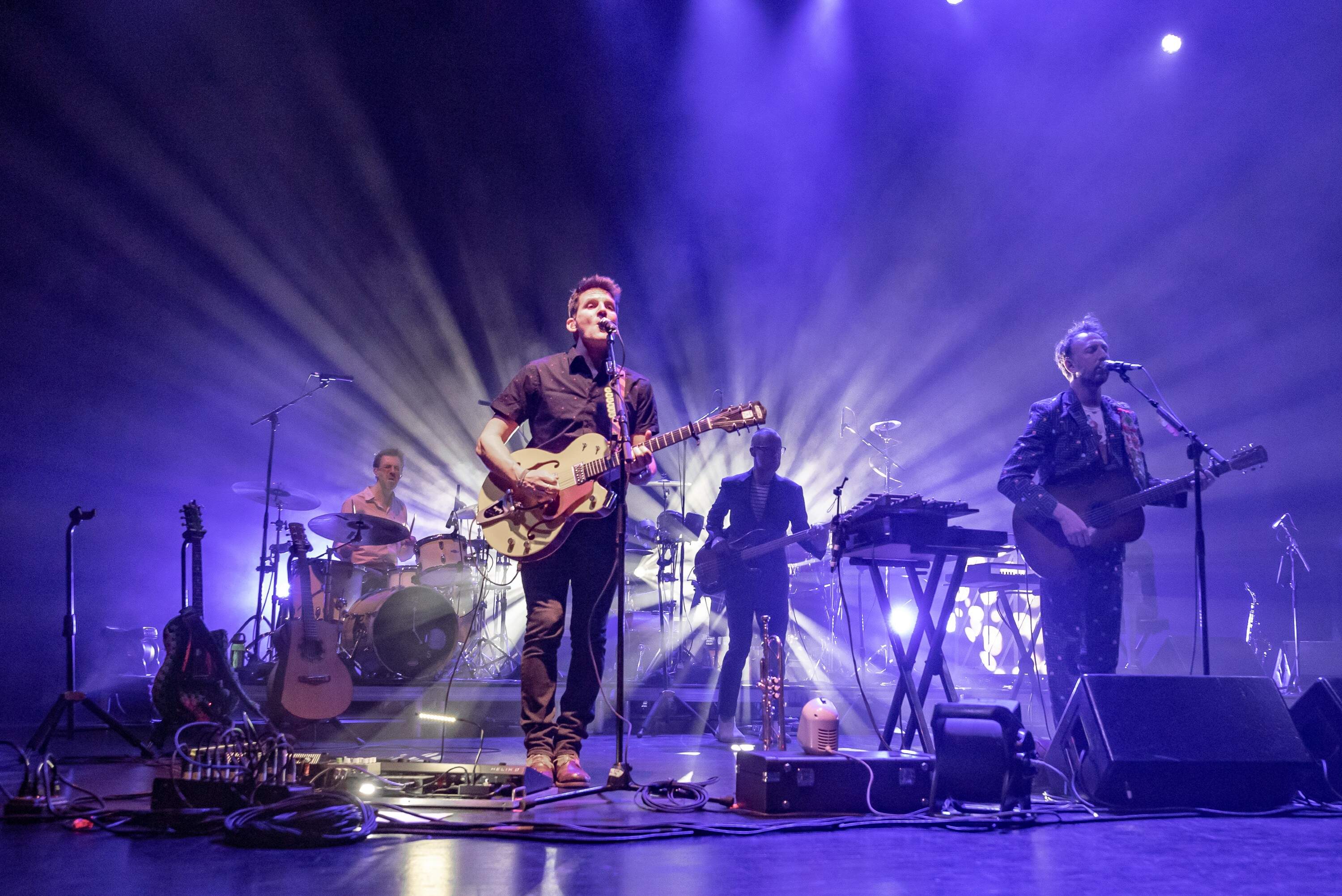
Editors' note: Guster's founding members, Adam Gardner, Ryan Miller and Brian Rosenworcel, started playing music together in a Tufts dorm room in 1991. Luke Reynolds joined the gang in 2010. And while Gardner may tell you Guster isn't a household name, the band has played Red Rocks, Newport Folk Festival, Radio City Music Hall and sold-out symphony shows across the country. Many fans who first fell in love with their music on the college circuit are bringing their kids to shows now, including a recent three-day acoustic residency in Providence, which Cog attended. We talked to fans who've been to so many shows, they said it's like seeing old friends. Then we caught up with Gardner over Zoom at his home in Portland, Maine, to talk about creativity, collaboration and playing the long game in a band that's having as much fun now as when they all first began.
Here is Gardner, in his own words. This conversation is edited for length and clarity.
— Cloe Axelson and Sara Shukla
“Why would someone come to their 40th concert?”
Every time we go out and tour, we ask ourselves a question — because we've been a band for so long, and a lot of the fans have been along for the ride for three-plus decades — Why would someone come to their 40th concert? Why would they come this time? So we always try to shake it up a little bit and do a slightly different version of ourselves.
We wanted to play with this idea of doing weekend gigs. We all have seniors that are graduating. The wives basically conspired with each other with the timing of our firstborns. Really it was my wife that went around to all the other wives being like, We're kind of in the zone. Are you guys in the zone? And the result was three kiddos within four months. So it's perfect. It actually times out nicely that we're making a record, and we don't want to be gone from our homes for too long the last year that our eldest are around.
We've done this acoustic setup before, but it's been a while. It's very different. We're seated. We have string players. We rent a grand piano. It's a very intimate version of the songs, but also of ourselves. We're shoulder-to-shoulder sitting in a semi-circle, no in-ear monitors. We can hear each other. We can joke to each other. It's just way more conducive to shenanigans and more personality, between each other and us and the audience. I always love that.
“At this point, we’re really brothers.”
We've made a bunch of records, but when you think about how many years we've been a band, we haven't been cranking them out. I think part of it is that there's enough time between those albums where we're listening to new music or we're experiencing different things in our lives. There's a good portion of living your life between digesting whatever that experience is into a song.
I used to say it was painfully democratic, the writing process. Now I think it's just democratic. It's not painful, because we've been doing it so long. At this point we have a shorthand too, so it moves quickly.
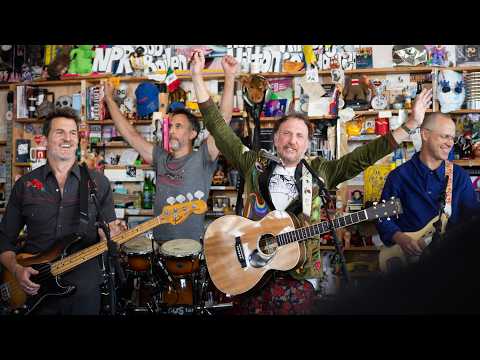
We are still friends. At this point, we're really brothers. It’s family. We've raised each other. We met each other when we were 18. We're in our 50s now.
Any of the stuff that was a point of friction or would have exploded the band, that already would have happened by now. So now we're in this amazing part of our relationship and careers where we appreciate each other and what we have more than ever.
"A very good cycle"
When we write, we don't write in the same place. We don't bring our own instruments. We'll find a place that has instruments laying around, but whatever's there is what we use, and that often keeps things interesting and different, too, especially if it's an instrument we don't know how to play. Like, All right, let's pick up a ukulele. Or I'll pick up a mandolin, or something that we really don't understand how it works, so you don't fall into the same patterns.
We've gotten into a very good cycle of touring, writing, having our home lives, having our individual lives. I think when we all lived together in Boston and were constantly touring and we were going, going, going, I think if we were still doing that, we would've imploded. To have individual lives and not have your entire identity wrapped up into your band has been very beneficial, to the band and to us as individuals in the band.
"We wanted to create something... for fans to come together and also give back"
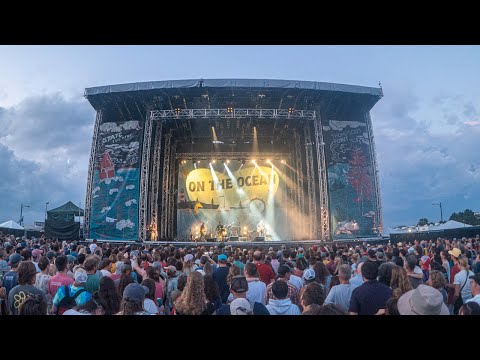
The other big weekend that we do every year is this festival that we host in Portland, Maine, where I live, called On the Ocean. It's this big community event, and it's both for the community of Portland, but also for Guster fans as a community.
We wanted to create something to allow for some specific ways for the fans to come together and also give back to the community. That's where Reverb comes in, the environmental nonprofit that my wife and I started in 2004. One of the bigger concepts of Reverb, and reasons it exists, is to help bands support the communities that they play in and not just be extractive.
I just didn't feel great going around on tour being like, Look at how great we are. Now give us your money for tickets and t-shirts, and we're gonna leave a pile of garbage behind. See ya. And then on to the next city. That didn't fit our ethos. Reverb helps bands to be more sustainable on tour, creating less waste, but also giving back to community organizations and the communities that the tour visits.
"A time in recent history where we had to be super intentional"
A time in recent history where we had to be super intentional was when we were playing the Kennedy Center. This is with the National Symphony Orchestra, two nights. We were thrilled. It sold out in minutes, and then months later, the Trump thing happened. Artists were dropping and canceling their shows out of protest.
After a bunch of thinking about it and talking to each other, we were all on the same page: It's gonna be louder if we actually play the concert. And through some of the musical and Broadway work that Ryan does, we brought up the cast of “Finn,” which was an LGBTQ cast and show that was canceled when Trump took over. We brought them on stage. We played a song that is called "Hard Times,” and they sang it with us, and it was beautiful. Ryan said something before they came on, like, "This is their stage as much as it's ours."
We weren't trying to make a press moment out of it or anything like that. We just wanted to make sure we were being authentic to ourselves and to our fans. And then, one of the fans in the audience actually just had a well-known blog, and wrote about it. It got picked up by Rolling Stone. It ended up being louder than us just being another band that canceled.
Otherwise, all the other stuff we do, whether it's music or weird antics, it's really for our own amusement, and we hope that everyone else enjoys it as much as we do.
"We've never been in a better place"
We played Hawaii last year. That was our 49th state, and we're like, "Well, we gotta play Alaska. We don't care where it is. It could be a ‘dumpster set’ in Alaska. We don't care." So we asked our agent, and we're playing Salmon Fest. End of July.
We do talk about the “empty nest tour” and what that might look like. Once our kids are gone, maybe we can do a residency in Tuscany. Pick an awesome place. Let's go there and plant some roots and see.
We have never been — and at this point I say this every year — we've never been in a better place emotionally, physically, musically in our band. We are so all in on this, and so appreciative and grateful for what we have for, and for each other and all of it. We feel so fortunate.
You know, who gets to be a dad and then also go back out on the road and do what they were doing in their 20s with the people they were doing it with and live that life? We're so lucky.
The audio version of this piece was produced by Cloe Axelson with help from Sara Shukla. It was edited by Tania Ralli and mixed by Paul Calo.