Support WBUR
Commentary
Why we love anonymous celebrities like Banksy – and hate when they become known
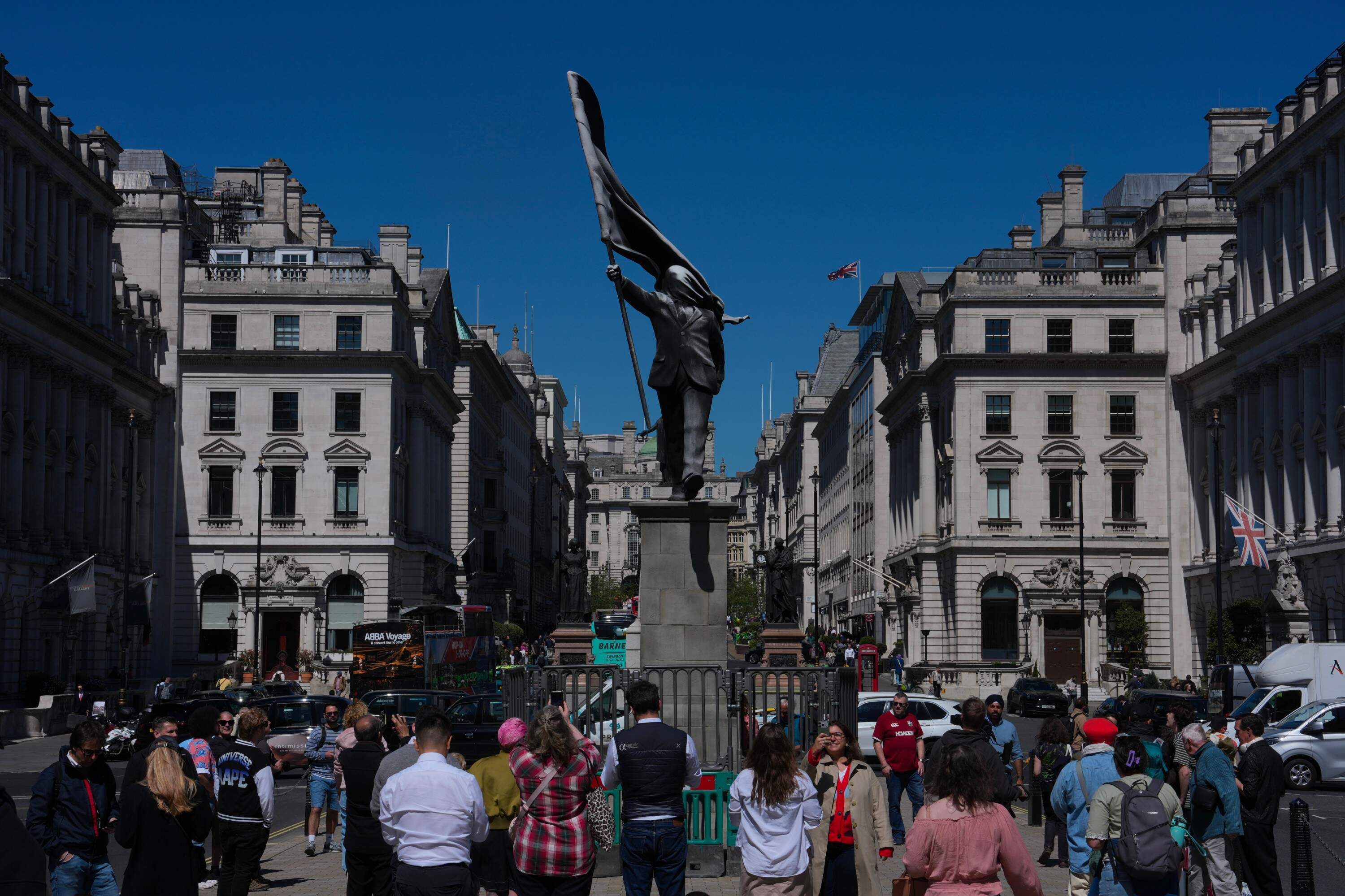
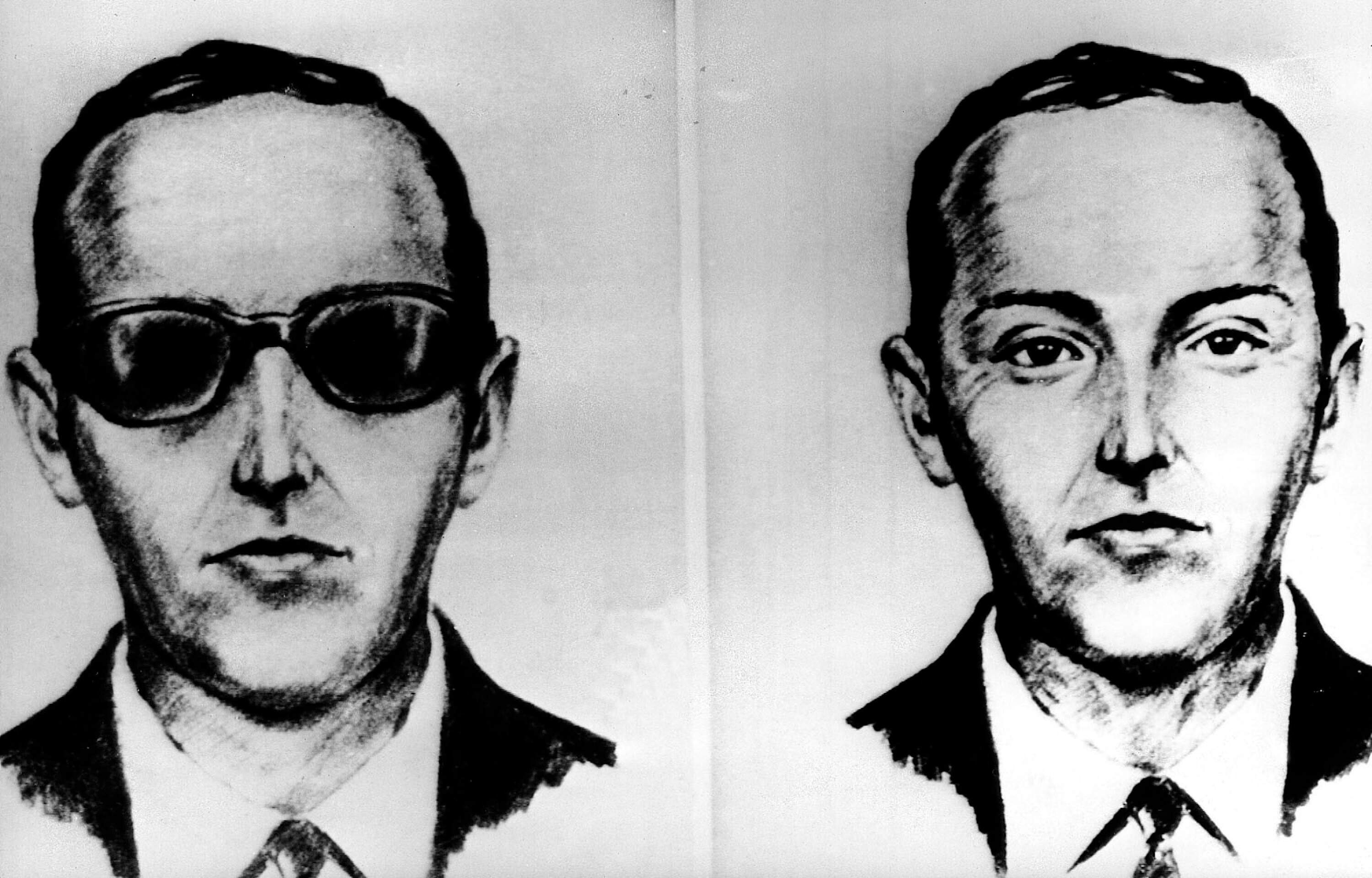
As technology makes it more difficult to conceal one’s identity, the anonymous celebrity — people like D.B. Cooper, Tank Man and the Italian writer Elena Ferrante — has become a dying breed. For those that remain, no matter how famous they become, parts of their identity remain unknown or obscured, and that’s a big part of their allure.
Consider Banksy. Since the 1990s, we have been enraptured by the masked artist who spray-paints provocative imagery on city structures all over the world — from London to New York City, Ukraine and the West Bank. Who is this mysterious artist, who mocked the Venice Biennale with a massive installation of a commercial cruise ship, we wondered? We wondered until last March, that is, when a Reuters investigation outed Banksy once and for all. It turns out, as the Daily Mail first alleged nearly two decades ago, he’s a Bristolian named Robin Gunningham.
The world has been similarly spellbound by the anonymous creator of Bitcoin, who goes by the pseudonym Satoshi Nakamoto. Nakamoto is thought to have mined 1.1 million coins, worth about $76 billion at the time of this writing. This would make him one of the richest people on earth, and rather vulnerable to kidnapping or “wrench attacks.” His anonymity is, at least in part, an act of self-defense.
For nearly 18 years, Nakamoto’s anonymity has been part of his and Bitcoin’s appeal — he’s living proof the currency has no governing body capable of unmasking him, or anyone else who uses the currency. But on April 8, the New York Times published perhaps the most convincing account yet of his identity. The article suggested that Nakamoto is Adam Back, a British cryptographer in his mid-50s, who has denied these claims.
What’s behind our cultural obsession with stories like these? For starters, we are hard-wired to want to “know” people. We all go through life seeking ever more information about the other humans we encounter. When we read a great book, for example, we almost instinctively flip to the back cover to put a face to the author’s name. We read magazines devoted to the lives of celebrities whom we’ve never met. And many of us derive hours of entertainment watching what our favorite social media influencers choose to wear or eat on any given day.
Social psychologists call these acts of trying to know people based on limited information “thin slicing,” and we all do it. Within seconds of meeting new people, or reading about them online, we generate all kinds of predictions about them and how they might behave: who the leader is in a meeting, which child might misbehave on a field trip, who might be the strongest player on a sports team. Of course, we don’t enter these situations "tabulae rasae," or blank slates. We all harbor unconscious biases that skew our judgment. But for the most part, research suggests “thin slice” judgements are fairly accurate.
There’s an evolutionary basis for why this behavior is so ingrained in us: “thin slicing” makes our complex social world comprehensible. Nobody could visit a firearm range, for example, without the confidence in their ability to instantaneously deduce that no one there seeks to cause them harm.
Anonymous celebrities play on this primitive urge of ours. They present us with a puzzle that we’ve evolved to want to solve. Banksy understands this. In his 2005 book, “Wall and Piece,” he wrote, “Nobody ever listened to me until they didn’t know who I was.”
So then why the big letdown when an anonymous celebrity is finally unmasked? Blake Morrison, one of the journalists behind the Reuters investigation that outed Banksy, was recently publicly criticized during a Reddit AMA (AMA stands for “ask me anything”). The thread amassed more than 700 comments, which were nearly all negative. The top comment asks, “Why did you do it? He didn’t want to be known. I get you guys are proud of yourselfs [sic] but you doxxed him essentially and that’s not cool.”
When the mask of anonymity is lifted, we experience a kind of second-order identity crisis. Even though we know a lot more about Banksy now, our social understanding of him has been shattered. To understand why that feels bad, you have to shift your understanding of anonymity, viewing it not as the absence of something, but as a specific kind of privileged identity or role into which we categorize anonymous people. In other words, it’s not just that Banksy gained an identity, he also lost the anonymous identity we were attached to.
Sociologist Georg Simmel made a similar point in a 1950 essay titled “The Stranger.” In it, he argued that strangers occupy a distinct social location in our minds, one that is simultaneously close and distant. This position affords strangers certain privileges. For example, it’s this paradox of being close yet distant that might lead us to confide in a bartender whom we’ve just met. If it turned out the bartender was not a stranger – perhaps we discover that we share a mutual friend – we’d have to do some subconscious work to reclassify or place the bartender in a new social role, and it would probably be one we might not feel like being so vulnerable with.
“Simmelian strangers” like Banksy and Nakamoto are therefore symbolically important. They encourage us to think about an invention or piece of art — say, Banksy’s “Balloon Girl” or Bitcoin — on its merits, without getting bogged down by the foibles, politics or love life of its creator. The publishers of The Economist get this. The magazine is one of a small number of mainstream news outlets that still primarily publishes without bylines. The reason for doing so is a belief that “what is written is more important than who writes it.” In our celebrity-obsessed culture, that’s increasingly rare.
So while technology makes it easier than ever to expose an anonymous celebrity, perhaps we shouldn’t just because we can. “Despite his peripheral status,” Simmel wrote, “the stranger remains an essential part of the community.” Strangers are like an antidote to social media; they keep our attention on the art, or the work, as opposed to its creator. We should protect their anonymity, not for their sake, but for our own.