Support WBUR
Stayin' alive: Survival horror in 'Shadows of Rose' and 'Signalis'

Video games offer all manner of power fantasies. You can be a superhero, a wizard, a literal “God of War.” But “survival horror” games don’t seduce us with such charms; instead, they brutalize, bewilder and terrify. They’ve got jump scares, sure, but the dread really kicks in as the bullets and medicines run out and as the unspeakable monstrosities close in. If you’ve ever wanted to feel like Ellen Ripley in “Alien,” these are the games for you.
“Shadows of Rose” and “Signalis,” both released last week, approach this high-stress formula from different directions. One comes from Japan, the latest installment in the blockbuster “Resident Evil” franchise that codified the genre all the way back in 1996. The other, from a two-person team based in Hamburg, Germany, trades campy adventure for cerebral horror set in an outer-space dystopia.
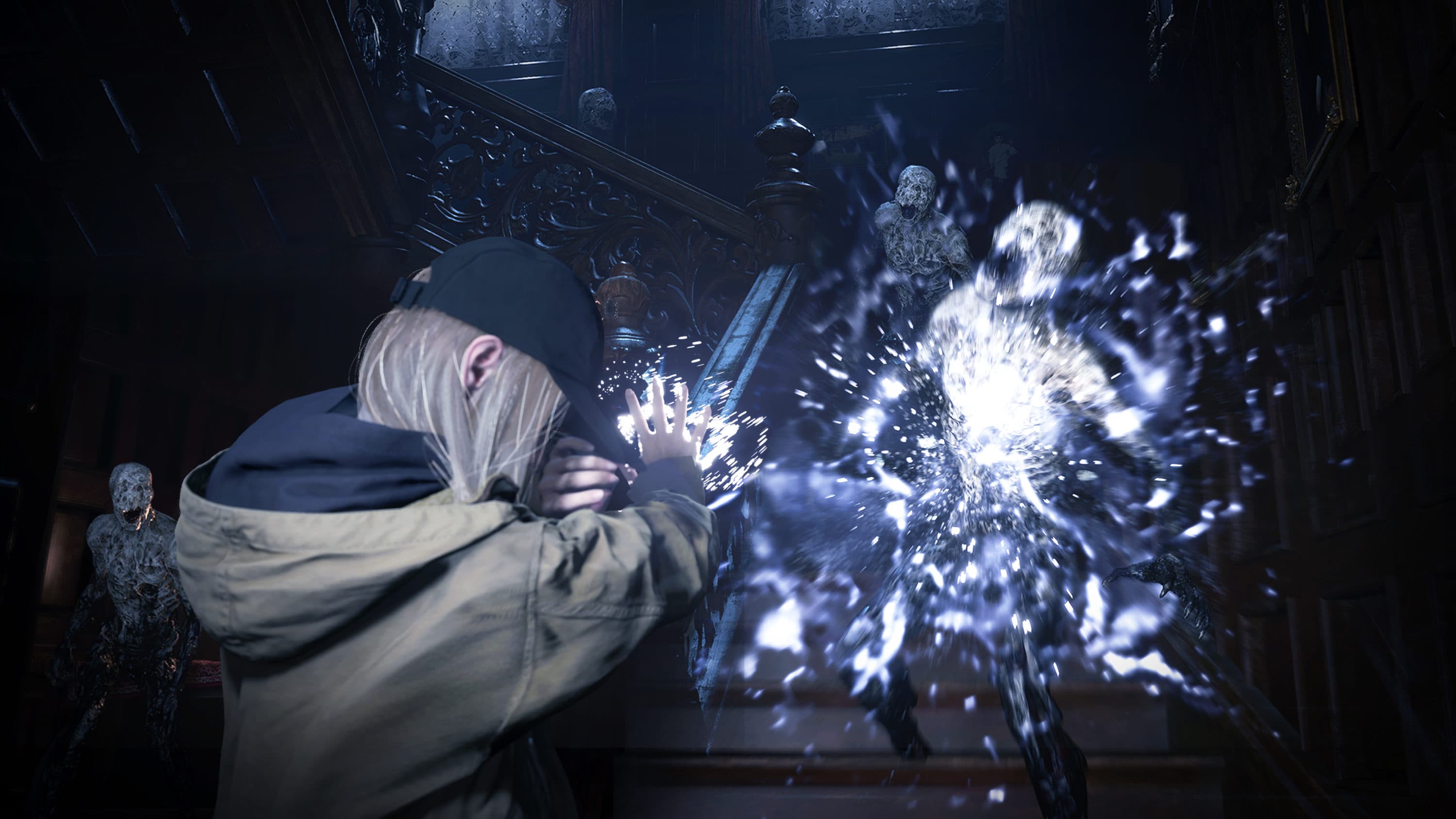
“Shadows of Rose” is the simpler of the two. An expansion to 2021’s excellent “Resident Evil Village,” you play the 16-year-old Rose Winters, who explores reimagined locations from the base game. A mutant whose powers have isolated her since childhood, Rose willingly enters the consciousness of an ultra-powerful mold (long story), after she’s promised that she can find a way to rid herself of her special abilities there.
Her nightmare begins in a rococo castle overtaken by corruption and decay. Once ruled by the iconic Lady Dimitrescu and her vampire daughters, it’s now inhabited by clones of Rose and a mysterious “Masked Duke” who torments and kills them. Bored by these “rabbits,” as he calls them, the Duke turns his sadism on the real Rose, besetting her with the mold-monsters that her fallen duplicates turn into.
That premise really ups the stakes. Instead of nameless zombies, Rose sees versions of herself stabbed, battered, drowned and hanged, all of whom she has to evade or gun down after they rise from the dead. Naturally, the very powers she hopes to abandon come in handy. You can use them to stun enemies and unlock passages, adding new dimensions to “Resident Evil Village”’s solid exploration and encounter design.
Unfortunately, there’s more to the game than Castle Dimitrescu and its puzzles. It also revisits House Beneviento, the scariest part of “Village,” only to fall flat with trite writing and tedious stealth sections. For all of its promise, “Shadows of Rose” ends with predictable boss battles and exhaustive exposition — a troubling sign for a series that tends to swing from self-aware schlock to self-serious bombast.
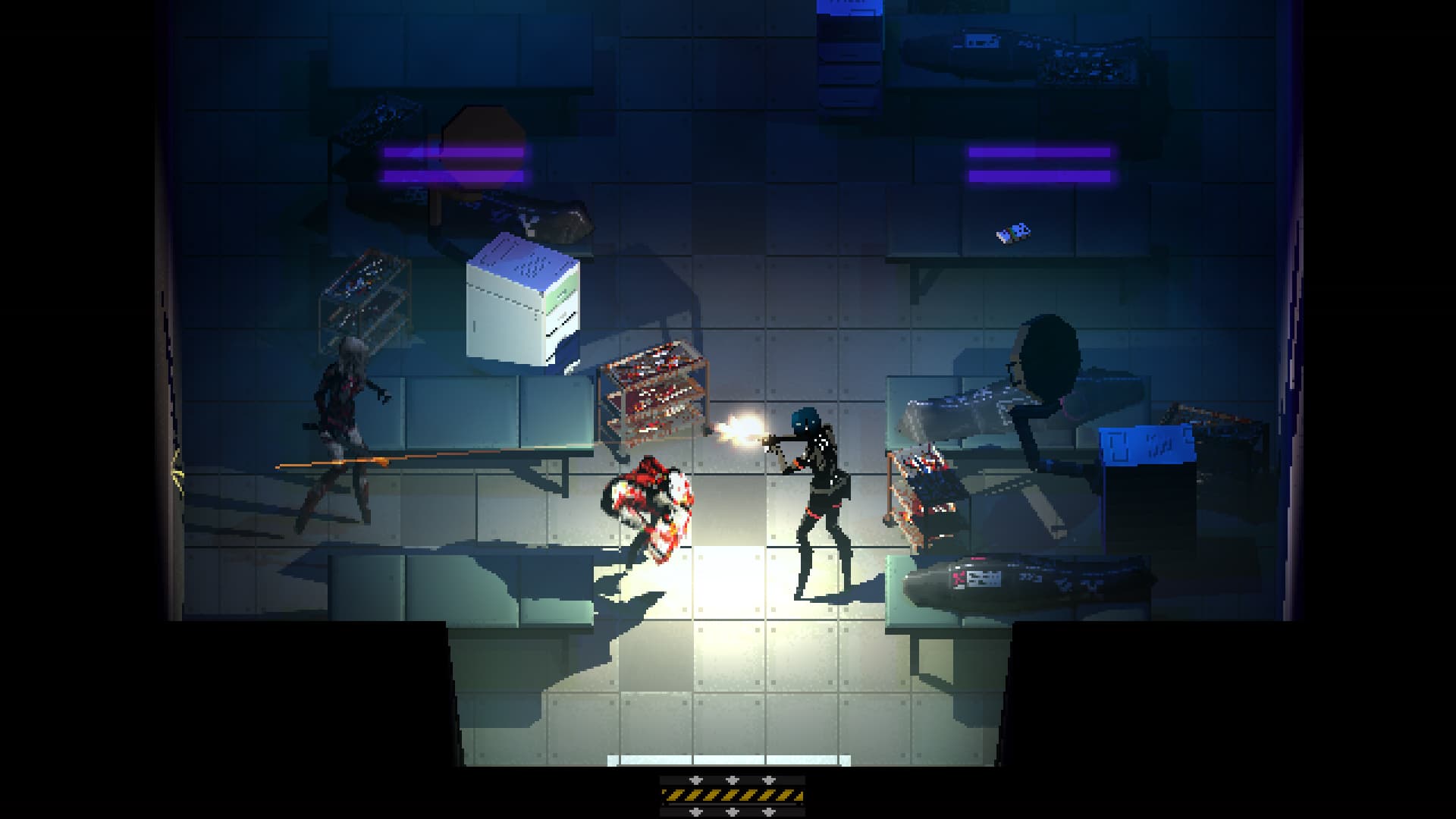
“Signalis,” by contrast, returns to survival horror’s roots. It resembles the chunky polygons and pixels of the Playstation 1 era, and its creators have cited both the classic “Resident Evil” and its surreal cousin, “Silent Hill,” as inspirations. While “Shadows of Rose” shows off its big-budget graphics, “Signalis” uses spartan corridors, dim lighting, and grainy textures to sell its grim setting.
You play Elster, another “final girl” — of a sort. She’s a Replika — a construct with a psyche copied from a flesh-and-blood human. She arrives at a desolate mining station in the periphery of her solar system, searching for someone she made a promise to long ago. But something very wrong has happened here — the regular humans are long dead, and most Replikas have turned into shambling husks who patrol the halls and attack with knives, guns and riot batons should they catch you.
This universe would be horrific enough without such monsters. Throughout the game, you find notes and propaganda posters that slowly flesh out an Orwellian society not dissimilar from the surveillance-state of communist East Germany. The mining colony is something of a gulag for normal humans, and its cramped corridors and unending toil are the only life its Replikas have ever known. An interplanetary war looms off-screen — one that the totalitarian state may well be losing.
Like “Shadows of Rose,” “Signalis” also features horrific facsimiles of its main character. Despite their different personalities, Replikas look nearly identical: the same face with different bodies to suit different jobs. Slender builds for the regular workers. Tall legs for the security enforcers. Huge mech-suits for the heavy engineers. Once transformed, these anime-inspired facades dissolve, revealing harsh metal frames stained blood-red.
It’s not just visually arresting. “Signalis” also requires you to tune to different radio frequencies to solve environmental puzzles. It all adds up to an eerie soundscape: sparse music and droning ambience float over the occasional shriek of an enemy while you scramble to dial into the radio’s crackling fuzz or high-pitched tones.
So while “Shadows of Rose” has its highs and lows, “Signalis” remains evocative and literary throughout. It references some of my favorite short stories — from R. W. Chambers to H.P. Lovecraft — and it's haunted me since I’ve played it. “Resident Evil” may have popularized survival horror, but “Signalis”’ tiny team made something wholly unique — and they did it by digging deep, rather than by going big.