Support WBUR
SAG-AFTRA’s chief negotiator on the AI sticking points in the video game performer strike
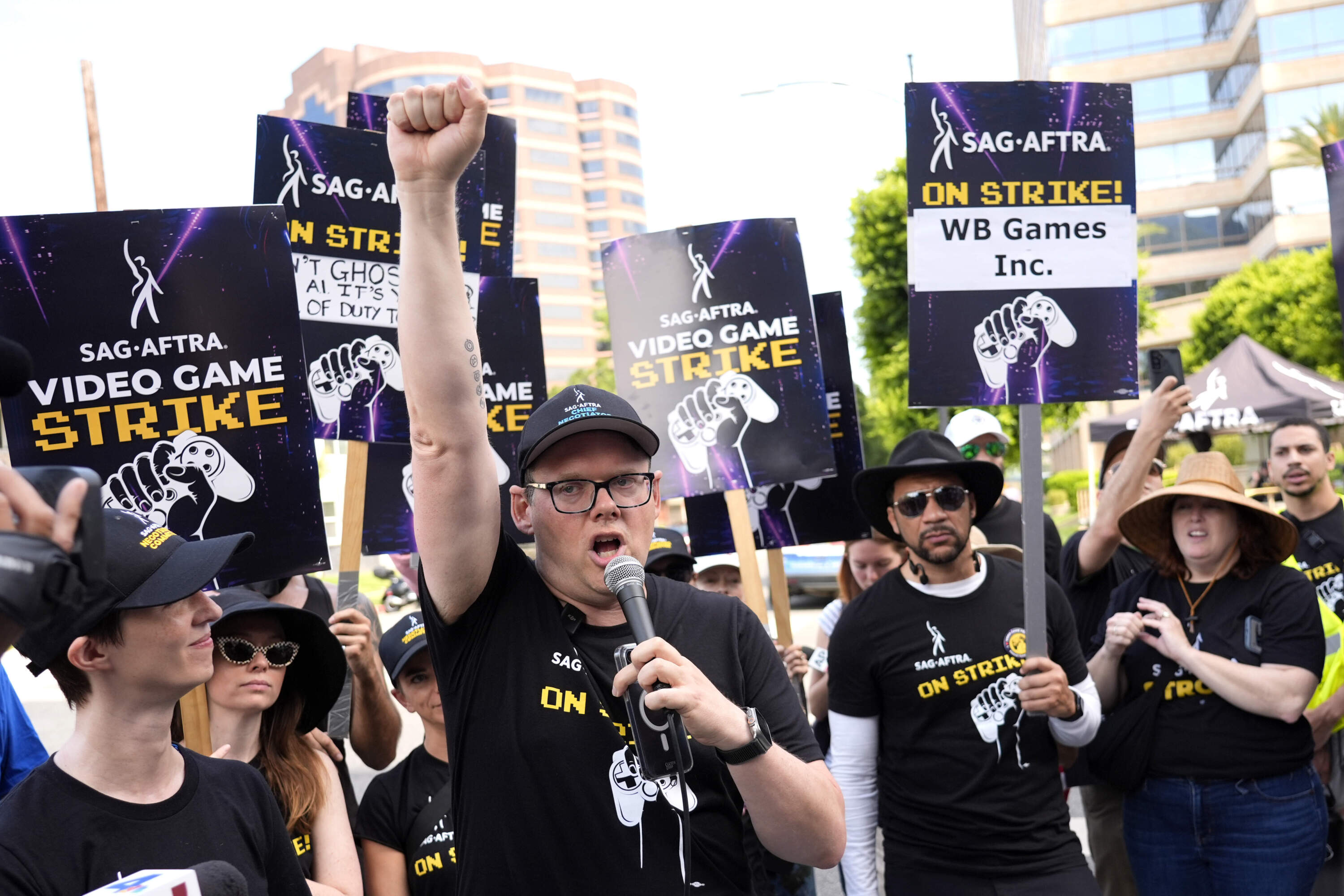
Video game performers are two weeks into their biggest strike since 2016. Like the writer and actor strikes that shuttered Hollywood last year, the labor dispute revolves around artificial intelligence.
“When you go to work, your likeness, your movement, your performance can be alienated from you and used to program a computer that can now perform in your stead,” says SAG-AFTRA chief negotiator Ray Rodriguez. “That jeopardizes the whole rest of your career and the future of your employability.”
AI has even more potential to reshape game production than live-action film and TV. Rather than solely embody a character, game actors collaborate with each other and animators to bring digital avatars to life.
“You could be a voice actor that is just providing the voice for a character where that character is then moving based on the performance of another actor,” explains Rodriguez.
That’s why the union has focused on protections for motion capture artists, arguing that the physical movements they record aren’t simply data for programmers to extract and manipulate. “If it was just data, they could put an animator or a developer in a motion capture suit and have them do it,” says Rodriguez.
“But the fact is, they want professional performers, because when professional performers do it, it is more than just data,” Rodriguez says. "What they're getting out of that is a performance that is part of what sells the game and part of what makes the experience immersive for the fan.”
Audrey Cooling, a spokesperson for the impacted video game companies, told NPR’s Mandalit del Barco that negotiators had nearly closed a deal before the strike: “We have already found common ground on 24 out of 25 proposals, including historic wage increases and additional safety provisions,” Cooling said in a statement. “Our offer is directly responsive to SAG-AFTRA’s concerns and extends meaningful AI protections that include requiring consent and fair compensation.”
Meanwhile, SAG-AFTRA hopes to rally the public. It called the strike just before San Diego Comic-Con kicked off, where unionized actors appealed directly to fans for support. More than 11,000 people have since signed an online petition to “add your voice to the chorus of those who support SAG-AFTRA video game performers.”
“Every video game fan that spoke at our panel at Comic-Con, anyone that has spoken to me separately from that has been entirely supportive,” says Rodriguez. “The fans want the performers to have these protections.”
Rodriguez elaborated that the union is not yet calling for a consumer boycott, “but that is a tactic that we could deploy in the future — our hope is that we don't need it to go there.”
Editor's note: Many NPR and WBUR employees are members of SAG-AFTRA, but are under a different contract and are not on strike.
James Perkins Mastromarino and produced and edited this interview for broadcast with Michael Scotto. Perkins-Mastromarino adapted it for the web.
This segment aired on August 6, 2024.