Support WBUR
Sage advice: Spice up your autumn recipes with this earthy seasonal herb
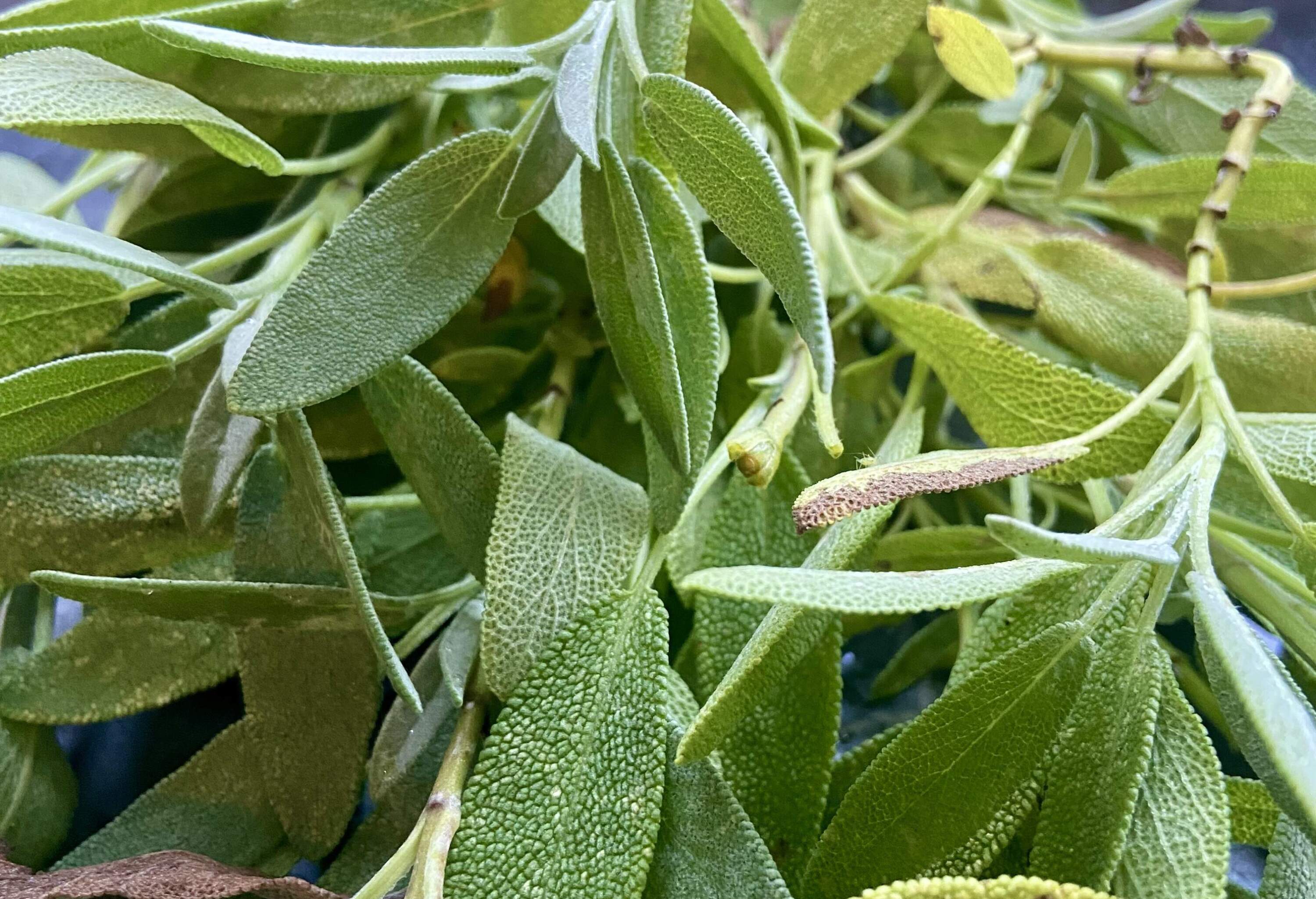
Seasons have distinct aromas. For me, autumn is the smell of fallen leaves mulching on a wet lawn, the curl of wood smoke in the air, and warm sun hitting a half-frozen field. In the garden and in the kitchen, the defining scent of fall is sage. The woodsy, earthy scent has a powerful flavor that works well with everything from cheese and soups to pork, risotto, pasta, stuffings and winter squash.
Sage can be quite strong and is best paired with foods that can hold up to intense flavors. Ideally, sage should be added to soups, stews and sauces towards the beginning of preparation of a dish so it can mellow as it cooks.
A shrubby perennial with woody stems and leaves ranging from purple to gray to a rich dark forest green, sage is a member of the mint family. The botanical name for sage is salvia, which means 'healing.' Sage is rich in vitamin A, iron, calcium, magnesium and vitamin C. It has many medicinal uses from reducing perspiration to eliminating headaches. The leaves can be made into tea to calm nerves and soothe sore throats.
These three recipes show off the power and beautiful flavor of this fall herb. Look for it at farmers markets or good supermarkets where the leaf is still attached to the stem. If the herb was grown organically, you don’t need to wash or dry it, but if you’re not sure or it seems muddy or coated with dirt, lightly rinse under cold water and dry thoroughly before using. Sage can be dried and kept for months but when used fresh it can truly change and improve the flavor of so many dishes.
The first dish is an appetizer or an accompaniment to an aperitif. Whole sage leaves are coated in a simple batter and shallow fried until crispy. They are delicious sprinkled with coarse sea salt and served with Prosecco, dry white wine or your favorite drink. They also add crunch and flavor as a topping to soups, stews and pasta dishes. The next dish is a riff on a classic: sauteed pork chops with chopped and whole sage leaves with figs and dates. And the final recipe is also a riff on a classic: many Italians stuff pasta like ravioli and tortellini with pureed squash or pumpkin and serve it with a simple sauce of brown butter and sage leaves. Here I deconstruct the dish using cavatappi — or you can use any one of your favorite pasta shapes — with whole sage leaves, roasted winter squash and Parmesan cheese.
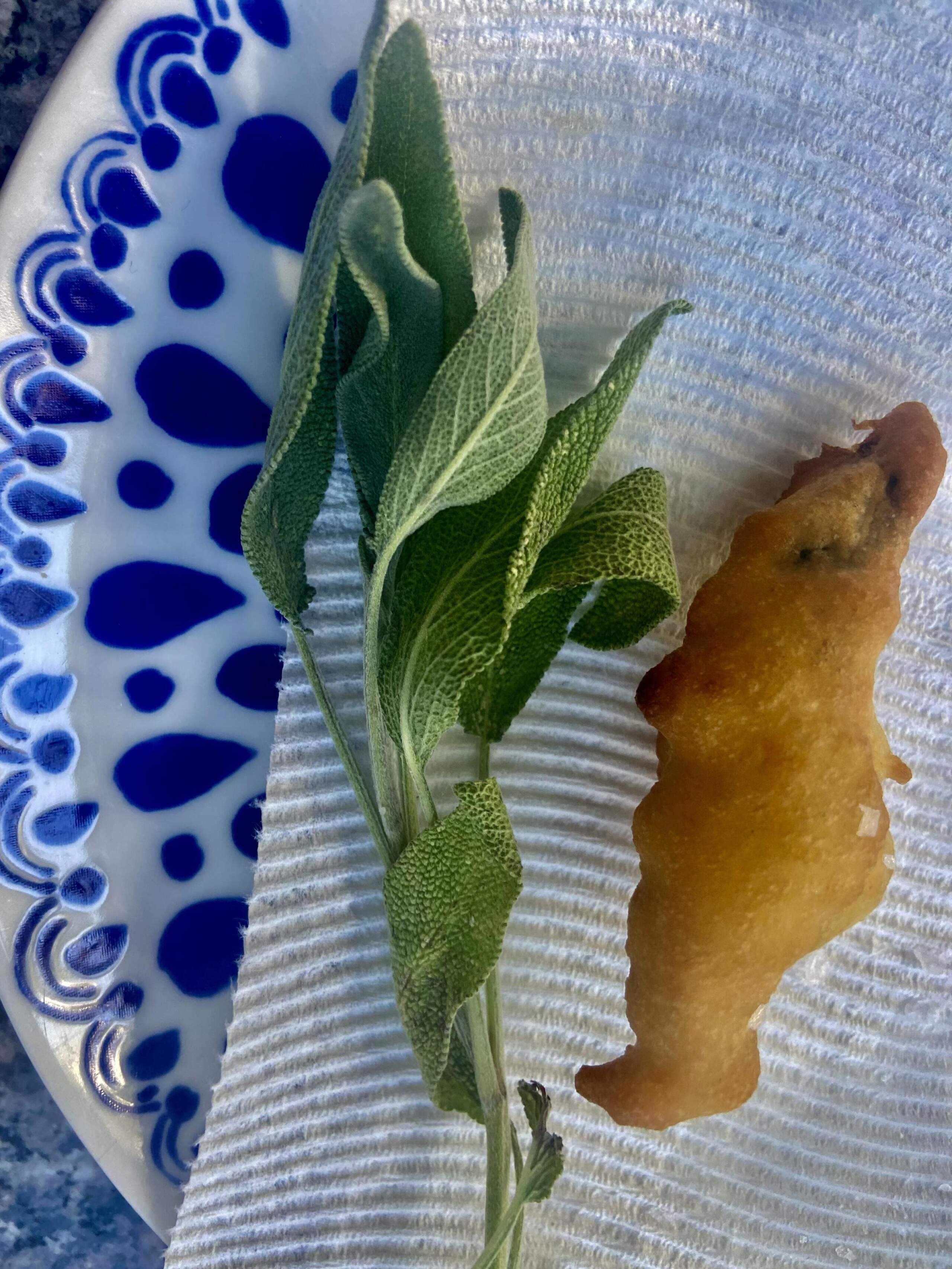
Fried sage leaves
Whole sage leaves are dipped into a simple batter of flour, salt, seltzer water and egg, and lightly fried in vegetable oil. The recipe for this Italian stuzzichino, or snack, comes from my friend Italian food writer, Domenica Marchetti. The sage leaves are excellent with a glass of white or red wine or can be used to top salads and soups. They take just minutes to make and are an unusual treat. Think of an herbal little bite of savory pancake.
Try to find very fresh sage leaves with the stem still attached. And plan on serving them as soon as they come out of the skillet. As with any fried food, they taste best minutes after cooking. The recipe can easily be doubled.
Makes about 20 sage leaves. Serves 4 to 6.
Ingredients
- ½ cup unbleached all-purpose flour
- ¼ teaspoon fine sea salt
- ½ cup sparkling water (seltzer)
- 1 small or ½ large egg, lightly beaten
- Sunflower or vegetable oil for frying
- About 20 large, unblemished sage leaves with stems still attached, see note about cleaning sage above
Instructions
- Make the batter: In a medium bowl whisk together the flour and salt. Add the seltzer and whisk until smooth. Add the egg and whisk until smooth.
- Add oil to a medium or large frying pan until it’s ½-inch deep and heat over medium-high heat. The oil is hot enough when a tiny bit of the batter sizzles up immediately.
- To fry the sage leaves: Hold the leaf by its stem and dip into the batter on both sides. Gently place in the hot oil and repeat, working in batches, being sure not to overcrowd. Fry until a light golden color, about 1 to 2 minutes, and, using tongs or a slotted spoon, turn the leaf over and cook for another minute or two until golden. Remove from the skillet and place on a sheet of paper towel or a clean brown bag to drain. Lightly sprinkle with sea salt and serve hot. Continue with the remaining sage and batter.
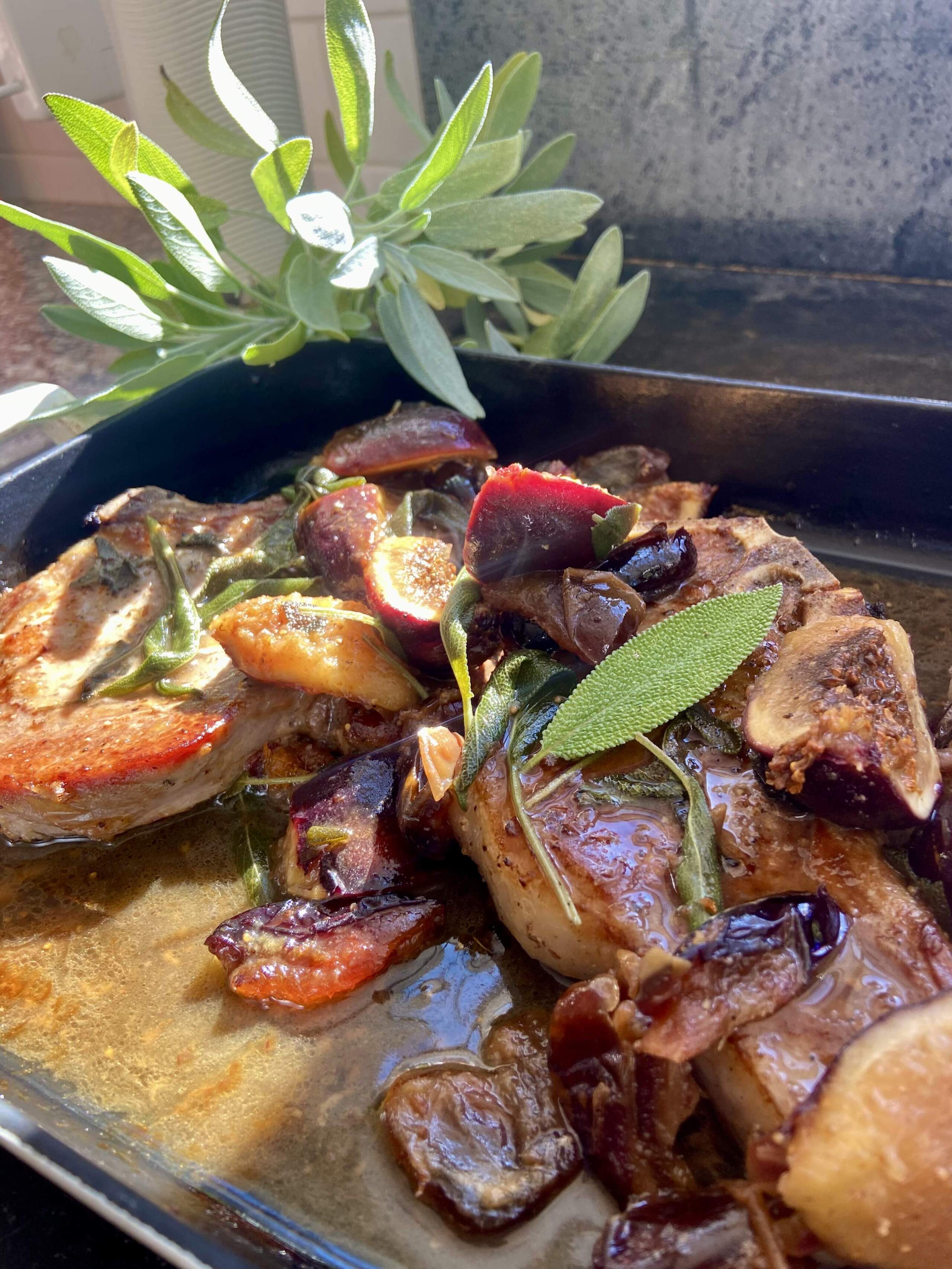
Sauteed pork chops with sage leaves, dates and figs
This dish screams autumn and comfort and home. Bone in pork chops are sautéed with fresh chopped sage leaves and finished off in the oven. The skillet is cleaned out and then you brown butter with figs (fresh or dried), dried dates, whole sage leaves, and white wine. The sauce is reduced on the stovetop and then poured over the chops. Serve with sweet potatoes or couscous and a salad.
Serves 2 to 3.
Ingredients
- 1 tablespoon olive oil
- 4 bone-in pork chops, about ¾ to 1 inch thick, about 2 ½ pounds
- Salt and pepper to taste
- 2 tablespoons chopped fresh sage
- 2 ½ tablespoons butter
- 4 large fresh figs, stemmed and quartered or 4 dried figs, quartered
- 8 dried dates, pitted and cut in half
- 8 to 10 whole sage leaves
- ¾ cup dry white wine
Instructions
- Preheat the oven to 350 degrees.
- In a large skillet, heat the oil over medium-high heat. Season the pork chops with salt, pepper and the chopped sage on both sides. Brown in a hot skillet for 5 minutes. Gently flip over and brown for another five minutes. Remove from heat. Place the pork chops in an ovenproof skillet or shallow casserole or gratin dish. Bake for about 10 to 15 minutes, or until the pork registers 140 degrees on an instant-read thermometer.
- Meanwhile clean out most but not all of the fat in the skillet. Over medium-high heat, add the butter to the skillet and cook until sizzling, about 2 to 3 minutes. Add the figs and dates, whole sage leaves, salt and pepper and cook for 1 minute. Raise heat to high and add the wine; simmer for about 4 to 5 minutes until the wine is somewhat reduced. Taste for seasoning.
- Pour the fig/date brown butter over the pork and serve.
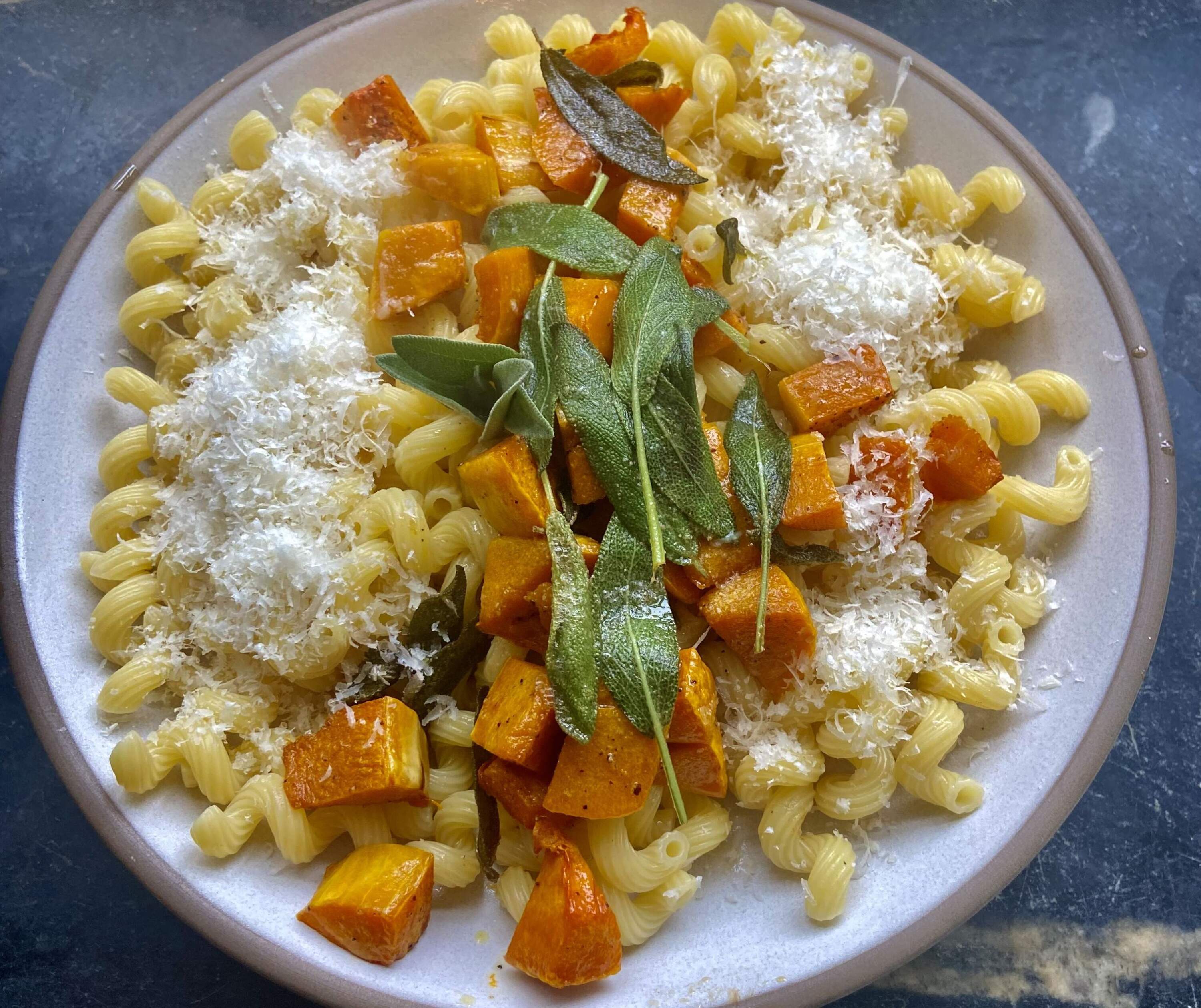
Cavatappi with roasted squash and sage
Pumpkin and winter squash ravioli and other stuffed pasta shapes are very popular this time of year. Adorned with a sage leaf, they seem to be the very definition of autumnal pasta. But what if you deconstructed a ravioli and instead of stuffing it, you roasted winter squash cubes with butter and sage leaves and tossed it with cavatappi or another favorite pasta shape, brown sage butter and grated Parmesan. This dish was a big hit at my dinner table recently and something I plan on making again very soon.
Serves 2 to 4.
Ingredients
- One 1-pound winter squash, like butternut or honeycup, peeled, deseeded, and cut into ½ inch size cubes, about 2 cups
- 1 tablespoon olive oil
- 2 ½ to 3 tablespoons butter, depending on how rich you like it
- 14 whole sage leaves
- Salt and pepper to taste
- ½ pound cavatappi or other shaped pasta
- About ⅓ to ½ cup grated Parmesan cheese
Instructions
- Preheat the oven to 425 degrees. In a medium roasting pan or oven-proof skillet, toss the squash cubes, oil, 1 tablespoon of the butter and half the sage leaves. Place on the middle shelf and roast for about 15 to 18 minutes, or until the squash is golden and tender when tested with a small, sharp knife.
- Meanwhile, bring a large pot of salted water to boil over high heat. Add the pasta and cook until al dente, following the directions on the package.
- In a small skillet, heat the remaining 1 ½ or 2 tablespoons of butter over medium heat. Let it sizzle and once it begins to turn a rich golden brown, about 4 minutes, swirl the pan from side to side. Add the remaining sage and cook for 1 minute; remove from heat.
- Drain the pasta and place in a serving bowl or plate. Add the roasted squash and sage and any juices from the roasting pan. Top with the browned sage butter and gently toss. Sprinkle on half the Parmesan cheese and serve the rest on the side of the pasta.
This segment aired on October 22, 2024.