Support WBUR
How to curb the rise of aggressive driving, road rage
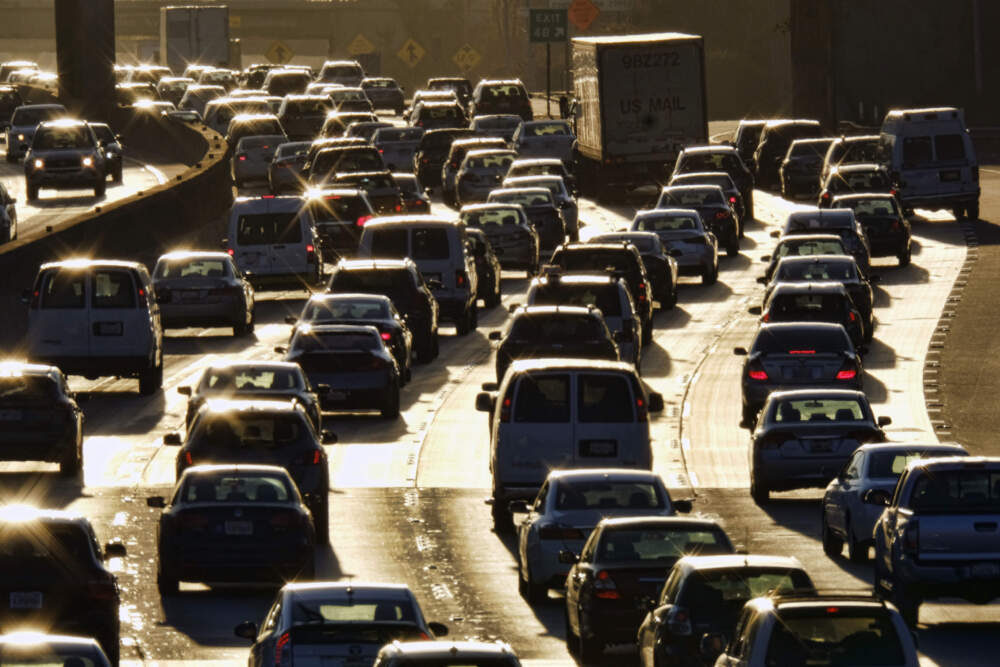
The majority of drivers across the country feel that driving has become more dangerous than before the pandemic began.
According to a new survey by Pew Research Center, 63% of adults say that speeding and aggressive driving — tailgating, speeding, weaving through traffic and running red lights — are major problems where they live. About a quarter of drivers say they frequently see road rage.
Dean DeSoto, CEO of the Community Alliance for Traffic Safety in San Antonio, Texas, has been teaching a class about aggressive driving for 26 years. DeSoto agrees aggressive driving has increased since the pandemic.
“Overall I've noticed that society is just more anxious, more stressed, more angry, more frustrated,” he says. “Those seem to be causal factors.”
Colten Bonk took classes with DeSoto after getting charged with driving while intoxicated. Bonk is an alcoholic in recovery who’s been sober since July 2021.
Working a 12-step program helped Bonk with his alcoholism and anger, he says.
“I have friends who don't even want to go in the interstate in San Antonio because [road rage] is so high right now,” Bonk says. “In my experience, there's been people just not being accountable, thinking only of themselves and not even taking into consideration what other people have going on and what's going on in their day.”
7 questions with Dean DeSoto and Colten Bonk
People come to your class because they've been ordered to by a judge after getting a ticket and being stopped while driving. What do you do in your class?
Dean DeSoto: “Well I'm a big believer if you treat people as they should be and could be, they become what they should and could be. So it's more of like a therapeutic group than a classroom situation. We're actually examining, looking at anger, frustration, anxiety, and how that works. So, we've been doing that, plus we're doing some research now with the University of Texas San Antonio. The key point is getting people in touch with their emotions so they can focus amongst each other and come to a common theme and common reason why they're here.”
And what are some of those common reasons?
DeSoto: “High rate of speed is one. We know this from anonymous comments we picked up. One said, he disclosed he was really doing 160 in a 65 miles per hour zone. So, speed is definitely a big part of the aggressive driving.
“Another is assaultive behavior, family violence. There's a domestic violence-centered relationship here. Whatever goes on in the community is going on in the roadways, which is very sound and very true, and still is true today. They might be talking about a fight with their partner in the car.
“Other things they might discuss is just like to go fast. Or others, they've been using alcohol, methamphetamine, or fentanyl, which is approximately equal here in San Antonio. And again, we don't judge them. We let them put it out there. We give them empathy, but not sympathy. Empathy is a key factor here. So they begin to see their own accountability. One of the group exercises, they actually go over what happened in the transaction. So we want them to discuss that both in written format and also in verbal format. Our credo is a community-wide challenge is approached by a community together.”
What kind of reaction do people in the class have to your story?
Colten Bonk: “I certainly think it's a good reaction. Many of the times I've spoken to Dean's classes we've had people move to tears. Usually, people perceive it well and they see somebody who was in that position and who now kind of has a different viewpoint.
“The 12 steps, spirituality and working a program really helped me get sober, but it also helped me take accountability and how you play a part in everything you do. Every time you get behind the wheel of a car, there's power behind that. It can really hurt people. People can get hurt and, or worse. And people need to be accountable every time that they decide to drive somewhere. The world doesn't revolve around them. They're just a part of it.”
How do you work with people who feel justified for speeding?
DeSoto: “Accountability. That's our biggest objective. It's not a judgment of the behavior. People have done all these behaviors. I've myself done these behaviors. Colten's done these behaviors. But once you take responsibility for it, the behavior pattern seems to be reduced. Colten made a huge transformation and he's been good to come out and give his time to us to discuss what he's doing now compared to what he used to do.”
What was most helpful to you to get you to recognize your anger and take responsibility?
Bonk: “It's similar to what Dean's talking about and what you just asked. If you're speeding and you're validating your point in your own head, like that doesn't matter at all to the situation. It doesn't make it okay that you went 100 miles an hour. So to that ruthless accountability. That is what really got me thinking about, what is the point of getting upset over things? There's no point in being aggressive.”
Do you have some advice for drivers out there?
DeSoto: “Well, one thing, understanding we have to drive with compassion and forgiveness and also empathy is a very important part of the equation. But the other thing is, we're getting calls from all over the United States, United Kingdom, Canada, somebody else called me from Australia. But I will say this, it seems like the problem is universal from everybody here.
“Our biggest problem is getting people to take accountability. So you're accountable for what happens. Flip side of this is, just like the days of drunk driving, the early days back in the 1980s. I remember victims were a big part of this. So we are getting calls from victims now. I just got a call just before the interview from a lady here in San Antonio whose son was killed by another aggressive driver eight years ago and every, about every two weeks she goes out to the site and holds up poster boards to tell them, ‘My son was killed here. Please don't drive aggressively.’
“So we're starting a national movement. This is an important issue. People are getting killed. They're getting injured. They're getting hurt. We need to take responsibility. It's more than just passing laws. It's changing attitudes.”
What advice do you have for people experiencing road rage?
Bonk: “On the cognitive side, you talk about like stop, start, right? Like calm down, breathing exercises, all that stuff. On the spiritual side, what I would do is I would just pause, you know, pause when agitated. That's [what] my sponsor always told me when I was getting sober, ‘Pause when agitated, man. If you need to pull over, take a deep breath, consider what's going on, you know, or call someone.’
“When I was [in] early sobriety and I was still wrapped around the axle, I didn't know how to be sober yet. I would call someone, you know, when I was really in my own brain and my own head when all else fails. And that's what I would say to people who are having those moments when they're aggressive or they're feeling angry when they're driving, just reach out to someone, talk to someone. You're not alone. You don't have to be. The longer you sit in between your two ears and your brain, the worse it’s going to get.”
Julia Corcoran produced and edited this interview for broadcast with Michael Scotto. Allison Hagan adapted it for the web.
This segment aired on November 19, 2024.