Support WBUR
2024's best board games that won't get you mad enough to flip the table

Board games tickled, trounced and astounded me in 2024. This year, I’ve steered space empires, strutted in streetwear from Tokyo to Paris and scrambled to suck carbon out of a rapidly warming atmosphere. In an era of high-tech entertainment, I’m awestruck by the range of experiences you can still squeeze out of cardboard and dice. From brief to epic, cooperative to competitive, here are five of my 2024 favorites.
‘Couture’
“Couture” puts you into the stiletto heels of models competing on runways in New York, Paris and Tokyo. But don’t let the wispy fashion illustrations fool you — “Couture” is a razor-sharp numbers game. You’ll start with four cards with values ranging from 1 to 3, which you’ll use to bid on cards across the game’s three venues.
Deceptively deep, “Couture” is essentially a drafting game like “7 Wonders” or “Sushi Go” where, instead of building a tableau or a deck, you’re collecting card suits and perfecting your hand. Priorities also subtly shift based on player count. At three players, you may avoid winning a venue because doing so may land you a dreaded Flop card for negative points. At six players — the game’s maximum — you’ll have to read opponents to see which venue may be least popular and thus most achievable. Quick to teach and play, “Couture” packs more tactics in its tulle skirts than most games twice its size.
‘Wilmot’s Warehouse’
I didn’t expect a stack of squiggly cards and a nearly blank board to feel like a raucous magic trick, but “Wilmot’s Warehouse” is full of surprises. In this cooperative game, you’ll draw abstract images from a bag, debate on what they look like, and then place them face down on a 7x7 grid. Repeat roughly three dozen times before the “rush” starts, when you’ll scramble to match each tile with its counterpart card in as few seconds as possible.
That might sound simple, but it’s rarely straightforward. “Wilmot’s Warehouse” demands creative leaps and mind-melding mnemonics. A card might look like an eye — you collectively decide it represents a Cyclops. Another might look like teeth — maybe the Cyclops went to the dentist? Over time you’ll weave an absurd story out of such associations — a silly mind palace that you and your friends will share forever.
‘Daybreak’
Never have gray cubes filled me with such dread. Each “Daybreak” player has to work together to stave off climate catastrophe, taking on the roles of different regions — from Europe to China to “Majority World,” which designer Matt Leacock describes as, “folks that have contributed the least to emissions and are going to feel the worst effects of it.”
Each round, you’ll scheme with cards representing real climate policies (i.e. Green Quantitative Easing) and technologies (i.e. Geothermal Plants) to capture carbon cubes and prevent a giant thermometer from filling up. I have to caution that the game’s rulebook doesn’t adequately explain its tricky card play. But once it clicks, “Daybreak” cascades with tense decisions and satisfying synergies.
‘River of Gold’
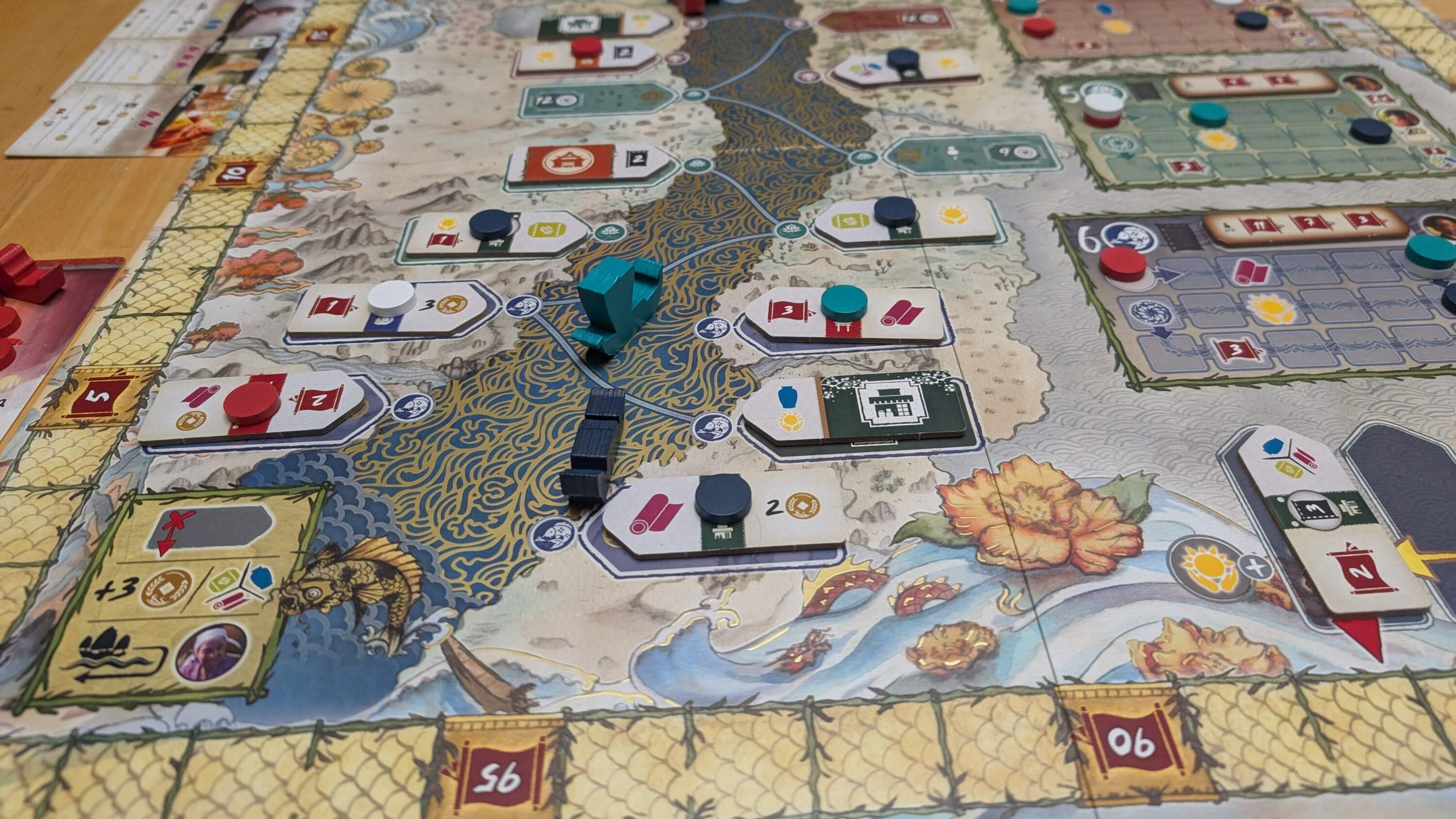
Set in a fantasy land inspired by feudal Japan, “River of Gold” is a pristine pleasure cruise of a game. You’ll float down the board, building trading outposts and delivering goods to needy customers ranging from monks to artisans to nobles. But if you stop at a property owned by an opponent, don’t fret: Both players will reap resources. It’s a kinder, gentler “Monopoly.”
That’s not to say that “River of Gold” is old-fashioned, however. It’s got just the right amount of randomness to constrain your actions without dictating them. Gold-leafed and lovely, my only gripe is that the box doesn’t offer sensible storage solutions for its many components.
‘Arcs: Conflict & Collapse in the Reach’
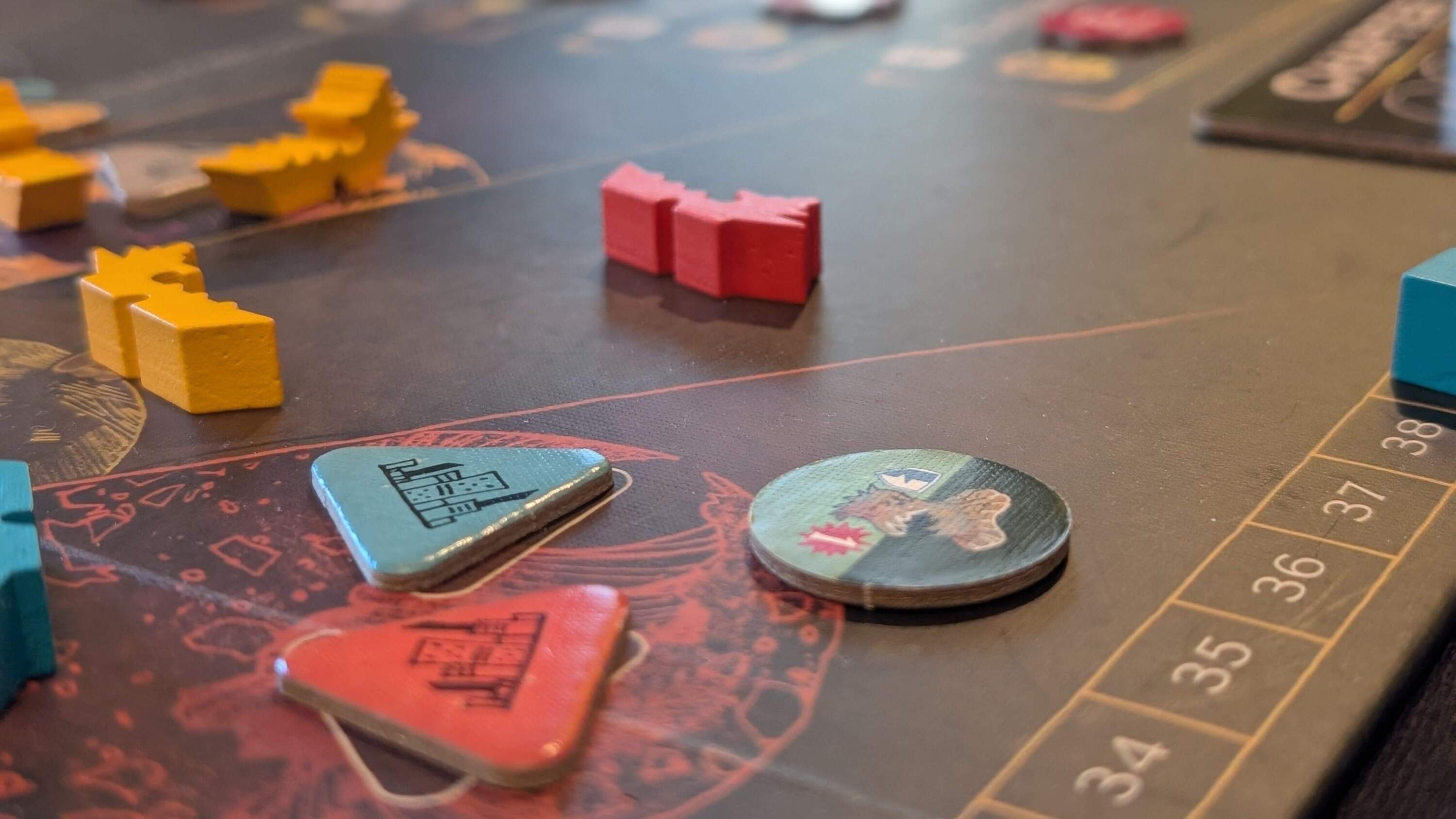
My favorite board game of the year, “Arcs” is also the most sprawling and ambitious on this list. It’s got an elegant core — “Dune” by way of trick-taking games like “Bridge.” You’ll wage war, tax resources and manipulate space courtiers by playing one of four suits of cards each turn. By itself, this system rewards adaptability and foresight — but “Arcs” expansion “The Blighted Reach” mutates the game into something endlessly fascinating and utterly bizarre.
Played over three interconnected games, “The Blighted Reach” has each player take on different roles with unique objectives. I started one campaign as the Caretaker, tasked with unearthing golems strewn through the galaxy. After two sessions shepherding these robots and battling the fungal Blight, I switched fates to the Naturalist. Suddenly my only path to victory lay in protecting the fungus, even as it periodically attacked me. Wedged between two mighty opponents, I sent a small fleet to capture another Blighted planet in the final turn of the game.
Against all odds, the gambit worked. I sprung from my chair, shouting, “Ecoterrorists for the Win!” and ran a lap around my living room. It wasn’t particularly sporting behavior, but I couldn’t contain myself. True to its name, the game delivered an incredible narrative arc, one enabled by kaleidoscopic mechanics and an evocative spacefaring theme.
Not every “Arcs” campaign will explode with such potential. My wife and brother-in-law bristled at the game’s restrictive cards and punishing combat. But with 24 unique Fates, I still haven’t exhausted “The Blighted Reach.” If I could fit its huge box in my luggage to inflict it upon my California family this Christmas, I absolutely would.