Support WBUR
'Magic: the Gathering' returns to a fan-favorite, contested setting in 'Tarkir: Dragonstorm'
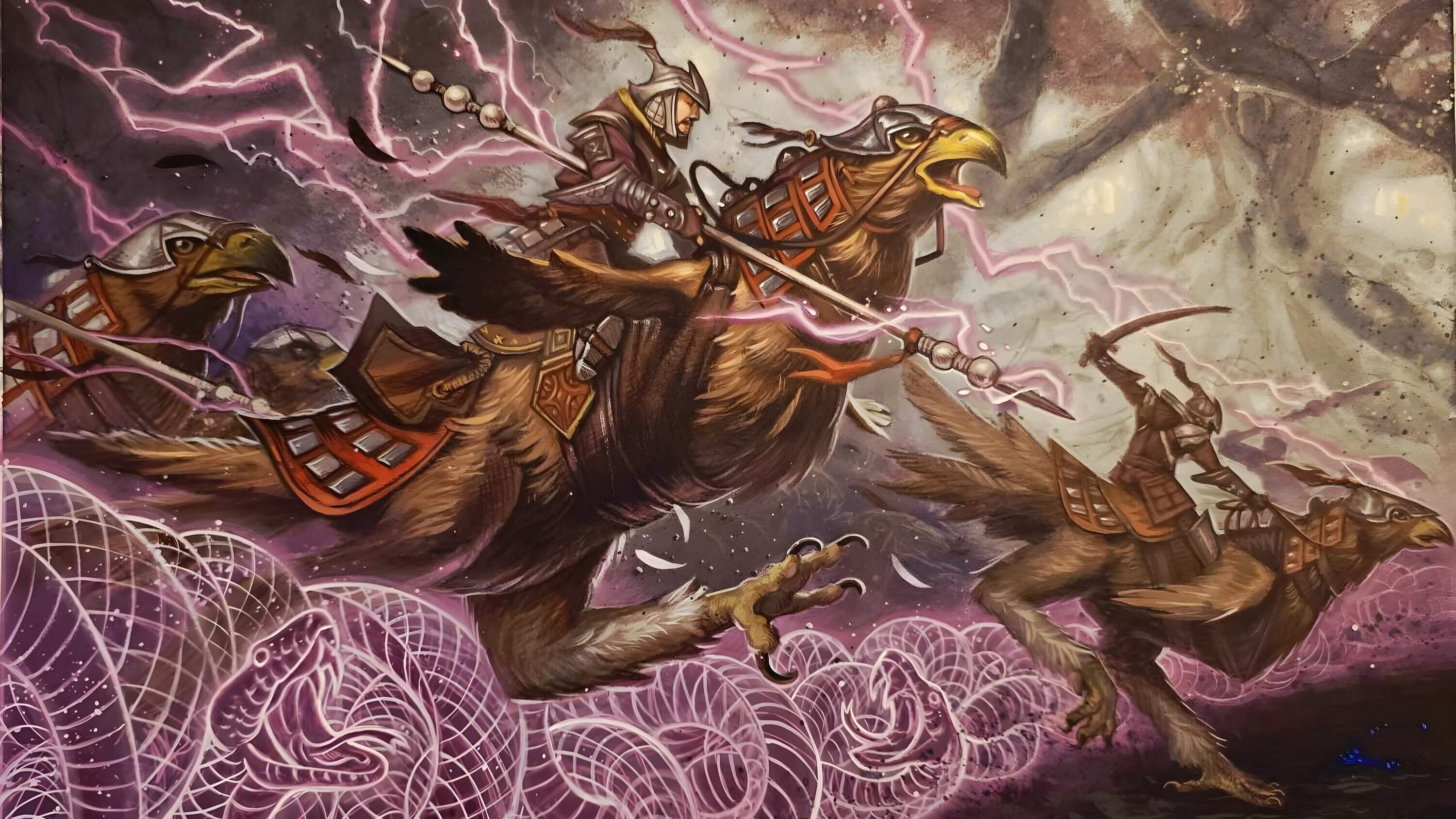
Dragons tear through the sky while warring factions struggle to oppose them. Tarkir has never been a particularly peaceful place, but it’s gotten a whole lot more contested in “Magic: The Gathering”’s most recent expansion, a long-awaited sequel to a celebrated 2014 set that’s drawn allegations of dealing in Orientalist tropes.
Out Friday, “Tarkir: Dragonstorm” addresses those criticisms while largely succeeding at updating the formula that made the original “Khans of Tarkir” such a fan-favorite. It’s not quite as fresh, but it’s still a welcome return to an original setting as Magic careens towards crossovers ranging from “Final Fantasy” to “Avatar: The Last Airbender.”
Learn from the Past
The first Tarkir block arose out of converging trends inside the world’s most popular trading card game. Its designers, who came to game maker Wizards of the Coast through a vaunted talent search, were tasked with creating a three-act arc that hinged on its middle set. The team settled on a time-travel story.
In the first product, 2014’s “Khans of Tarkir,” protagonist Sarkhan Vol returned to his titular home plane, a battleground for five competing clans who modelled their philosophies on aspects of the ancient dragons their ancestors had exterminated. The Mongolian-inspired Mardu, for example, trumpeted “the speed of the Dragon” and emblazoned their banners with an abstracted wing symbol. The vaguely Khmer Sultai, conversely, emulated the “cunning of the Dragon” and used a fang as their icon. Each clan bore a unique visual identity that extended to their mechanics.
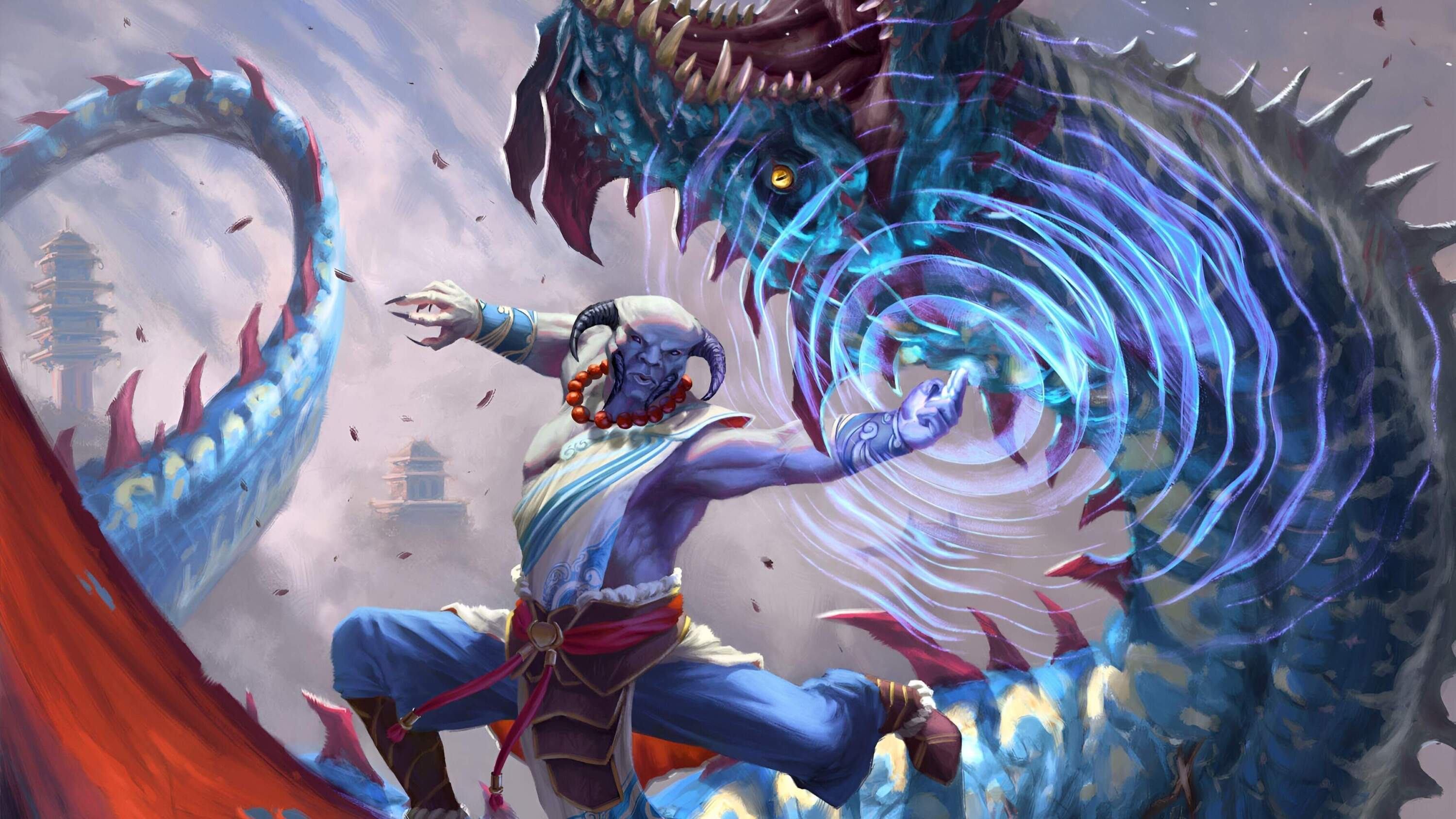
That’s because Wizards also revisited three-color cards, an ambitious concept it introduced in 1994’s “Legends,” explored in 2000’s “Invasion” block, and refined in 2008’s “Shards of Alara.” Magic decks usually constrict themselves to two out of the five available colors. Put simply, each additional color makes deck construction much more complex, particularly in draft. But “Khans of Tarkir” was expertly tuned to make these clans playable and indelibly rechristened their color combinations. Red-white-blue decks, sometimes awkwardly called “America” decks, for example, would forever be known as “Jeskai” after ”Khans of Tarkir”.
By 2015, the ground started to shift: Tarkir was no longer wholly defined by three-color clans but rather by revived two-color dragons. In the pivotal middle expansion, “Fate Reforged,” Sarkhan travelled to the bygone past to save a legendary Spirit Dragon — an act that rippled throughout Magic’s entire multiverse. For Tarkir, the change empowered broods of dragons to overwhelm the nascent three-color clans. In the next set, “Dragons of Tarkir,” characters that reigned over their factions in the first, alternate timeline transformed into conniving viziers, downtrodden warriors or rebellious martyrs — all under the yoke of dragon rule.
Rally the Ancestors
The “Khans of Tarkir” block hit my life when I was most engaged with the game. It was my senior year of college. I had rebounded from a spiraling depression, thanks in part to a lifelong friend I met at a local Magic store. Together, we spent most weekends drafting the Tarkir sets, and I even won a local “Game Day” Standard tournament with a deck I’d cobbled together from inexpensive cards. For years, I hosted flashback “Khans” drafts, and I even joined a homebrewed “Dungeons and Dragons” campaign set on Tarkir.
So I've been elated to see Wizards return to the war-torn setting after more than a decade. Resurgent clans have overthrown their old draconic oppressors, but now face new broods of wild dragons. “Tarkir: Dragonstorm” thus tries to unite fan-favorite three-color gameplay with crowd-pleasing, powerful dragons, which now serve as both allies and antagonists.
After complaints that the original setting conflated real-world cultures, the set’s new designers based this Asian-inspired fantasy on more direct roots. The Mardu look as Mongolian as ever, but the Sultai, a clan of deep-jungle necromancers that lived in opulent palaces resembling Angkor Wat, got a makeover. Their zombies aren’t mindless, shackled slaves anymore; now they’re honored dead (incidentally, the mummies of Magic’s “Amonkhet” plane recently received the same rehabilitation).
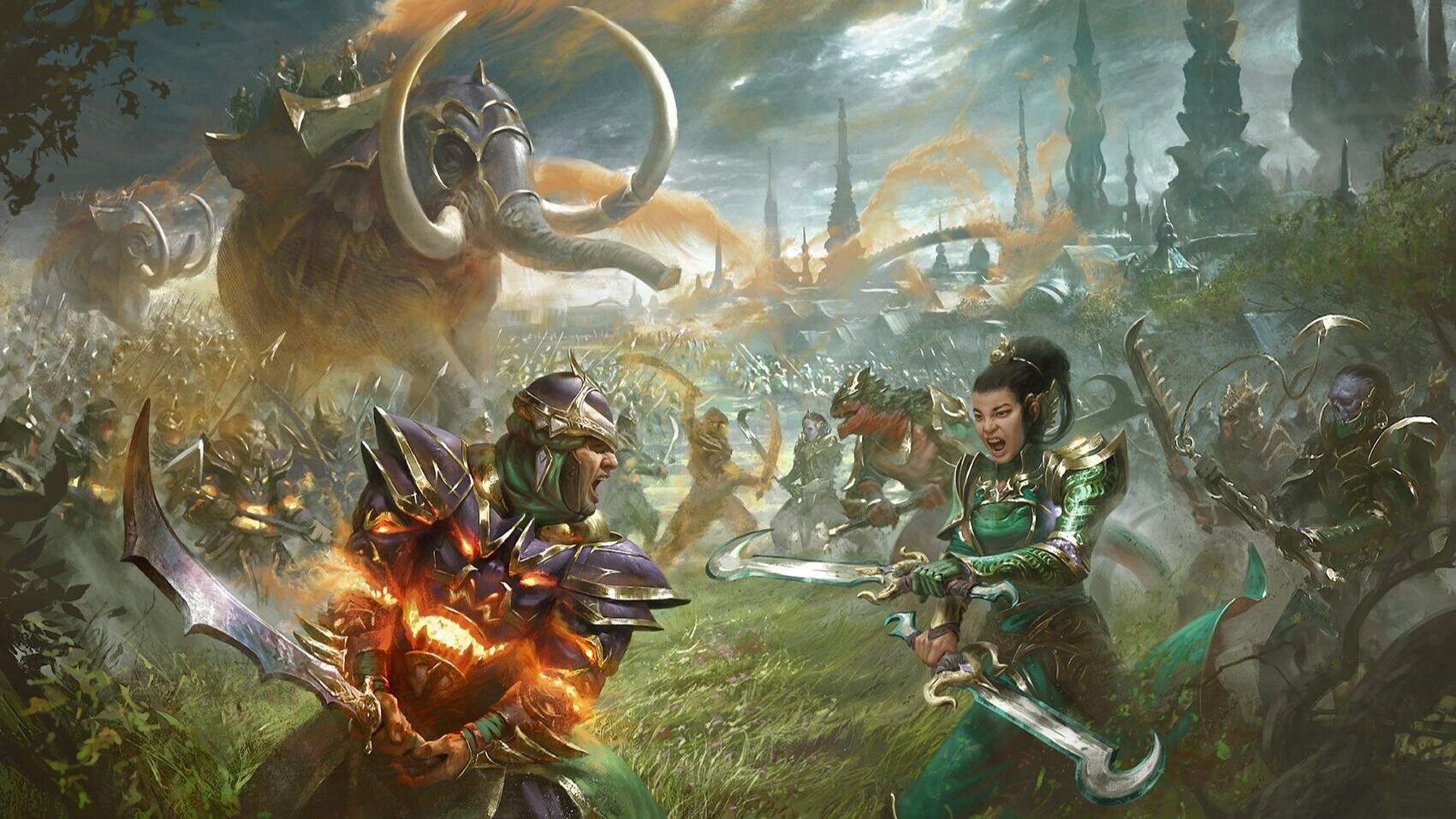
The nomadic Abzan got the most dramatic transformation. Instead of sporting scale mail more reminiscent of ancient Chinese armor than those the Turkic tribes they were based on actually wore, Abzan troops now look far more fantastical. Stylized faces adorn their breastplates, which light up like Jack-o'-lanterns when infused by the power of the ancestors they carry into battle. I'll admit that I don't love the silliness of this particular bit of art direction.
I'm also unimpressed by the Abzan’s headlining “endure” mechanic. Creatures with this keyword enter with +1/+1 counters (an echo of Abzan’s old “bolster” and “outlast” mechanics) or they create variably sized Spirits. It's appropriately thematic, but I hate tracking all the different tokens these cards produce.
Call the Spirit Dragons
Otherwise, “Tarkir: Dragonstorm” feels like a supercharged blend of the original block. I've been particularly drawn to the quasi-Siberian Temur: I realized that I played it exclusively during the Magic Arena streamer event, at last week's prerelease tournament, and at a draft I hosted this week with packs Wizards provided. What can I say? Temur’s mix of splashy spells, woolly mammoths and a potent (and amazingly, merely uncommon) dragon makes it a force on the battlefield. Temur also boasts my hands-down favorite preconstructed Commander deck, which includes dozens of dragons from across the game's history.
While it'll never eclipse my memories of “Khans of Tarkir,” “Tarkir: Dragonstorm” already feels like a high watermark of the Magic year. It's spurred me to compose a new Tarkir cube, and it's driving me to compete in more local tournaments. I wish it included the old “morph” mechanic, but after several face-down sets from last year, I really can't complain. The clans are back, baby, and I wish they'd never left.