Support WBUR
Ring says police partnerships help solve crimes. What does it mean for your privacy?
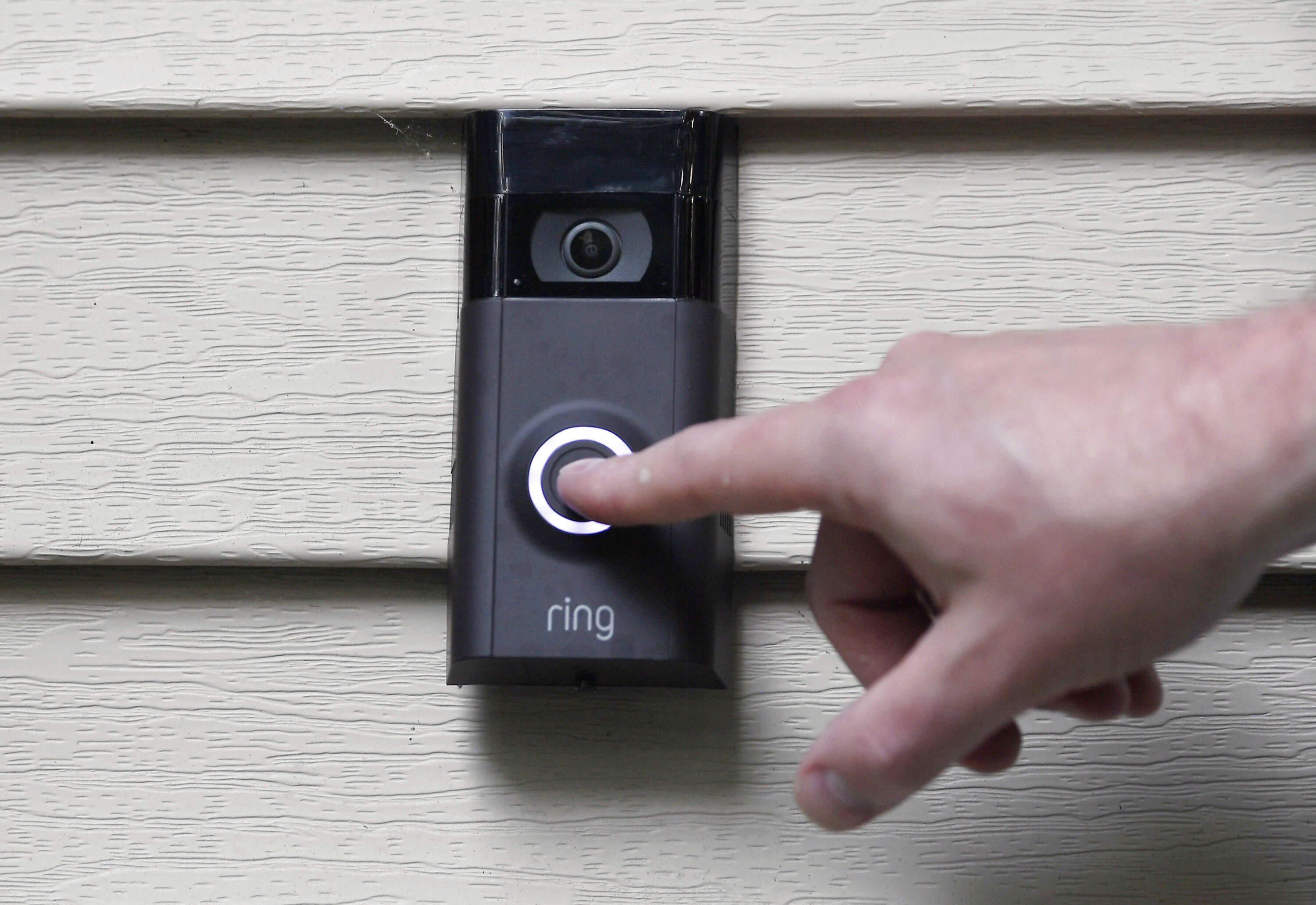
The Amazon-owned Ring doorbell company launched a new feature on its Neighbors app earlier this month called Community Requests, which allows police officers to request camera footage from users.
This comes in conjunction with the company’s partnership with Axon, the law enforcement and military technology company behind the TASER and police body cameras. Axon reviews police officers’ requests for footage and stores all footage acquired in its secure evidence database, according to Ring.
Some data experts say they are concerned about these new developments based on Ring’s past collaboration with police.
But Ring founder Jamie Siminoff said in an April blog post that the Axon partnership comes with built-in guardrails around data privacy, noting that users can opt out of seeing these requests.
"Public safety agencies must have an active investigation case number and requests are time-bound. Participation is also completely optional," Siminoff said in the post. "If neighbors choose not to respond to the request, their choice — and their information — remains completely private. Public safety agencies are not able to see who didn’t respond, and only footage that neighbors voluntarily choose to share will be transmitted to Axon’s secure evidence management system."
Ring’s history of working with the police
Ring’s recent move isn’t unprecedented.
Ring began courting police departments as early as 2016, according to the nonprofit Electronic Frontier Foundation. The company reportedly threw parties for interested police officers, complete with free food, open bars, and at least one visit from Shaquille O’Neal. Ring sent police ambassadors fliers and discount codes in return for promoting the company’s products in their communities.
“ If a police officer who is supposedly a trusted, impartial civil servant came to your door and knocked on it and said, ‘You really should put a camera up,’” said Matthew Guariglia, senior policy analyst at the Electronic Frontier Foundation. “You don't know if it's because they actually think your neighborhood is dangerous, or if it is because they are one purchased camera away from getting a free device themselves.”
The partnerships also gave participating police departments access to maps of active cameras. That practice ceased when the ambassador program ended in 2019.
Once Amazon acquired the company in 2018, Ring continued to ramp up its work with police, as reported by The Guardian. On Ring’s Neighbors app, police could request user footage through the company. In 2020, police departments across the country made more than 20,000 requests for footage captured by Ring and other home security cameras, according to reporting in the Washington Post.
“ That did not require a warrant,” Guariglia said. “Technically, they pitched it as the digital equivalent of cops going door to door, knocking and asking for people's footage.”
By 2023, the Markup found that 2,600 police departments partnered with Ring.
Since the beginning of the company’s work with police, civil liberties groups have expressed concerns about privacy threats and the potential for data misuse.
In response to a series of questions sent by Sen. Ed Markey (D-MA) in 2022, Ring admitted that during the first six months of that year, it had granted police access to footage without the owners’ permission during what it called 11 ‘emergency situations’ — cases involving death or serious physical injury.
In 2023, the company reached a $5.8 million settlement with the Federal Trade Commission over its inability to keep user footage private. As part of the agreement, Ring is required to disclose to customers how much of their data is accessed by the company and its contractors.
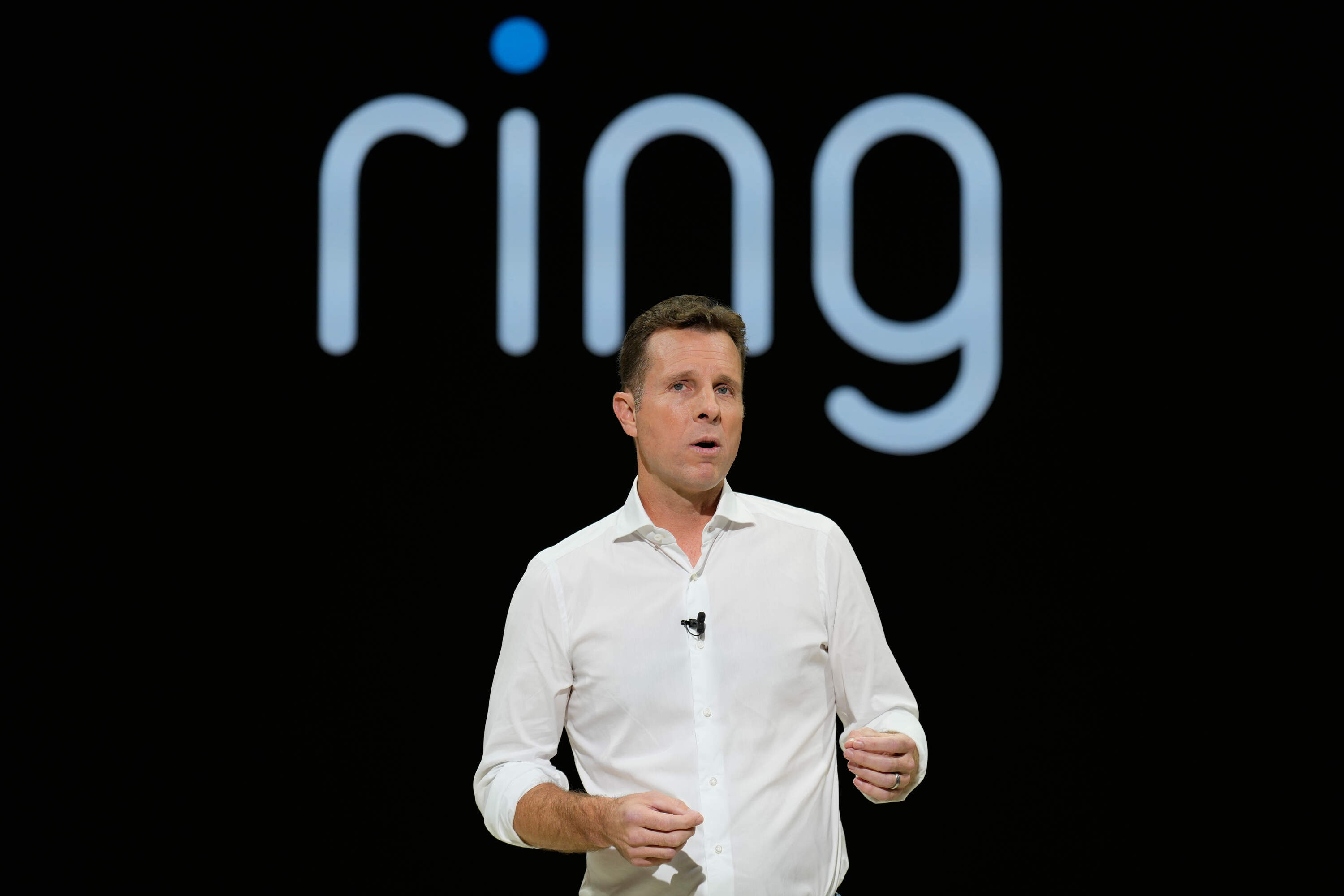
CEO Siminoff left the company in 2023. When his replacement, Liz Hamren, took over, she said Ring would no longer facilitate police officers’ requests for user footage.
But after rejoining the company in 2025, Siminoff rolled that back, citing the “enormous impact Ring has had on neighborhood safety — particularly by enabling voluntary collaboration between our neighbors and public safety agencies.”
‘Self-fulfilling cycle’: How police partnerships and increasing private camera use impact consumers
Research shows that private security cameras often aid police in investigating and solving crimes. A 2020 study conducted by the Urban Institute found that cameras reduce property crimes and vehicle thefts in particular.
In a statement to Here & Now, Amazon said Ring has helped “reunite families with missing loved ones and pets, solve crimes, and provide critical information during natural disasters.”
Chelsea Binns, associate professor at John Jay College of Criminal Justice, said Ring’s private-public partnership with police allows both parties to pool their resources and work collaboratively on investigating crimes.
“ The private sector doesn't have everything alone. The public sector doesn't have everything alone, but together, they can have it all,” Binns said. “We all need to work together to solve crime.”
While information sharing has its benefits, it can also clog up police resources, said Lam Thuy Vo, a data journalist and professor who has covered Ring’s police partnerships for The Markup. She said that on the Neighbors app, police officers could set up email alerts for every post in a specific area.
“ We found one police officer who had more than 10,000 alerts in his email account,” Vo said. “ Regardless of how much these police officers acted on that, that was a way of really over-inundating police with the needs and the nuisances that people in specific neighborhoods of a specific wealth class were expressing.”
Many of those “nuisances,” Vo said, were people reporting what they thought was suspicious behavior in their neighborhoods, like someone checking cars or approaching houses.
Vo said her reporting found that home security cameras contribute to a culture of paranoia and citizens surveilling their own communities.
“ I think there's something to be said about this constant surveillance that then also manifests itself,” Vo said. “You know, ‘It's just a camera. It's gonna help me, like, keep an eye out on my house,’ but that might also perpetuate a compulsion to constantly check, to constantly look, and that creates a different fear or a different feeling around your safety.”
Guariglia said constant monitoring keeps users on high alert, comparing it to a nosy neighbor who is always watching out their window, “but eventually that neighbor went to sleep or went to the bathroom. This is constant access.”
Vo said that richer, often whiter neighborhoods have greater access to Ring and other security cameras, so the voices of more affluent residents were elevated above others.
What can concerned residents do to protect themselves, both from crime and data privacy breaches?
While Ring has offered end-to-end video encryption since 2021, Guariglia said it isn’t the default setting and that users should look into privacy settings on their security cameras.
While Binns said that police partnerships with security camera manufacturers can provide customers some peace of mind, Vo said that awareness around those partnerships and who has access to their data is key. She said users should know how and where their information is stored and what rights they have to their camera’s footage.
Vo and Binns both advise customers to think critically about the trade-off between the benefits and risks of the technology. While there is potential for data security breaches, Binns said people should consider their own sensitivities and beliefs.
“ For some people, they would feel so unnerved by not having the camera at their home that they would rather take that small risk of a data issue rather than not have that security measure in place because then they wouldn't be able to sleep at night,” Binns said.
To Binns, the main purpose of a home security camera is not to gather evidence of a crime but to act as a deterrent to prevent crime in the first place. She said it’s worked for her; when every house on her block was burglarized in a series of break-ins, hers was the only one left alone. She credits not only her security cameras with deterring potential thieves, but also signs on her front lawn declaring the use of those cameras.
A well-lit yard and front door can also act as a deterrent, Binns said.
“ Nobody wants to be in a spotlight when they're doing something illegal, something clandestine,” she said. “Even though we have all this technology, we need to think back to basics sometimes, and those basics can really be our best defense in many cases.”
For those concerned about package theft, Vo said people should consider getting shipments delivered to a different, more secure location, like a post office box. And like Binns, Vo lauds the success of basic solutions before jumping to high-tech gadgets.
“Something that surprises me as a technology reporter and someone who has done a lot of reporting into realms of misinformation as well as these privacy concerns and technology and policing,” she said, ‘is that a lot of these technological problems actually call for very analog solutions.”
Editor's note: Amazon is among NPR's recent financial supporters and pays to distribute some NPR content. An earlier version of this story incorrectly characterized what police departments can request from users.