
Support WBUR

The real story behind the Wounded Knee massacre
05:31
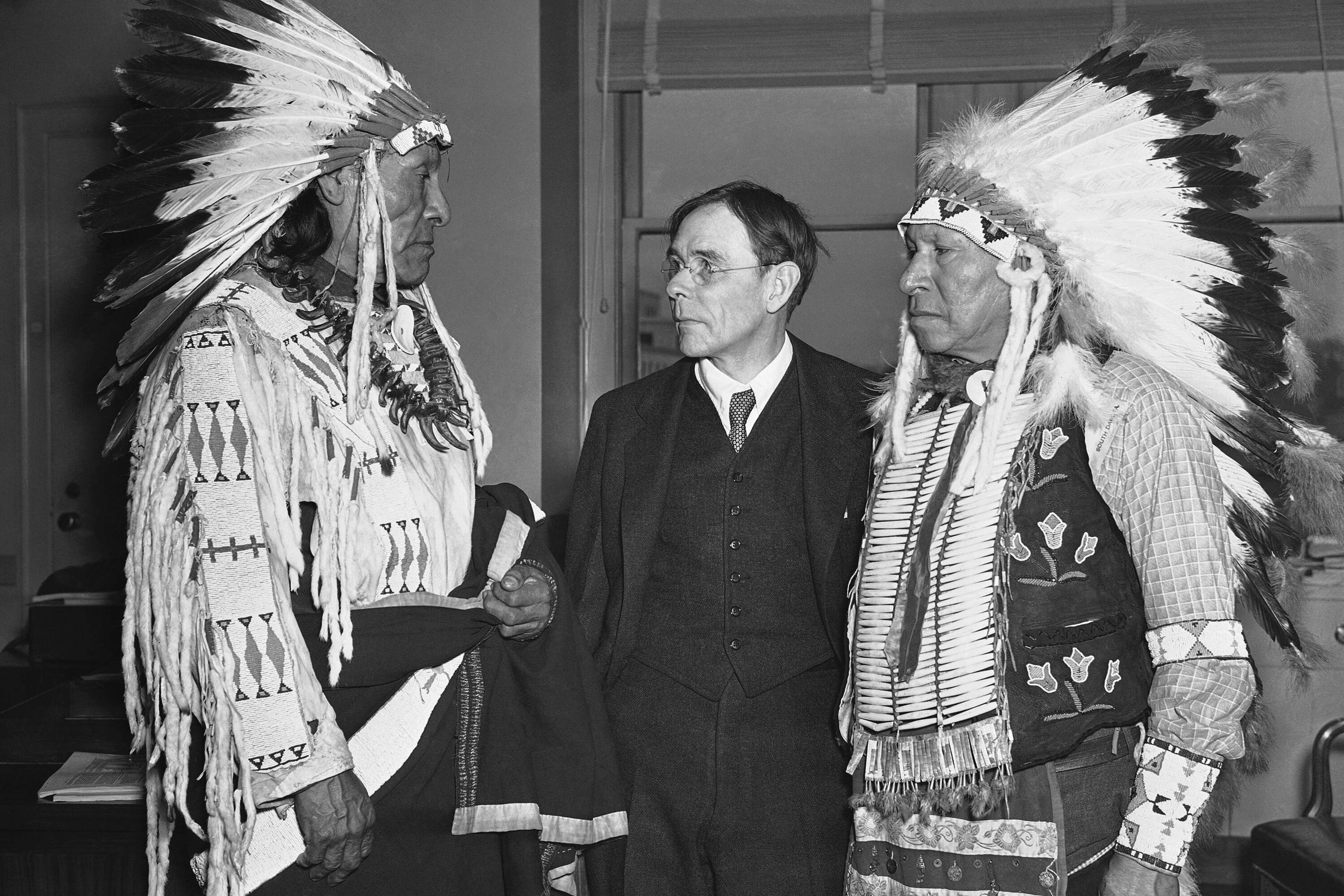
In full tribal regalia, Dewey Beard, left, and James Pipe-on-Head, survivors of the Wounded Knee massacre of 1890 in South Dakota, arrived in Washington on March 4, 1938, to testify in behalf of a bill to pay survivors of the event in which hundreds of Lakota people were killed by U.S. soldiers. They are greeted by John Collier, center, Commissioner of Indian Affairs. (AP)

On Dec. 29, 1890, hundreds of Lakota Sioux men, women and children were killed by U.S. Army troops on the Pine Ridge Reservation in what is known as the Wounded Knee massacre.

After the fighting, 19 U.S. soldiers were awarded the Medal of Honor, a move that has been hotly debated in the decades since. Former Defense Secretary Llyod Austin ordered a review of the medals last year. Now, Defense Secretary Pete Hegseth says those U.S. soldiers will keep their awards.

Nick Estes, a Native American historian, journalist and author, joins us to discuss what actually happened at Wounded Knee.

This segment aired on October 13, 2025.

Support WBUR

Support WBUR

Listen Live