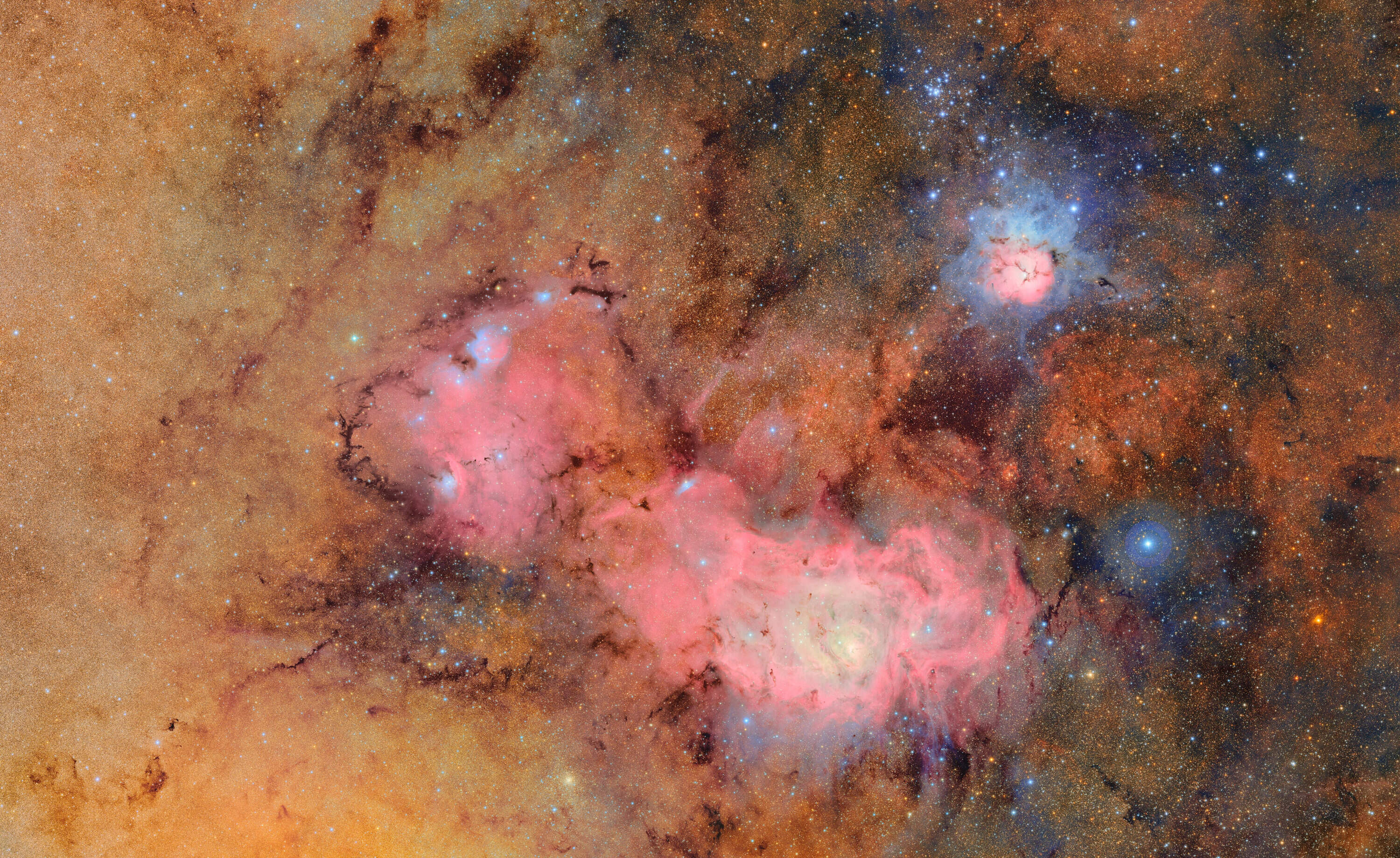
This image provided by the NSF-DOE Vera C. Rubin Observatory shows 678 separate images taken by the observatory in just over seven hours of observing time. Combining many images in this way clearly reveals otherwise faint or invisible details, such as the clouds of gas and dust that comprise the Trifid nebula (top right) and the Lagoon nebula, which are several thousand light-years away from Earth. (NSF-DOE Vera C. Rubin Observatory via AP)
High in the mountains of Chile, a new telescope equipped with the world's largest digital camera will collect more astronomical data in a single year than all others combined, and promises to revolutionize our understanding of the cosmos.
Here & Now's Peter O'Dowd speaks with Željko Ivezic, astrophysicist and longtime director of the Rubin Observatory construction project.