Support WBUR
In 'Freedom Lost, Freedom Won,' Eugene Robinson tells U.S. racial history through his family's story
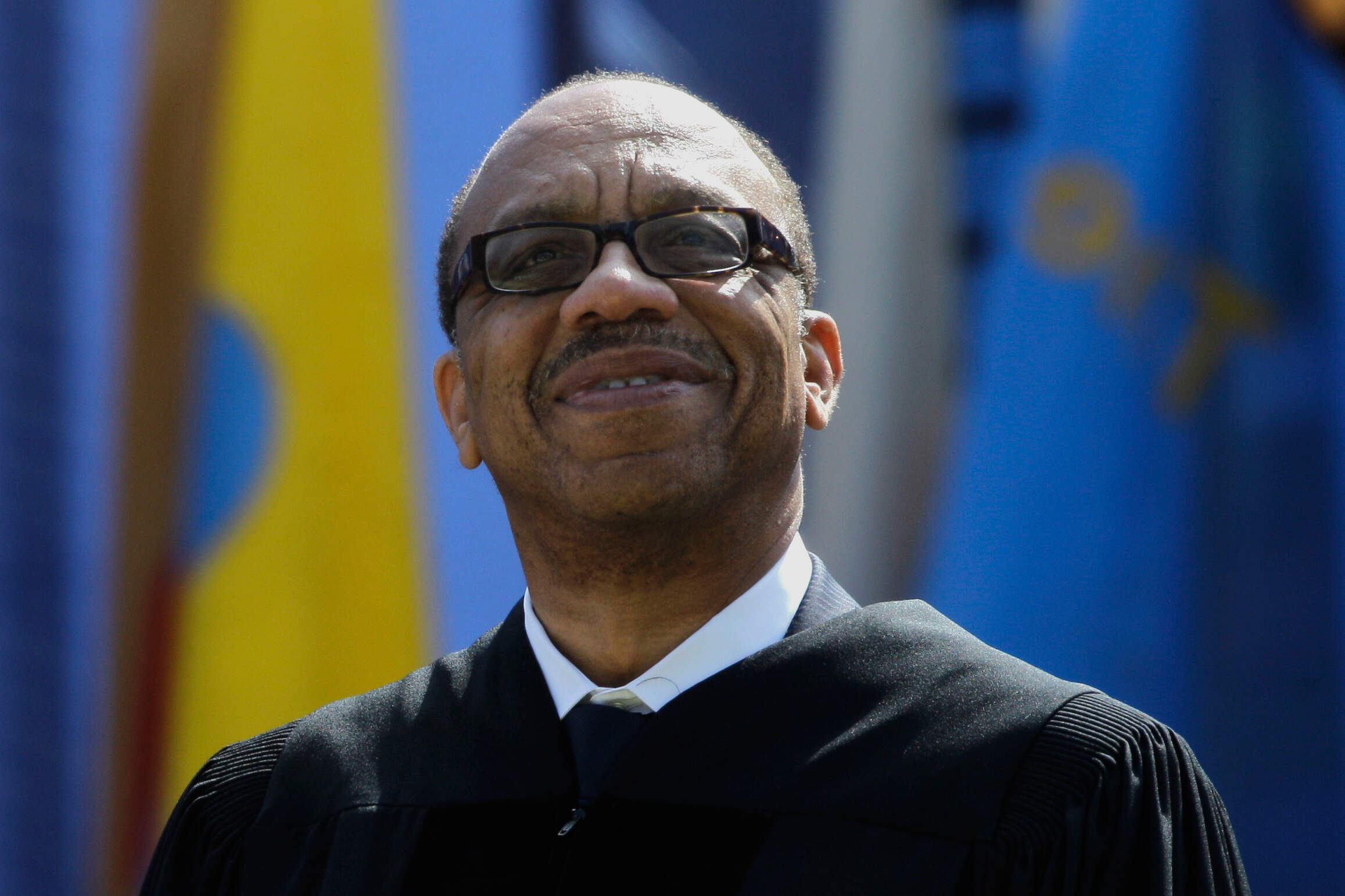
In 1829, a wealthy white planter in South Carolina purchased four enslaved Black Americans. One of them was Pulitzer Prize-winning journalist Eugene Robinson’s great-great-grandfather, a boy called Harry.
Robinson's new memoir, "Freedom Lost, Freedom Won," traces 200 years of our nation’s history through the eyes of the remarkable family that Harry founded.
Here & Now's Indira Lakshmanan speaks with Robinson about Black America’s cyclical fight for freedom and equality: hard-won gains followed by deliberate setbacks, and renewed struggle.
Book excerpt: 'Freedom Lost, Freedom Won'
By Eugene Robinson
THE MAJOR WAS, BY all accounts, a talented and accomplished attorney. A faded newspaper clipping I found in his safe—date and source unfortunately not noted—says of him, “His success in that profession has been a marked one. Owing to his intimate knowledge of law, keen, searching interrogatory, he has made criminal law a specialty and at the same time a decided success.”
My grandmother, who had a way with words, described what he was like on a typical day when he was working out of his office near our house. He was by nature “too slow and lazy and aristocratic to say good morning too loud,” Sadie said, so he would stroll the few blocks home at a regal pace for dinner, the midday meal, which was on the table every day at two. He cut a striking figure, tall and erect. On fair days, the sunlight would glint off his mahogany skin, highlighting his sharp cheekbones. When it rained, he would approach as slowly as ever, refusing to hurry one bit. My great-grandmother Louisa would look down the street and see him coming. She always called him by his middle name: “Hammond!” she would yell; but he was oblivious. When he finally reached the house, she would tell him he had looked like a fool strolling through the rain. “Not as much of a fool as I’d look running through it,” my great-grandfather would reply. Then, removing his tailored jacket, now sopping and shapeless, he would make her exasperation complete with just the right touch of gall: “And now, madame, you may lay out some fresh clothes for me.”
It was a busy household, and Sadie, as the bright and sassy youngest girl, had her own special daily chore: going to the post office to fetch the family’s mail. She made the round trip in style. “I was the only colored girl in town who had a horse and buggy,” she told me proudly.
The Major believed in himself and his ability to provide for his family, however difficult the circumstances. And he believed, above all, in democracy. Every year, religiously, he went to the city clerk’s office and registered to vote. Louisa, like all American women, was of course ineligible, even though she was, on paper, the Fordham with the biggest
stake in the outcome of elections—most of the property, after all, was technically hers. But the Major’s vote spoke for the family, and he appeared in person every summer to inscribe his name on the voter rolls for the September local election. He kept the receipts, lest there be any doubt about his rights.
“This is to certify, That J.H. Fordham is a Qualified Elector of the City of Orangeburg, resides on R.R. Ave Street, is 43 years of age, and is entitled to vote in the Municipal Election on the 14th day of September 1897. Registered on the 13th day of July 1897,” says one of the registration slips he left behind in his safe. (In truth, he was actually forty-one years old at the time.) The Major not only registered and voted but also encouraged other Black men in Orangeburg to do so. To vote for Republicans, of course. To vote for possibility.
The historical imagination, shaped by the limited way this country’s story has traditionally been told, associates can-do American optimism with whiteness. The faces and stories that automatically come to mind are of white pioneers, entrepreneurs, dreamers, and tycoons. But that is not even half the story. African Americans whose ancestors were enslaved and legally condemned to centuries of forced labor, Native Americans whose ancestors survived genocide and the theft of a continent, Mexican Americans whose ancestors were treated like the dirt from which they coaxed agricultural bounty, Chinese Americans whose ancestors were imported to do the dangerous work of building railways through impassable mountains because their lives were considered worthless, Japanese Americans who were forced from their homes and herded into internment camps—we, the unloved and erased, are the true American optimists. Just to make it through the day and face another tomorrow, we have always had to be the most radical and resilient optimists on earth.
Excerpted from "Freedom Lost, Freedom Won," with permission of the publisher.
This article was originally published on March 03, 2026.
This segment aired on March 16, 2026.