Support WBUR
In new essay collection, two-time National Book Award winner Jesmyn Ward muses 'On Witness and Respair'
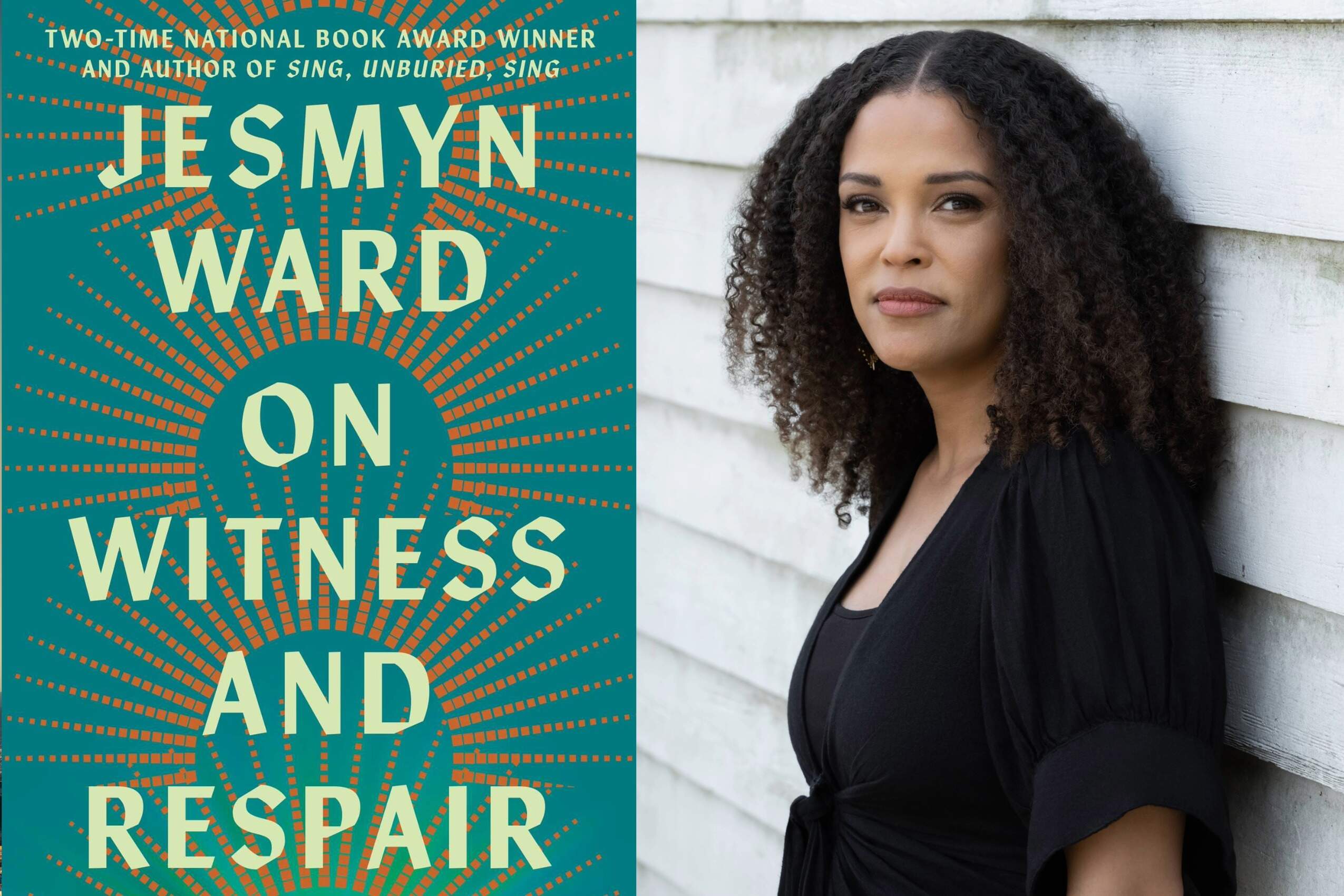
Host Indira Lakshmanan speaks with MacArthur Genius Grant recipient Jesmyn Ward.
In her new collection of essays, "On Witness and Respair," Ward reflects on the importance of storytelling, bearing witness to racism, and finding healing and hope.
Book excerpt: 'On Witness and Respair'
By Jesmyn Ward
Introduction
I FIRST SAW THE MISSISSIPPI STATE AUTHORS MAP WHEN I was in elementary school. I felt such awe looking at that map, studying the sometimes kind, oftentimes serious illustrated faces of the writers: William Faulkner, Eudora Welty, and Richard Wright beamed the brightest in my childhood memory. I was too young for their work then, but as I sat in that linoleum-tiled library with its metal bookshelves and strong fluorescent lighting, that map, along with the books lining the shelves, transformed the space into something expansive and precious.
I sat at those long tables and sank into story; their authors transported me so completely that I tasted the food the char acters ate, the tea they drank, and felt every little tic of terror or joy or sadness they felt. Writers were magic-workers. They spun tales from the ether, wrote narratives so riveting that I often felt a kind of overwhelming longing as I read. I could already sense the worlds they constructed, already felt so much with the characters; why couldn’t I just step through from my world into theirs? Even at the tender age of eight, I knew I was poor and Black in Mississippi, and that meant eating WIC-issued cornflakes and never being sated by them. That meant being too hot for most of the year, and being too cold the rest because we didn’t have any central climate control in any of our homes. It meant hardly ever experiencing the luxury of solitude because I spent many of my childhood years growing up in a house where aunts and uncles and my parents and my first cousins all lived together, by necessity.
Reading offered respite from all of this, but as I grew, I found myself seeking less escapism. As I grew, I understood that being Black and poor in Mississippi also meant Sunday baseball games at the local Negro-league park, everyone communing and eating and celebrating. It meant swimming with everyone in our community at the local river, camping and cooking over open fires. It meant gathering for birthdays and anniversaries and just because, playing Al Green and Otis Redding and Denise LaSalle and dancing, old with young, babies with seniors, whirling in golden living rooms, amber kitchens, on pale blue porches. This understanding led me to wanting more empathy, more feeling, and it was then I was ready to engage with those famous Mississippi writers from the map.
I began with Welty first; I muddled my way through her short stories, grinning at her sly wit, before alighting in her essays. I fought my way through Faulkner, half understanding what was happening, feeling thunderous import lurking in the margins of every page. Even though I struggled with some of their work (Welty’s essays on jazz musicians soured me, Faulkner’s story about the bear frustrated me), I recognized their power, their magic. I appreciated the way Faulkner wrote the reader into a kind of fever dream of the South, the way Welty invited the reader […].
Excerpted from "On Witness and Respair: Essays" by Jesmyn Ward. Copyright © 2026. Reprinted by permission of Scribner, an Imprint of Simon & Schuster, LLC
This segment aired on May 18, 2026.