
Support WBUR

Post-Cold War, international cooperation soared. Now, we're trending toward global disorder
11:03
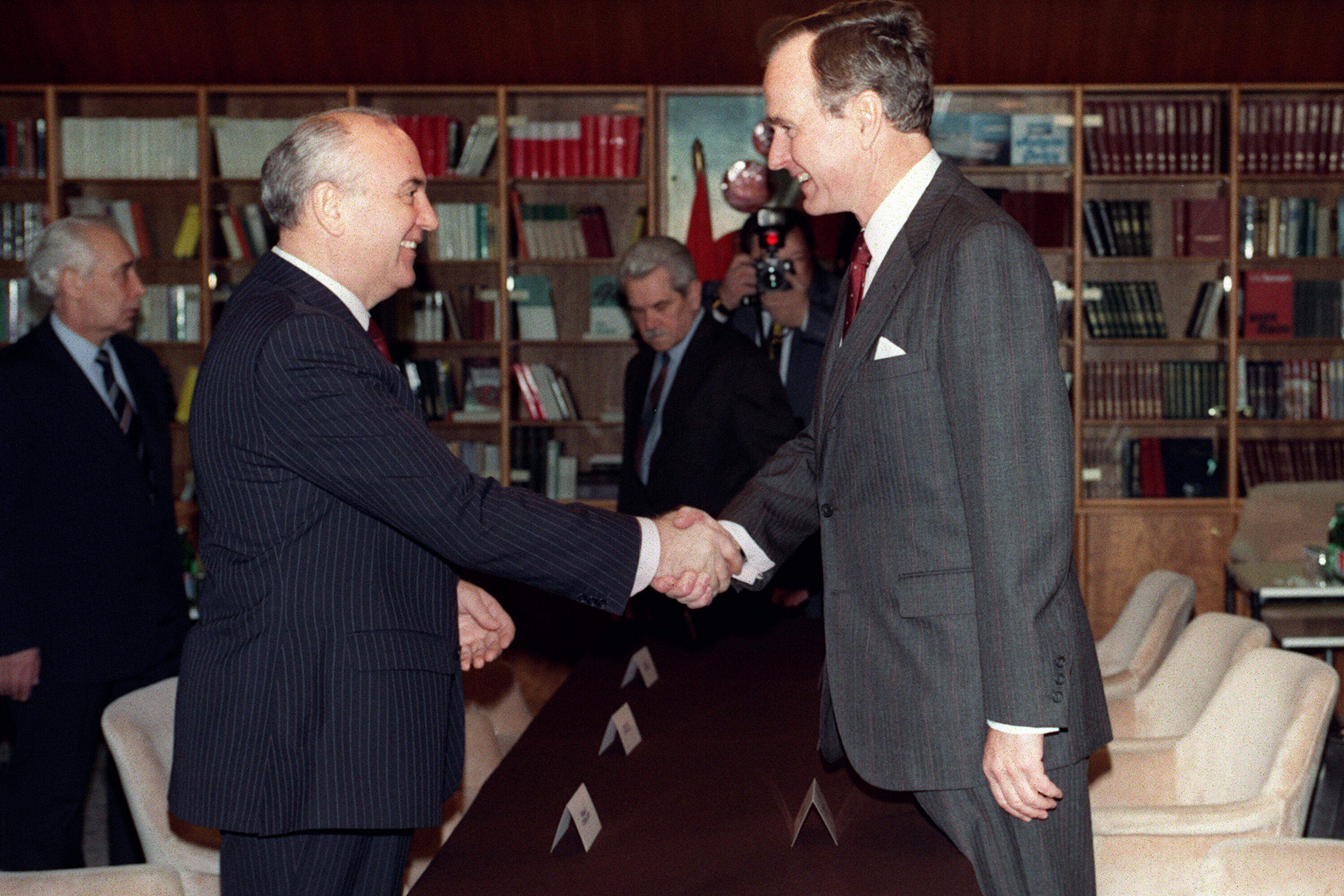
Soviet leader Mikhail Gorbachev (L) and U.S. President George Bush (R) shake hands on Dec. 2, 1989 on board the soviet cruise "Maxim Gorki", shipdocked at Marsaxlokk harbour, before the start of their first summit meeting, just a few weeks after the fall of the Berlin Wall. This summit is viewed as the official end of the Cold War. (Jonathan Utz/AFP via Getty Images)

In the decades since the fall of the Soviet Union, there’s been broad agreement that the world was moving towards greater economic integration, deeper international cooperation, and a more stable world order. Today, that picture looks a lot less certain.

Tino Cuéllar, president of the Carnegie Endowment for International Peace, joins host Indira Lakshmanan to discuss how countries are navigating an increasingly fragmented world.

This segment aired on June 10, 2026.

Support WBUR

Support WBUR

Listen Live