Support WBUR
50 Years Ago, Daniel Ellsberg — Who Leaked The Pentagon Papers — Surrendered At Boston Federal Court
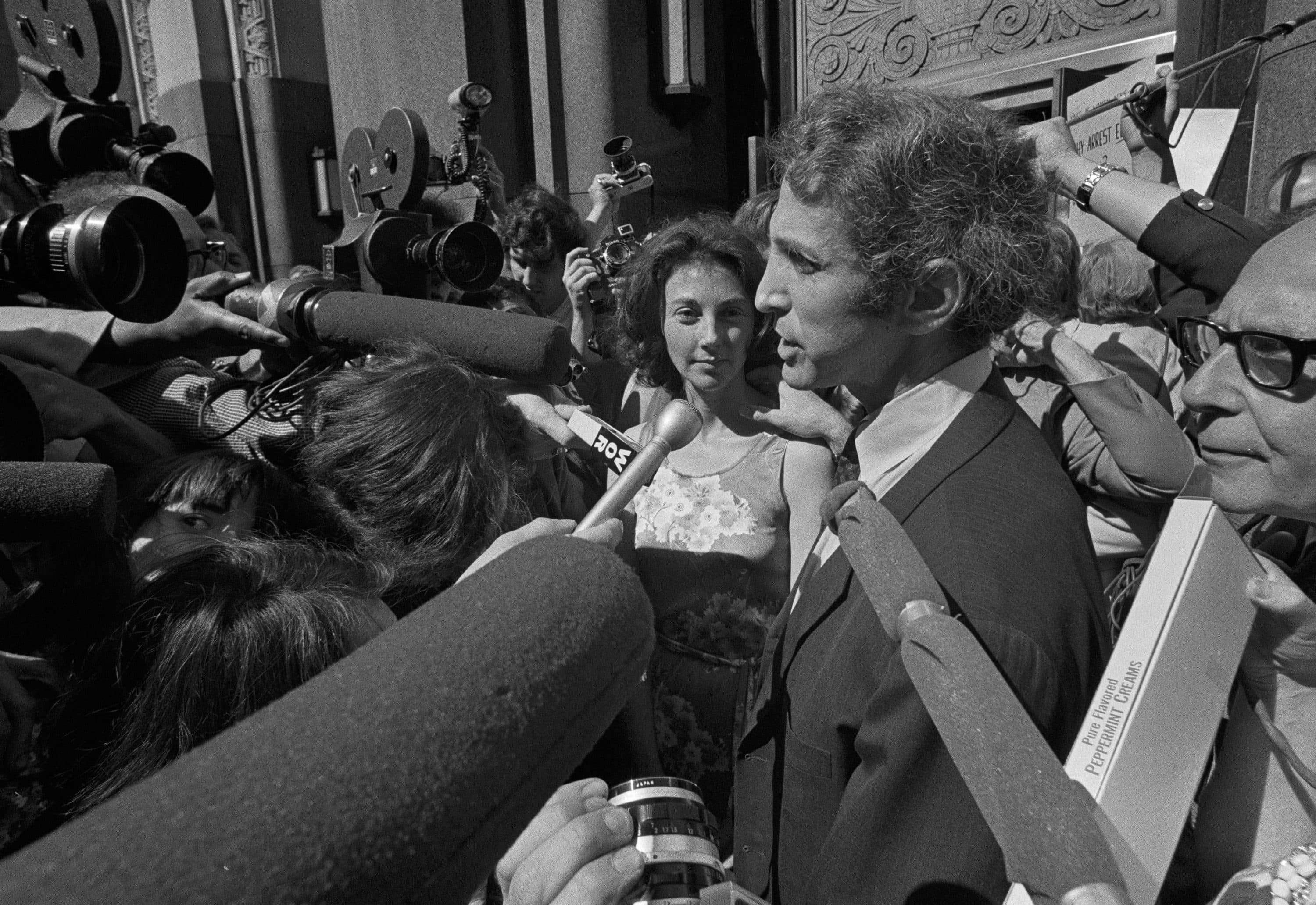
Fifty years ago, something that would come to shape modern U.S. history happened on the steps of the federal courthouse in Boston: Daniel Ellsberg surrendered to authorities.
Ellsberg was a researcher at MIT. He had been a defense researcher for the Pentagon and helped compile a report that documented the U.S. role in the Vietnam War. The report became known as the Pentagon Papers.
It was thousands of pages long and detailed how one administration after the other lied to the American public about the scope of the war — and that the U.S. was losing.
Ellsberg gave the report to The New York Times and The Washington Post.
To mark this day in history, WBUR's All Things Considered host Lisa Mullins spoke with journalist David Freudberg. He was just 16 years old at the time, and covered Ellsberg's trial for NPR.
Interview Highlights
On the context of Ellsberg's surrender:
"There had been a nationwide manhunt organized by the FBI to find the person who had leaked the Pentagon Papers documents to The New York Times. The Times knew the source, but it was not known to the federal government. And this manhunt ensued and it was clear that Ellsberg was going to have to surrender and there was a crush of reporters at the federal courthouse in Boston, and he gave a brief statement about why it was worth releasing these documents to the public media."
"I did this, clearly, at my own jeopardy and I am prepared to answer to all the consequences of these decisions."
Daniel Ellsberg
On what Ellsburg did that caused a nationwide manhunt:
"Ellsburg had access to a top secret study that had been commissioned by the secretary of defense at the time, Robert McNamara, that was intended to reconstruct the history of decision-making on the Vietnam War. Ellsberg contributed to that study and eventually had access to the full document — 7,000 pages, 47 volumes — that came to be known as the Pentagon Papers. And because Ellsberg had gone from a hawk on the Vietnam War to becoming a dove, he took the supreme risk of releasing this study, which was done by the government itself, and he realized that this could make a difference in the conduct of the war and the public perception of it."
On what was in the Pentagon Papers that was so revealing about how the U.S. had prosecuted the war:
"Well, there was a long history of U.S. involvement in Vietnam. It included the assassination of the president of South Vietnam. It included attempts to lie about what actually happened in the war. Essentially, multiple presidents had misled the public."
On reaction to the publishing of the Pentagon Papers:
"President Nixon was furious that a secret document had been leaked and he decided to go after Daniel Ellsberg."
Here is part of a tape where Nixon is talking to his chief of staff, Alexander Haig, about Ellsberg: "Just because some guy is going to be a martyr, we can't be in a position of allowing the fellow to get away with this kind of wholesale thievery or otherwise it's going to happen all over the government. I just say that we've got to keep our eye on the main ball, the main ball is Ellsberg. We got to get this son of a bitch."
On what Ellsberg was charged for:
"Ultimately, the Justice Department indicted Ellsberg for theft, conspiracy and espionage. The total penalty for those crimes carried a maximum of 115 years in jail for Ellsberg and 35 years for his co-defendant, Anthony Russo. Very stiff penalty for releasing a document to the press."
"He didn't serve the time because the trial was ultimately declared a mistrial because there was massive prosecutorial misconduct committed by the Justice Department. Notably, this included an event that became the start of the Watergate scandal where Ellsberg psychiatrist's office had been invaded by a group that came to be known as the Plumbers who were looking for what Nixon called dirt to discredit Ellsberg. And that was the first caper of the Plumbers who a few months later invaded the Watergate complex in Washington, where the Democratic National Committee's headquarters was housed."
On what he thought back then about this event:
"Well, we certainly didn't realize that it was the opening act of Watergate, which was arguably the pivotal political event of the time. But watching the trial itself, to the extent that I was there, was very powerful because the war was considered immoral by about half the country — 58,000 Americans died, two million Vietnamese died — and this man, of his own conscience, decided he was going to go up against the entire war machine of the federal government to try to bring about an end to the suffering, which he had concluded was highly immoral and that a succession of federal administrations had lied about."
This segment aired on June 28, 2021.