Support WBUR
As water gets warmer, shrimp snap louder. Here's why that matters
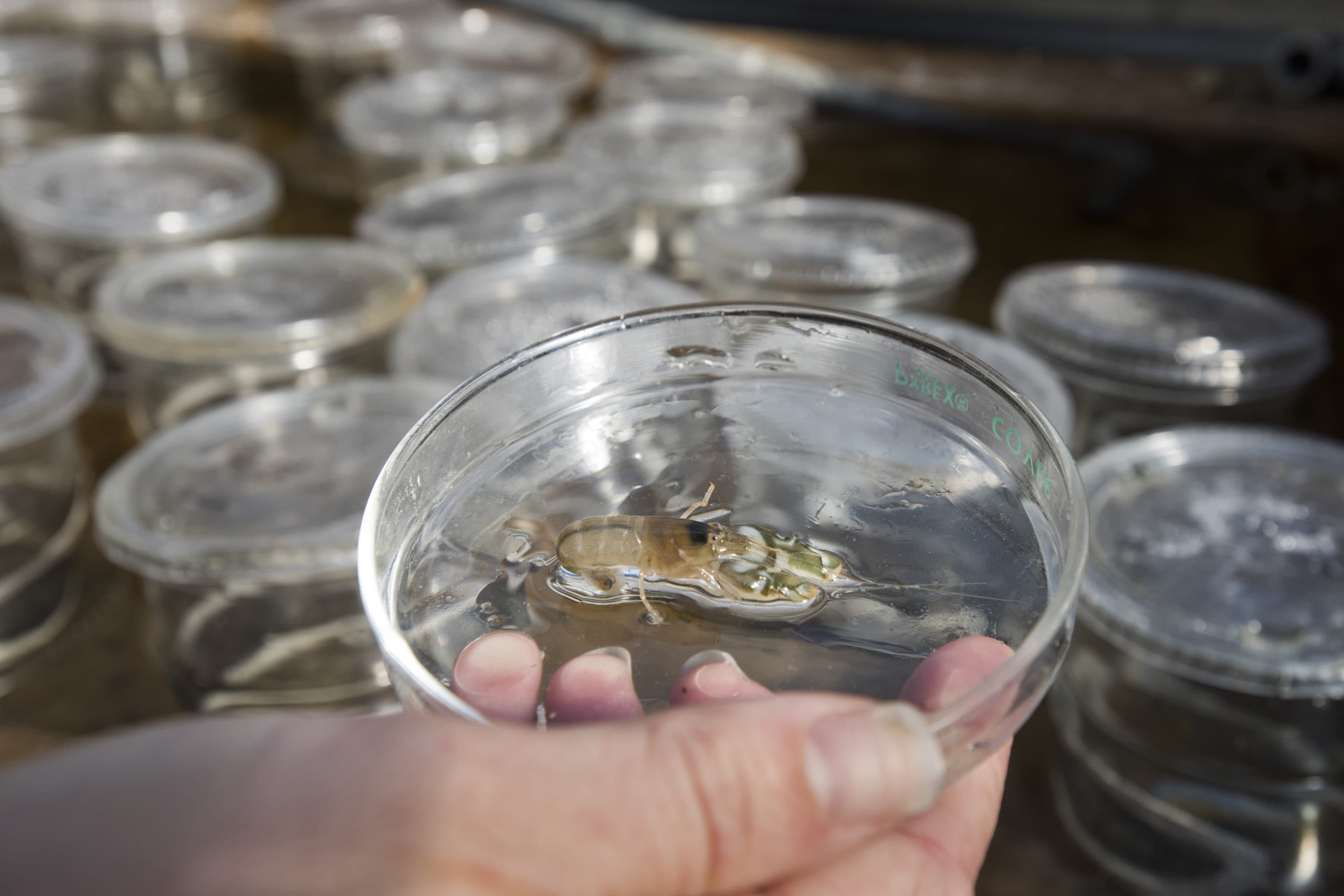
Some of the noisiest animals in the ocean are actually pretty small. They’re called snapping shrimp and new research from the Woods Hole Oceanographic Institution (WHOI) finds they snap louder as water gets warmer. As climate change warms the world's ocean, the changing soundscape could have far-reaching impacts for both humans and animals.
"This whole sound environment is going to change," said Aran Mooney, a marine biologist at WHOI, and co-author on the new study. "That's really fundamental for animals, because that's how they communicate to each other, that's how they attract mates, that's how they defend territories."
Snapping shrimp are especially important to coral reef ecosystems, where the sizzling-bacon sound of their snaps dominate the soundscape. Scientists have noticed that the snapping gets louder over the course of the summer. Mooney and his co-author, WHOI biologist Ashlee Lillis, wanted to test it in the lab.
Sure enough, they found that snap frequency more than doubled as they tested shrimp in water temperatures from 68 F and 86 F.
"As you warm these animals up they're snapping more often," Mooney said. "And that's what we think is happening on the reefs — the reefs are getting louder because these animals are getting more active."
Scientists aren't sure why the shrimps snap.
"If you perturb them, they snap," Mooney said. "So something to do with territorial defense, right?" And they're not sure why they snap more when things heat up, though some scientists have suggested anxiety or heightened aggression. Or maybe it's more of a summertime happy hour vibe, where they're "sort of warming up and getting looser."
The effects of warming water on the overall marine soundscape is a crucial — and often overlooked —ramification of climate change, said Mooney.
For instance, a noisier ocean could interfere with underwater drones that use sonar, or whales and dolphins that use sound to migrate.
“We don’t yet know what happens to the ecosystem when background noise levels are higher, but there are far-reaching implications," he said.