Support WBUR
Company can't dump nuclear plant wastewater into Cape Cod Bay, Mass. rules
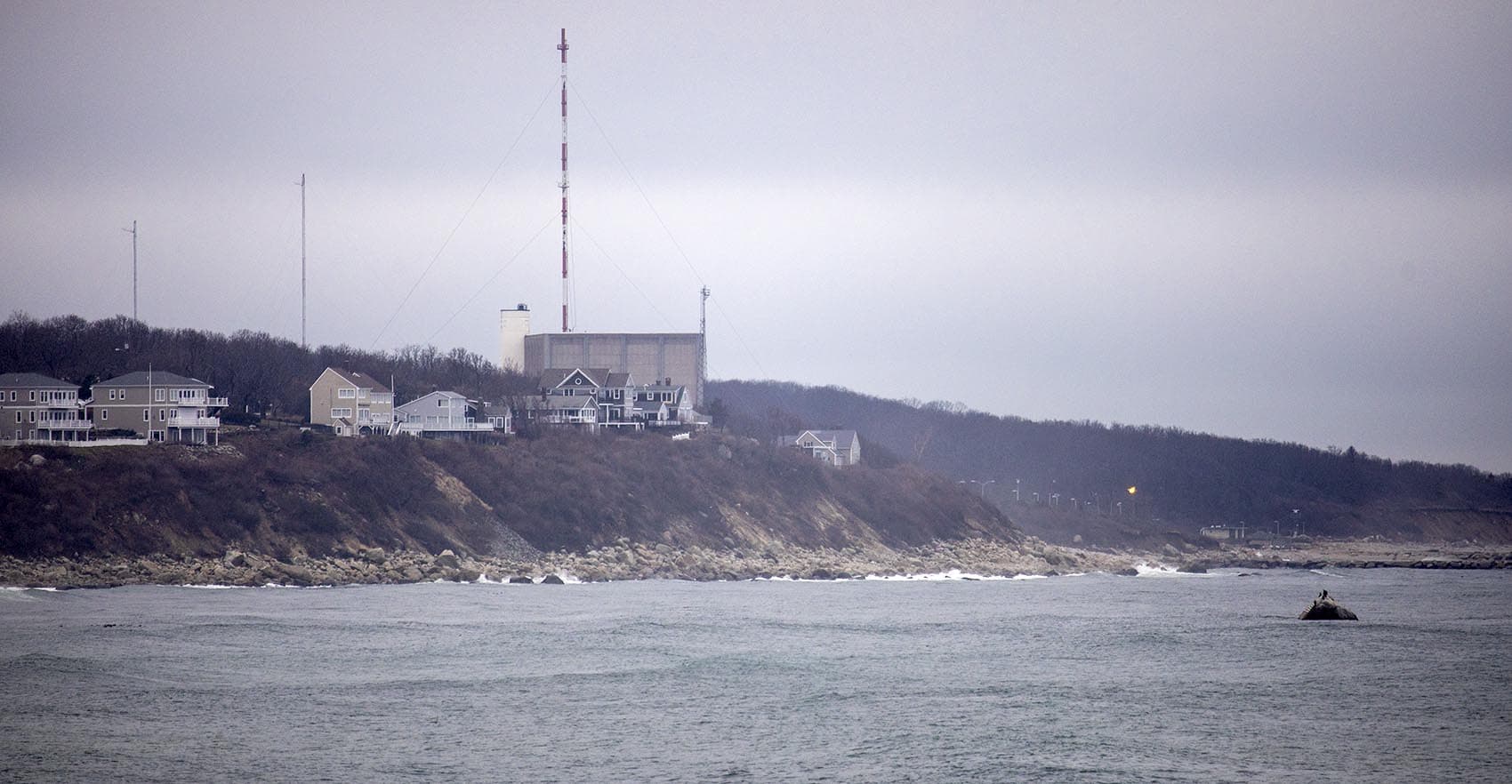
Massachusetts will not allow the company decommissioning the former Pilgrim Nuclear Power Station to discharge treated nuclear wastewater into Cape Cod Bay.
The state's Department of Environmental Protection shot down the plan in a final decision published Thursday. According to the department, they cannot allow plant owner Holtec to discharge the water because Cape Cod Bay is protected under the state's Ocean Sanctuaries Act.
"The Ocean Sanctuaries Act prohibits the 'dumping or discharge of commercial, municipal, domestic or industrial wastes' into ocean sanctuaries. The water that Holtec proposes to discharge qualifies as industrial wastewater, and therefore, the proposed discharge is prohibited," the department wrote in a statement announcing its decision.
Holtec had hoped to dump 1.1 million gallon of treated water from the site into the bay. The water had been used to cool spent nuclear fuel rods. The process is legal and deemed safe provided the water does not exceed radioactivity levels set by the federal Nuclear Regulatory Commission. The federal agency has published an FAQ web page specifically about the proposed discharge from Pilgrim.
Speaking in Montague in Western Massachusetts Thursday, MassDEP Commissioner Bonnie Heiple said Holtec will have to find another way to clear the site of the contaminants.
“This was always going to be a known byproduct of having operated a facility like this,” she said. “So it will really be up to them to evaluate the options. Certainly, trucking and rail are among the options to safely dispose of materials like this.”
In a statement, Holtec spokesperson Patrick O’Brien said the company is "disappointed" by MassDEP's decision.
"Treated water has been discharged within safe limits since the plant began operations in 1972 and today’s denial will continue to delay the decommissioning and economic reuse of the Pilgrim lands," wrote O’Brien. "We will continue to evaluate all disposal options for the treated wastewater and the effect this decision has on our timeline to fully decommission the facility."
Opponents to the planned discharged cheered the news of the denial. Andrew Gottlieb, executive director of the Association to Preserve Cape Cod and member of the state's Nuclear Decommissioning Citizens Advisory Panel, called the ruling an "important victory" that "validates that the rules mean something."
"Holtec acts as though the local residents and communities have no say in what happens around their plants because they claim impunity arising from federal preemption of state and local authority," he said. "The reality is state laws do apply, we do have a say and APCC and others refused to back down and made the case that this denial was not only right, but required by the law."
Pilgrim went offline in 2019 and Holtec has started the long process of dismantling the plant and cleaning up the property. Holtec, which specializes in decommissioning nuclear facilities, purchased the aging plant in 2019. The decommissioning process often takes decades to complete, but Holtec in 2019 said it could finish the process at Pilgrim in just eight years.
The company has pushed for the wastewater discharge since it purchased the plant, but has been rebuffed by the federal Environmental Protection Agency, which has required new permits before the water dumping could take place. Those federal permits are still under review.
This article was originally published on July 18, 2024.