Support WBUR
Tired of spammy political donation texts? You're not alone
You’ve no doubt experienced the latest barrage of political texts.
“7X-MATCH to BOOST Dems to victory!” or “YES! For the next 60 minutes, we’re 600% -matching all donations to CRUSH TRUMP’S CAMPAIGN!”
Or on the Republican side: "I CAN'T BELIEVE IT! Trump just told EVERY Catholic to join CatholicVote," with a link to a donation request.
Breathless fundraising texts, often shouting in ALL CAPS, have been blowing up the phones of voters from both parties at a breakneck clip, with tens of millions sent out each week.
Through May, it was Republican groups flooding voters with the most texts. Then in June, the text traffic flipped: Democratic missives took over the volume as the race shifted, according to YouMail, an Irvine, Calif., company that runs a spam-blocking app.
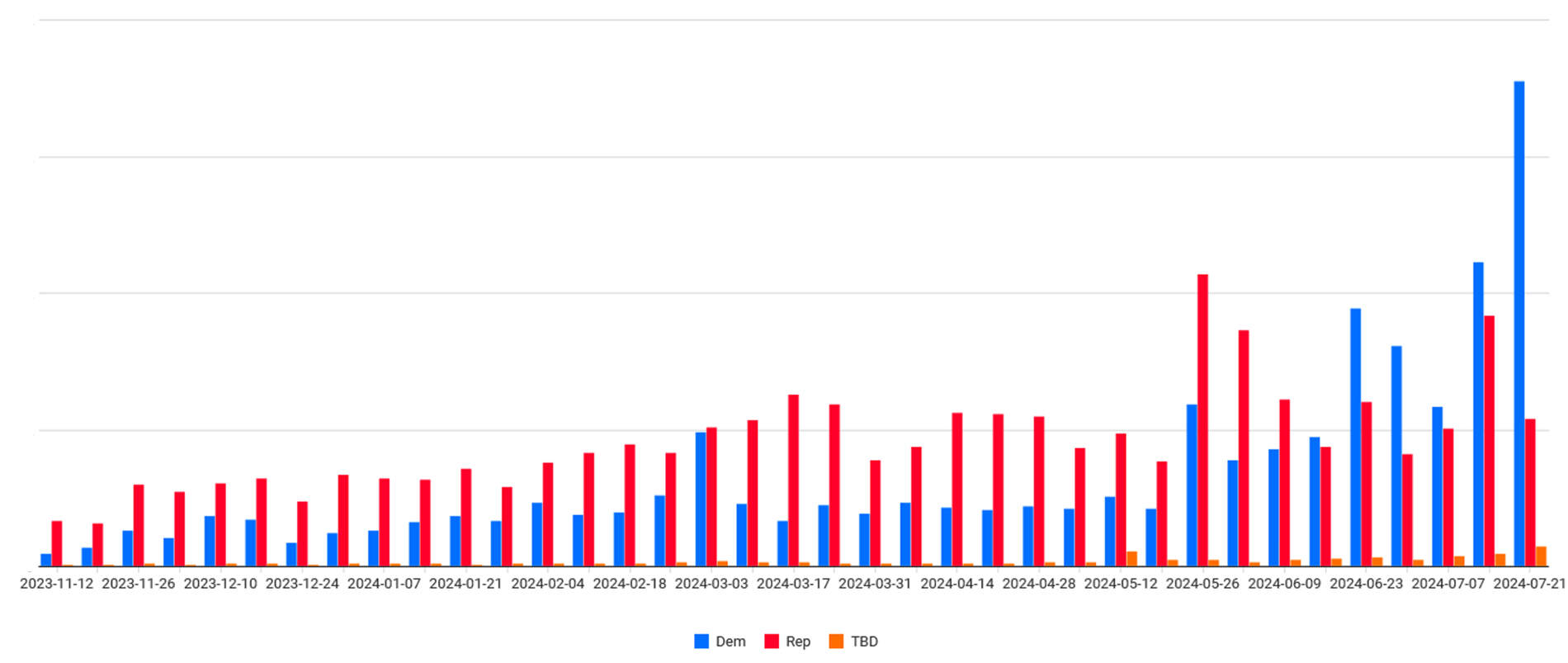
The turn started the week of June 23, in the run-up to the presidential debate that fueled fresh doubts over President Biden’s ability to beat former President Donald Trump.
Fundraising texts supporting Biden — often with tone-deaf messaging, like "I'm begging. Will you GRADE Joe Biden's CNN Debate?" — ramped up for a month. They continued in the days after the assassination attempt on Trump and through the Republican convention in mid-July, according to YouMail data.
But then their numbers flew off the charts: In the week of July 21, when Biden announced he would leave the campaign and threw his support behind Vice President Kamala Harris, Democratic texts surged to three times the volume of Republican texts.
“You can see a sea change in texts with the Democrats massively accelerating their text messages starting the week of June 23rd to an absolutely inane amount,” said Alex Quilici, chief executive of YouMail. Across both parties, he estimates more than 100 million political texts per week are going out now.
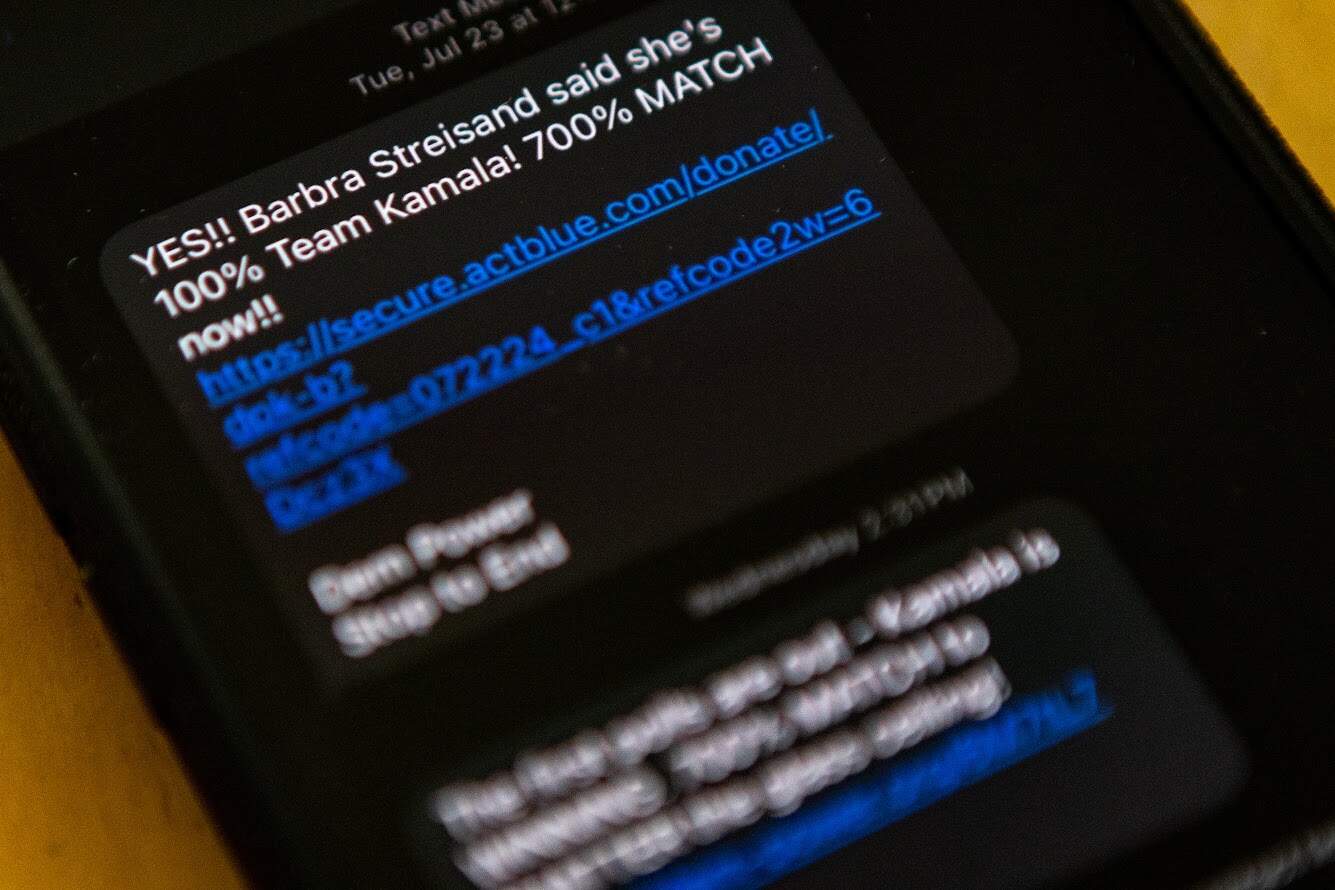
To most people, the texts are a nuisance. Not only are they unwelcome, in most cases, but it's hard to determine what’s real and what’s a scam. Recipients report deleting multiple texts per day and dozens each week.
Even Alan Solomont, a big Democratic fundraiser in Boston and former ambassador to Spain, gets them. “I probably get a dozen texts a day. I just delete them,” he said in an interview. “You’ve got more people chasing the same amount of money than you ever have.”
Solomont occupies the realm of political fundraising that’s done the traditional way — calling up people who are likely to write large checks. He said potential donors sometimes ask him whether to trust groups that have texted them for money. It takes some research to sort that out, he said; some groups are legitimate, but in general he advises donors to give directly to a candidate or party.
The political texts contain a dizzying slew of URLs linked to PACs large and small. From Democratic groups, for instance, the links run from turnoutpac.org and democraticvoters.org to prochoicewomen.org and stoptrump.io and many more. A number of recent Republican texts come from surrogates, including Donald Trump Jr. and U.S. Sen. Ted Cruz, but use less clear URLs.
No oversight of mega match promises
The tone of the texts on both sides is typically over the top, not least when it comes to promising big donation matches of six times and or seven times a donor's gift. The Federal Election Commission does not oversee the text offers, according to a spokeswoman. The federal overseers say only that, “any contributions given or matched” via text “would be subject to the same contribution limits and reporting rules as any other.”
Several PACs contacted by WBUR did not respond to requests for interviews about how the matches work that are promised in texts. A spokesperson for the Chicago-based Progressive Turnout Project, which has sent out texts with the URL turnoutpac.org, did respond. The group says it “specifically raises funds for our grassroots matching program and then utilizes those dollars for specific match opportunities,” like those offered via text.
“Just treat these political texts as some kind of alert — like, do I care enough to donate to this candidate? ... If you feel compelled to do that, don't just click a button.”
Alex Quilici
One text from turnoutpac.org this week said, “1 HOUR LEFT: Donate on ActBlue to defeat Trump and BOOST voter turnout for Kamala before the 4X-MATCH expires!”
Some 16,000 Democratic entities use a Somerville-based platform, ActBlue, to fundraise. Republicans use a separate platform for online fundraising, called WinRed.
It's not yet clear what impact the flood of texts has had, though they may at minimum raise awareness. The Harris campaign says it raised more than $200 million in the week after the vice president announced her bid for president. More than half the donations came from first-time donors, and much of it was done online, according to the campaign.
In a statement, the campaign threw shade on the fundraising texts: "In recent days, our campaign has seen a surge in activity from so-called Scam PACs. Voters have been inundated with text messages and other solicitations from political action committees claiming to support the Vice President or working to defeat Donald Trump,” it said. “In reality, these are financial scams from bad actors trying to take advantage of the urgency Democrats are feeling in this moment.”
The campaign urges caution, saying, “the only committees raising money directly for our campaign are Harris for President, Harris Victory Fund, and Harris Action Fund.”
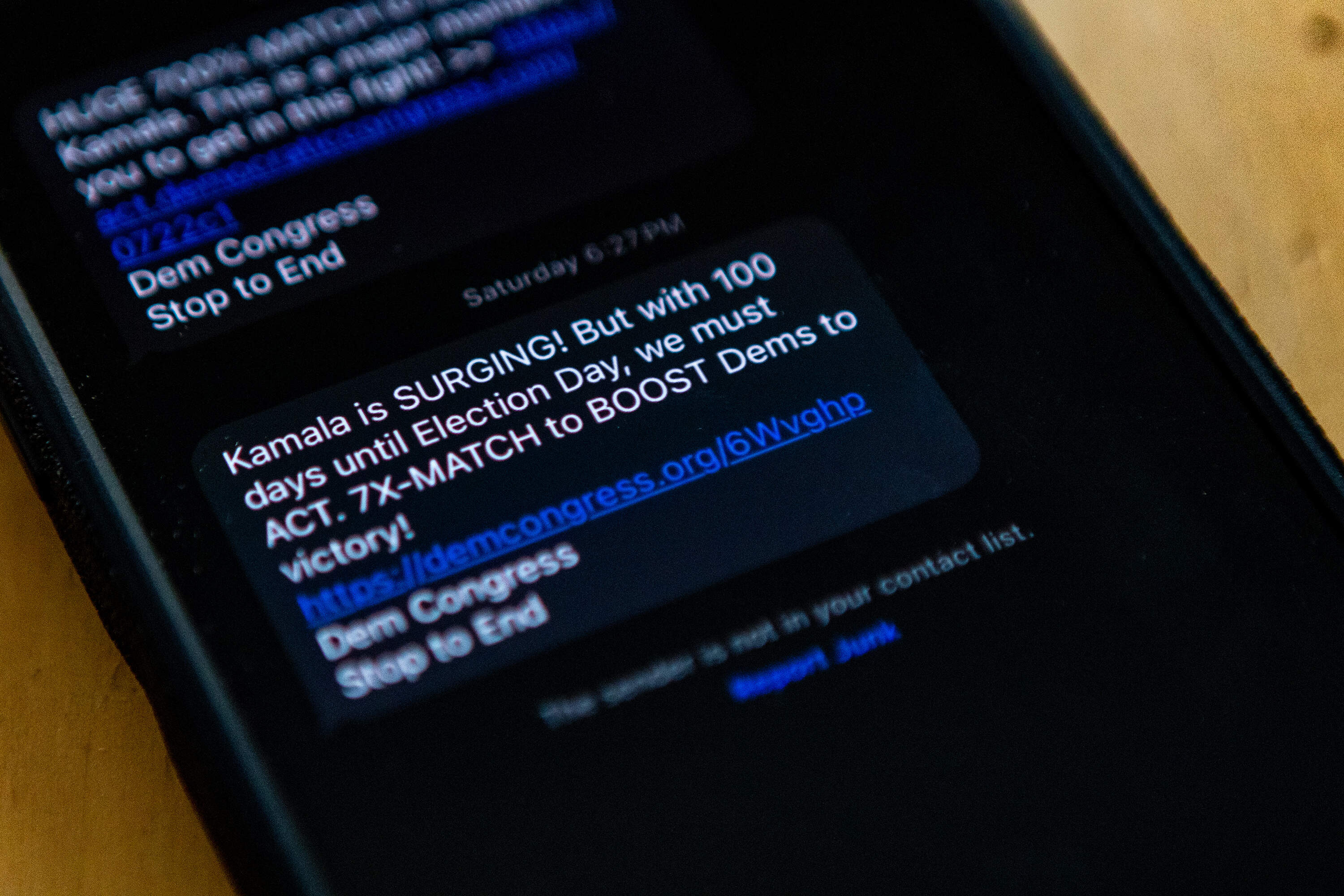
Quilici, the YouMail chief executive, urges similar caution, no matter which party is sending out the texts.
“Just treat these political texts as some kind of alert — like, do I care enough to donate to this candidate?” he said. “Go give money to President Trump or go give money to Vice President Harris, but go find the website to do it. If you feel compelled to do that, don't just click a button.”
As to how effective the text bombardments are? Quilici said it’s “not super efficient” to send texts to a party who hasn’t consented to receive them. He likens them to robocalls; if a group made 100 million calls, they might get 100,000 people to respond.
That’s a small victory, he said, “But the other 99 million-plus people were annoyed.”