Support WBUR
The Weekender: Boston's Saturday Morning Newsletter
Bonus: Hosts Deb Becker and Darryl C. Murphy talk shop, signature recipes and secret ingredients
Editor's Note: This is an excerpt from WBUR's Saturday morning newsletter, The Weekender. If you like what you read and want it in your inbox, sign up here.
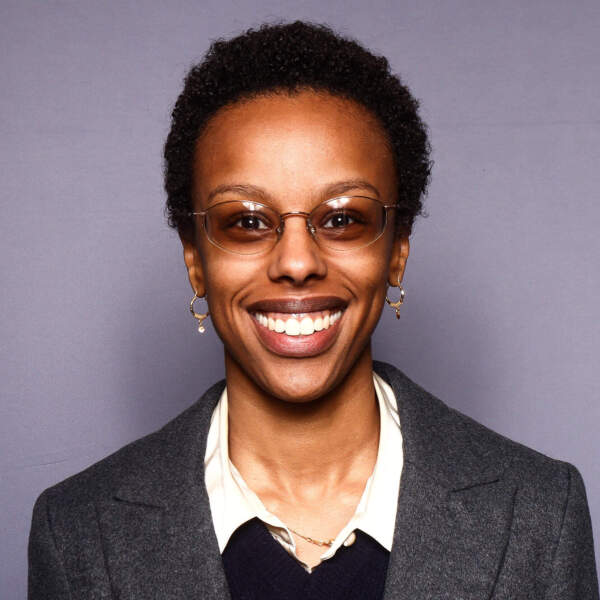
If you listen to WBUR, you probably recognize Deb Becker’s voice.
After all, she’s been at the station for over two-and-half decades — producing, reporting, hosting, editing and much more.
But did you know Deb also loves to cook?
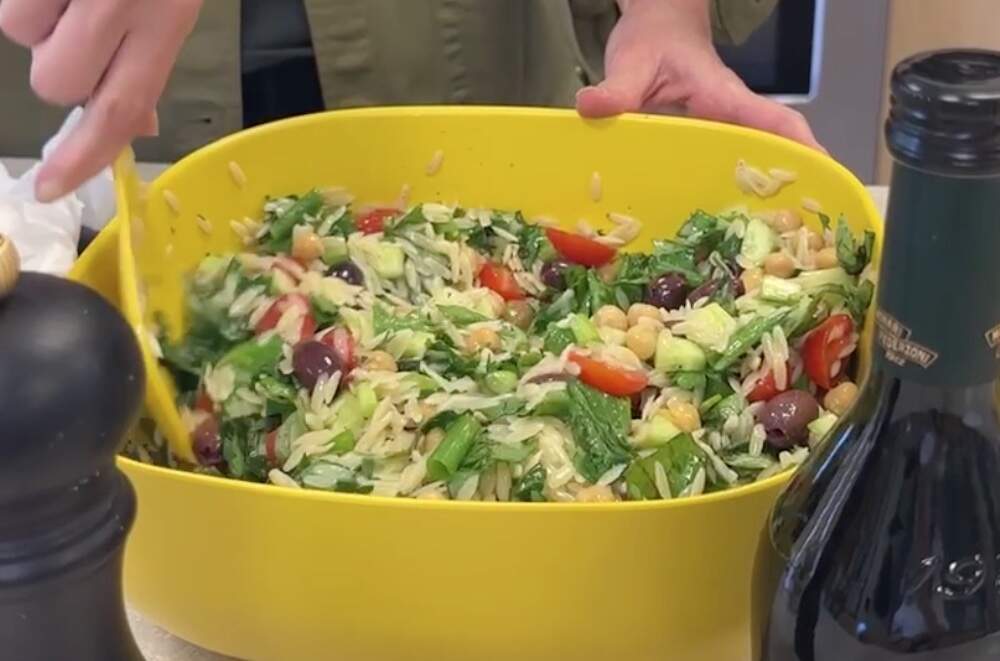
On this week’s episode of The Common, she joined Darryl C. Murphy (a fellow pro in the kitchen) for a cooking session-slash-interview. While Deb prepped her famous orzo pasta salad, Darryl helped listeners get to know her a little better. She talks about her reporting, what it was like growing up as one of six kids and the journalists she admires. You can listen to the full podcast (and get that pasta salad recipe) here.
Now, when you get two charismatic interviewers like Deb and Darryl together, the conversation naturally flows. Even though the episode was meant to focus on Deb, she ended up asking Darryl a few questions about his experience getting into journalism — all while he whipped up his own specialty: a batch of chocolate chip cookies.
That conversation (and the cookies) didn’t make it into the final cut. But if you’ve finished the podcast and are hungry for more, we’re sharing this bonus content below.
Editor’s note: This interview has been lightly edited for clarity.
Deb Becker: So, you asked me a bunch of questions. Can I ask you some questions?
Darryl C. Murphy: Absolutely.
DB: How did you get into journalism?
DCM: I kind of talked my way into journalism.
I had an English professor at Temple University whose class I didn’t like, and I wanted to drop the class. If you drop a class after the drop date, you don’t get a refund. But I felt like, “I just paid thousands of dollars for a service. I should get my money back.” And so, I went to the department and I explained my case, and it just so happened that I went on the first day of the new president. Since he’d just started, he told me to come back in a week.
We must’ve talked for maybe an hour and half. We had a conversation about my writing [for Temple News] and I could tell he was intrigued, because later he was like, “Hey, I’m on the board for this nonprofit paper. They’re looking for an intern. And would you be interested?” And I said, yeah. He made the connection. I got the interview. They liked me. And I just saw my lane there. I did the work, and two months later, they were like, “you want a job?” That was how I got in.
DB: Did you get your money back from the class?
DCM: I did not.
DB: Ohhh.
DCM: But, all in all, you know, shout out to that professor for not being my favorite professor.
Journalism was it for me. I went back to school in 2014 and around that time I was doing English, writing and stuff like that. And then it was “The Case for Reparations” from The Atlantic by Ta-Nehisi Coates — when I read that piece, I was like, “Oh, I could do this.” Not to say I could do it at that level at that time, but just knowing he was somebody who didn’t graduate college, but knew how to ask questions and get the right support, I was like, “This is very possible.”
DB: And how did you get into audio?
DCM: I was working in Philly at the Philadelphia Public School Notebook, which is right down the street from WHYY. One thing led to another, and I ended up at WHYY.
DB: What were you doing there?
DCM: The main thing I reported on was transportation. On that beat, you’re learning about funding, but then you’re also getting a very direct look at how a bit of money here affects a community, and how if buses don’t run on time, people can’t get to where they got to go — we’re talking about work, school, doctor’s appointments, all that type of stuff.
For my first story, they had me cover a meeting on SEPTA service zones. This meeting was boring as hell. And I’m asking questions, trying to figure out how to write this. But then I stepped back and I said, “I think I’m looking at the wrong thing.” This is a public meeting, but there’s not a lot of people here. And the story was about how there wasn’t a big turnout for this event — where they were making decisions on what stations go where — and that became the story.
DB: And that’s only possible with local reporting. You have to be out and you have to be talking to people. The stories are about people, ultimately, no matter what you do.
P.S. — Did we mention that Darryl likes to use soy sauce in his chocolate chip cookies? Click here to get his recipe.