Support WBUR
Commentary
A celebration of 'transplendent' actress Shelley Duvall at The Brattle
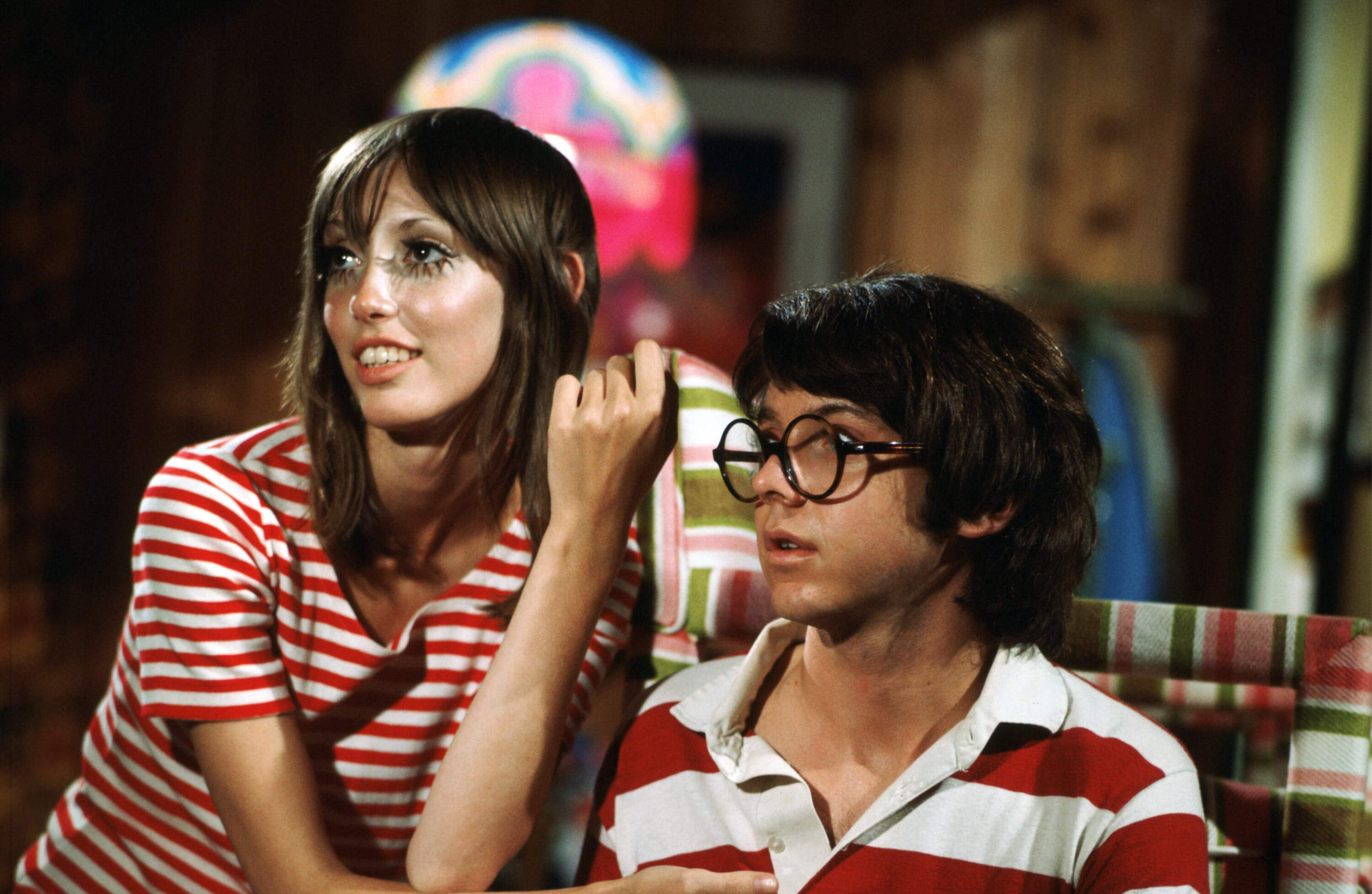
Shelley Duvall was 21 years old and selling her artist boyfriend’s paintings out of a van in Houston, Texas when Robert Altman asked her if she wanted to be in a movie. Members of the filmmaker’s entourage, including longtime assistant director Tommy Thompson, had met her at a party a few nights before and told the filmmaker he needed to “get a load of this girl.” Duvall had never acted before; never even considered it, really. Nonetheless, Altman ended up offering her the female lead in “Brewster McCloud,” the follow-up to his wildly successful “M*A*S*H” that was set to start shooting in Houston in three days. They’d wind up making seven pictures together.
Three of those collaborations will be screening at the Brattle Theatre as part of “Hello, I’m Shelley Duvall,” a nine-film retrospective running from Friday, Aug. 30 through Wednesday, Sept. 4, celebrating the career of this thrillingly unique American actress, who died in July at the age of 75. Additionally, on Saturday, Sept. 7, the newly reopened Harvard Film Archive will screen a pristine 35mm print of "3 Women," Altman’s haunting 1977 head trip for which Duvall won Best Actress at the Cannes Film Festival.
With her gangly, akimbo limbs and wide, anime-character eyes, Duvall didn’t look like other leading ladies of the era. Or really any era, for that matter. Yet there was something mesmerizing about her. Even in the dizziest comedies she had an ethereal, melancholy quality that drew the viewer in. Critic Pauline Kael famously wrote that “Shelley Duvall melts indifference. You're unable to repress your response; you go right to her, in delight, saying ‘I’m yours.’” Kael also claimed that “she seems able to be herself on the screen in a way that nobody ever has before,” but I always felt that was giving Duvall short shrift as an actress. She played a wide range of characters for a number of different, distinctive directors. What was often interpreted as “being herself” was more a matter of not allowing a lot of showy technique to muddy up that connection with the audience.
Duvall’s debut in 1970’s “Brewster McCloud” (Aug. 31 and Sep. 4) is certainly a striking one, though it doesn’t suggest the depth of which she proved capable in later films. Altman’s hellzapoppin’ sendup of cornpone Americana is a manic, largely improvised affair starring Bud Cort as an eccentric young virgin trying to teach himself how to fly in the basement of the Astrodome, advised by a frequently nude, possibly imaginary friend (Sally Kellerman) who might be a bird or an angel or some combination of the two. The film’s madcap, avian-obsessed antics include a narrator (Rene Auberjonois) coughing up feathers, and Duvall at her most birdlike, wearing eye-makeup that resembles wings, deflowering our hero and causing him to come crashing back down to Earth.
It's the kind of movie someone makes after a massive success when they can do whatever they want. Altman was a gambler who always bet big on his gut instincts, and often admitted “Brewster” wasn’t his best movie but it was his favorite “because I took more chances then.” One of my fondest Brattle memories is a screening that took place in 2009, attended by co-stars Kellerman, Michael Murphy and the filmmaker’s widow, Kathryn Reed Altman. The movie had long been out of circulation, so the special guests were seeing it for the first time in decades. The trio sat onstage afterward laughing, saying they were sure it must have made sense to them at the time.
It was visually inspired to pair the lanky, elongated Duvall with stubby, pint-sized misfit Cort. They reunited for Joan Micklin Silver’s adaptation of F. Scott Fitzgerald’s “Bernice Bobs Her Hair” (Sept. 1) The Brattle has a rare 16mm print of this little-seen gem, which was produced for the PBS series “The American Short Story” in 1976. Duvall stars as an awkward wallflower coerced by her shallow, debutante cousin (Veronica Cartwright) into a disastrous haircut as a mean-spirited prank. Though the Jazz Age set decoration is hampered by the public television budget, this is still the strongest Fitzgerald adaptation in terms of nailing the social strata and unwritten rules of the idle rich. The only catch is that the effortlessly stylish Duvall makes her allegedly bad hairdo look kind of great.
Duvall doesn’t have a huge role in Altman’s “Nashville” (Aug. 31 and Sept. 1), but the loopy groupie she plays is emblematic of the misplaced priorities chronicled in the director’s 1975 masterpiece, abandoning her beloved aunt’s sickbed to hover on the fringes of ephemeral stardom. One of the great American films, and maybe the greatest film about America, “Nashville” follows 24 characters moving through Music City on the eve of the bicentennial. It’s a movie about the intertwining of politics and entertainment, and how it’s probably been that way since the founding fathers; the whole country aspiring to an authenticity that more often than not comes off as kitsch. Altman is compassionate but clear-eyed, building to an ending of both shocking violence and unexpected grace. His bustling canvas seems to spill out over the sides of the movie theater screen. Every time I watch it I discover something new.
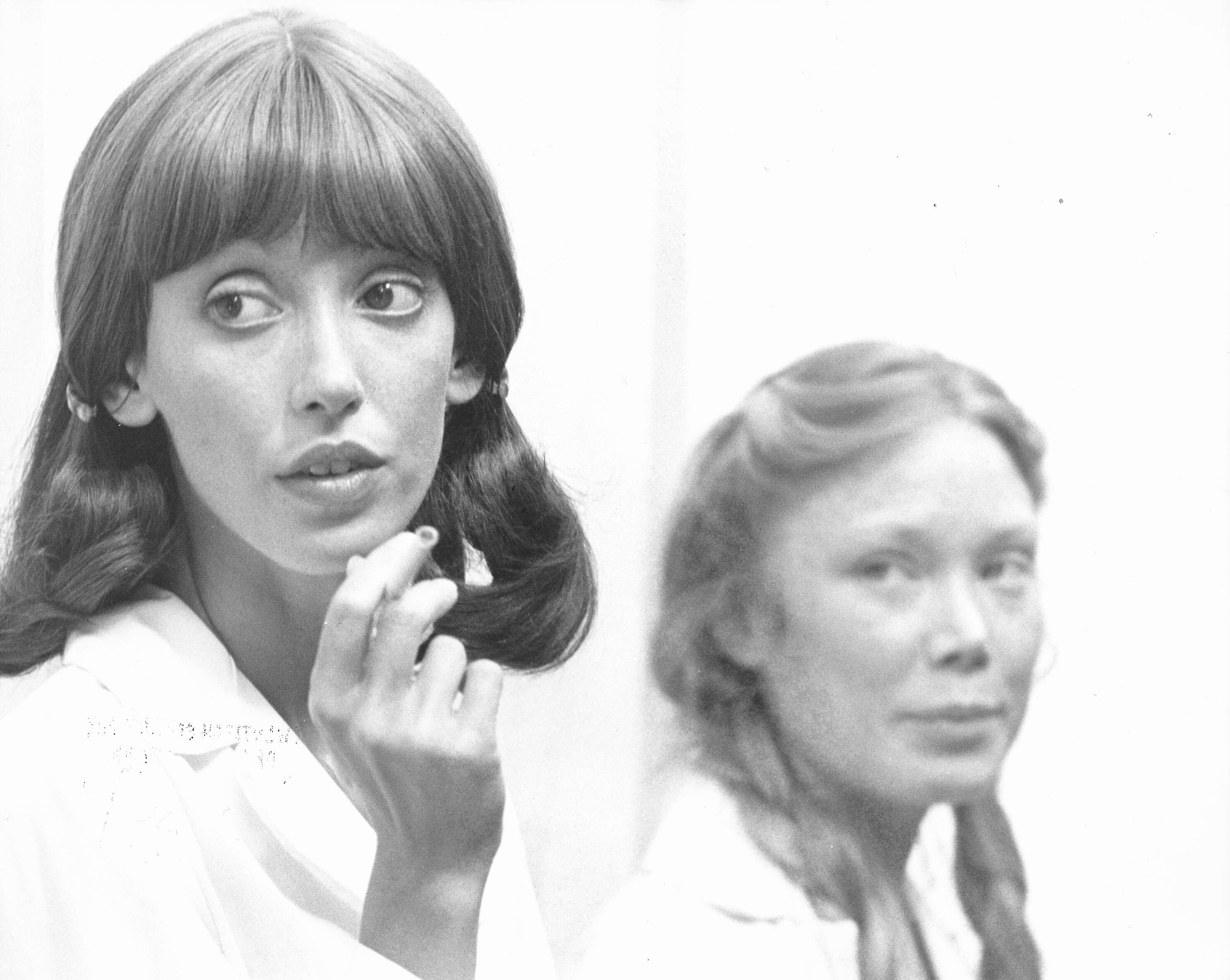
For this critic’s money, Duvall’s finest work can be found in “3 Women,” starring as a flighty, man-hungry supervisor at a purgatorial Palm Springs eldercare spa who falls into a disturbingly co-dependent relationship with a teenage co-worker played by Sissy Spacek. Altman’s riff on Ingmar Bergman’s “Persona” came to the director fully formed in a dream, and the picture unfolds with the unsettling, erratic logic of somebody else’s nightmare. (Altman told the studio that the script was based on an acclaimed short story, waiting until Cannes to admit that he’d literally dreamed it all up.) Duvall’s uncanny ability to remain emotionally grounded in the film’s increasingly surreal scenarios is what convinced Stanley Kubrick to cast her in the role of Wendy Torrance. It’s also the movie that inspired Julianne Moore to become a film actress. She often tells interviewers that as a Boston University theater student she went to a Brattle screening of “3 Women” and decided that day she’d rather be in movies.
Altman and Duvall’s final collaboration was the doomed 1980 “Popeye” (Sept. 2 and Sept. 3) a critically despised, big budget boondoggle that some contrarians — especially yours truly — consider something of a classic. Altman’s defiantly idiosyncratic adaptation of E.C. Segar’s comic strip was a stealth remake of his own “McCabe and Mrs. Miller,” all about the struggles of the individual in a world of systemic corruption, except as a children’s movie with songs by Harry Nilsson. Duvall’s casting as Olive Oyl was as perfect as it was inevitable. Who else could possibly have played the part? Her plaintive performance of the woozy love song “He Needs Me” is so gorgeous that Altman acolyte Paul Thomas Anderson used it to score the swooniest sequence in his 2002 “Punch-Drunk Love.”
Duvall’s last major film was the divisive 1996 adaptation of Henry James’ “The Portrait of a Lady” (Sept. 4). Writer-director Jane Campion’s controversial follow-up to “The Piano” proved to be the pivot from when Nicole Kidman went from being best known as Tom Cruise’s wife and Batman’s girlfriend to a favorite of international auteurs. Duvall plays the Countess Gemini, sister to John Malkovich’s devious Gilbert Osmond. (Duvall and Malkovich look nothing alike, but casting them as siblings makes perfect sense.) Like a lot of important ‘90s indies, “The Portrait of a Lady” has fallen through the cracks due to complicated rights issues and is not currently available to stream, nor could I locate a DVD copy in the NOBLE library system. This 35mm screening might be your last chance to see it for some time.
It’s not included in the Brattle series, but Duvall’s funniest moments onscreen can be found during her quick cameo in Woody Allen’s “Annie Hall,” playing a free-spirited Rolling Stone reporter who epitomizes all the counterculture good times our stick-in-the-mud protagonist can’t comprehend. (The film was originally titled “Anhedonia,” due to the main character’s inability to enjoy anything.) Gushing to an annoyed Allen about Bob Dylan lyrics and “Mick’s birthday,” Duvall coins the made-up word “transplendent” to describe her groovy vibes, repeating it ecstatically. Later that night she tells him, “Sex with you is a really Kafkaesque experience,” waiting a perfectly timed beat before adding, “I mean that as a compliment.”
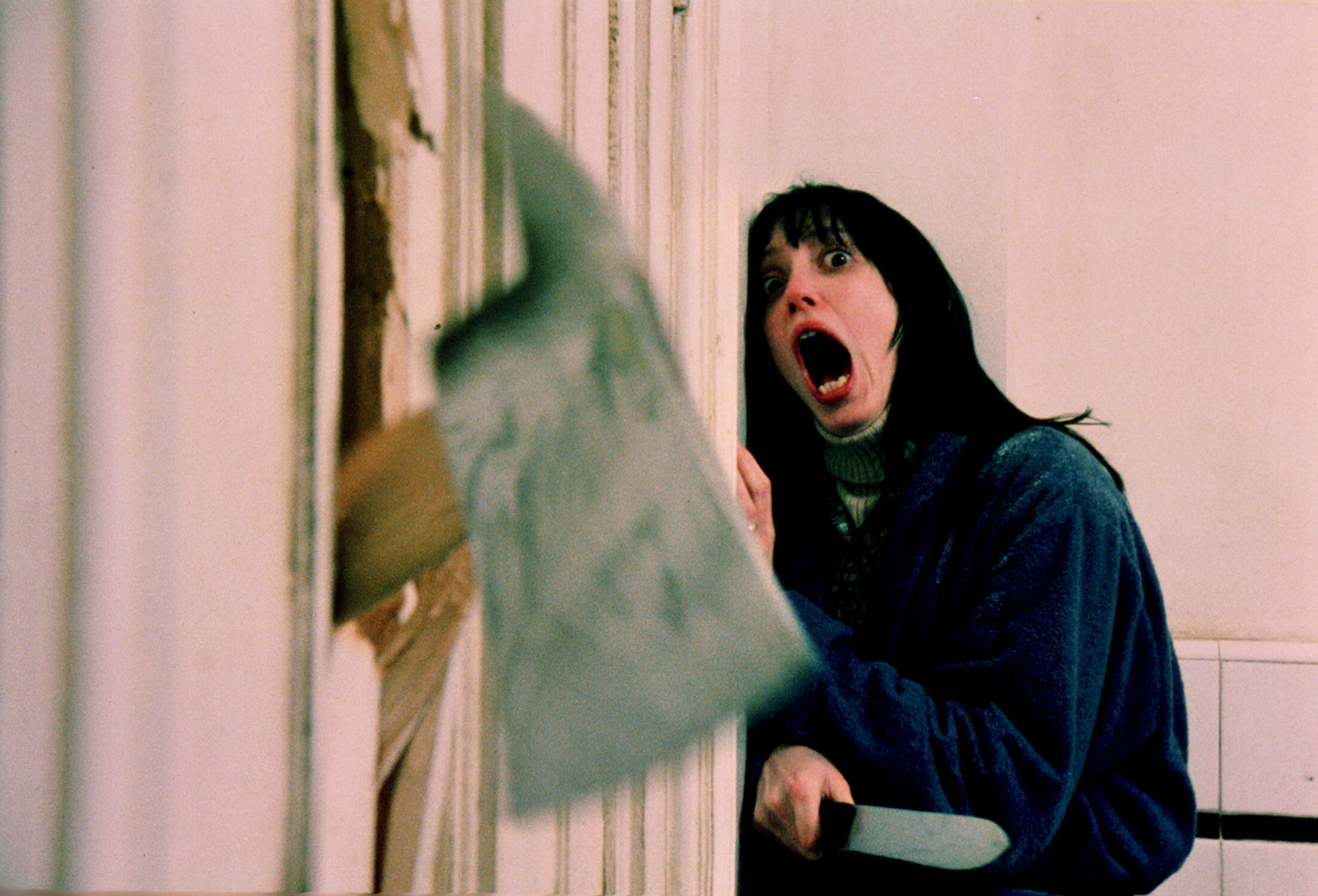
Duvall’s legacy has been tainted somewhat by asinine urban legends surrounding “The Shining” (Aug. 30) in which her brilliant performance has been falsely attributed to psychological abuse on the set by director Stanley Kubrick. It’s also become fashionable in ill-informed online circles to assert that the mental health issues Duvall suffered later in life were caused by her traumatic experiences on “The Shining,” a view that denigrates her excellent work while remaining willfully ignorant of not just her subsequent output — including creating and overseeing every aspect of the beloved 1980s television series “Faerie Tale Theatre” — but also the actress’ own words.
Her work in “The Shining” is so emotionally naked and devoid of vanity, one can understand why people might want to believe that there’s something more going on here than just craft. It goes back to Kael’s quote about Duvall seeming to be herself onscreen. There’s no protective, actorly barrier between ourselves and Wendy’s terror; it’s ugly and unflattering. Hers is one of the rawest performances ever captured in a horror film, especially when placed in such deliberate contrast to Jack Nicholson’s showboating theatricality. But watching the film again (and again), one can see how carefully Duvall has layered in Wendy’s whole history with Jack, their early scenes colored by the sad knowledge of a woman who has seen the man she loves at his worst, infused with her irrational hope that things are going to be different this time.
Shelley Duvall wasn’t just a great actress. She was transplendent.
“Hello, I’m Shelley Duvall” runs at the Brattle Theatre from Friday, Aug. 30 through Wednesday, Sept. 4. “3 Women” screens at the Harvard Film Archive on Saturday, Sept. 7