Support WBUR
Former Boston Mayor Marty Walsh on his work with Harris and Walz
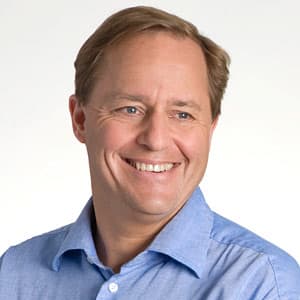
Marty Walsh, the former mayor of Boston, was closely involved in the vetting of Minnesota Gov. Tim Walz to be Vice President Harris' running mate for the Democratic ticket.
Walsh, who has a background in union organizing, is now representing professional hockey players as the executive director of the National Hockey League's Players' Association. He served seven years as mayor of Boston before President Biden tapped him to become labor secretary. Walsh worked closely with Vice President Harris when they served together in the Biden administration.
Walsh spoke with WBUR about his relationship with Harris, the challenges facing the Democratic party and whether he plans to return to public office.
Interview Highlights
This interview has been lightly edited for clarity.
Anthony Brooks: Can you share more about how you got to know Harris?
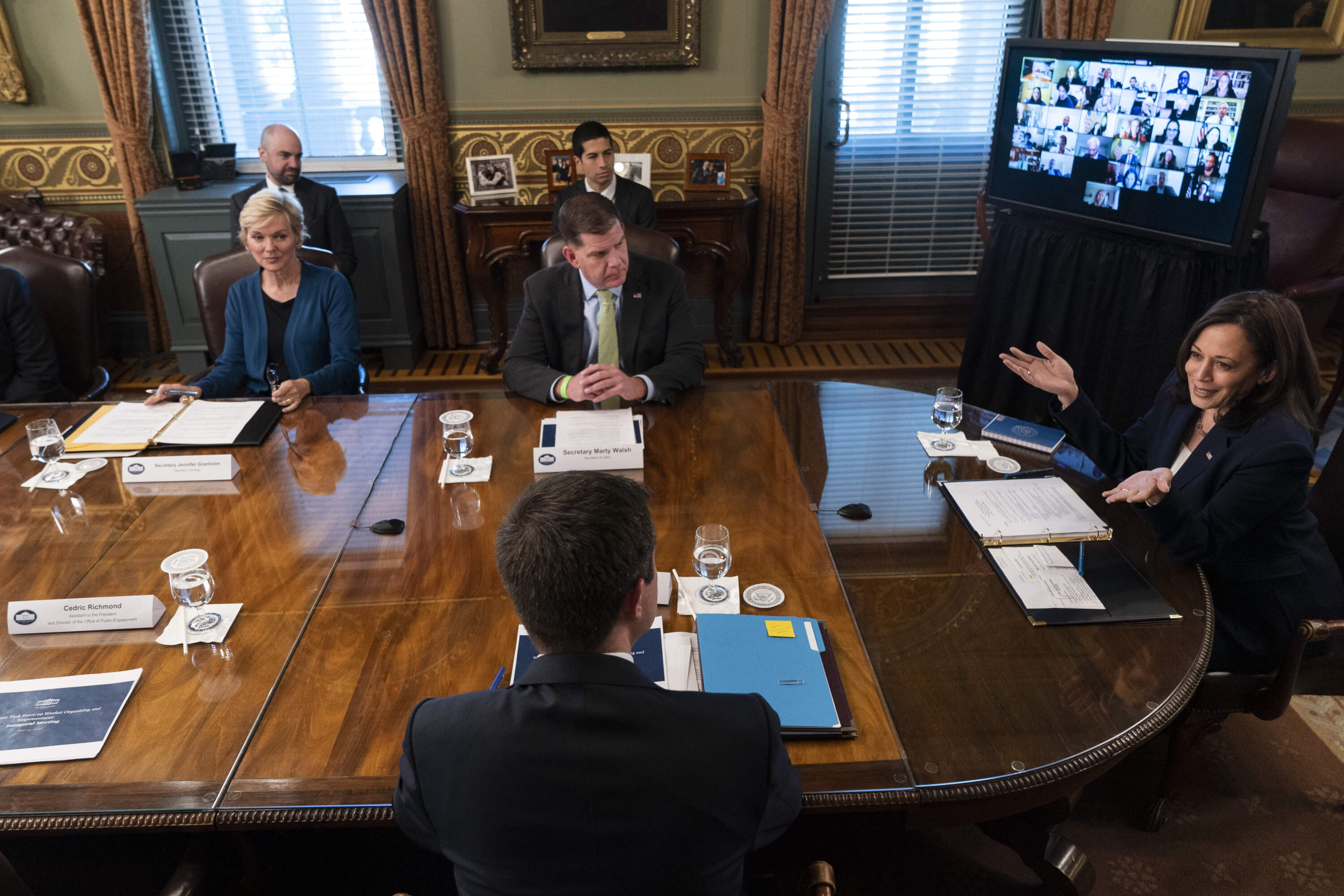
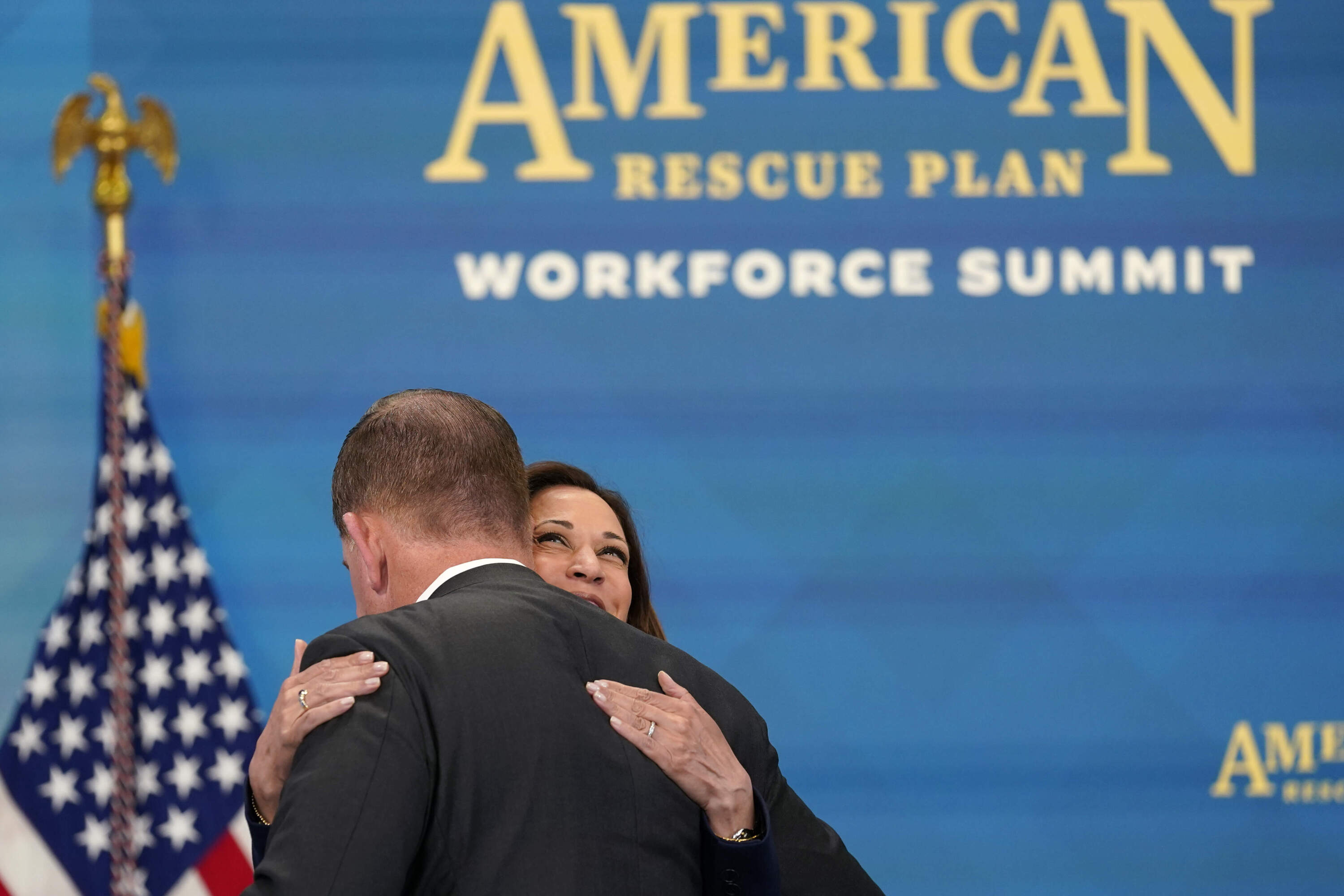
Marty Walsh: "When I was mayor of Boston, I met her a few times. And then, when I became the labor secretary, we worked closer together. The president had us working on a lot of workers' task forces and different issues. And we worked closer together — I know her values.
"We talked about everything — from what was going on in the nation, to the world, to local [politics], to family. You know, sometimes you just meet somebody, and you just have a natural bond and connection with them. And that happened between myself and the vice president."
You were involved with the vetting of Walz, who became her running mate. Can you tell me about your role in that?
"We talked to the candidates. It was interesting. I mean, all the candidates were great. I had a chance to meet Gov. Walz when I was labor secretary. I was in Minnesota, and I watched him interact with constituents almost like a mayor of Boston, meaning that everyone in the street knows you. Everyone knows him, who he is and what he's all about.
"They were all good candidates [for Harris' running mate]. They all had their strengths, and they all would have brought something different to this ticket. At the end of the day, you know, the vice president chose Gov. Walz. And I think it comes down to relationship chemistry. You can see why she chose him. He understands the issues; he's been out there. He's run a state. He's been in Congress. He's a veteran. He did a lot of what American people are looking for."
Did you recommend Gov. Walz and say, “This is your guy?”
"I'm going to keep that — that's just that the decision, you know, a lot went
on there. I'm going to leave that one there."
Now, it seems like things have gone awfully well for the Democratic ticket, but there's still more than two months to go. What are you concerned about in the next two months?
"I think there's unknowns. Momentum changes quickly, whether it's momentum on the ground, momentum with the press, momentum on social media. And I think that the Harris-Walz ticket is still getting out to America and introducing itself.
"I don't know if I'm necessarily concerned about anything. I just think that you need to continue to work hard every day... There's big challenges in front of us in this country moving forward still. We still have to deal with immigration. There are issues of the economy. The economy is going in good directions, but American people don't feel that so I think there's messaging that has to be done there as well."
There are a lot of indicators that suggest the economy is strong. But it seems like if the Democrats face a challenge, it's just what you said: a lot of folks still feel kind of sour about the economy. So how do you address that?
"Messaging is key... It's hard to get your message out there when [in] the course of a day you're dealing with anything from Israel to Ukraine, to the border, to [a] hurricane, to a tornado.
"So, it is about getting messaging through mayors and messaging through governors and messaging through elected officials and then get it to the mainstream. I mean, people need to feel comfortable."
You've had quite a journey since you were mayor of Boston. Do you miss it?
"Oh, I do. I mean, I miss the people. I miss the challenges of the job ... but the biggest piece is missing seeing the people in the streets, going to the housing developments, doing the peace walks, going to the events. You miss that. You miss the action of talking to everyday people."
Do you foresee a return to public life in Massachusetts, running for another public office someday?
"Oh, God, I don't know. I let everyone speculate what's going on right now. I'm doing a job that I enjoy. We have a collective bargaining contract in a couple years; I'm getting to know the players, getting to know the league. I've enjoyed every bit of it. I'm going to do this best I can right now and take my life as I always do: A day at a time."
But no long-term plan or hope that one day you run for something?
"I don't generally do that. When I was younger, I wanted to be in the Legislature. I was able to get there. And I wanted to be mayor of Boston and I got there. I really didn't think about what would be next after that. I didn't know that I was going to get a call from the president of the United States of America to ask me to be in his cabinet. That was not on the plan.
"I hadn't really thought about being governor or senator or anything like that. I never rule anything out, but it's not something that's top of mind."
This segment aired on August 29, 2024.