Support WBUR
What to know as mosquito-borne illnesses circulate in Mass.
This summer, state and local officials became increasingly concerned about mosquito-borne diseases in Massachusetts. By early October, threats of the viruses persisted, but were reduced in many communities.
At least six West Nile virus human cases were reported this summer. In that time period, the state detected roughly 300 positive cases of the virus in mosquitos.
Symptoms of West Nile can range from a mild fever to more serious impacts like encephalitis or meningitis. Most people infected with the virus won't exhibit symptoms.
The more concerning mosquito-borne illness circulating now is eastern equine encephalitis (EEE). The last outbreak in Massachusetts was 2019 to 2020.
EEE is a rare but potentially fatal disease. The first symptoms can include fever, stiff neck, headache and fatigue, according to the state health department, and can cause serious neurological damage. (Read this to learn more about EEE.)
Over the summer, a Plymouth County woman in her 30s became the second person in the state infected with EEE. A New Hampshire man died from the disease at the end of August.
Massachusetts' Public Health Commissioner Dr. Robbie Goldstein earlier noted the final month of summer remains the peak time for transmission of mosquito-borne illnesses. The risk diminishes with the first hard frost of fall.
Until then, it's important to know the risk level in your community, and protect yourself from mosquito bites.
Map: See EEE and West Nile risk levels
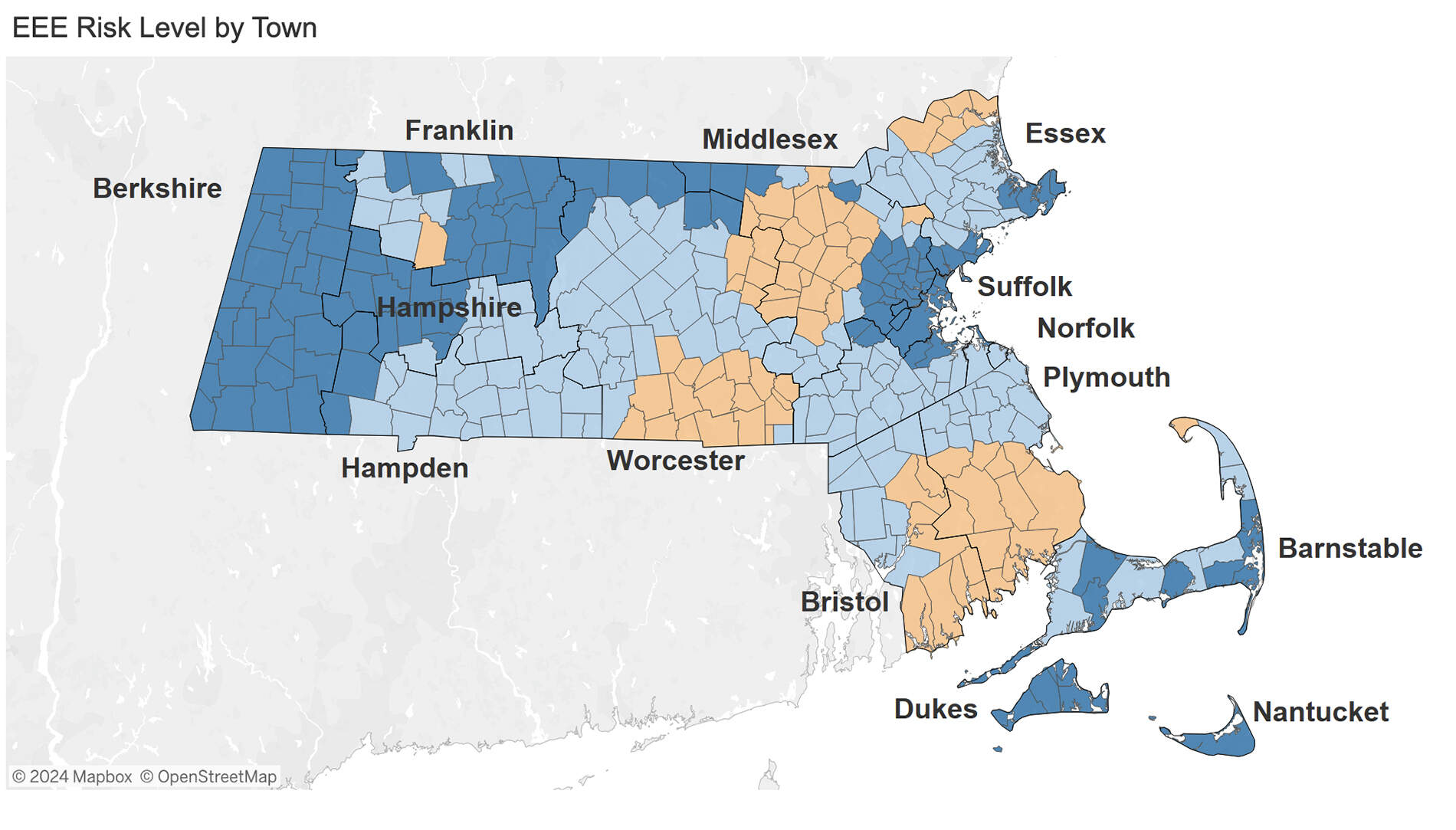
Here's a look at the current risk level of EEE, by town. Dark blue shading indicates low risk, while dark orange indicates high risk. For the most up-to-date map, click here.
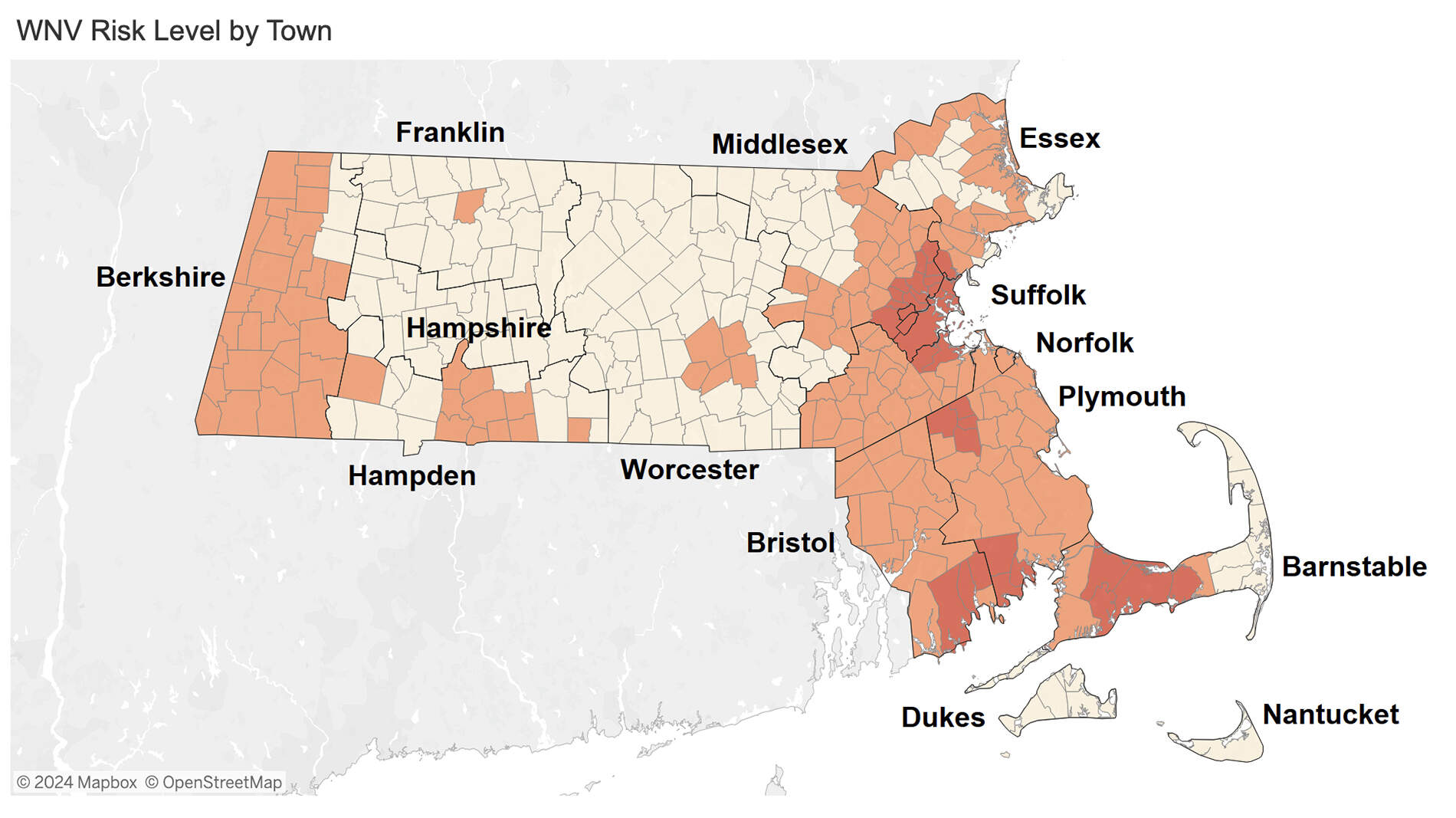
Here's a look at the current risk level of West Nile, by town. Tan shading indicates low risk, while red indicates high risk. For the most up-to-date map, click here.
How to protect yourself
The best way to protect yourself is to avoid mosquito bites. Here are some tips from the state's public health department:
- Use mosquito repellent with an EPA-registered active ingredient, like DEET, permethrin, picaridin or oil of lemon eucalyptus, anytime you go outside. (Be sure to read the labels, as some products should not be used on children or infants.)
- Wear long sleeves and pants to give the mosquitos fewer opportunities to bite you. Consider wearing high socks as well.
- Stay inside from dusk to dawn in towns where EEE risk is high. Mosquitos are most likely to bite in the evening or early morning.
- Mosquito-proof your home by draining any standing water and installing or repairing screens for your windows. Standing water is where mosquitoes lay their eggs, so you'll want to check the areas where they could breed like rain gutters and drains, empty flower pots, birdbaths, kiddie pools
,and pet water dishes.
The state sprayed pesticides in high risk counties, including Plymouth and Worcester, at the end of August in an effort to reduce mosquito populations. (The woman in Plymouth County who contracted the disease was infected before this week's pesticide spraying, according to state officials.)
The pesticides help control the mosquitos spreading the disease, but does not completely eliminate the risk.
“We expect that the aerial spraying will help prevent risk for EEE from continuing to escalate in the area, but it does not eliminate it completely," Goldstein, the public health commissioner, said. "We are asking people to be consistent about taking steps to prevent mosquito bites.”
This article was originally published on August 29, 2024.