Support WBUR
The Gardner Museum’s most infamous gallery is getting a facelift
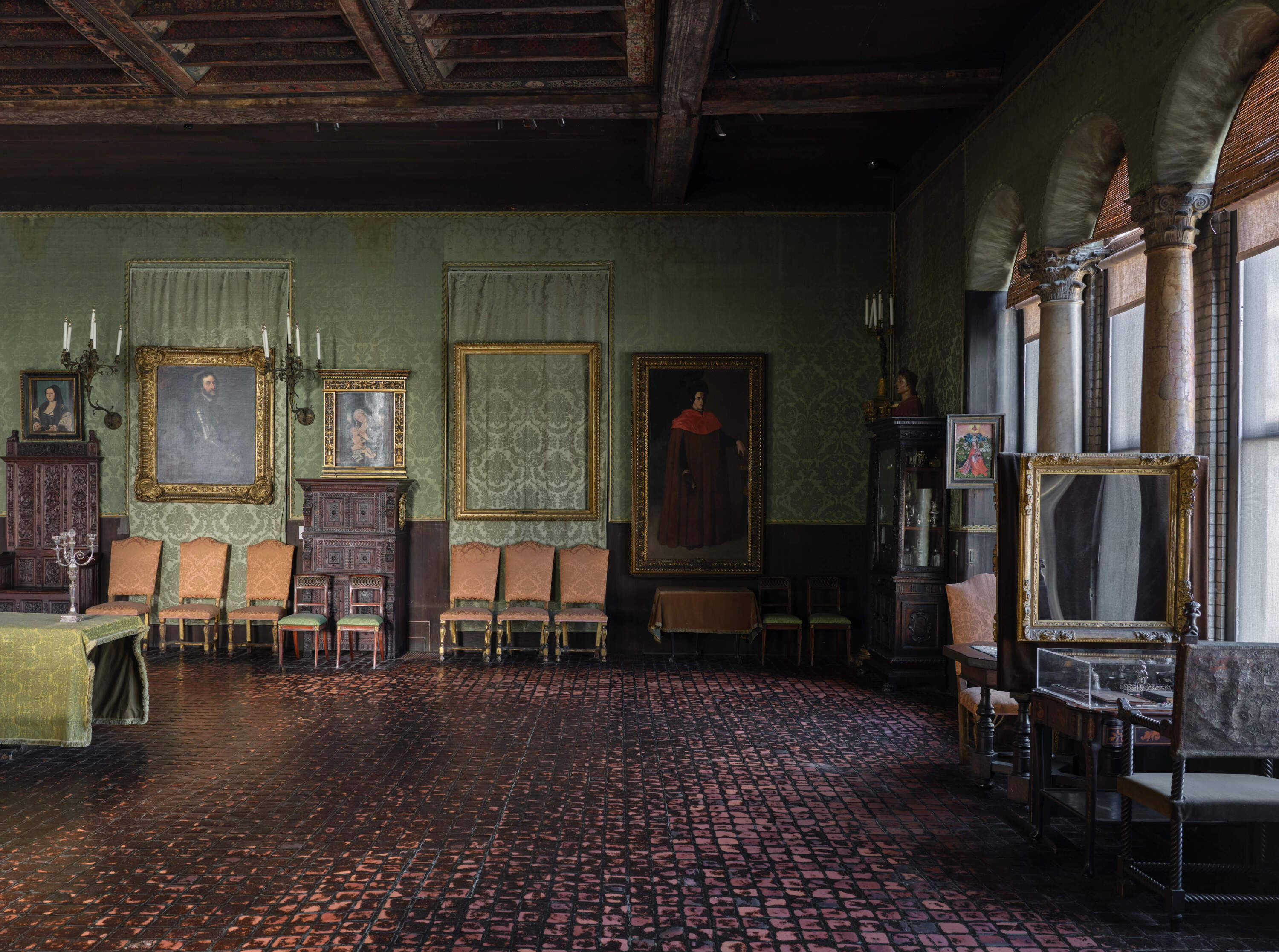
One of the most storied galleries at the Isabella Stewart Gardner Museum is undergoing a major restoration. The floor-to-ceiling overhaul of the Gardner’s Dutch Room includes historic furniture, textiles, its ceiling, artworks and frames — including the four empty ones thieves left behind after robbing the Fenway palazzo in 1990.
During the notorious heist, they lifted six of the 13 stolen pieces from the second floor gallery. Amidst the looted trove were large-scale paintings by Rembrandt and Vermeer. Their frames hang in the room as stark reminders of the museum's unsolved loss.
Staff has painstakingly restored other spaces in the historic building — most recently the Titian Room in 2021 — as part of the museum's longterm strategic plan. But for director of conservation Holly Salmon, working on the Dutch Room project feels palpably different.
“Because we're restoring the space in hopes of the return of those paintings,” she said, “and really, in many ways, the restoration won't be complete until we have the paintings and the Chinese bronze back on view in the space.”
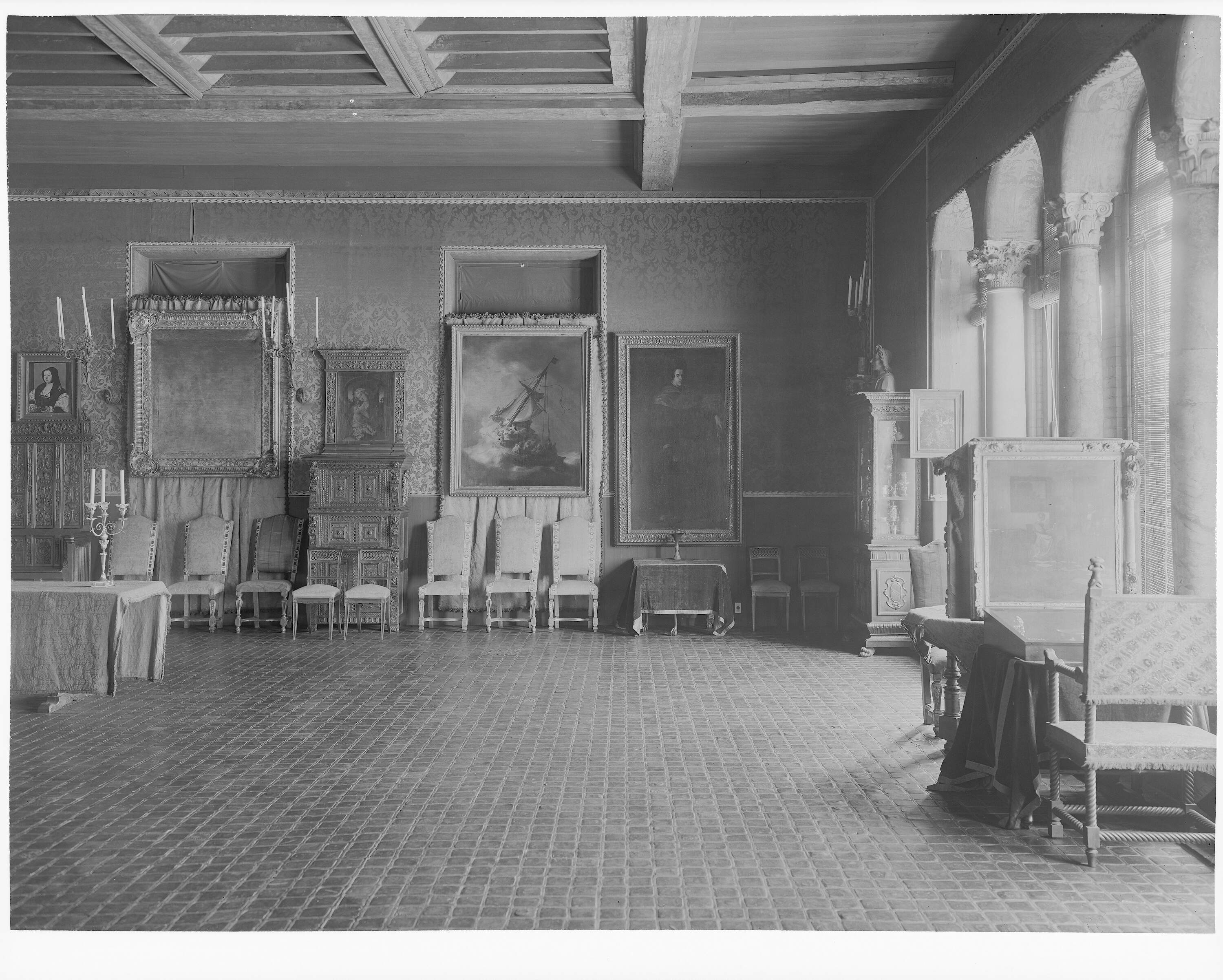
Behind-the-scenes preparation and research on the Dutch Room's elements have been underway for about a year. Now cleaning, studying and repairing the room’s collection is moving forward in earnest. Its terracotta floor is slated for deep cleaning, and the ornately painted 16th-century wood ceiling will be treated for the first time. Salmon said in mid-2026 the room will be brought down to its studs.
In addition to preservation, the ultimate goal is also to fully recapture Isabella Stewart Gardner’s original arrangements, colors and textures. The conservation and curatorial teams are cross-referencing archival photographs, documents and records so they can reclaim the space’s original aesthetics. According to Salmon, the hope is that nearly every element in the room will be brought back to what it looked liked when Isabella Stewart Gardner opened her museum in 1903.

“There are little changes that were made at different moments over the history of the museum,” she explained, “all carried out in the interest of preservation and caring for the collection or the room as a whole.” Examples of that have included reupholstering tattered furniture and replacing original wall coverings in the 1950s. “Those changes add up over time to present us with a very different view of the gallery today, and it's not what Gardner had originally envisioned.”
A number of the Dutch Room’s paintings will also be scientifically analyzed, including Rembrandt’s “Self-Portrait, Age 23,” a milestone purchase Mrs. Gardner made in 1896.
The Dutch Room will remain open throughout the multi-year restoration project so visitors can view the conservationists in action.
“We will be taking more works off view to be treated in our lab space,” Salmon said, “but there'll be information in the gallery talking about the project so that our visitors can really learn about the stories we'll have to tell over the next two years of the project.”
She estimates the Dutch Room's restoration will be completed by late 2026.