Support WBUR
St. Francis House to break ground on downtown Boston affordable housing tower
The Boston homeless services organization St. Francis House will break ground Tuesday on an affordable housing development near its downtown day shelter.
The 19-story tower on LaGrange Street will have 126 apartments, 70 of which will be permanent housing with support services for people coming out of homelessness. The rest will be for people who make a range of low to moderate incomes, according to St. Francis House President and CEO Karen LaFrazia.
LaFrazia said the organization envisions an inclusive and integrated apartment community, with "somebody who might have been homeless in a shelter for years living alongside of a family that could find themselves homeless if it weren't for having an opportunity to find an affordable apartment."
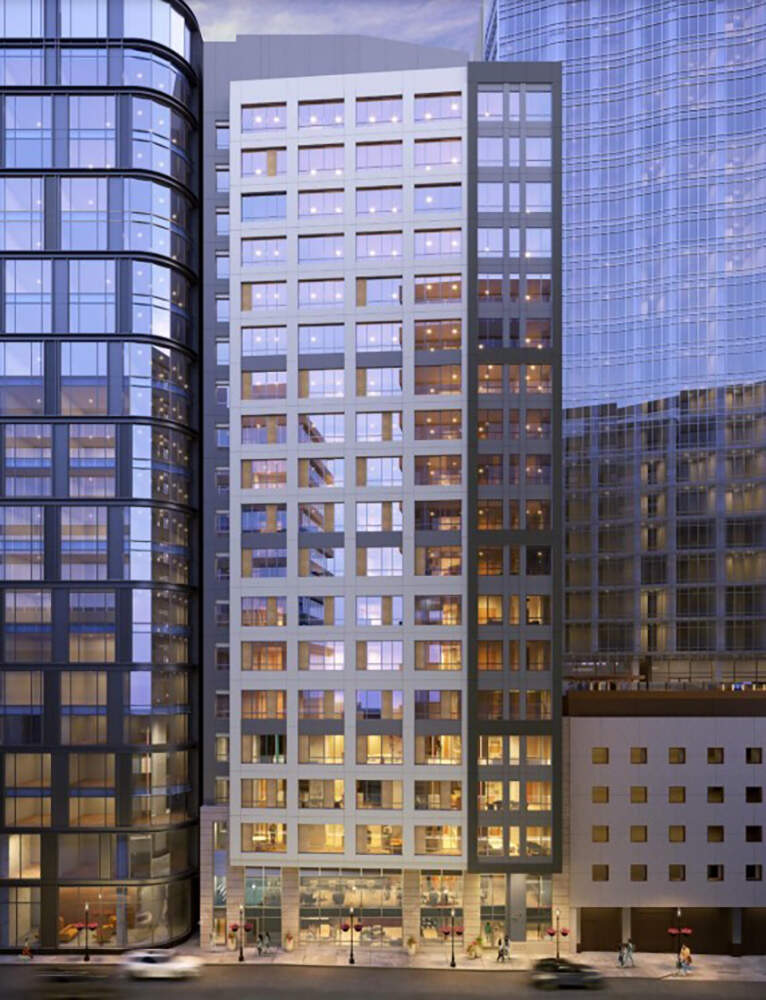
St. Francis House is partnering with the Planning Office of Urban Affairs, a housing development nonprofit affiliated with the Archdiocese of Boston, to create the housing.
The city of Boston has also provided funding and assisted with planning for the development. Boston officials said the apartments dedicated to people experiencing homelessness are among 577 units of permanent supportive housing the city has helped facilitate since 2022. So far, 179 of the housing units are complete and the remainder are under construction, according to the city's housing office.
Other funding for the project is coming from state's Executive Office of Housing and
Livable Communities, along with nonprofits and businesses aimed at spurring affordable housing development.
In the LaGrange Street building, individuals who are homeless and staying in shelters will be matched, via a database, with permanent supportive housing units as they become available. The mixed-income units will be rented via a lottery to households making less than 50%, 60% or 80% of the area median income, depending on the housing unit, according to LaFrazia.
She noted that the demand for affordable housing is so high that in an earlier phase of the project, completed in 2019, nearly 2,000 individuals and families submitted applications for just 20 income-restricted apartments.
"We had to stop the intake of those applications, because it just became too large," LaFrazia said. "So I think that really speaks to the need for affordable housing at all income levels."