Photographer Feda Eid explores Arab Muslim identity in luminous self-portraits
On a rainy day in June, Quincy photographer Feda Eid stood in an art gallery in Providence, burning frankincense.
“It just smells really beautiful,” Eid said, holding up the hourglass-shaped incense burner, a delicate contraption inlaid with mother of pearl. “And I love burning things.”
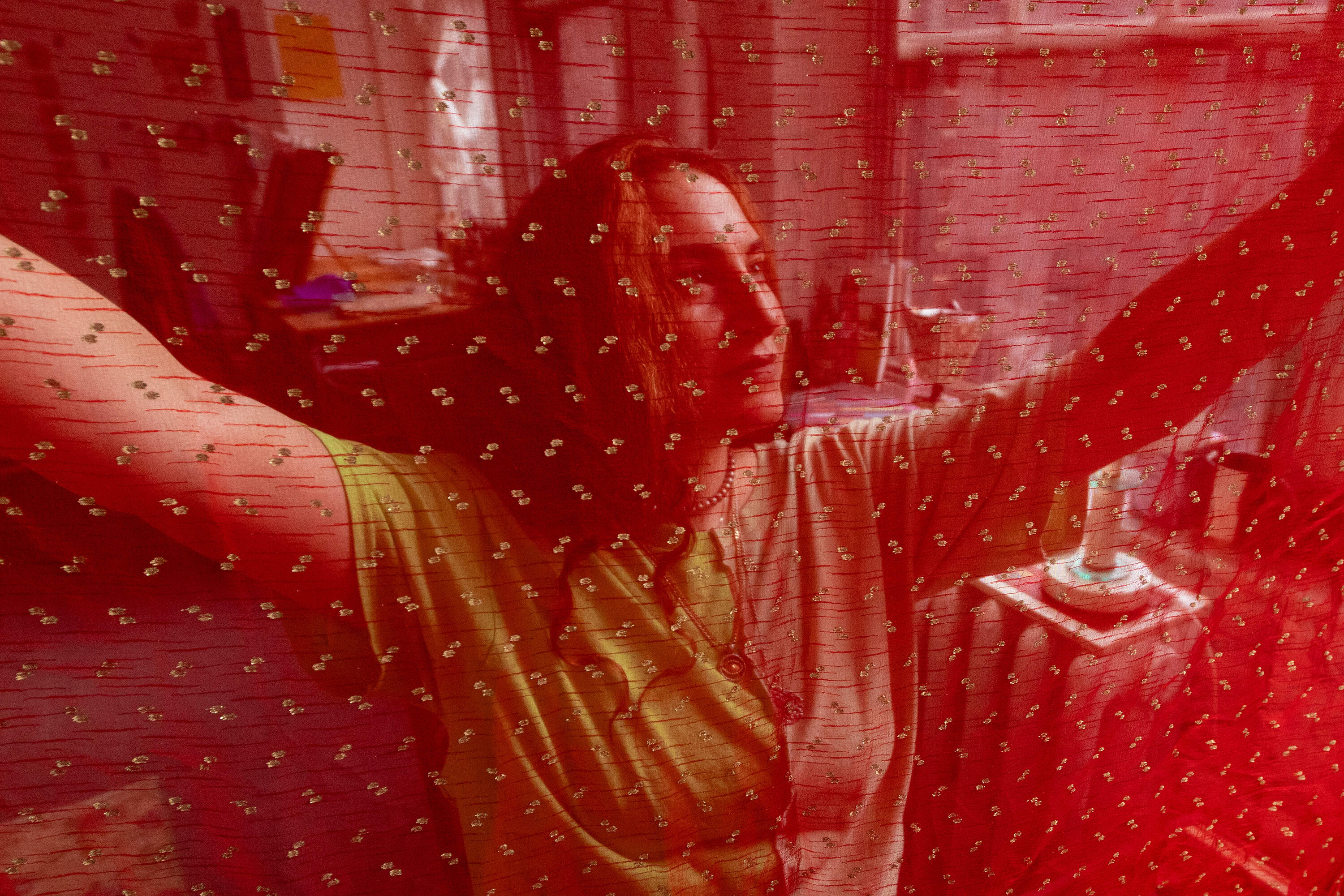
Surrounding Eid on the gallery’s whitewashed brick walls were framed photographs from her series “Made in USA,” luminous tableaus rendered in cool pinks and blues. Items of interest or significance to Eid — an empty rosewater bottle, a broom that reminded her of the type favored by her grandmother in Lebanon — were arranged in a cluster, shrine-like. Her short film “Rooted Revelations” played on a loop nearby.
The exhibit, which featured work by Eid and the artists Shey “Rí Acu” Rivera Ríos and Luana Morales, was originally scheduled to run from March to September at Providence College. In early March, administrators abruptly canceled the show, citing past works by Ríos with “sacrilegious” imagery. (Providence College is a Catholic institution.) The decision ignited a local controversy, resulting in an invitation for the three artists to instead exhibit their work at Aunty’s House, a community space tucked away in an industrial neighborhood in the city.
“Unfortunately, this is the art world nowadays,” Eid remarked dryly.
Eid, who is 37, grew up running wild in Quincy, Massachusetts, climbing trees and looking for snails on the grounds of the local mosque where her father was the imam. The mosque was founded by Lebanese dockworkers in the 1960s, becoming a multicultural oasis for Muslim residents. But at school, Eid was one of only a handful of Muslim students. She was made aware of her difference from other kids early on.
“One time, my mom made tabbouleh, and she brought it into class in kindergarten,” Eid recalled. “And the kids started eating and they were like, ‘This is gross. This is yucky.’ I was so heartbroken.”
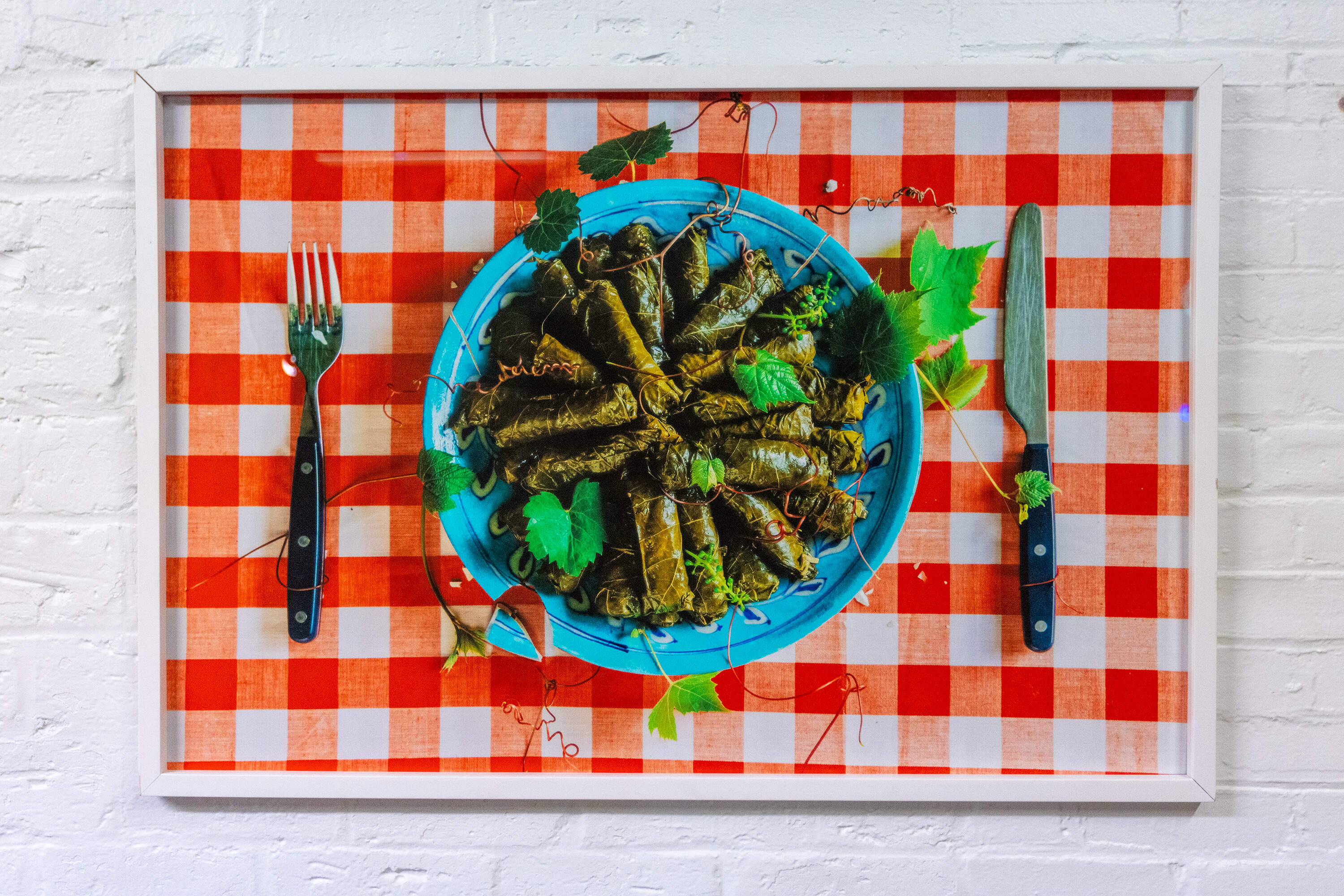
Decades later, Eid mined the potency of memories like this in a photograph called “Homemade.” It’s a picture of a plate piled high with stuffed grape leaves — another childhood staple. The place setting is symmetrical and neat, but the plate is chipped, and wild grape vines curl haphazardly across the glossy heap of food.
The photograph reminds Eid of her family.
“My family came here and made roots here, and my mom cooked so much,” said Eid, whose parents left Lebanon in the 1980s during the Lebanese civil war. “It's all sort of kind of chaotic and messy. But yet, we're still growing here, and thriving here.”
Eid was a high school freshman when, years later, the twin towers fell. This time, she found herself the target of outright animosity.
“I had a classmate come up to me after school, and he said, ‘I have a knife and I'm going to defend my country,’” Eid recalled. “And I was like … ‘If this is his country, then what’s my country? And, like, who am I?’”
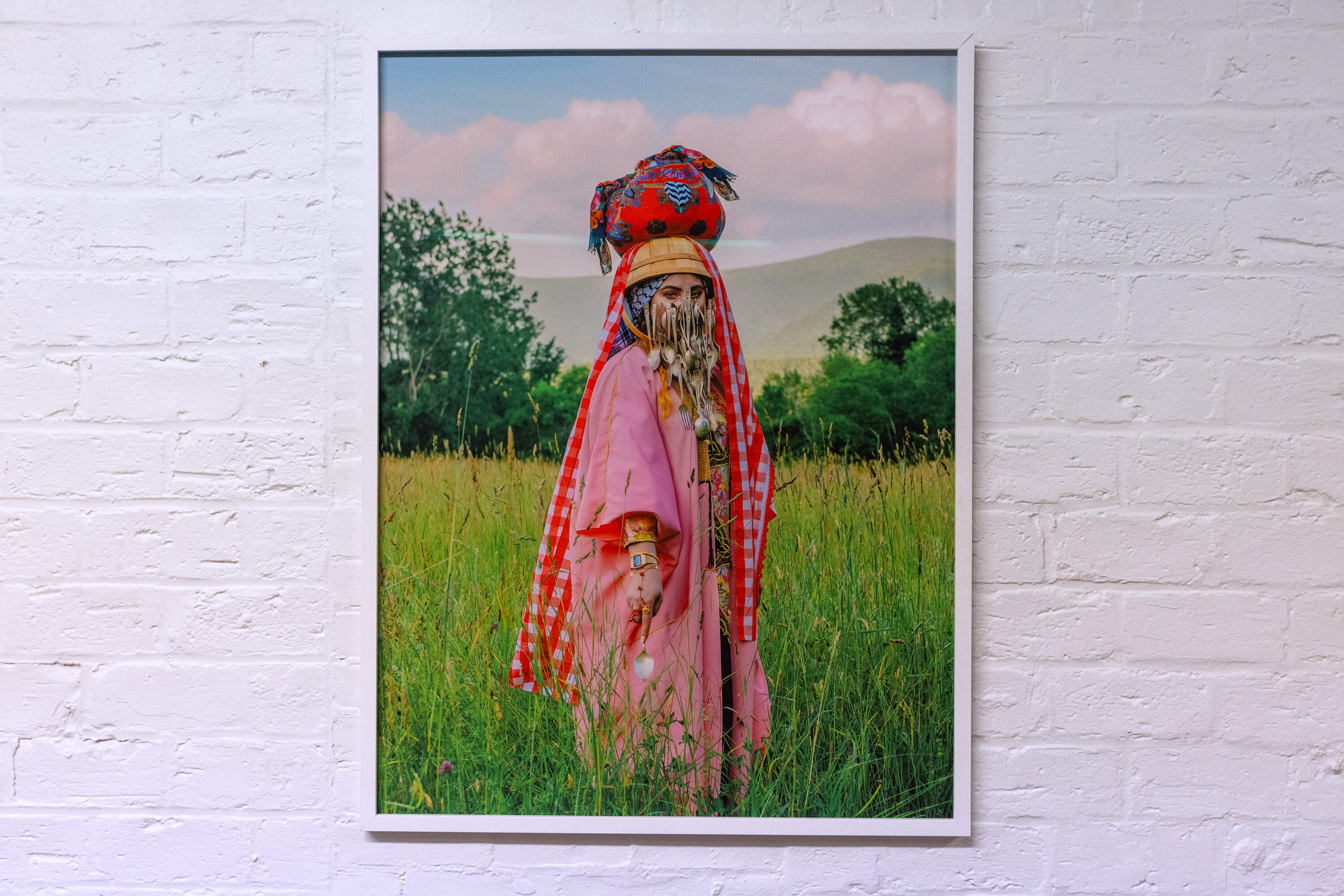
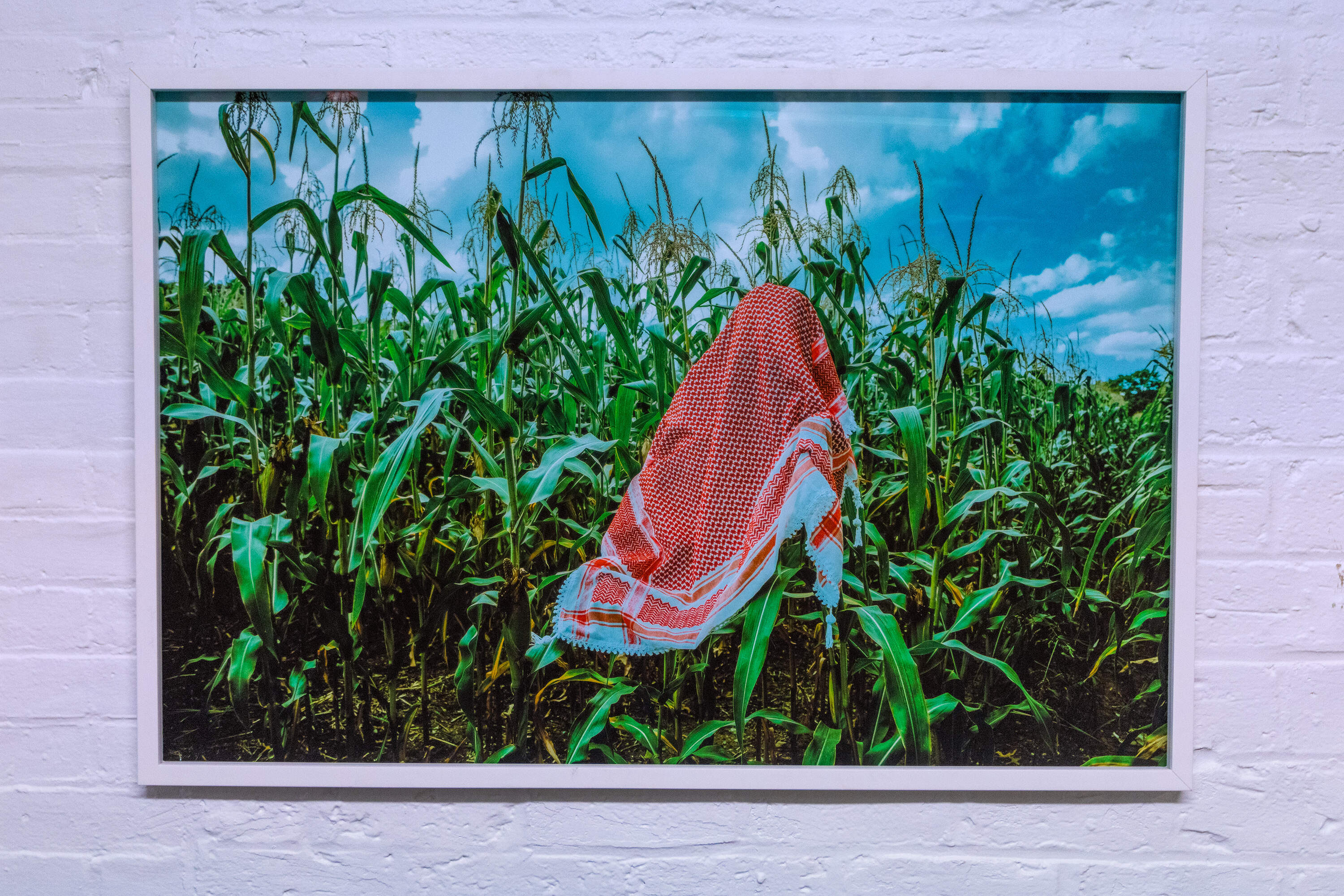
This, arguably, is the question animating all of Eid’s work. In “Made in USA,” she explores her Muslim Arab identity through arresting self-portraits, the images cast in a nostalgic, slightly mythical sheen. In one photograph, Eid stands in a field of tall grass with one arm outstretched, wielding a spoon like a weapon. Her eyes gaze out above a silvery mask made of vintage forks and spoons she bought at Goodwill — an irreverent take on traditional Bedouin face veils.
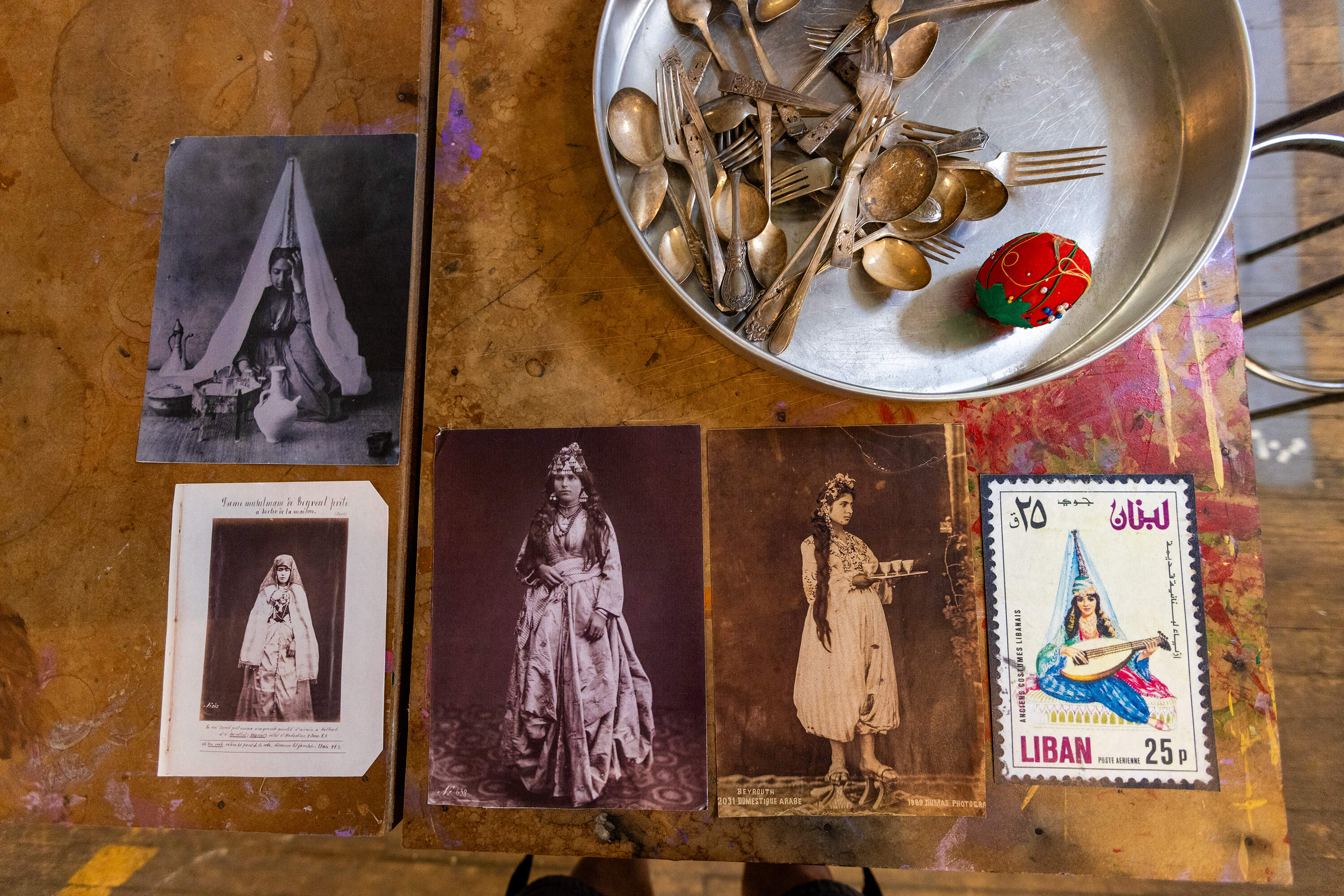
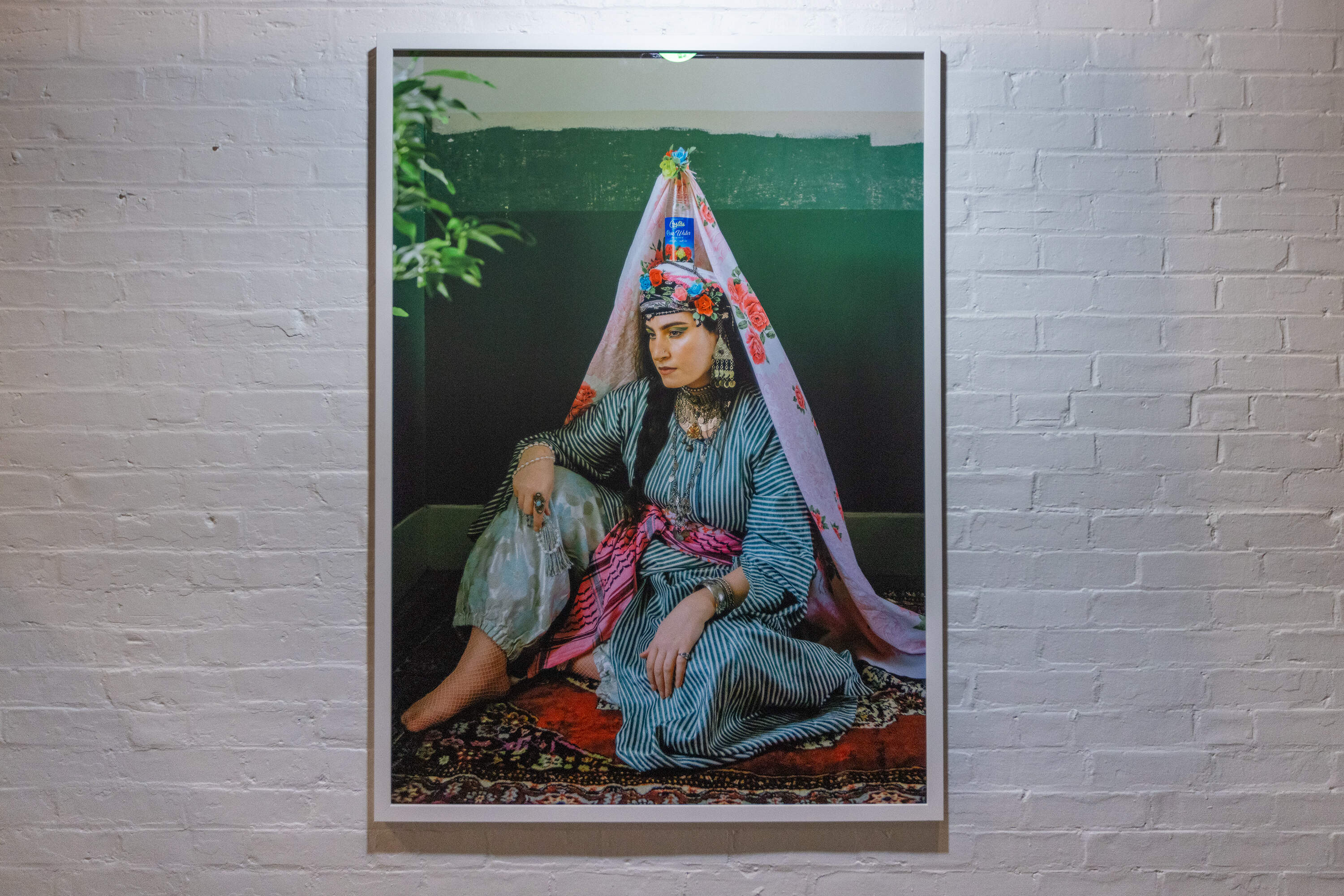
Eid designs self-portraits like these to challenge the exoticizing gaze so often directed at Arab women. In another photograph, she wears an elaborate headdress called a tantour, a tall, narrow cone with a long veil draped on top. The image is based on 19th-century photographs of women from the Levant region, posed in formal garments and offered up as enticement for European tourists. A closer look at Eid’s self-portrait reveals that instead of a cone, the veil is supported by an empty rosewater bottle — a ubiquitous item in Middle Eastern markets. The headdress is adorned with little plastic cake toppers in the shape of flowers.
“I'm being more playful here,” Eid explained. “I love to go back and look at references of adornment and wear it in the everyday, because I think a lot of that has become erased in our cultures over time.”
Though personal, Eid’s photographs are “also asking you to look inward,” said Dory Klein, the community history librarian at the Boston Public Library, where “Made in USA” was exhibited last year. “In what ways do you relate, in what ways don't you relate? … In what ways have you benefited from the same systems that are harming other people in this country?”
Last year’s exhibit at the library also featured photography by students in the Teen Bridge program at the Eliot School of Fine and Applied Arts, where Eid was an artist in residence in 2023. She worked with the students to create their own self-portraits, inspired by their identities and interests.
The exhibit happened to open shortly after the Hamas attack on Israel on Oct. 7. Klein said she worried an event celebrating the exhibit could be the target of “Islamophobic blowback.” But the evening went off without a hitch, which Klein attributes to Eid’s ability to bring people in and make them feel comfortable.
“She's very true to her politics, and to her activism. It shines through in everything she does,” Klein said. “And it comes from such a place of love and care.”
Still, Eid’s politics have not made things easy for her. In the spring, she pulled out of a solo show at Northeastern University in protest of its crackdown on students protesting the war in Gaza.
“I felt strongly — like, you want my work to beautify your space, but you're okay with harming people in my community, or not recognizing the harm that's happening to my community,” Eid said.
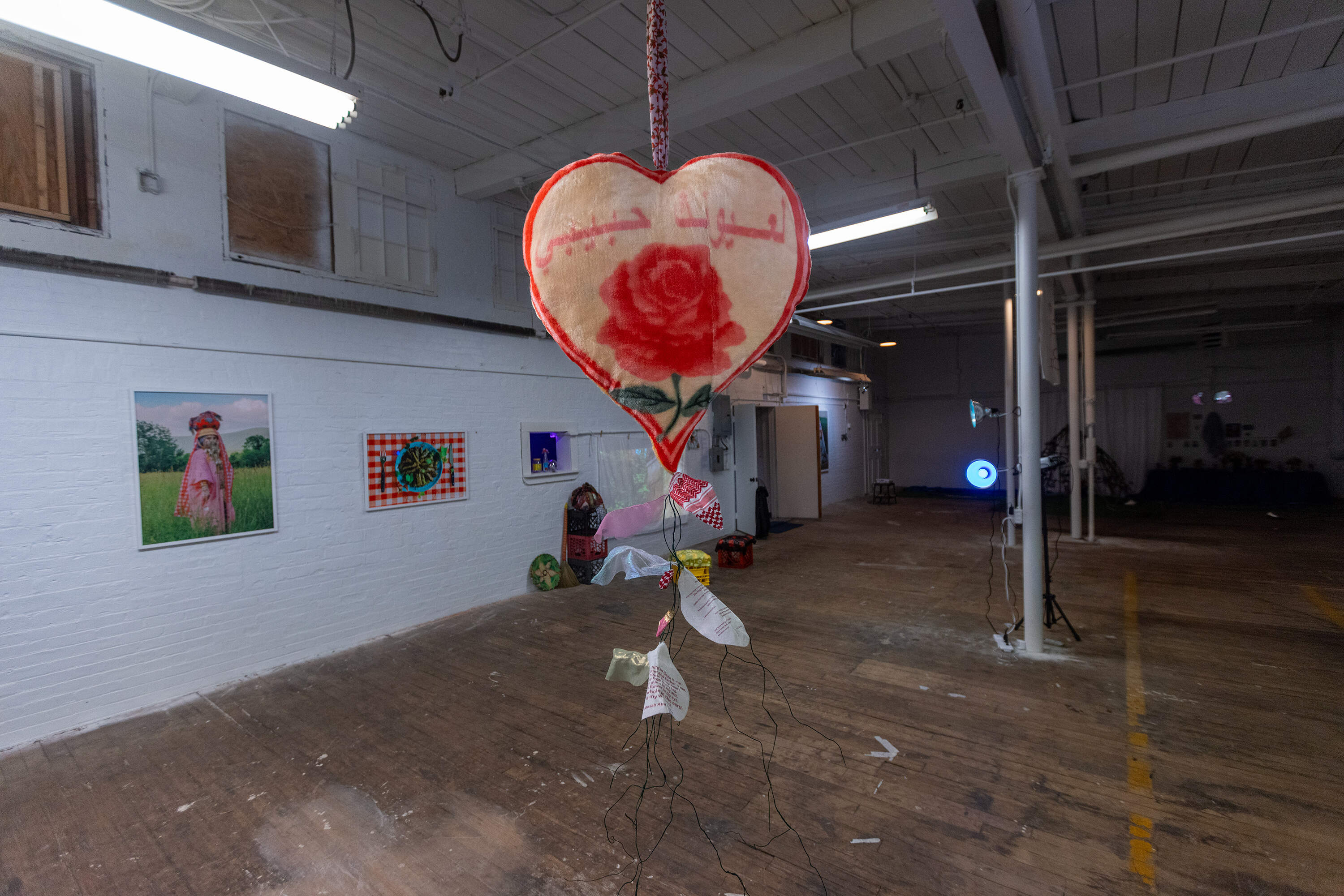
At the gallery in Providence, she drew attention to one of her newer pieces, a plush heart fashioned out of a blanket printed with the image of a rose, which hung from the ceiling. She said she was inspired to create the sculpture in response to the news of children killed in Gaza.
“I just noticed a lot of these kids have been wrapped in these blankets after they've passed,” Eid said. “I couldn't unsee it.”
A tangle of wire roots radiated from the bottom of the heart, giving the impression of a flower suspended in mid-air. Eid explained how seeing the news of so many people killed — murdered, in her words — brought to her the image of flowers falling back to earth. She was quiet for a moment.
“It’s heavy,” she said, adding pointedly, “You're probably going to censor all of that, because everyone's censoring Palestine stuff.”
It was an observation, and maybe a challenge. Eid is conscious of what it means to be an artist — that is, to open herself up to criticism, misrepresentation and censorship. She could lose professional opportunities by expressing her political beliefs. But Eid has made her peace with that.
“I will happily go back to my job at Goodwill, if [an opportunity] means that I have to compromise my morals,” she said.
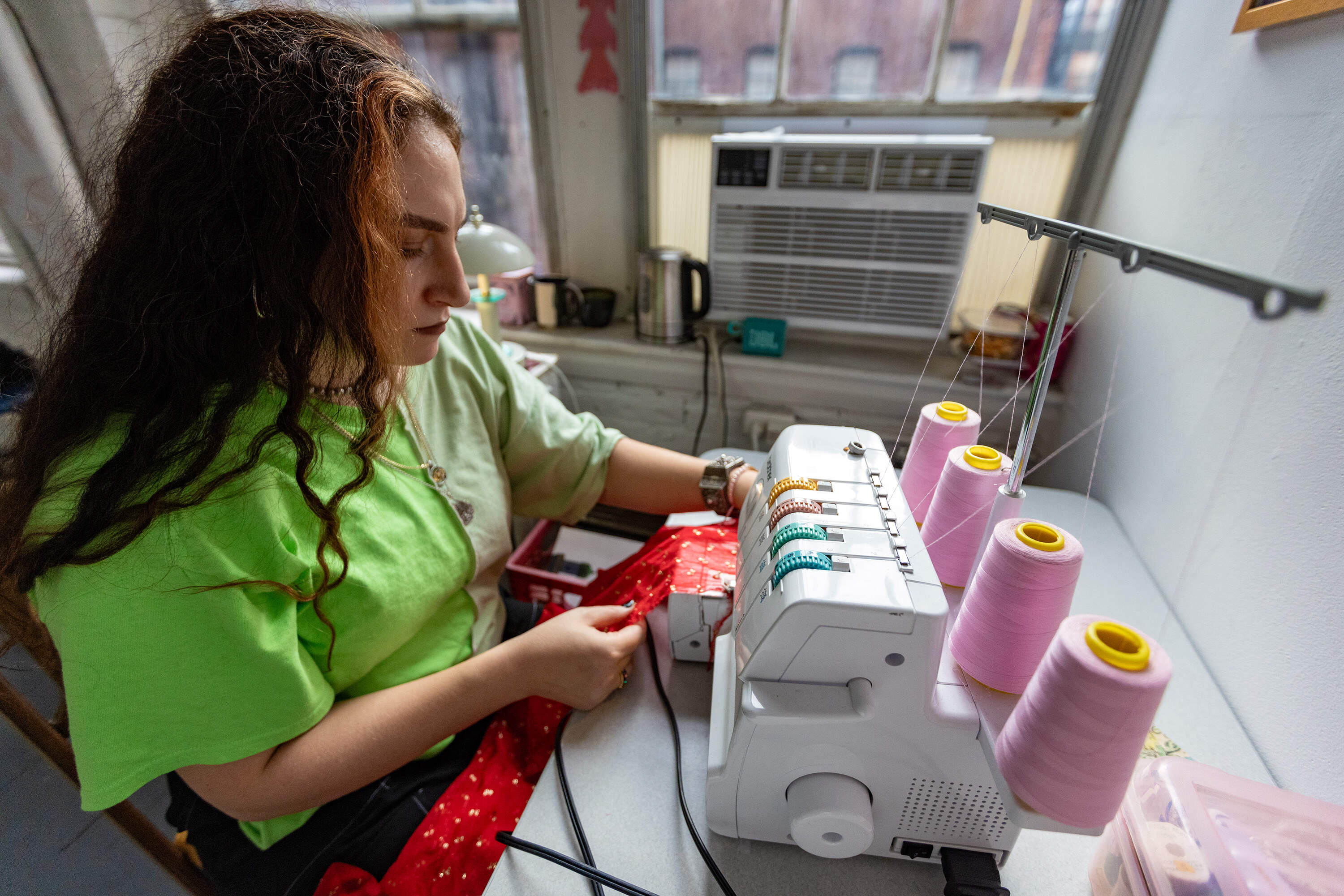
These days, Eid’s career seems to have plenty of momentum. The artist just moved into a three-year studio residency at the Boston Center for the Arts. She’s already hard at work on her next photograph, an image she says will embody the rage of witnessing Arab people “being dehumanized and disposable while living in a country that is supplying the weapons that are disposing of them.”
Naturally, it will be a self-portrait.
“I often embody a character that I have a vision of, or see in my head, when I'm trying to process emotions,” Eid explained. “It often comes to me as a sort of iconic woman. Always standing, somehow.”