Support WBUR
Mayor lays out new details on expansion of Boston liquor licenses
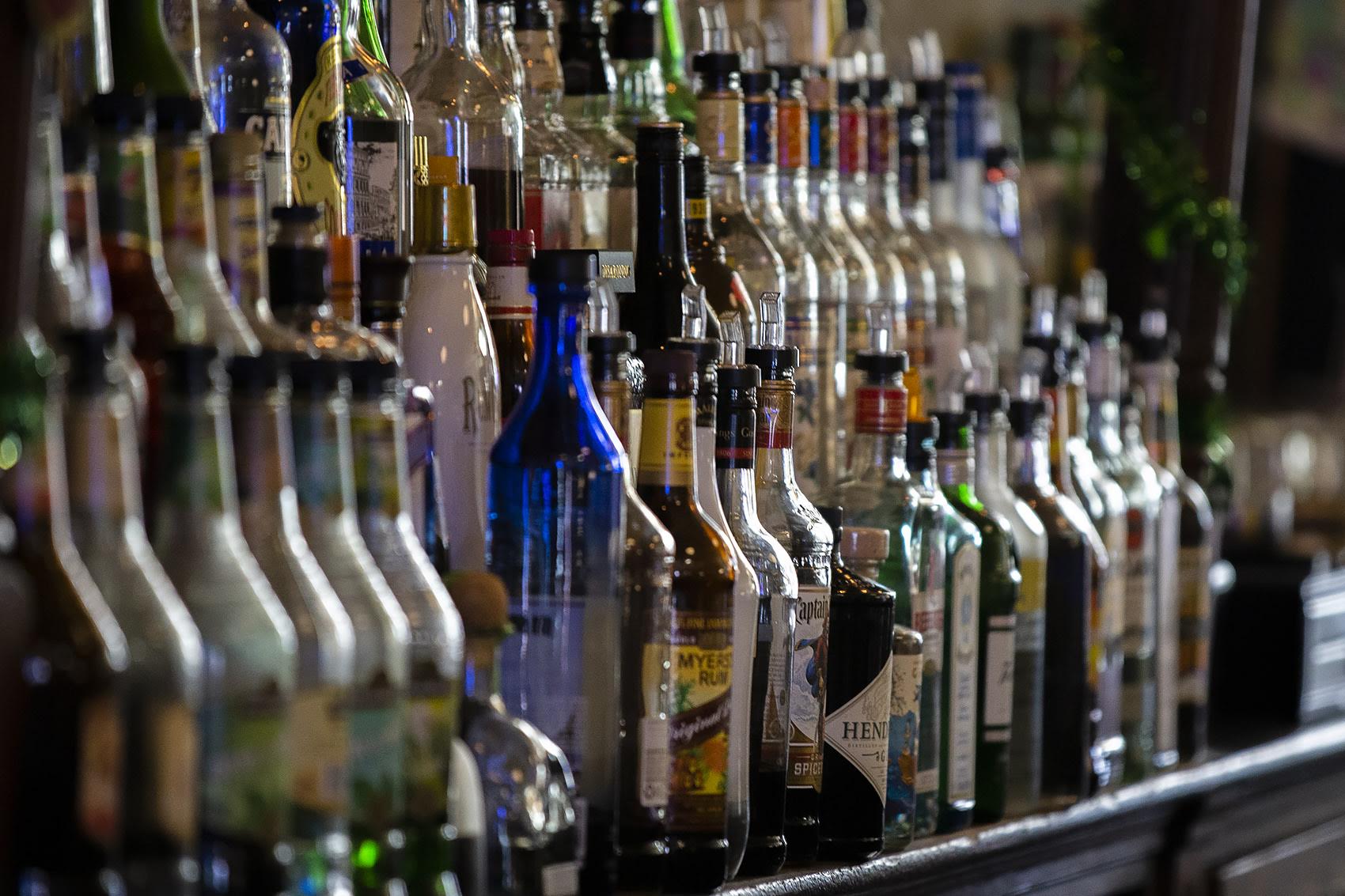
The city of Boston will award 225 new liquor licenses over the next three years, which officials say will help support new and existing small businesses across diverse communities.
The expansion of liquor licenses comes after Mayor Michelle Wu filed a home rule petition that was passed by the legislature and signed by Gov. Maura Healey last month. It marks the first "significant" increase to liquor licenses in Boston since 2014, Wu said.
"For the first time in a decade, Boston is receiving a significant infusion of these new licenses," Wu said Wednesday at a ceremonial bill signing at the State House. "This will make it easier for chefs, entrepreneurs, and business owners to create the kinds of spaces that make our city feel like home."
The legislation "will bring more equity, more opportunity and more fun to neighborhoods of our great capital city," Healey said Wednesday. She added that it will provide business owners in Boston — particularly those of color — "the same opportunity to provide the service that neighbors, customers, residents are looking for, and the opportunity to grow wealth in their communities."
Liquor licenses have historically been capped in Boston. And they're usually costly — as much as $600,000 — and hard to get, especially for entrepreneurs of color, because most licenses have to be purchased from another business at a price set by that business.
The new licenses will be issued directly by the city's licensing board and applications for the first round of licenses will be due by December 6, Wu announced Wednesday.
The new liquor licenses will fall into three categories: neighborhood licenses, community space licenses and citywide licenses.
There will be 198 total "neighborhood" licenses issued to applicants in 10 city neighborhoods, including Charlestown, Dorchester, Roxbury, East Boston, Hyde Park, Jamaica Plain, Mattapan, Roslindale, the South End and West Roxbury. There will also be three licenses available for Brighton's Oak Square.
There will be 15 total "community space" licenses issued. This category includes outdoor spaces, theaters with less than 750 seats and non-profit organizations.
The "neighborhood" and "community space" licenses will be non-transferable. They can't be sold to another business and the licenses will be returned to the city's licensing board if the business closes.
The city can also issue 12 "citywide" licenses that have no geographic restrictions and are transferable to another business, Wu announced.
State House and Senate leaders who approved the expansion say the licenses will increase economic opportunity in communities of color.
"These license[s] are a large part of [an] initiative to spark economic growth from Blue Hill Ave. to Bennington Street [in East Boston]," Rep. Chris Worrell, who represents Boston, said.
Sen. Liz Miranda, who represents Boston, said the liquor license legislation is "vital in restoring our communities, restaurant, and nightlife industry" as well as helping Boston retain culinary talent that may seek out opportunities in other cities. Miranda added she hopes the new licenses will serve as a "great equalizer" and spur economic development.
"Enabling our current and prospective small business owners to secure these neighborhood restricted liquor licenses will not only help us do that, but it'll help us tackle the pervasive racial and gendered wealth gap that is actually growing," Miranda said.
