Support WBUR
The Weekender: Boston's Saturday Morning Newsletter
Journey if you dare: 5 historically haunted spots in Boston
Editor's Note: This is an excerpt from WBUR's Saturday morning newsletter, The Weekender. If you like what you read and want it in your inbox, sign up here.
The history and lore of Massachusetts, one of the earliest settled colonies in New England, has been inspiration for centuries of creepy gothic stories. But a few of these legends exist beyond the pages of books, with supposed ghosts still lurking the hallowed grounds in Boston where their ancient atrocities occurred.
At least that’s what folklore says, according to a few experts I recently spoke with ahead of Halloween.
Peter Drummey, chief historian at the Massachusetts Historical Society, and Dan Seeger, manager at Haunted Boston Ghost Tours, helped me pinpoint five historically haunted spots across the city. Now, I can’t tell you whether or not ghosts actually exist. What I can say is that the spine-chilling tales below are local legends, and a few concern actual people who lived and died here. Venture at your own risk!
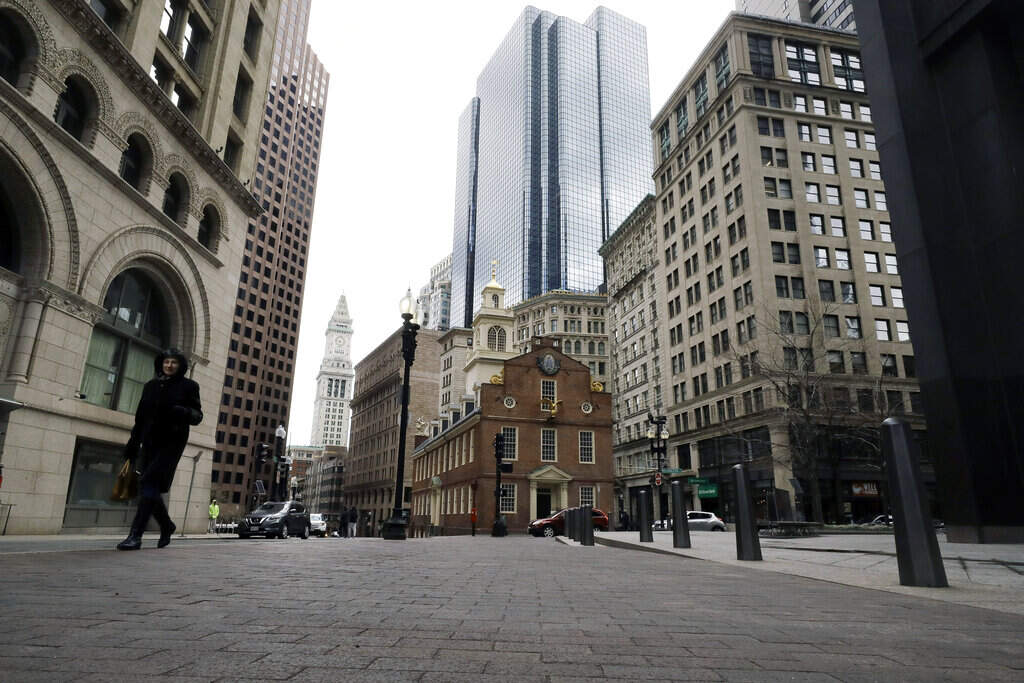
1. Court Street in the Financial District
Before it was Court Street, the road near Boston’s Old State House was called Prison Lane. It was home to Boston’s first jail, the “Boston Gaol,” which held prisoners accused of numerous crimes, including witchcraft, libelous journalism, unpaid debt and rebellion. (Fun fact: Gaol is the popular way British people spelled jail back in the 1600s; the two words are pronounced the same.)
“Margaret Jones was imprisoned at the Boston Gaol as a witch,” Drummey said. An account from John Winthrop, then-governor of the Massachusetts Bay Colony, recounts her trial and eventual hanging. This was in 1648, making Jones the first person to ever be executed for witchcraft in Massachusetts.
“It had this striking ripple effect that could be seen 40 years later,” said Drummey, referring to the Salem witch trials of 1692. “If that’s not haunting, I don’t know what is.”
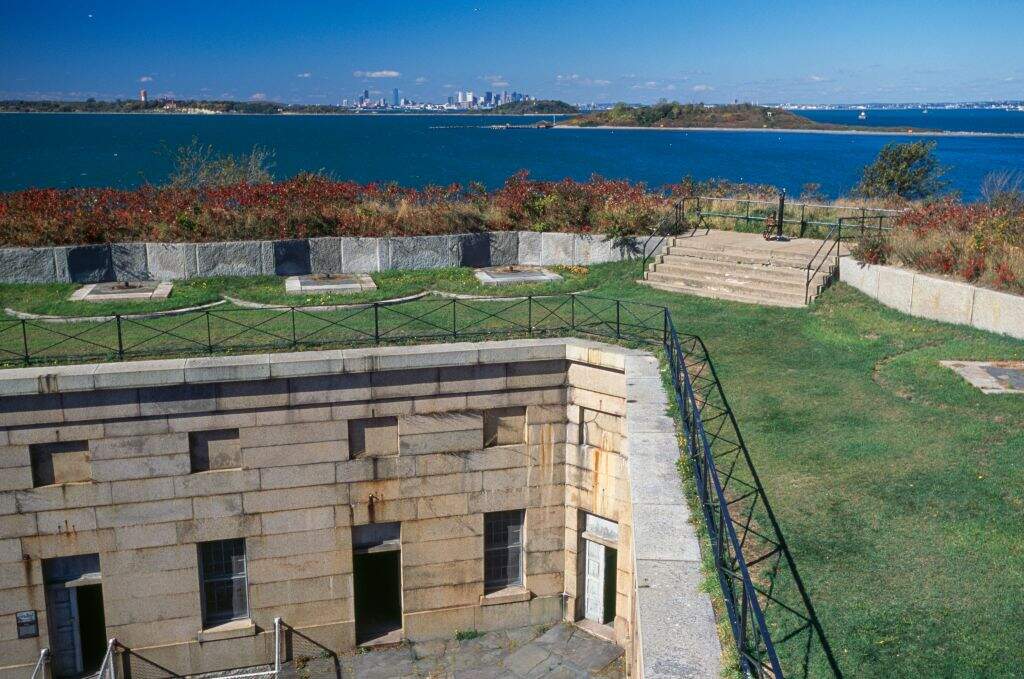
2. Fort Warren on Georges Island
During the Civil War, Fort Warren was a prison for Confederate soldiers. Legend has it that Melanie Lanier, the wife of an imprisoned soldier, infiltrated the fort in an attempt to free her husband, leading to a scuffle with the guards where she accidentally shot and killed the very man she was trying to save. Lanier was sent to the gallows at Fort Warren for her crimes, and her restless ghost apparently haunts the island to this day. “As a ghost, she appears in all black — possibly mourning her husband — holding a lantern or a candle,” said Drummey.
A modern history of Fort Warren, by author Jay Schmidt, says the story of the Lady in Black, most popularly penned by writer Edgar Rowe Snow, is “probably not” true. Still, Drummey says it’s one of the most enduring ghost stories about the Boston Harbor Islands. (There is also a “Lady in Red” and a “Lady in White” said to be lurking among the harbor islands.)
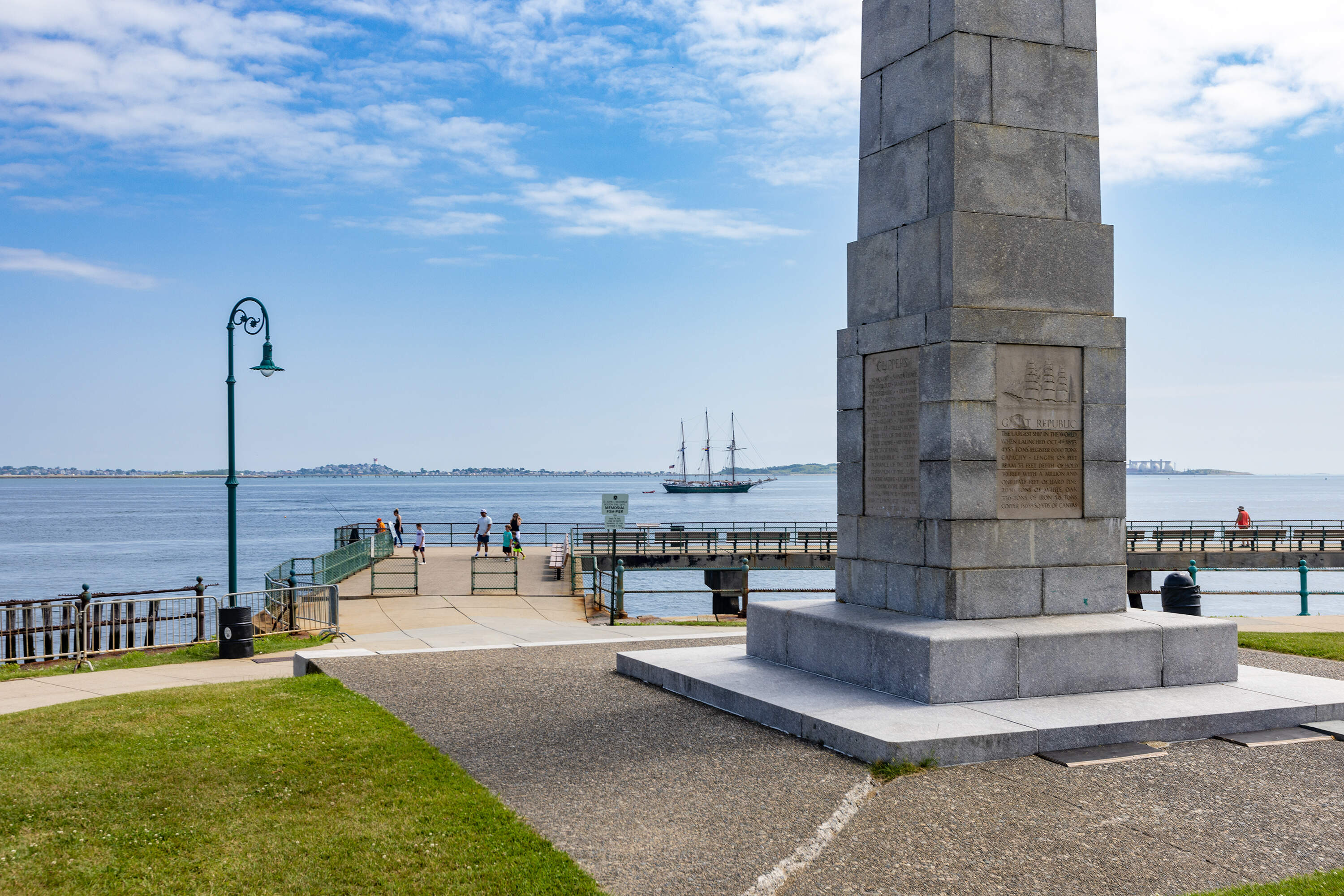
3. Fort Independence on Castle Island
Edgar Allan Poe may have been inspired to write one of his spookiest stories while stationed at Fort Independence.
During Poe’s time on the island as a sergeant, he heard the story of a legendary duel between two lieutenants, Gustavus Drane and Robert F. Massie. Massie was allegedly killed in the duel, but his friends wouldn’t let the murder slide. They decided to get Drane drunk, lure him into a chamber and seal him inside, leaving him to die. (While Drane was a real person, he didn’t actually meet his end this way.)
Poe later published a version of the tale set in Italy, “The Cask of Amontillado,” in 1846. Centuries after it was first told, this haunting Castle Island legend is still inspiring adaptations on the page and onscreen.
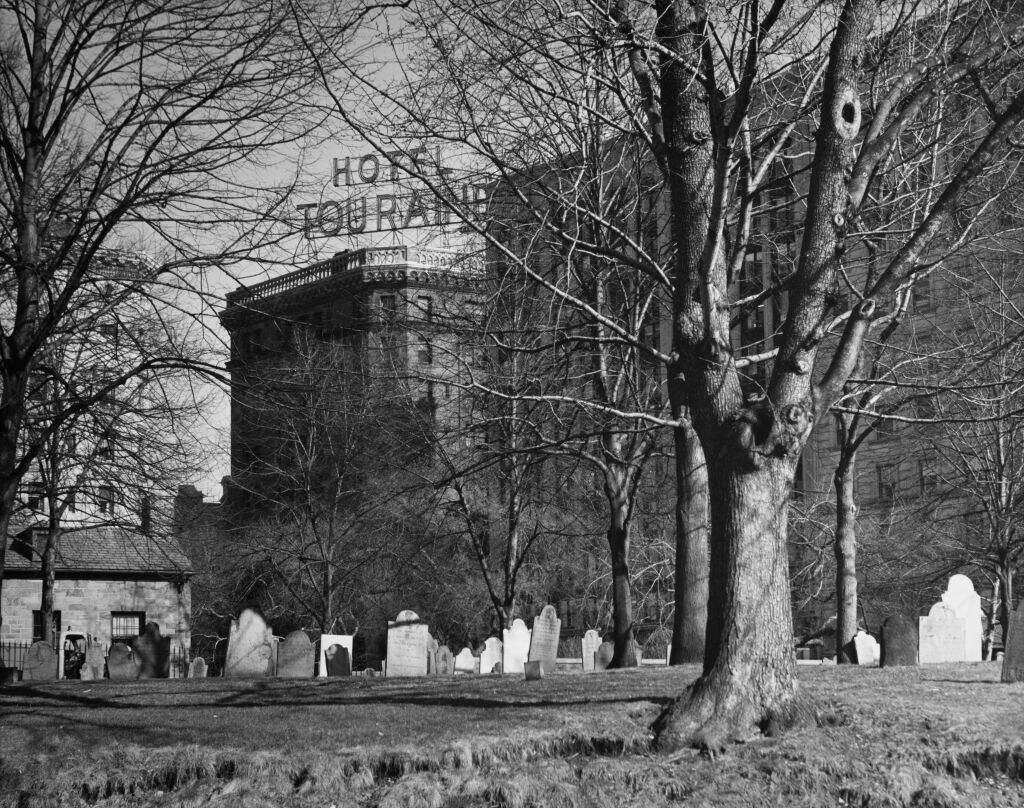
4. Boston Common Central Burying Ground
Founded in 1634, Boston Common is the oldest public park in the U.S., serving as the site for events like speeches and hangings in its early years. But for over a century, something even more gruesome laid beneath its grassy grounds.
In 1756, the Central Burying Ground, a mass grave considered an undesirable resting place for Bostonians at the time, was dug along Boylston and Tremont streets. British soldiers, foreigners who died in the city and American patriots who died during the Revolutionary War were interred there. But in 1895, the tombs of the Central Burying Ground were disturbed.
“When they started digging up Tremont Street in order to build the train in 1895,” said Seeger, “they discovered bodies.”
It is estimated workers uncovered 90 bodies in undisturbed tombs, while another 820 bodies were discovered in other circumstances — crushed beneath debris, underground (but outside of the tomb) in piles or scattered in parts. The construction drew crowds, who were fascinated by the horrific sight of human remains strewn across the site. An undertaker had to be hired to respectfully rebury the salvageable remains.
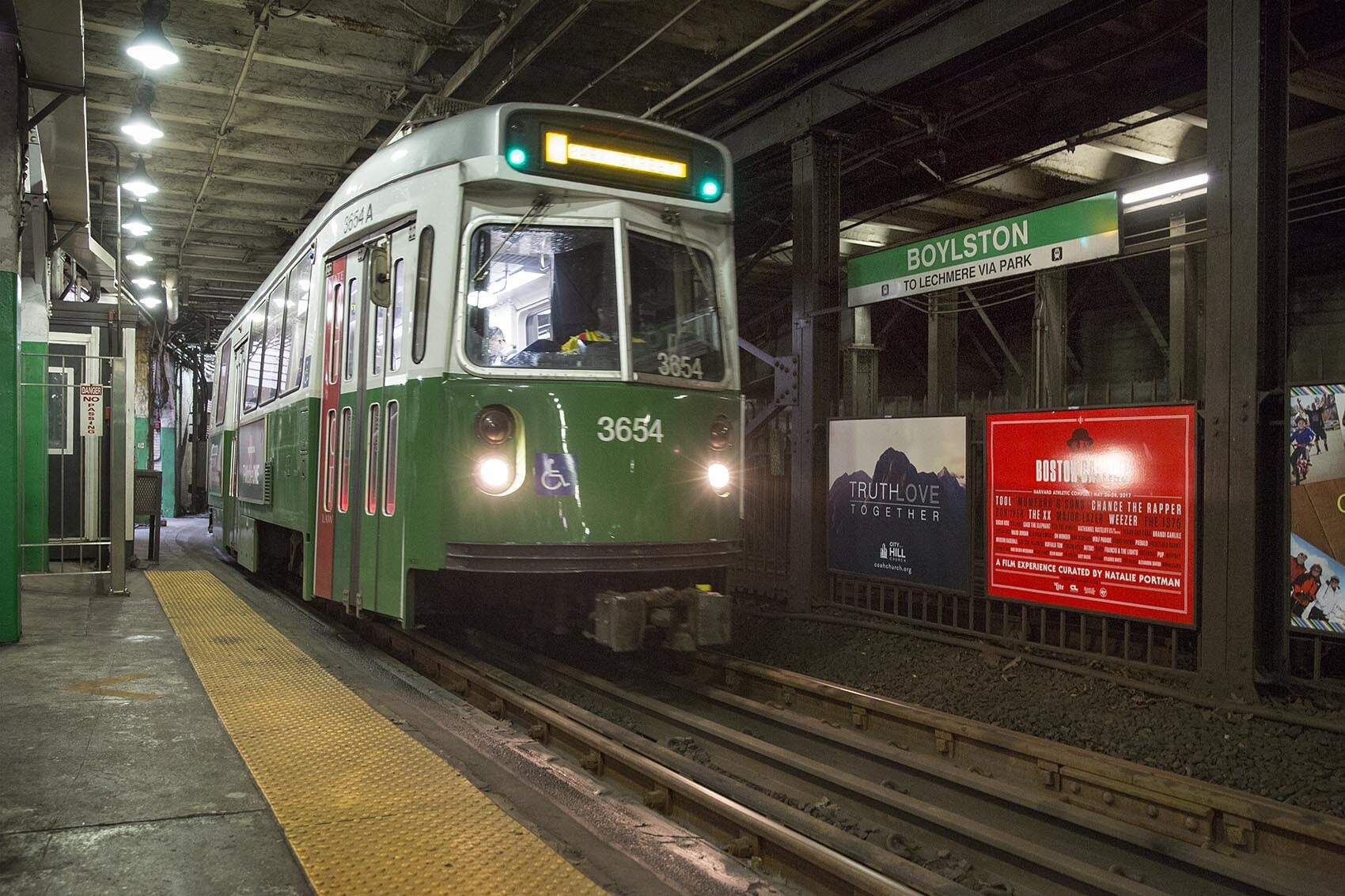
5. The Green Line?
The disruption of the Central Burying Ground ties into the haunting of the Green Line between Boylston and Arlington stations. “There are several reports of [operators] seeing British soldiers on the tracks on the T,” said Seeger. Could it be the redcoat apparitions are responsible for all the Green Line delays between those two stations? Who knows! Unlike faulty tracks, ghosts are much harder to get rid of.
P.S. — In need of a last-minute costume? Check out these Boston-themed costume ideas that comedian Ken Reid, The Boston Globe's Diti Kohli, Darryl C. Murphy and I came up with for Radio Boston.