Support WBUR
The Weekender: Boston's Saturday Morning Newsletter
Marigolds and memories: How people are celebrating Día de los Muertos across Boston
Editor's Note: This is an excerpt from WBUR's Saturday morning newsletter, The Weekender. If you like what you read and want it in your inbox, sign up here.
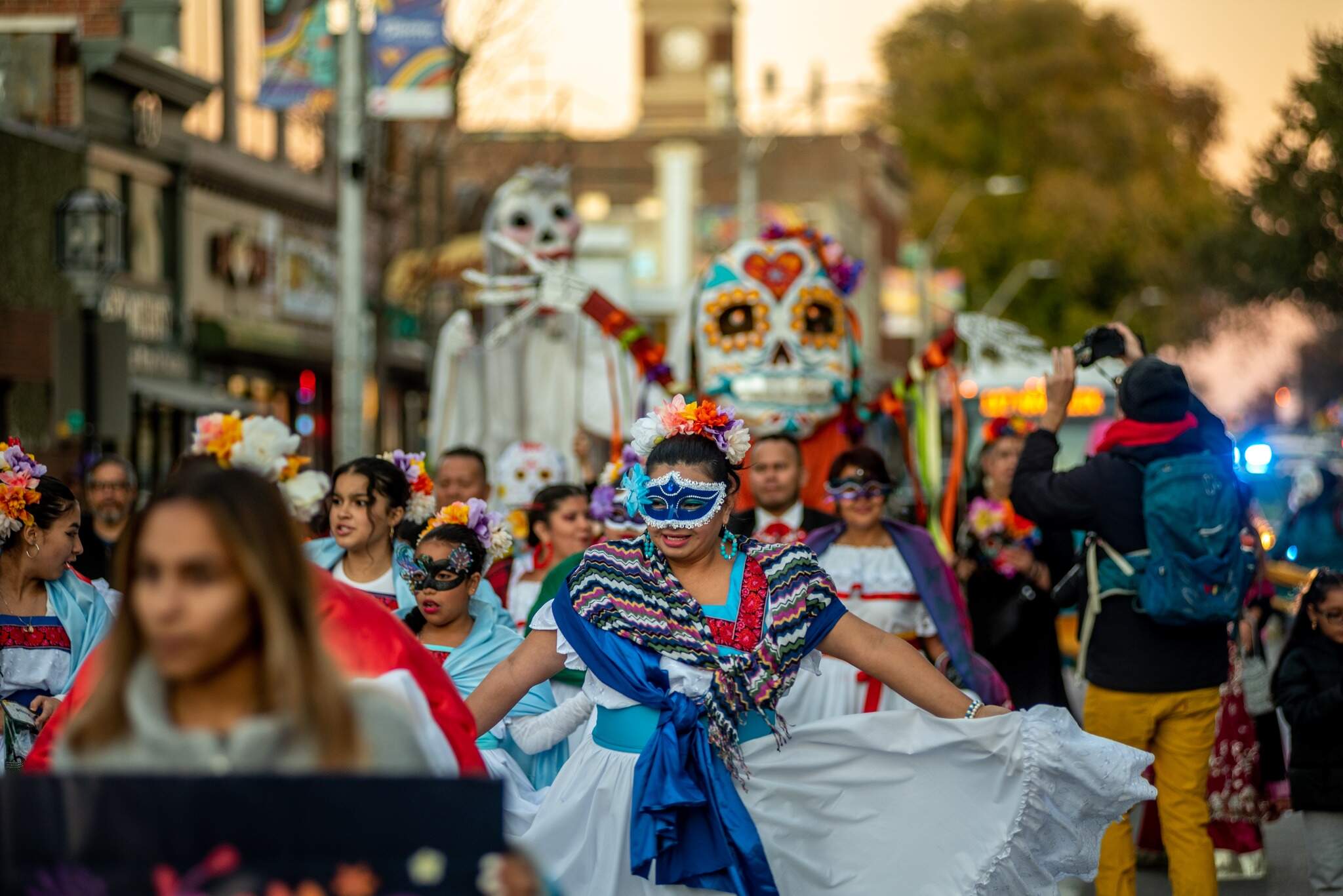
Sugar skulls and brightly colored paper are lining the perimeter of Chelsea’s Washington Park on Saturday.
Why?
It’s Día de los Muertos, or the Day of the Dead, and the community is gearing up for an evening of music and memorials.
If you’ve never celebrated the holiday, you may have a vague understanding of its purpose. You’re not alone. “A lot of people don’t know much about Día de los Muertos,” said Lourdes Alvarez, manager of arts, culture and creative economy for the City of Chelsea. She says Disney’s 2017 film “Coco” helped a bit with recognition, but there are still some prevalent misconceptions.
“It’s not Mexican Halloween. It’s not meant to be scary,” said Omar Miranda, civic designer for the City of Chelsea. Miranda is the lead organizer for the city’s Día de los Muertos celebration Saturday, happening from 4 p.m. to 8 p.m. in Washington Park.
I spoke with Miranda and Alvarez ahead of the event to learn more about the significance of the holiday, how locals celebrate it and how you can observe it, too.
Day of the Dead 101
How someone celebrates Día de los Muertos can depend on where they come from. In the U.S., what we see most often is the Mexican cultural interpretation of the holiday, which can include a big party, said Alvarez. You might notice decorations like marigolds, Catrina skulls and garlands of papel picado at celebrations, all elements that tie back to Día de los Muertos’ origins in Mexico.
Alvarez also celebrated Día de los Muertos growing up in Uruguay. There, “it’s a celebration where you remember your loved ones that are not here,” she told me. People in Bolivia, Brazil and Guatemala also celebrate iterations of Día de los Muertos, which can involve different traditions like kite-flying and cemetery visits. “For some, it’s a celebration of life, but essentially it’s a day that we remember the ones that are no longer with us,” Alvarez added.
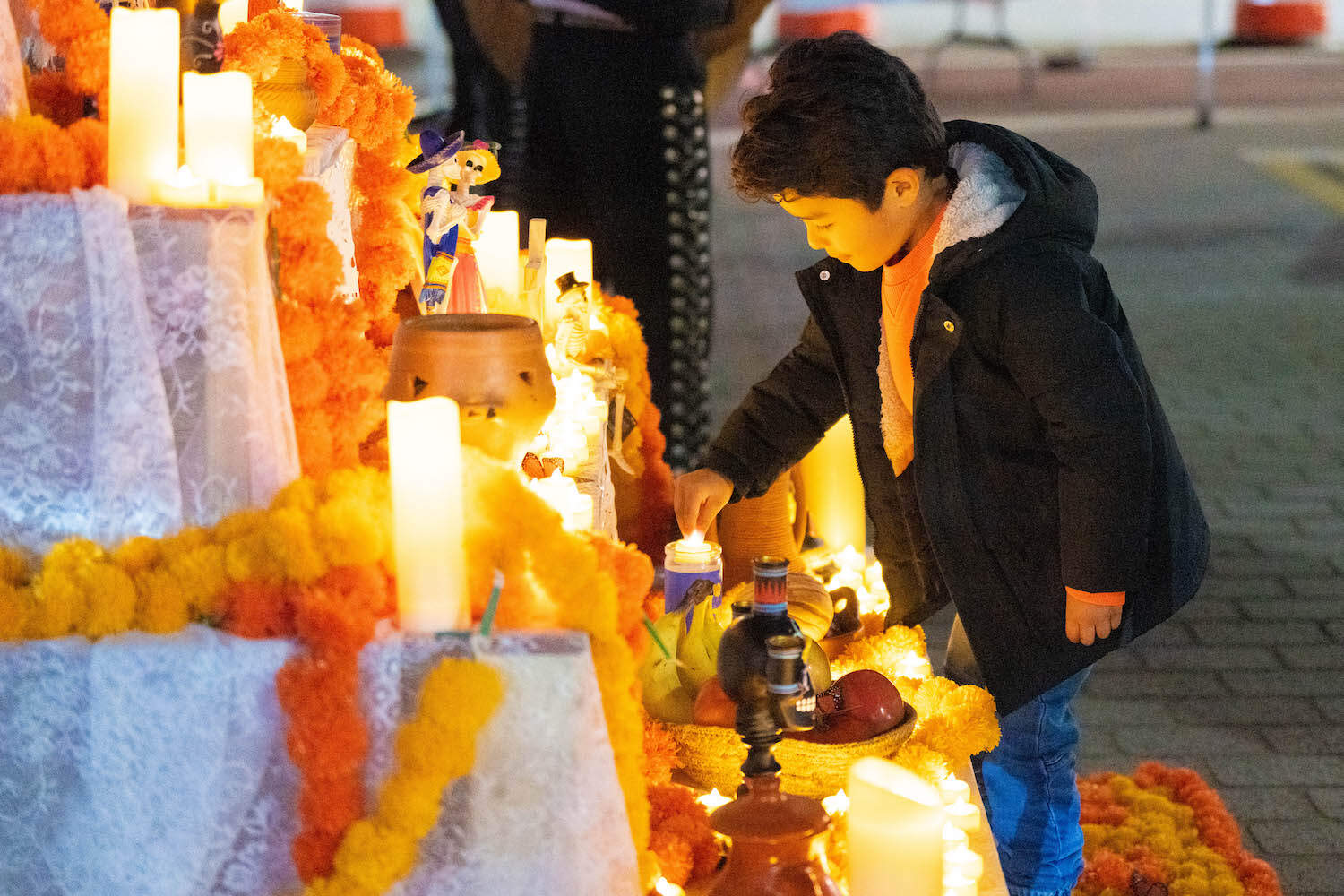
Across cultures, families observing the holiday often set up an ofrenda, or altar, where they can put up photos of their deceased loved ones. They’ll also place candles, lanterns and an offering with something their family member may have liked during life — like a snack, drink or special dish — to welcome their spirit home.
Celebrating Día de los Muertos in the Boston area
For this year’s Día de los Muertos in Washington Park, Miranda said they “want to be inclusive of all the different celebrations.”
“Chelsea is a hub for Central American culture,” he said. “We just want to bring all the different backgrounds together to celebrate something common and honor all of the loved ones who have passed away.”
The city has a big Hispanic and Latino population of nearly 27,000, but they’re inviting folks from across Greater Boston to come celebrate. “We encourage everyone to come to Chelsea to see how it feels and how we live Día de Los Muertos in a Latino community,” said Alvarez.
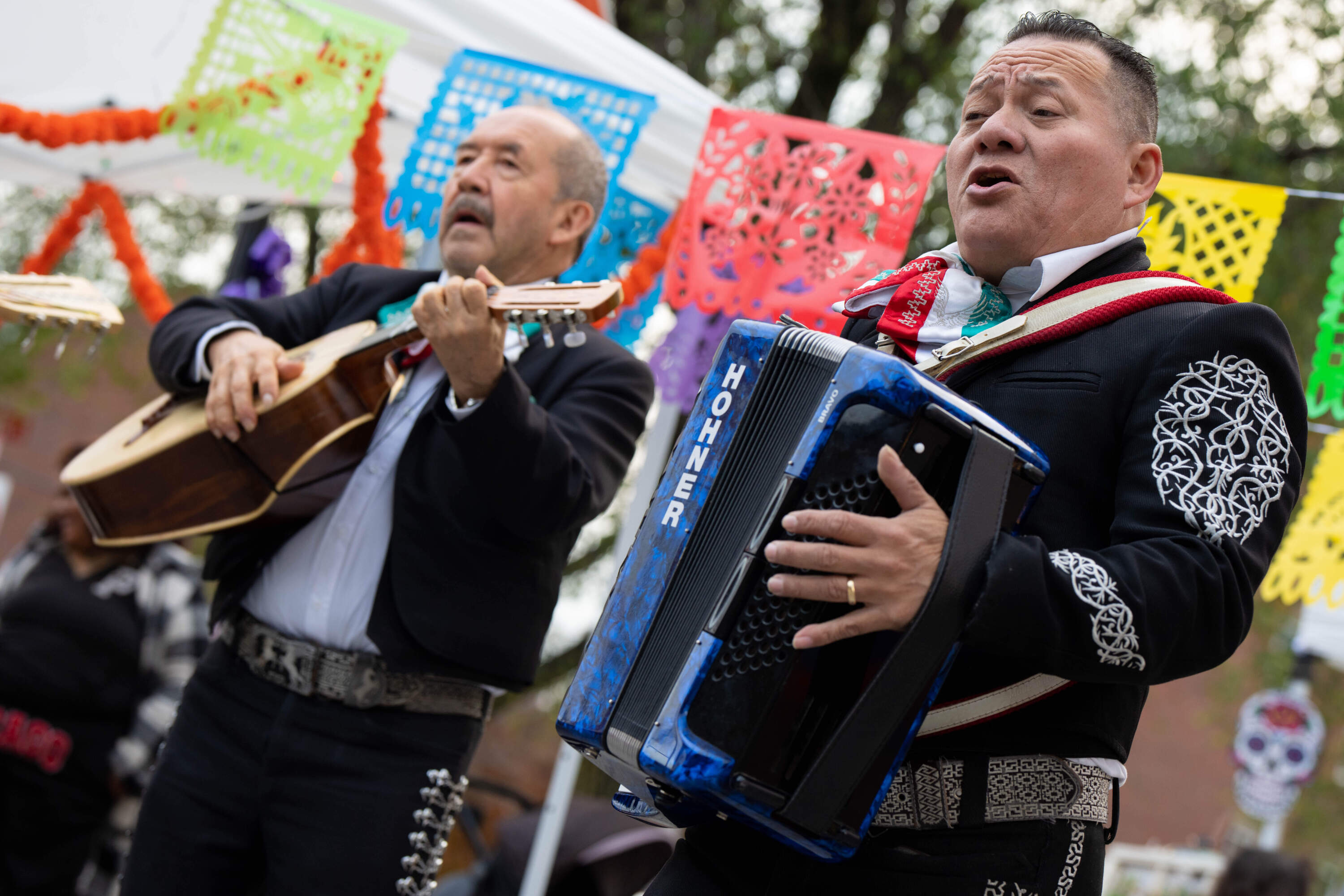
There will be three small community altars in Washington Park that anyone can place photos on, performances by traditional dancers and plenty of mariachi music. Miranda hopes the event will be an educational experience, too. “What’s most important is respect,” he said. “Come and eat the food, see the celebrations, talk to the people … see the beauty in it.”
The Institute of Contemporary Art also has a slate of events in honor of Día de los Muertos happening this Sunday in East Boston. The festivities begin at 11 a.m. with a festival in Central Square Park, and there will be shuttle buses to the ICA Watershed so visitors can view three altars made by local artists.
Celebrating at home
If you’d like to observe Dia de los Muertos but crowds aren’t your vibe, Alvarez and Miranda suggest setting up your own altar. “It could be a small table with pictures, candles and items from the person,” said Miranda. Discussing death is taboo in many cultures, says Alvarez. An altar makes space for people to share grief — and good memories.
“It’s so radical as well,” said Alvarez. “You can actually start reflecting on what death means to you. It’s an excuse for everyone to reflect.”
P.S. — Want to celebrate but not sure where to start? NPR has tips for building your own ofrenda in line with the Mexican tradition.