Support WBUR
Boston's Morning Newsletter
What would happen if Question 5 passes? A look at the data on raising the tipped minimum wage
Editor's Note: This is an excerpt from WBUR's daily morning newsletter, WBUR Today. If you like what you read and want it in your inbox, sign up here.
It’s the first day of November and the last day of early voting in Massachusetts. With Election Day just four days away, it’s crunch time to make a decision on all those pesky state ballot questions.
For today’s newsletter, we’re turning over the note to WBUR senior business reporter Zeninjor Enwemeka for a closer look at what the research says might happen if Question 5 passes:
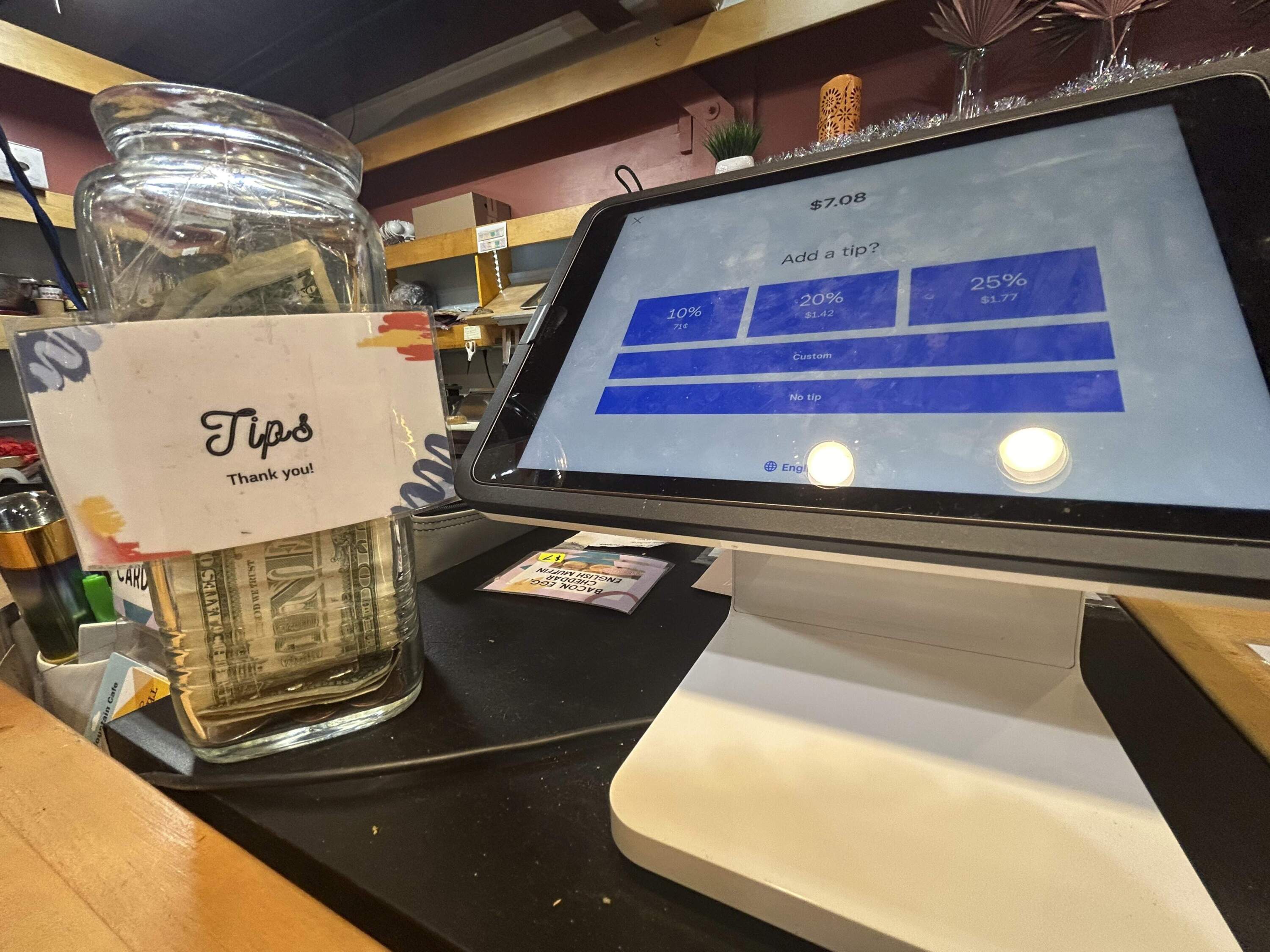
Data dive on Question 5: There are seven U.S. states that require the same minimum wage for tipped and non-tipped workers. Question 5 proposes that Massachusetts join them by gradually increasing the state’s hourly base pay for tipped workers from $6.75 to the full minimum wage (currently $15 an hour). It would also give restaurants the option to expand tip pooling. However, it’s been decades since a state has done this, and many Bay Staters feel uncertain about whether their vote will help or hurt restaurants and other industries with tipped workers. Here’s what the available research says:
- The impact on workers: Recent research suggests Question 5, if passed, would lead to higher wages for tipped workers. A report published by UMass Amherst in October found tipped workers in states without a lower minimum wage earn about 10%-20% more in wages and tips than tipped workers in states with a lower tipped minimum wage. According to the report, there are over 123,000 tipped workers in Massachusetts, who currently average about $12 an hour before tips (and about $20 an hour with tips).
- The impact on businesses: At the same time, businesses would also see their costs rise. But the UMass report found it would be “modest” — or roughly 2% of sales revenue for the average restaurant in Massachusetts. A Tufts University report released in September, which evaluated research on tipped wages around the country, said businesses would likely compensate with a mix of approaches, such as adding service fees, raising menu prices or implementing more automation. The report also said “decades of empirical research” suggests businesses could indeed respond by reducing jobs, but the impact is “limited.” Workers are less likely to quit when there are higher wages, so eliminating the tipped minimum wage might boost retention rates, the Tufts report said.
- A look at D.C.: All eyes are currently on Washington, D.C., which is somewhat of a test case, as it gradually increases its tipped minimum wage. The process began just last year and the district’s tipped minimum wage won’t match its general minimum wage until 2027. Experts say it’s a wait-and-see situation. “Not enough time has passed to really assess the economic impact in Washington,” researcher Evan Horowitz wrote in the Tufts report. So far, news stories reflect varying experiences. Some restaurants have raised menu prices or introduced service fees ranging from 5% to 20%. Last year, wages for most workers — and even the number of D.C. restaurants — went up, but recent data shows a slight decline in jobs. (The data doesn’t identify the reasons for job losses or gains.) The D.C.-area restaurant association says businesses are navigating a challenging environment. The group surveyed its members this year and found most businesses say they are also paying more for rent and ingredients.
- Don’t forget: If Question 5 passes, it’s possible state lawmakers could step in to amend the law or make additional changes, such as capping service fees (like what happened in D.C.) or even overturning the whole thing (like in Maine).
- Go deeper: You can read our full Question 5 explainer here, along with the rest of our 2024 ballot question coverage.
In other news:
PSA: It’s the first day of open enrollment for the Massachusetts Health Connector. Anyone — including recent arrivals to Massachusetts, gig economy workers and others who have no health coverage — can buy health insurance from the marketplace.
- What’s new: This year, the state is expanding its lower-cost “ConnectorCare” program to individuals making up to $73,000 and families of four making up to $150,000. Health Connector Executive Director Audrey Morse Gasteier says it has no deductibles and little-to-no premiums and copays. “There’s more help available than ever before,” she told WBUR’s Amy Sokolow.
It’s back: Harvard Square’s long-closed “Out of Town News” will get new life as a cultural center known as the Cambridge Kiosk. Officials announced yesterday the site will host arts events and serve as a center for visitor information. It’s set to open in early 2025.
P.S.— What is the purpose of the AutoMARK machines in Massachusetts elections? Take our Boston News Quiz and test your knowledge of this week’s stories.