Support WBUR
5 key takeaways from Massachusetts' 2024 election results
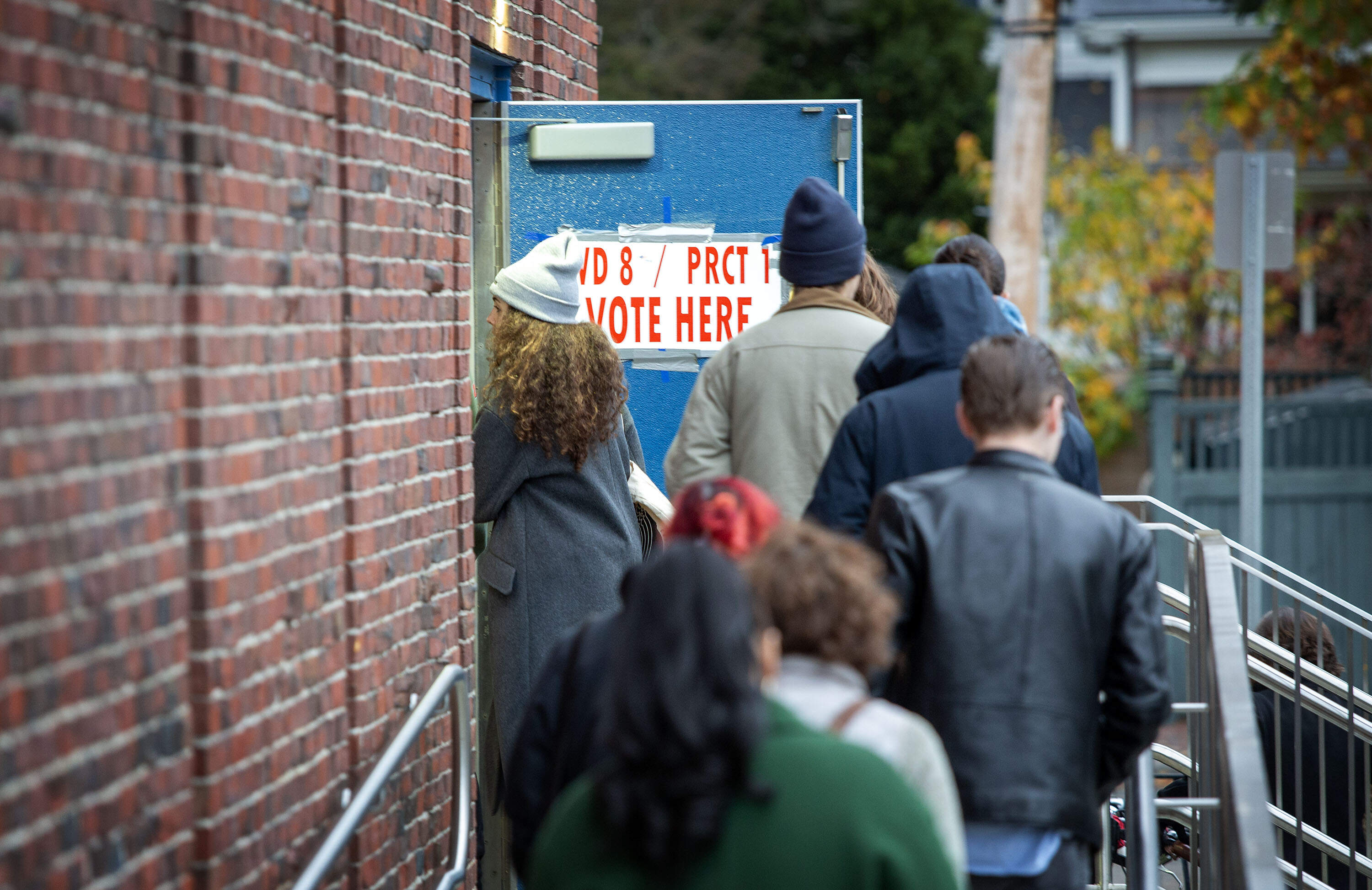
Massachusetts was called for Vice President Kamala Harris within seconds of polls closing Tuesday night, making her the 10th straight Democratic presidential candidate to carry the traditionally blue state.
But a closer look at the results shows a growing, red undercurrent of support for President-elect Donald Trump, reflective of the national gains that propelled him to a second term.
Here are five takeaways:
1. Trump won nearly a quarter of cities and towns across Massachusetts.
While Massachusetts remains a solidly Democratic state, Trump carried 87 of the state’s 351 cities and towns — including 33 that had supported President Biden in 2020. It’s even more than the 58 cities and towns Trump won during his first 2016 run. While nearly every county this year showed gains in Republican support, Trump’s strongest showings were in the more rural parts of the state, including Hampden, Worcester and Bristol counties.
2. Cities with sizable Hispanic populations saw big shifts in support for Trump.
Hispanic voters backed Trump in larger numbers than anticipated, according to national exit polls. While it’s impossible in Massachusetts to break down the Hispanic vote — or any vote by demographic — election results show some cities and towns with large Hispanic populations shifted support away from Democrats at a higher rate than the rest of the state.
In Lawrence, where Latinos make up more than 80% of the city’s population, the winning margin for Democrats dropped by more than 30 points from 2020. Speaking on WBUR’s Morning Edition, MassINC Polling Group president Steve Koczela highlighted these potential gains made by Trump with Hispanic voters.
"Back in 2016, Hillary Clinton won 82% of that city. Then it went down to 74%,” said Koczela. “This time, Kamala Harris only won 57% of Lawrence."
Overall, the six Massachusetts towns and cities with the highest shares of Hispanic voters (Lawrence, Chelsea, Holyoke, Springfield, Lynn and Everett) saw the margin of victory for Democrats drop by 18 points from the previous election — nearly triple the statewide average.
3. Bristol County breaks for Trump.
Bristol County, home to Fall River, New Bedford and other South Coast communities, was once a reliable stronghold for Democrats during presidential elections. In 2004, the Kerry-Edwards ticket won Bristol by more than 28 points. Since then, the county has bucked the state's overall shift left — and this year it nearly became the first county to vote GOP in decades. Bristol County’s Acushnet led the way with 61.5% support for Trump — the highest in the state.
4. There were pockets of MCAS loyalty.
Voters gave Question 2, the ballot measure to eliminate MCAS as a graduation requirement, a commanding victory on Election Day.
But there were notable pockets of support for the exit exam. More than 30 communities — mostly concentrated in Boston’s affluent suburbs — voted no on Question 2.
Opponents of Question 2 often argued the MCAS requirement was a foundational part of Massachusetts’ high-ranking K-12 school system. Incidentally, the five communities with the highest opposition to Question 2 (Weston, Wellesley, Dover, Lexington and Carlisle) are also home to some of the most recognized public high schools in the state.
On the other hand, the “yes” campaign ran up huge margins across central and western Massachusetts. In over 20 communities — including Northampton, Holyoke and Springfield — Question 2 garnered more than 70% support.
5. Where shrooms were doomed.
Despite earlier polls suggesting a deadlocked race, the ballot campaign to legalize certain psychedelics in Massachusetts was ultimately rejected by a 14% margin. Only 38 communities in the state voted in favor of the ballot question, led by famously left-leaning cities like Somerville, Cambridge and Northampton. It also received strong support in a cluster of small western Massachusetts towns and in parts of the Cape and Islands.
However, the question ran into a buzzsaw of over 65% opposition in Boston’s wealthy suburbs (once again, Wellesley, Weston, Lexington and Dover) and more conservative swaths of southeastern Massachusetts, like Seekonk and Rehoboth.