Support WBUR
'Noirvember' brings femme fatales and private detectives to the big screen
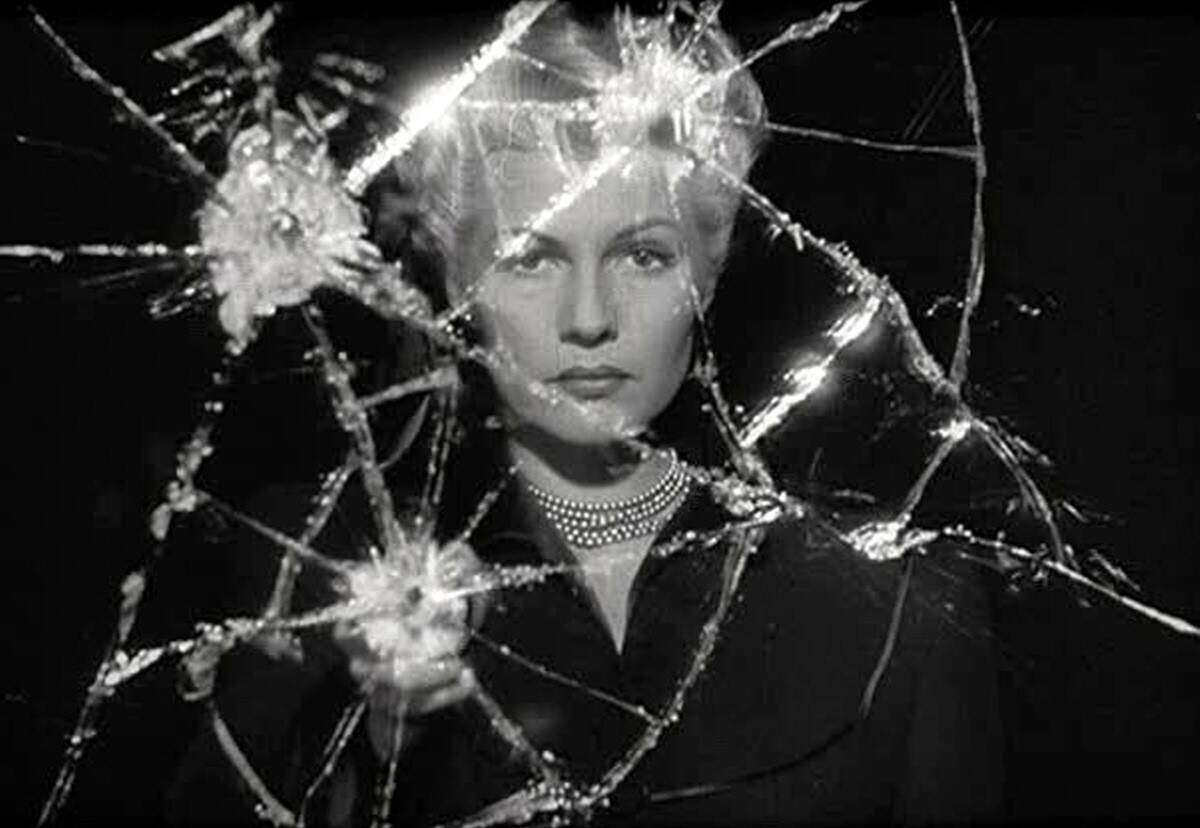
For a lot of people, November means football and turkey sandwiches. But for film buffs, it means blind alleys, blonde bombshells and suitcases full of cash. Every "Noirvember" at the Brattle Theatre and the Coolidge Corner Theatre, it’s a month for floozies, flophouses and hard-drinking private dicks played for patsies.
Film noir was the fancy French term for a strain of fatalistic American crime pictures that flourished during the early postwar years. Sharing stylistic elements like chiaroscuro lighting, labyrinthine plots and bitterly ironic endings, these movies often found their morally dubious male anti-heroes rendered helpless by powerful, overtly sexualized femme fatales. You don’t have to be an armchair psychologist to see how such cheap crime stories spoke to the fears of traumatized men returning from WWII to discover that women had become far more independent in their absence. Much in the way that the superhero movie craze started shortly after 9/11, it’s always been a grand American coping mechanism to process our anxieties through pulp.
The movies are also just plain fun — hard-boiled, down-and-dirty crime flicks that get you to root for lovestruck suckers and accidental bad guys left twisting in the wind of their terrible decisions. This month, the Brattle continues their yearlong celebration of Columbia Pictures’ 100th anniversary with a series of nine noirs from that studio selected by Chicago film critic Marya E. Gates, who originally coined the #Noirvember hashtag and will be on hand to introduce select screenings. The Coolidge is focusing on a few of the most famous femme fatales, with Sunday afternoon shows followed by discussions with Northeastern University professor Nathan Blake.
The Brattle series kicks off with a new 4K restoration of Nicholas Ray’s 1950 masterpiece, “In a Lonely Place” (Nov. 8), which for some reason I never think of as a noir even though it obviously qualifies. Sure, the story revolves around a murder, but it’s not one anybody seems particularly worked up about solving. Ray uses and freely discards the genre trappings to focus on the doomed romance between Humphrey Bogart’s hotheaded, past-his-prime screenwriter and Gloria Grahame as the no-nonsense neighbor who falls for him, even though he’s the prime suspect in the strangulation of an innocent young coat check girl who was last seen at his apartment.
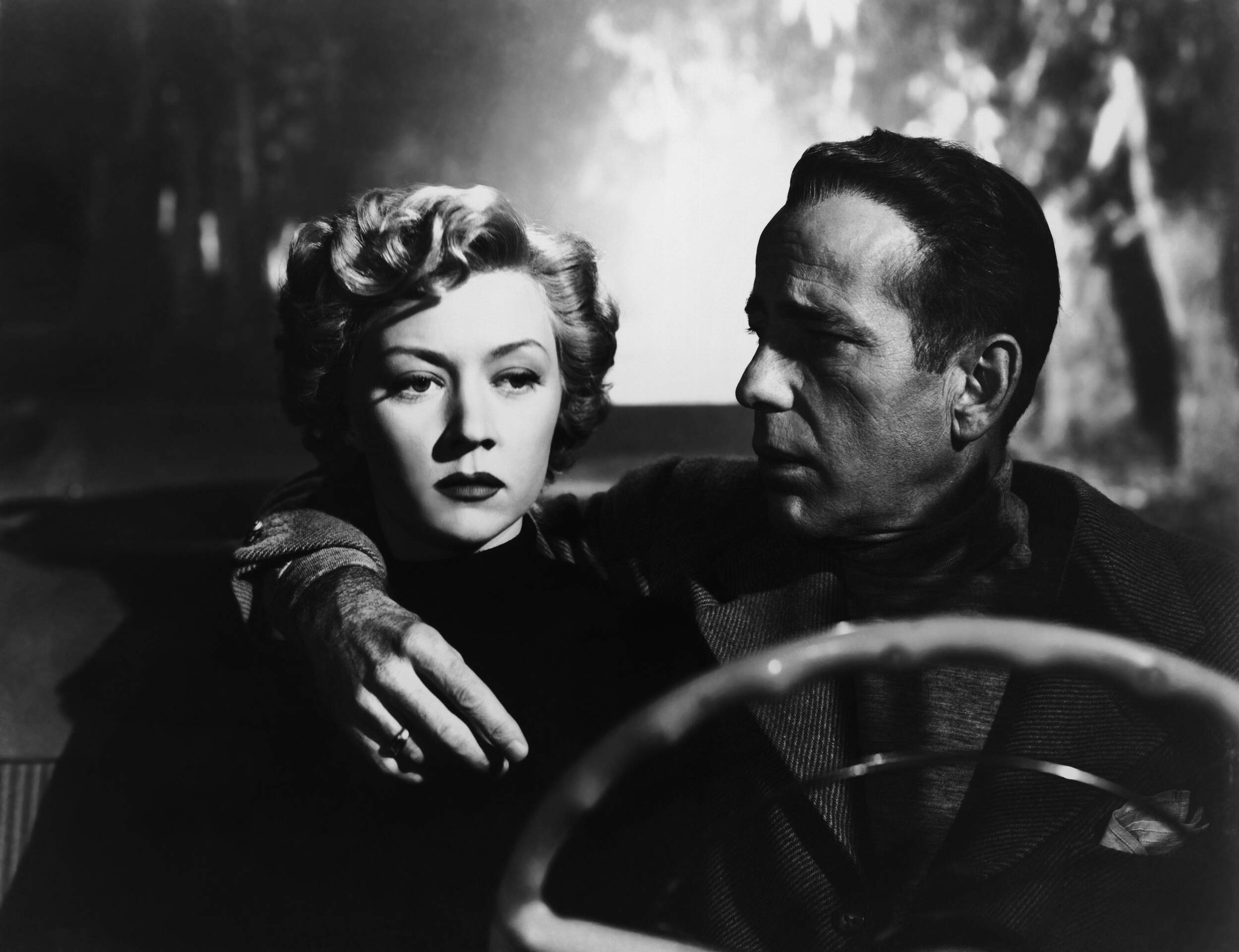
At once a scathing Hollywood satire and a semi-revealing emotional self-portrait, the movie was produced by Bogart’s Santana Productions and features what might be his finest performance. A friend likes to say that there are two types of Humphrey Bogart movies: ones like “Casablanca” and “The Big Sleep” where he’s always the coolest guy in the room, or films like “The Caine Mutiny” and “The Treasure of the Sierra Madre” where he’s constantly out of his mind. “In a Lonely Place” splits the difference, as his washed-up screenwriter Dixon Steele — what a name! — exhibits all the charming Bogart insolence but with a haunted mean streak that just might be murderous. (As with a lot of self-medicating men from that generation, there’s a reason Dix hasn’t written anything good since the war.)
Bogart originally wanted his wife Lauren Bacall for the female lead, but Warner Bros. wouldn’t let her out of her contract. So they went with director Ray’s wife Gloria Grahame, which only added to the self-reflexive hothouse psychodrama of it all since their marriage was falling apart and the filmmaker wound up sleeping on the set — in Steele’s apartment, no less! It’s a story about toxic masculinity made 70 years before anybody thought to call it that, playfully deconstructing itself as one of the first meta movies as our protagonist breaks down the story devices in the script he’s writing while we’re watching something strikingly similar. That’s how Ray smuggles in the movie’s most famously florid lines: “I was born when she kissed me. I died when she left me. I lived a few weeks while she loved me.”
Grahame pops up a couple more times in the Brattle series, most memorably taking an extremely unpleasant coffee break with Lee Marvin in director Fritz Lang’s 1953 bruiser “The Big Heat” (Nov. 10 at the Brattle). But the most fitting companion piece to “In a Lonely Place” might be Samuel Fuller’s 1959 “The Crimson Kimono” (Nov. 13 at the Brattle). With the lurid, low-budget panache that was former newspaperman Fuller’s stock-in-trade, the film follows two detectives falling in love with the same woman while investigating the shooting of a stripper with the perfectly Fuller-esque name of Sugar Torch.
Japanese American Joe (James Shigeta) and his white partner Charlie (Glenn Corbett) have been inseparable for ages. Charlie’s even had a pint of Joe’s blood pumping through his veins ever since the latter saved his life in Korea. But when both have feelings for a free-spirited artist and eyewitness (Victoria Shaw), the love triangle turns into a racial reckoning, one carried out with uncommon frankness for a film of this era. In its punchy, tabloid fashion, “The Crimson Kimono” is far more incisive about race and sexual jealousy than most prestige dramas. Fuller’s final shot is the kind of thing a filmmaker could only get away with back then in a disreputable B-picture, where nobody was looking too closely.
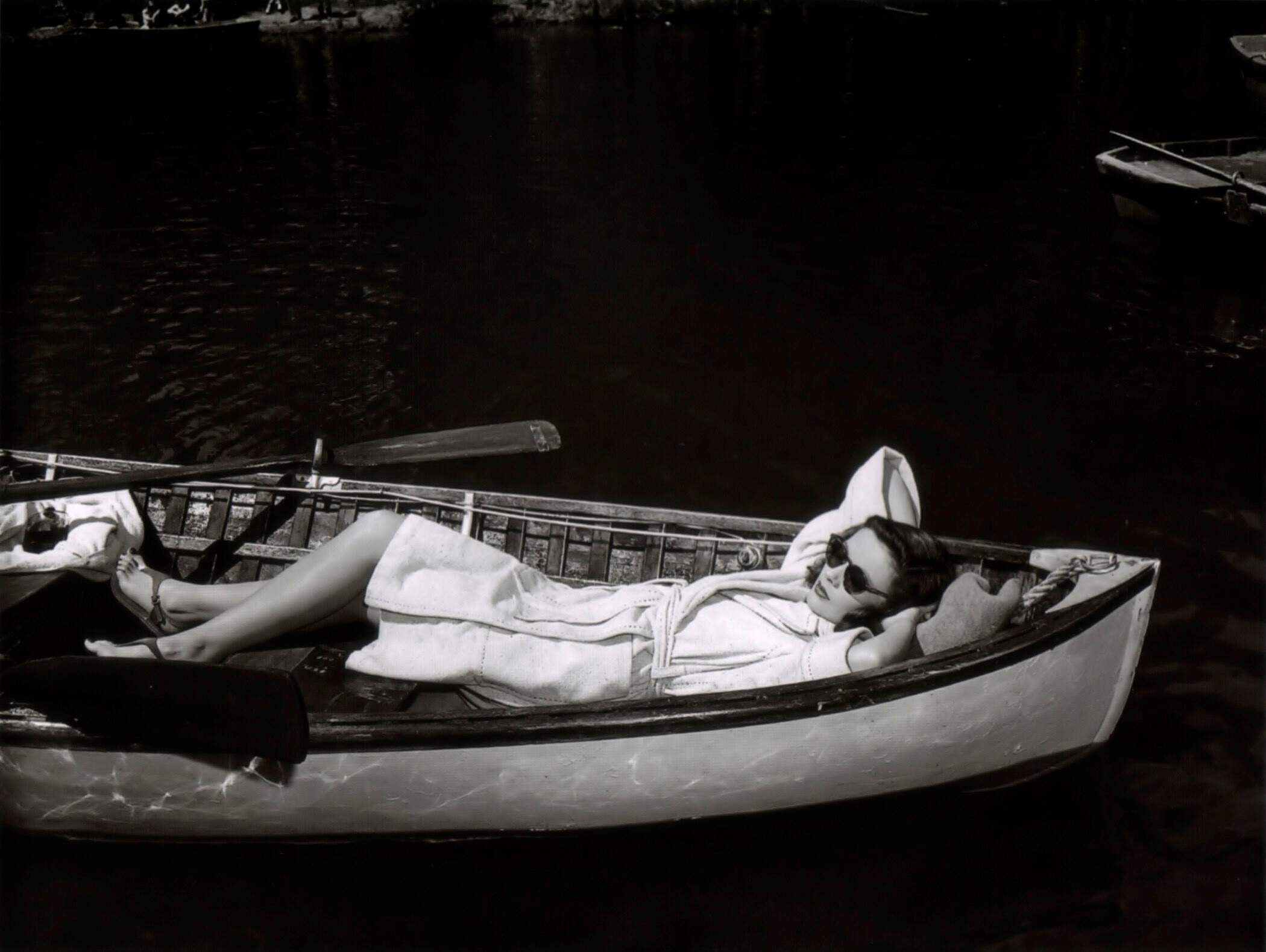
Film noirs are famous for their sinister, black-and-white photography, but the Coolidge is offering two of the genre’s finest full-spectrum departures, which brought the dark deeds out of the shadows and into the eye-popping splendor of the old Technicolor process. First up is Marilyn Monroe plotting to kill her husband in Henry Hathway’s “Niagara” (Nov. 10 at the Coolidge) followed a week later by Gene Tierney proving there’s nothing she won’t do for a little alone time with her fella in John M. Stahl’s classic “Leave Her to Heaven” (Nov. 17 at the Coolidge).
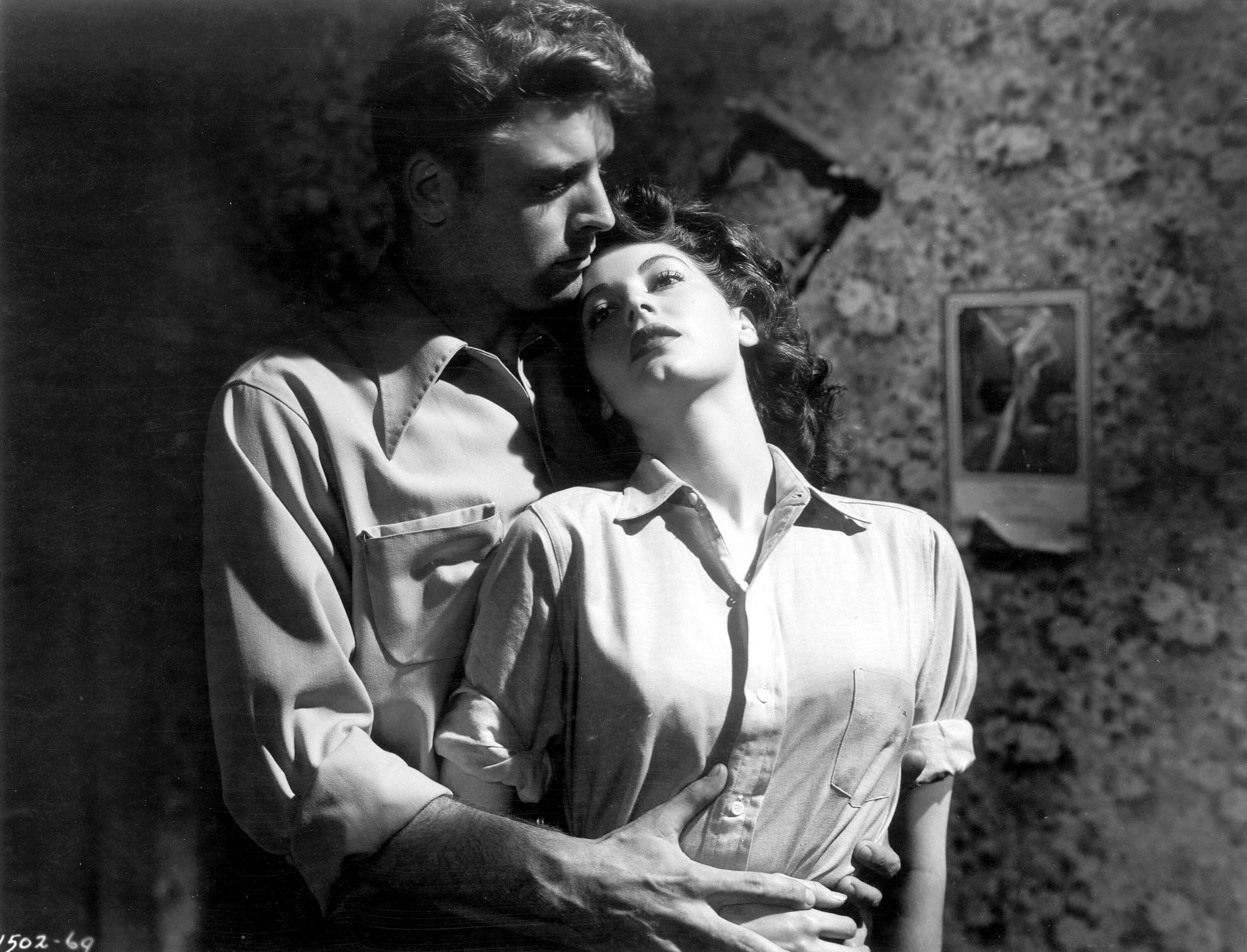
Ernest Hemingway’s “The Killers” (Nov. 12 at the Coolidge) is a brusque, 10-page short story full of existential dread in which the author’s sometime stand-in Nick Adams wonders why a depressed Swedish boxer doesn’t try to flee when two hired guns show up looking to ring his final bell. The answer, at least according to Robert Siodmak’s 1946 movie adaptation, is Ava Gardner. The film follows an insurance investigator played by Edmond O’Brien trying to piece together the details of a bungled heist that led to the Swede’s demise. Whenever an insurance investigator gets involved in a film noir, you know some good stuff’s about to go down.
Vaudeville superstar and trapeze artist extraordinaire Burt Lancaster made his film debut as the Swede, boasting a gravity-defying coiffure that remains the envy of viewers today. He and Gardner are such a hot couple, you can’t help but resent whenever the movie cuts back to the present-day insurance man. (No offense to Eddie O’Brien, a solid Los Angeles citizen.) “The Killers” was remade in 1964 by director Don Siegel with Lee Marvin, Angie Dickinson and John Cassavetes playing the most Greek-looking Swede in cinema history. It’s best remembered as the final film role of a mediocre actor named Ronald Reagan, surprisingly chilling in his only onscreen villain turn. I actually prefer Siegel’s remake to the original, and not just because it contains the not unpleasurable sight of John Cassavetes punching Ronald Reagan in the face.
Putting a semi-satirical button on all these offerings, the Brattle wraps up their "Noirvember" celebration with Joel and Ethan Coen’s poker-faced 2001 pastiche “The Man Who Wasn’t There” (Nov. 15), which screens on 35mm as part of the theater’s regular Friday Film Matinee series co-presented with the indispensable repertory calendar website Screen Boston. The Coens know noir in their bones, specializing over the years in contraption-like crime stories that can run sweet (“Fargo”) sour (“Blood Simple”) or silly (“The Big Lebowski”) depending on the capriciousness of fate. Even brother Joel’s solo directorial debut “The Tragedy of Macbeth” turned Shakespeare into a black-and-white potboiler with the payoffs of a 1940s B-picture.
“The Man Who Wasn’t There” is one of their more intriguingly inscrutable efforts. Set in 1949, the film stars Billy Bob Thornton as Ed Crane, a cuckolded barber with no discernable personality. Ed stumbles backward into a blackmail scheme that puts his shrewish, racist wife (Frances McDormand) in prison for killing her not-so-secret lover (James Gandolfini) before winding up on death row himself, not for the murder he actually committed, but one close enough that it all comes out in the wash.
Shot in shimmery monochrome and scored by somber Beethoven piano sonatas played by Scarlett Johansson’s teenage temptress, it’s a weirdly melancholy movie enlivened by an undercurrent of disgust with postwar Americana. Killers are one thing, but the Coens save their real ire for fake war heroes, scheming dry cleaners, department store magnates and blowhard driveway coating salesmen. The trappings of an idyllic suburban life look more like quicksand in this odd, unsettlingly funny film.
“Noirvember” runs Nov. 8-Nov. 13 at the Brattle Theatre and through Nov. 27 at the Coolidge Corner Theatre.