Support WBUR
Review
'Anora' comically explores transactional relationships and the class divide
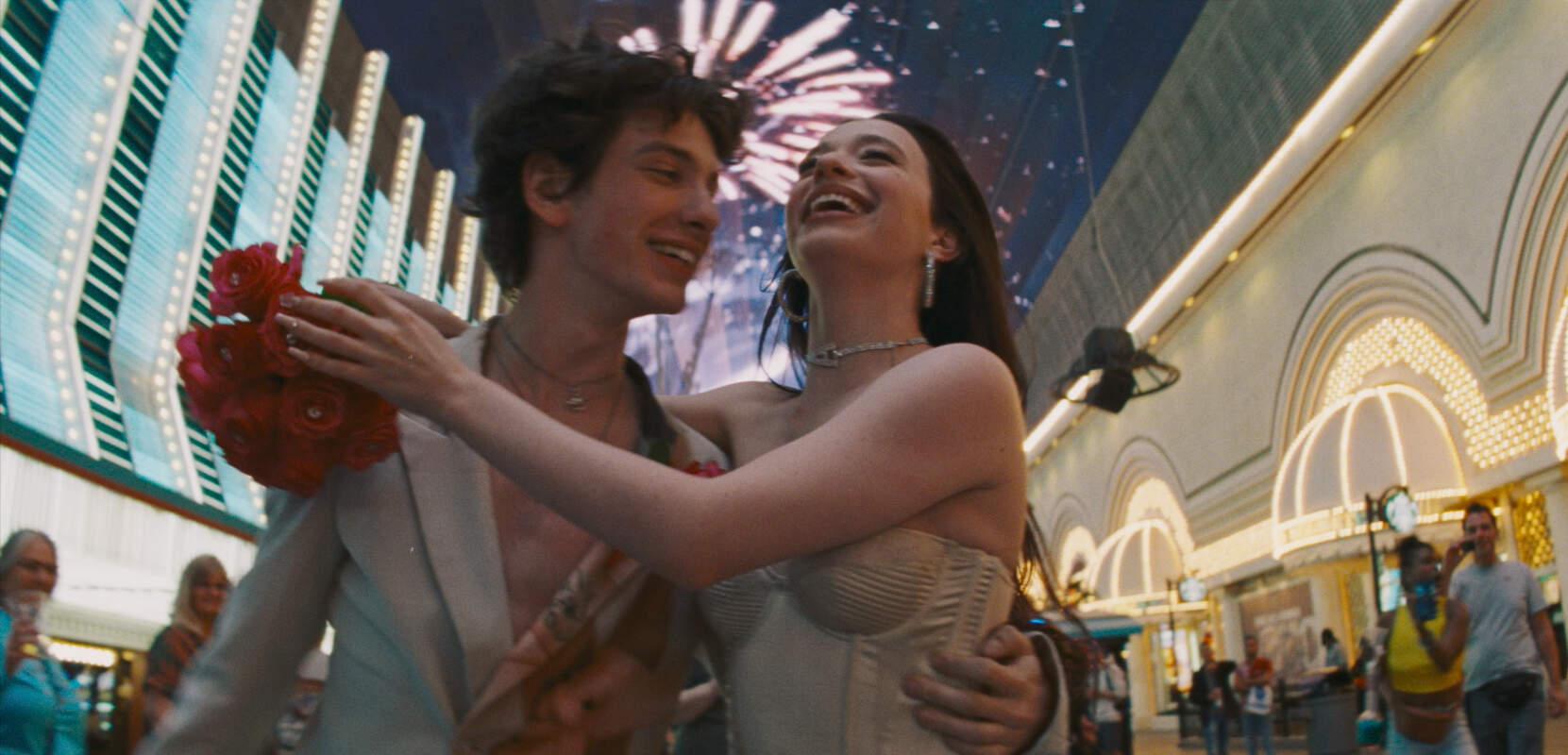
Vanya hired Ani to be his girlfriend for a week.
Played by Mikey Madison, Ani’s a 23-year-old stripper from Brighton Beach, a graduate from the school of hard knocks who speaks in a potty-mouthed Brooklyn honk that could peel the paint off your walls. Mark Eydelshteyn’s Vanya is the listless, none-too-bright, 21-year-old son of a shady Russian oligarch, sowing his wild oats in New York City with an insatiable appetite for sex and drugs and seemingly unlimited funds.
At first, it’s a harmless, for-profit fling — Vanya appears foundationally unequipped to deal with anyone who doesn’t work for him or his father in some fashion — and any resemblance to the plot of “Pretty Woman” is obviously entirely intentional. It all seems like a lusty little lark until the night these two impulsively fly to Las Vegas and get married. As one might imagine, Vanya’s family doesn’t take the news very well.
Winner of the Palme d’Or at this summer’s Cannes Film Festival, writer-director Sean Baker’s “Anora” is the best American film of the year so far. It’s also the funniest — a soaring, generous comedy about transactional relationships and the class divide. What starts as a Cinderella story in stiletto heels becomes a bawdy, up-all-night farce, with two hapless henchmen hired by Vanya’s father trying to corral these crazy kids and force them into a quickie annulment before his furious parents arrive from Moscow in the morning. The ticking-clock structure is straight out of classic Hollywood comedies, albeit updated for an age of champagne rooms and private jets. Baker stages “Anora” with a precise, screwball snap, like when a catfight breaks out at the strip club and there’s a shot of half a dozen dancers leaping off the laps of the stockbrokers they’re servicing like divers in a Busby Berkeley water musical.
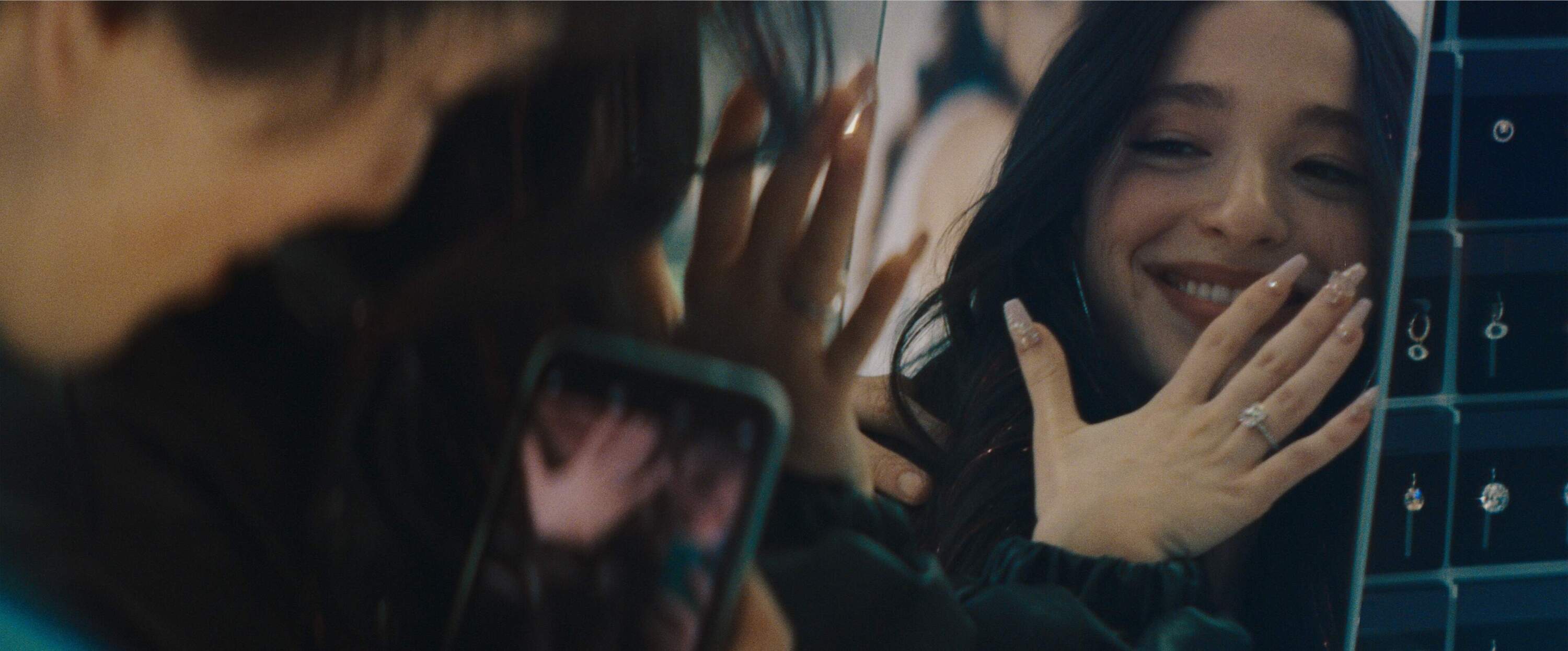
The chaos is anchored by a star-making performance from Mikey Madison as Ani. You might recognize her as the Manson girl who got flambéed in Quentin Tarantino’s “Once Upon a Time… in Hollywood,” or the Ghostface cosplayer who met a similarly fiery fate in the fourth “Scream” sequel. With her crack comic timing and air raid siren of a voice, Madison could be Jean Arthur in a thong. There’s a fearless physicality to her performance, literally throwing herself into some of these scenes. The movie’s centerpiece sequence — in which Ani singlehandedly fends off two home-invading goons — is a 25-minute tour de force that reportedly took a full 10 days to film, and it made me laugh so hard I was gasping for air.
An early trailer for “Anora” quoted the industry publication Variety as saying “it makes ‘Pretty Woman’ look like a Disney movie.’” This must be some sort of inside joke, because “Pretty Woman” actually was a Disney movie, released through the Mouse House’s Touchstone Pictures division, back in the days when the studio also made R-rated movies aimed at adults instead of just flooding the market with franchises for children. The Julia Roberts vehicle leaned into its fairy tale trappings to what many have called an irresponsible degree, something of which “Anora” will never be accused, as it’s more than obvious from the outset that Vanya is no Prince Charming. He’s not even Richard Gere. He's just a dumb, horny kid who’s frightened of his mom.
This is why Madison lets us see a sadness lurking beneath Ani’s bluster. She’s so desperate to believe in this star-crossed romance with Vanya, because otherwise what does their arrangement make her? In the words of his parents and their apparatchiks, “just some hooker.” We can’t help but notice that the more Ani’s wearing, the more exposed she is emotionally. There’s a real weight to the movie that sneaks up on you. Like all Sean Baker pictures, “Anora” is ultimately about bearing up under the crushing weight of capitalism — the personas we create and the lies you have to tell yourself to maintain dignity and self-respect in a system designed to grind those things out of you.
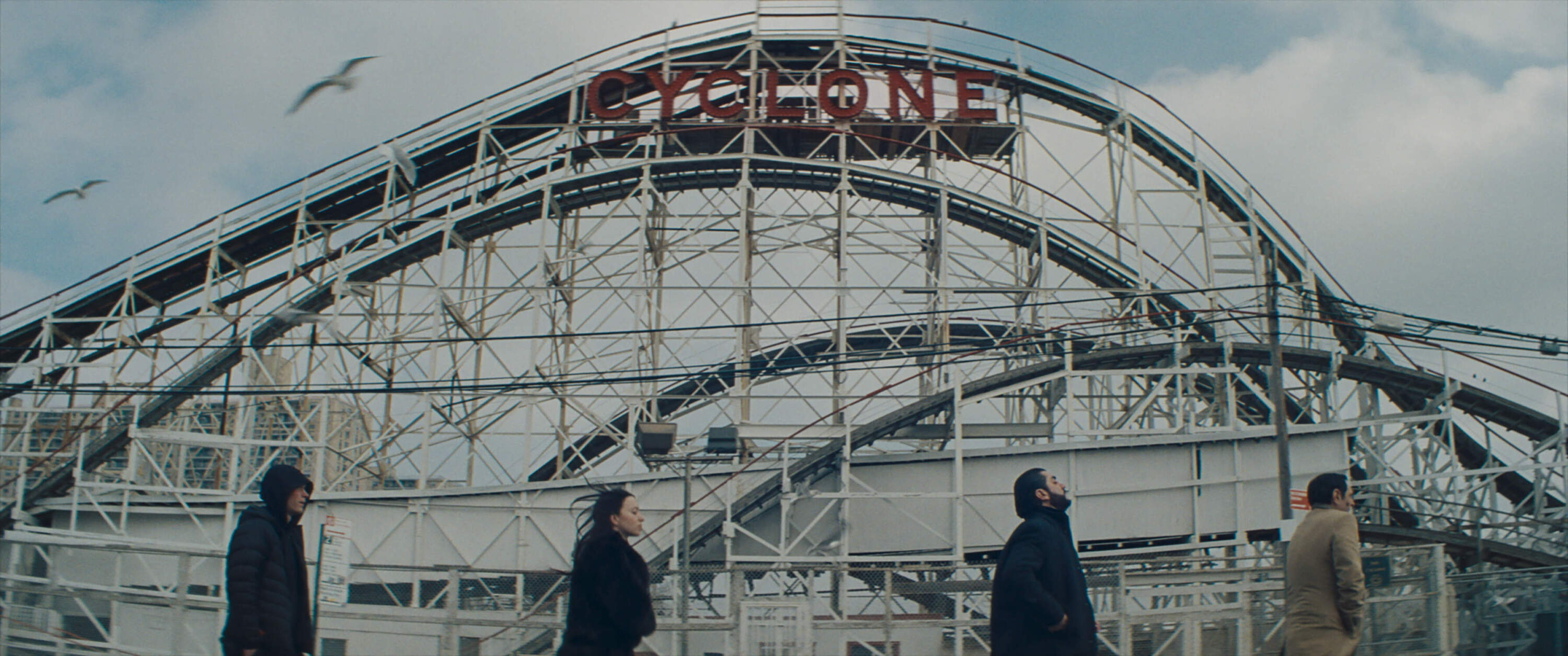
For the past 20 years, Baker has been making movies about immigrants, sex workers, porn stars and people on the margins struggling to scrape by. But what makes his ribald and often riotously funny films so special is that he does so without any special pleading on their behalf, without the pious condescension of more outwardly respectable Hollywood hokum like “Nomadland.” By allowing them to be flawed, complicated people, Baker meets his characters where they are. (Sometimes literally, as the filmmaker is fond of casting first-time actors he’s discovered while researching these stories.)
Baker is probably best known for 2017’s “The Florida Project,” his hilarious and heartbreaking chronicle of a welfare hotel in the shadow of Disney World, but “Anora” reminded me most of his rollicking 2015 breakthrough “Tangerine,” a Christmas Eve romp about transgender sex workers that shares a similarly anarchic, after hours energy. Baker has a genuine curiosity about outcasts and real compassion for people that polite society takes pains to look past. He’s like if Vittorio De Sica made sex comedies.
He’s also got something of the late Jonathan Demme’s affection for bit players. There are no “extras” in Sean Baker films, as everyone in front of the camera appears to have wandered in from a full and bustling life outside the frame. My favorite character in “Anora” is Igor, a hired thug played by Yura Borisov who really likes Ani, despite his assignment temporarily putting them at cross purposes. With great, witty restraint, Igor tries repeatedly throughout the film to prove to her that he’s not really a bad guy, even though he does get paid to hurt people. I’m so in love with this performance, and how much Borisov is able to give us while Igor struggles to show as little as he can.
It is only in the movie’s controversial last scene that two characters are able to communicate with one another beyond the roles circumscribed by their professions and stations in life, trying different permutations and power dynamics until they can finally just be themselves together, instead of who they’ve been taught to be. It’s when a very good film becomes a great one.
“Anora” is now in theaters. A 35mm print of the film is screening at the Coolidge Corner Theatre through Sunday, Oct. 27.