Support WBUR
Review
Angelina Jolie takes center stage in biopic of opera legend Maria Callas

Angelina Jolie is a great actress who has arguably never appeared in a great film. This is not entirely her fault. It’s the pictures that got small. Jolie’s presence is simply too gargantuan for most movies these days, knocking them off axis all the way back to her Oscar-winning breakthrough in 1999’s “Girl, Interrupted,” during which Jolie basically capsized Winona Ryder’s career by stealing the starlet’s self-produced vanity project out from under her. I’d only been at this job for a few months at the time, and remember having a hard time trying to write tastefully about how dangerous, sexy and alluring a performer could be onscreen. (Some would argue that I still haven’t figured it out.)
This is the reason Jolie has spent most of her career in a rut, elevating shlocky action pictures or playing video game characters, “Eternals” and wicked queens. It’s impossible to believe her as an ordinary person with a 9-to-5 job. Can you imagine seeing Angelina Jolie on the subway? Her regal, outsized femininity is totally out of step with contemporary cinema, more suited to European films from the 1960s. Lord, what Fellini or Antonioni might have done with her.
The closest I suppose we’re going to get is “Maria,” director Pablo Larraín’s unconventional portrait of opera legend Maria Callas. The film follows “Jackie” and “Spencer” as the third chapter of Larraín’s trilogy about famous 20th-century women held captive by their celebrity. Dodging the usual biopic barrage of events in favor of closely observing these women in their gilded cages, it’s a fascinating project, making sly, metatextual use of the baggage audiences can’t help but bring to watching contemporary superstar leads play icons of a previous era. Such semiotically loaded films are catnip for folks like a friend of mine who identifies as an “actress-exual.”
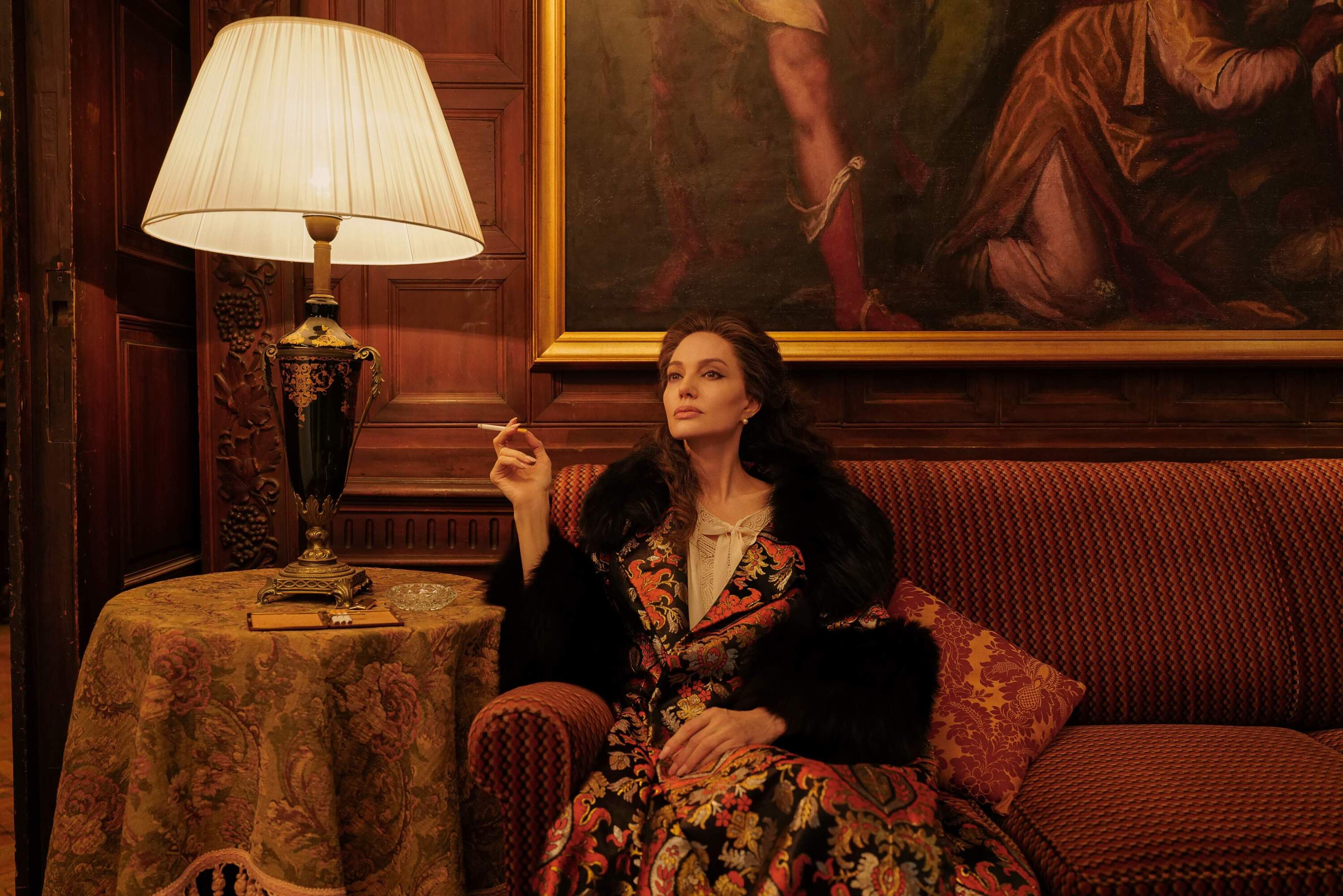
Larraín riffs on his stars’ personas while playfully incorporating elements of classic movies. “Jackie” sent Natalie Portman’s blood-spattered first lady wandering the halls of a White House shot to look like the Overlook Hotel, while “Spencer” turned the Royal family’s Sandringham Estate into the flat from Roman Polanski’s “Repulsion.” “Maria” sends “Sunset Boulevard” to the opera. Jolie’s Callas is Norma Desmond as a doomed (lowercase) soprano, a past-her-prime legend parading around a Parisian apartment that’s more like a mausoleum. Dictatorial to her slim remaining staff and zonked on pills most of the time, she’s imperious, insecure, impossible and irresistible. It’s finally a role that’s the right size for its star, and Jolie is more than ready for her close-up. Maria, you’ve got to see her.
It's 1977 and the ailing Callas hasn’t performed onstage in years. Larraín and screenwriter Steven Knight cobble together her story via flashbacks and an interview with a documentary crew that our diva is most likely hallucinating. The young journalist (Kodi Smit-McPhee) is named Mandrax; same as the pills Maria’s been gobbling day and night, much to the chagrin of her long-suffering butler (Pierfrancesco Favino) and the faithful cook (Alba Rohrwacher) tirelessly preparing meals that go uneaten. We get black-and-white glimpses of her romance with Greek tycoon Aristotle Onassis (Haluk Bilginer) who constantly kids about how ugly he is, because he knows he has so much money it doesn’t matter. It’s self-deprecation as a power trip, and it’s charming as hell.
The 53-year-old singer’s voice is shot from all the cigarettes, drugs and booze. She’s trying to summon it back up in secret rehearsals with a maestro who calls her Maria, but wants to see “La Callas.” Jolie’s voice has been digitally mixed with the opera singer’s actual recordings in certain scenes, and this is the part of the review where we critics are supposed to gush about how convincing her vibrato is while parroting publicity materials detailing the actress’ extensive preparations. The thing is that I know embarrassingly little about opera, but I do know great acting when I see it, and what matters is that Jolie convinces us she’s pulling these sounds up from somewhere deep inside of her aching soul. This makes it all the more shattering when they’re drowned out by the maid cooking breakfast sausages.
Knight’s screenplay for “Spencer” was egregiously overwritten, and much to its credit, “Maria” spends far less time trying to explain itself. Photographed by the great Edward Lachman and filled with some of the most beautiful music ever recorded, there’s not a lot for dialogue to do here besides get in the way. There is, however, a smartly written scene between Maria and President John F. Kennedy, who both know exactly what their significant others are up to and gently tweak each other about it. Kennedy is portrayed by Caspar Phillipson, who previously played the president in “Jackie” and Andrew Dominik’s “Blonde.” (I must admit, his appearance and the Onassis connection had me hoping for a Natalie Portman cameo, like how at the end of Krzysztof Kieślowski’s “Three Colors” trilogy you see Julie Delpy on that boat. But I guess now that would be too much like a Marvel movie.)
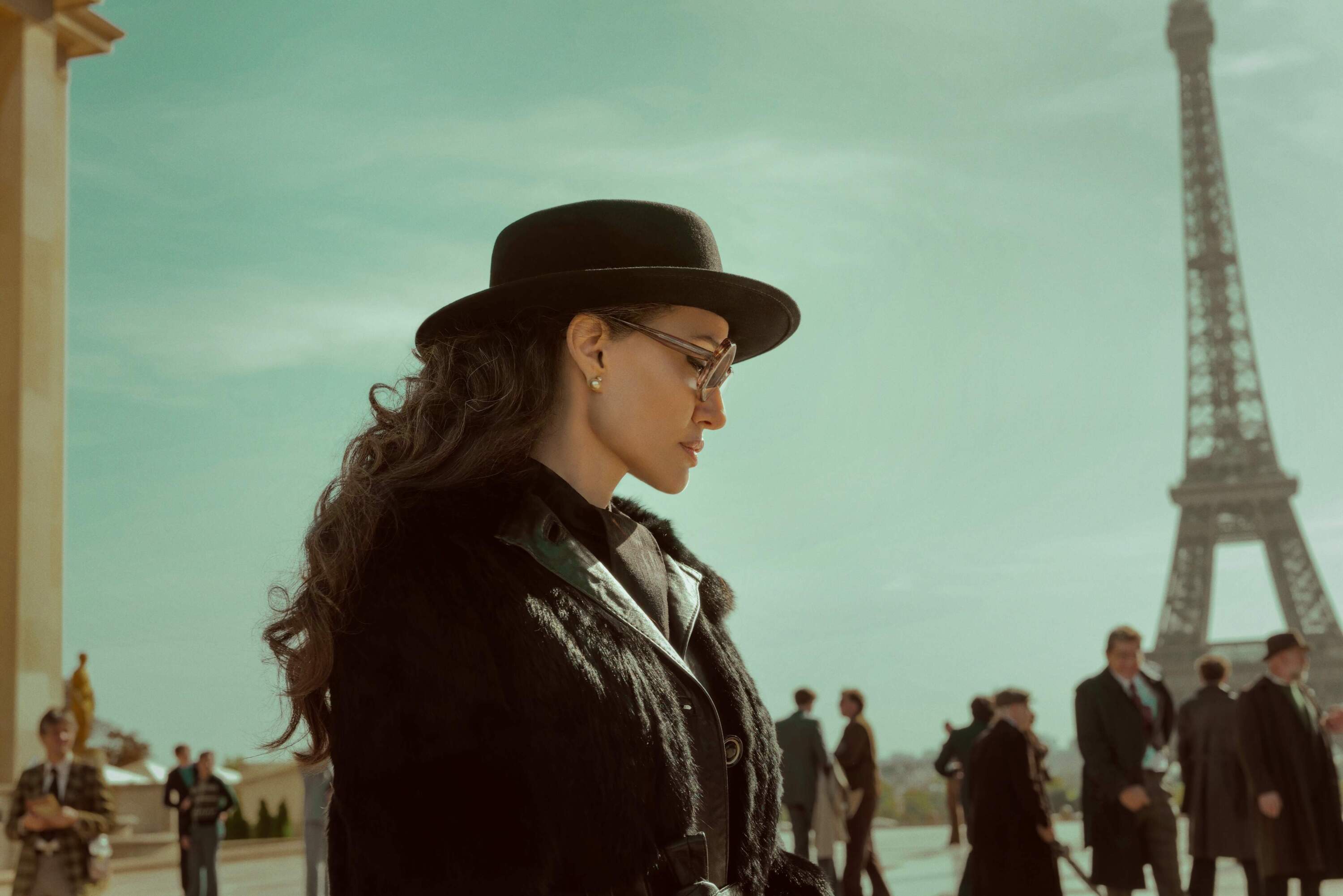
At its most horrifying, “Maria” is about what happens when you realize that a gift you’ve squandered is gone. What is a singer without her voice? Being “La Callas” is all Maria has. She goes out to restaurants not to eat, but to be adored by the public. (She treats the maître d’s offer to seat her somewhere more private as the most absurd thing she’s ever been asked.) When Maria’s imaginary biographer admits he’s fallen in love with her, Jolie waits an exquisite amount of time before telling him, “That happens a lot.”
A running joke has Callas instructing her butler to lug a heavy piano around to different places in the apartment, not because she wants or needs it moved, merely because she can. But fame is a fickle mistress, even for a legend, and Maria’s world is shrinking to a point where she’s running out of ways to insist upon herself. It’s a death march of diva-dom, affecting even when Knight can’t resist writing one or two too many tearful goodbye scenes. When the music’s over, turn out the lights.
“Maria” opens at the Coolidge Corner Theatre on Wednesday, Nov. 27. It starts streaming on Netflix on Wednesday, Dec. 11.