Support WBUR
Review
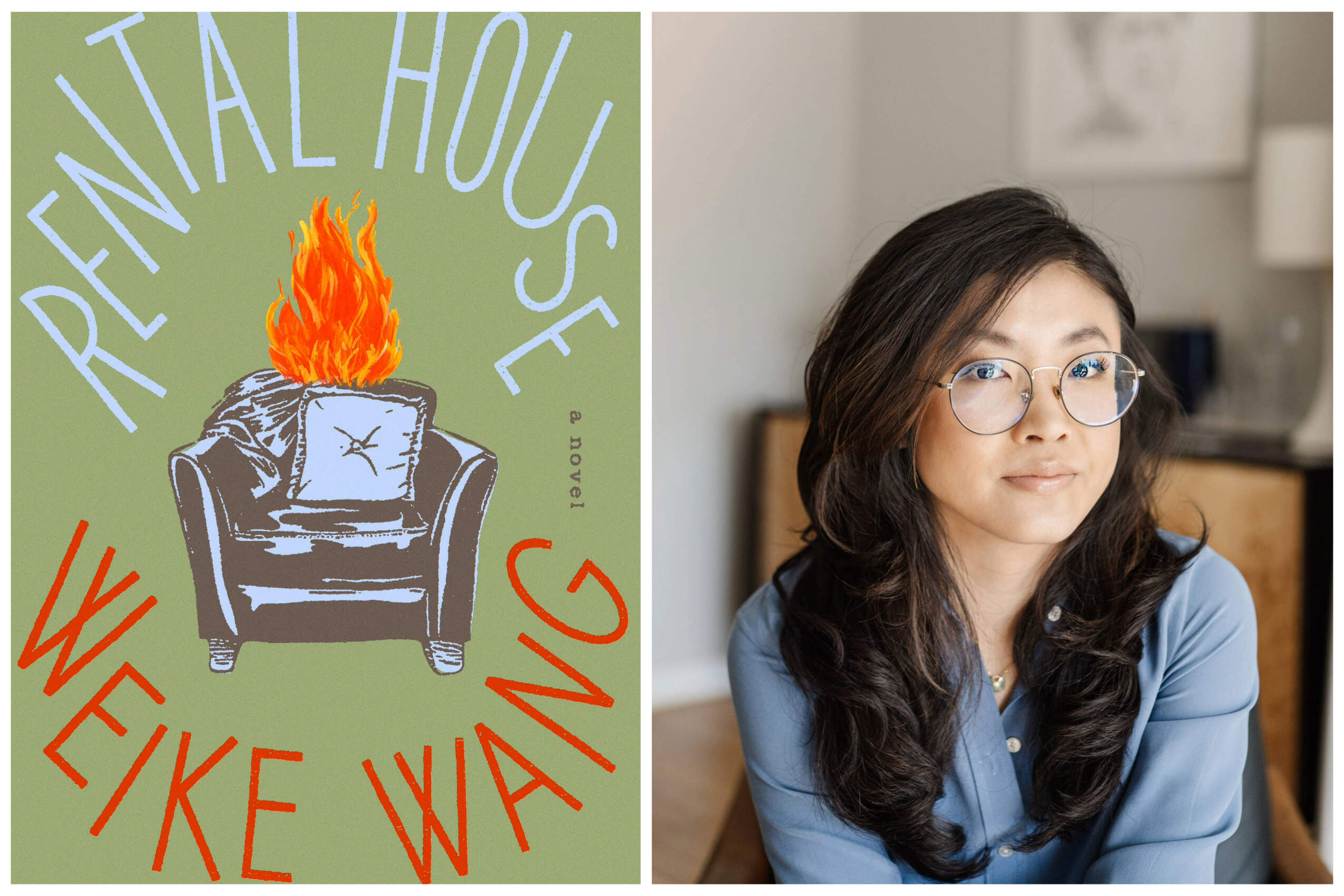
In 'Rental House,' Weike Wang crafts a bittersweet tale about a couple and their families
Some sayings are so fixed in the popular imagination that when you hear the opening words, your ear fills in the rest: like “actions speak [louder than words]” or “the pen is [mightier than the sword].”
One saying that can wave a red-flag caution is “You don't just marry the person, [you marry the family].”
Author Weike Wang plumbs the depths of this maxim in her third novel, “Rental House,” exploring the challenge of how to become part of a new family without becoming consumed by it – especially how to maintain your marriage when the two families linked by your nuptials are from entirely different worlds.
This is the case with Keru, a Chinese American immigrant, and Nate, from an Appalachian family who have lived, as he describes it, “at the foothills of the Blue Ridge Mountains” for generations. Now in their mid-30s, Keru and Nate have been married for a few years.
As reflected by some prominent 2024 works, dilemmas raised by colliding cultures are a timely topic. There’s Danzy Senna’s acidly funny novel “Colored Television” (biracial author Jane navigates shifting trends in the book and screenwriting industries ), Colm Tóibín’s “Long Island” (Irish-born Eilis resists being swamped by her husband’s overbearing Italian family) and the Netflix TV series “Nobody Wants This” (a romance between Noah, a rabbi, and Joanne, an agnostic).
As suggested by the title, most of the action occurs during two vacations: the first in Chatham on Cape Cod and the second, five years later, in a gated resort community in the Catskills. The title could also have a more poignant meaning; Keru and Nate are never truly at home as a couple or even with themselves.
Clashes abound, especially on issues of class, ambition and money. Wang has a keen eye for how the shared small details of daily life can illuminate the larger dynamics of a relationship; conflicts between Keru and Nate are sparked in believably ordinary ways. Although some sections are bogged down by overly expository conversations, most of “Rental House” shines with this writer’s particular blend of sharp wit and empathetic insights. (Each of Wang's previous novels garnered numerous awards, including the PEN/Hemingway Award for Debut Novel for “Chemistry” and a New York Times Editors’ Choice award for “Joan is Okay.”)
For the Cape Cod vacation, Keru and Nate invite each set of parents to stay with them for a week, one after another. The two visits create a study in contrasts.
Keru’s father is vigilant to the extreme on safety matters, and Keru’s mother does not trust anyone who makes something look too easy or seems too satisfied with their life. When Keru commented that not everything had to be difficult to have value, her mother replied, “To suffer is to strive and to set a bar so high that one never becomes complacent.”
Nate’s parents are free-wheeling, rule-breaking Trump supporters. At one point in their visit, Nate’s mother shuts down a debate by saying she doesn’t mind if her science is different, cheerfully waving away Nate’s exasperated reply that there is no “his or her science.”
Keru, a high-paid consultant, is responsible and frugal. Nate, an underpaid professor, might differ politically from his parents, but he’s given to loose planning at best; and feels he is often found wanting by Keru’s regimented, achievement-oriented parents.
In short but affecting flashbacks, Wang shows how the separate family histories shaped this couple. As a young girl, Keru immigrated with her parents from China to Minnesota in the 1990s; they have no other family in America. When Keru had once asked about her parents’ life before her, their brusque answer was freighted with pain: “We met, we married, had you. We live here now, the end.” She never asked again. Nate can’t imagine growing up without a lively network of cousins, grandparents, aunts and uncles nearby.
Throughout “Rental House,” Wang subtly but effectively underscores the power of roles, whether intentional or as a habit. Keru and Nate had met as undergrads at Yale. Nate, the first person in his family to attend college, never shared that “he was a poor white from nowhere” with anyone but Keru.
With more than a little humor, Wang highlights that primal tendency to revert to long-established roles when visiting family. Keru feels that “Around his parents, Nate postured.” Nate feels, “To be with his in-laws was to watch his wife turn into someone else.” (Keru, who at work and at home is often fierce to the point of intimidating, turns meek in their presence.) Of course, each recognizes this temporary wayward behavior in their spouse while being completely blind to it about themselves.
Yet, no character is shrunk down to a caricature. For example, Nate’s mother may populate her world with some easy-to-explain stereotypes, but she is ferociously protective of all her family members, including Keru.
Sometimes, though, the parents can seem too vivid, making Keru and Nate at times feel insubstantial (their Catskills vacation is nearly overrun by a highly opinionated neighboring couple).
Then again, that is the challenge that underlies this narrative: whether Keru and Nate can ever see each other clearly enough to make their own marriage their true home.
Wang creates conversational scenes that fizz with multiple world views. These work quite well because she crafts a character’s perspective that initially seems prickly or even opaque; then, as the story progresses, its underlying logic emerges in such a way that you, the reader, can’t help but consider a different point of view and see that character in full.
As with her earlier books, “Rental House” is just over 200 pages long. And once again, Wang has filled a relatively small literary space with a wise and bittersweet tale.
Weike Wang will be in conversation with Aube Rey Lescure at the Harvard Book Store on Friday, Dec. 6. The event is free and tickets aren't required.