Support WBUR
Mass. senator who blocked Boston property tax bill saw flood of real estate donations
The lone state senator to block a vote this week on a compromise bill that would raise taxes on Boston commercial property owners received a rush of campaign donations from real estate interests over the past two months, public records show.
South Boston state Sen. Nick Collins’ campaign committee collected $17,200 in contributions from real estate executives, developers and related industry groups in November, state campaign finance records show, representing more than three-quarters of the total donations he received.
The Democrat also took in $17,250 from similar donors — real estate developers, construction firms, investors and small property owners — in October.
The latest sums marked large jumps from his total contributions of $3,800 in September and $5,400 in August. The new money came in as negotiations ratcheted up on the tax bill championed by Mayor Michelle Wu to spare Boston residents a large property tax hike.
“A majority of contributions to my campaign come from Boston residents including organized labor and almost all are Boston taxpayers,” Collins said in a statement to WBUR. “As Senator, I will always prioritize protecting Boston's taxpayers and the economic stability of the City and our region.”
Collins, whose district also includes parts of Dorchester and the Seaport, has long enjoyed campaign contributions from the real estate and construction industries, state campaign finance data show, including more than $14,000 in June. He was elected to his office in 2018, after former state Sen. Linda Dorcena Forry resigned to work for Suffolk Construction, one of the city's top developers.
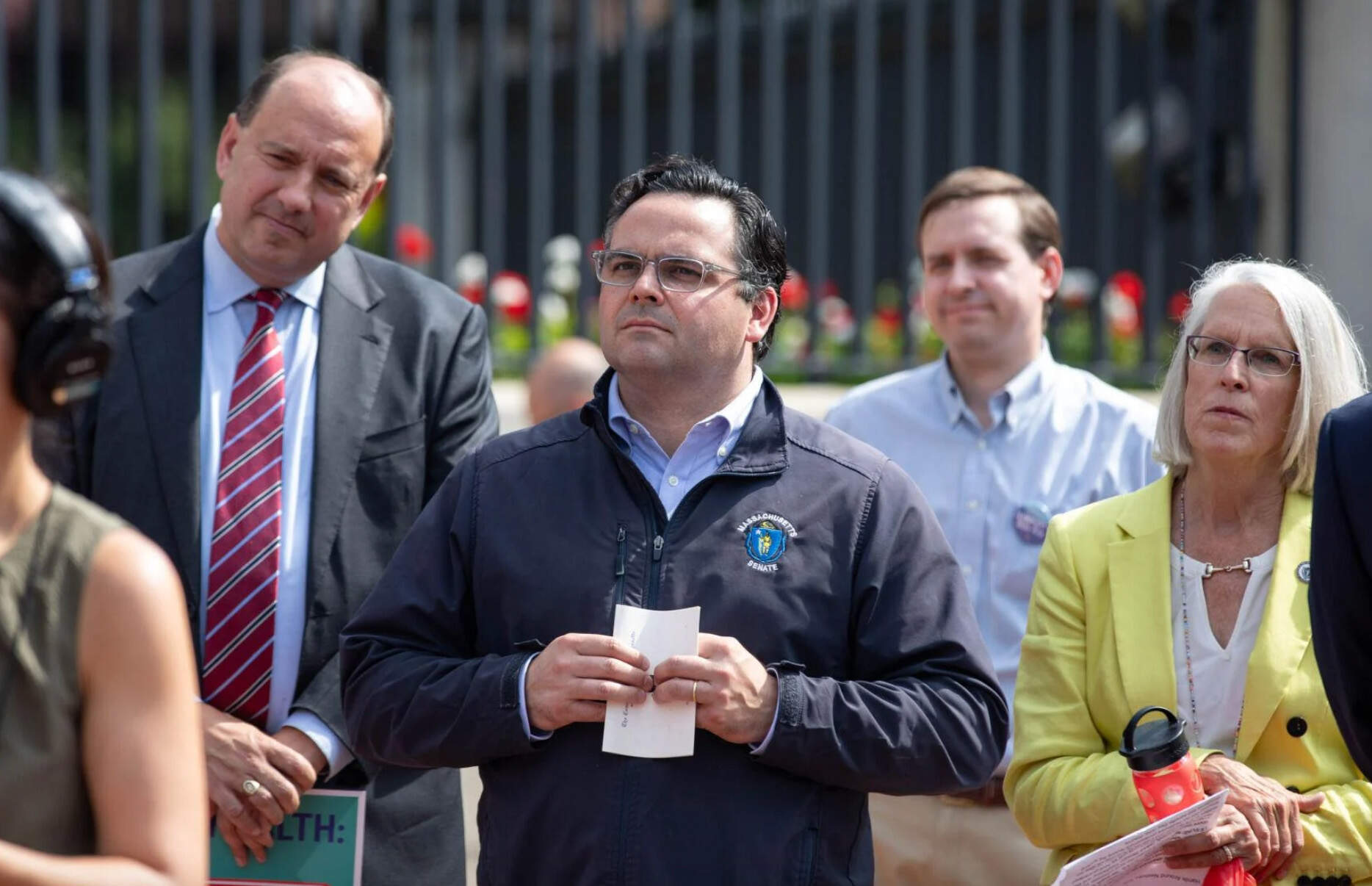
Collins said he opposed Wu's tax bill at the 11th hour because he wanted more information from the city on property valuations. His move took city officials by surprise — and comes as Wu warns just days remain to pass the bill and head off tax increases of up to 28% for city residents.
Boston city leaders quickly said they found Collins’ sudden public opposition confounding. “Today is the first time we are hearing about the senator’s specific concerns, and we will continue trying to reach him to understand the information he is seeking,” a spokesperson for Wu said in a statement Monday.
The Wu administration said officials had reached out to “each senator multiple times to ask for their feedback and concerns.”
It’s been a long battle to get this far. The mayor first proposed this bill about eight months ago and won passage in the City Council. Wu argues that declining downtown commercial property values will shift more of a burden onto residents’ tax bills, so she is seeking state approval to temporarily reconfigure the city’s taxation formula.
She has repeatedly re-crafted the bill to win support from skeptical lawmakers at the State House. And after facing fierce opposition from the business community, the mayor worked out a compromise version that lessens the impact on commercial property owners.

Under the deal, tax rates would rise for commercial properties 6.5 percentage points above the maximum allowable tax rate next year, then fall to 5 and 3 percentage points over the maximum over a three-year timeframe.
If the proposal does not pass, the Wu administration estimates average homeowners will see a nearly $500 increase in their property tax bill next year.
“I think it’s far more palatable than the original proposal,” Greg Vasil, chief executive of the Greater Boston Real Estate Board said in an interview. “It’s great that there was dialogue.”
But some business groups have continued to oppose the bill. One of the most outspoken is the Small Property Owners Association. Several of its members have donated to Collins in the last two months.
Collins also saw a raft of recent contributions from big players in the real estate industry, like the Davis Companies, McDermott Ventures and McCourt Construction. Collins received $3,500 in November from people connected to Synergy, one of the largest commercial landlords in the city.
Representatives of three of those companies did not respond to requests for comment. A spokesperson for the Davis Companies said support of Collins was unrelated to the tax bill.
The compromise version of the bill passed the House of Representatives last month. But on Monday, Collins used a procedural maneuver to delay the vote when it came up in the Senate.
Collins said he wanted more concrete financial information from the city before casting a vote.
“I'm opposed to the idea of doing something without the facts,” he told reporters outside the chamber Monday. He said he hoped to learn more from a city council revenue hearing the following day.
Randi Lathrop, a board member for the South End Business Alliance, gave $100 to Collins’ campaign in October. In a phone interview, she said many of the small business owners she represents are also city residents.
“If this goes through the way the administration wants to see it happen, they're going to be hit twice by taxes,” she said. “I’m supporting that Collins is asking questions.”
Lathrop said the city should explore budget cuts or hiring freezes to lower property taxes.
Meanwhile, supporters of the tax bill have been hounding Collins to drop his opposition. In recent days, people wearing the blue T-shirts of a group called the Mass Senior Action Council have flooded the marble hallways of the State House. The seniors, concerned about their tax bills going up, camped outside Collins’ office and, reportedly, even a bathroom they believed he was using.
Collins finally met with the group’s members over a pizza lunch in the Senate reading room Monday after the Senate adjourned.
At Tuesday’s City Council hearing, city officials reiterated their support for the tax shift proposal, but said they could not share the most recent property valuation data because the state had not yet certified it.
In a statement Tuesday night, Collins indicated he didn't get the answers he was looking for in the council hearing. He said while the city “refused” to share data on new valuations, he was encouraged by predictions of a future surplus.
“Surplus funds should be directed toward residential tax relief, particularly for our seniors,” he said. Business groups have previously urged the mayor to use rainy day funds to lessen residents’ tax hike, rather than shift the tax burden onto commercial property owners.
The clock is ticking for lawmakers to pass the bill if it’s going to take effect for residents’ Jan. 1 tax bills. Wu said at a previous hearing on Beacon Hill that the bill needed to pass by Dec. 5 to impact next year’s taxes. Now her team is lobbying senators to pass the proposal this Thursday.
The city council must set 2025 tax rates at its meeting next Wednesday.