Support WBUR
Human error led to Boston's ballot shortages, say city election officials
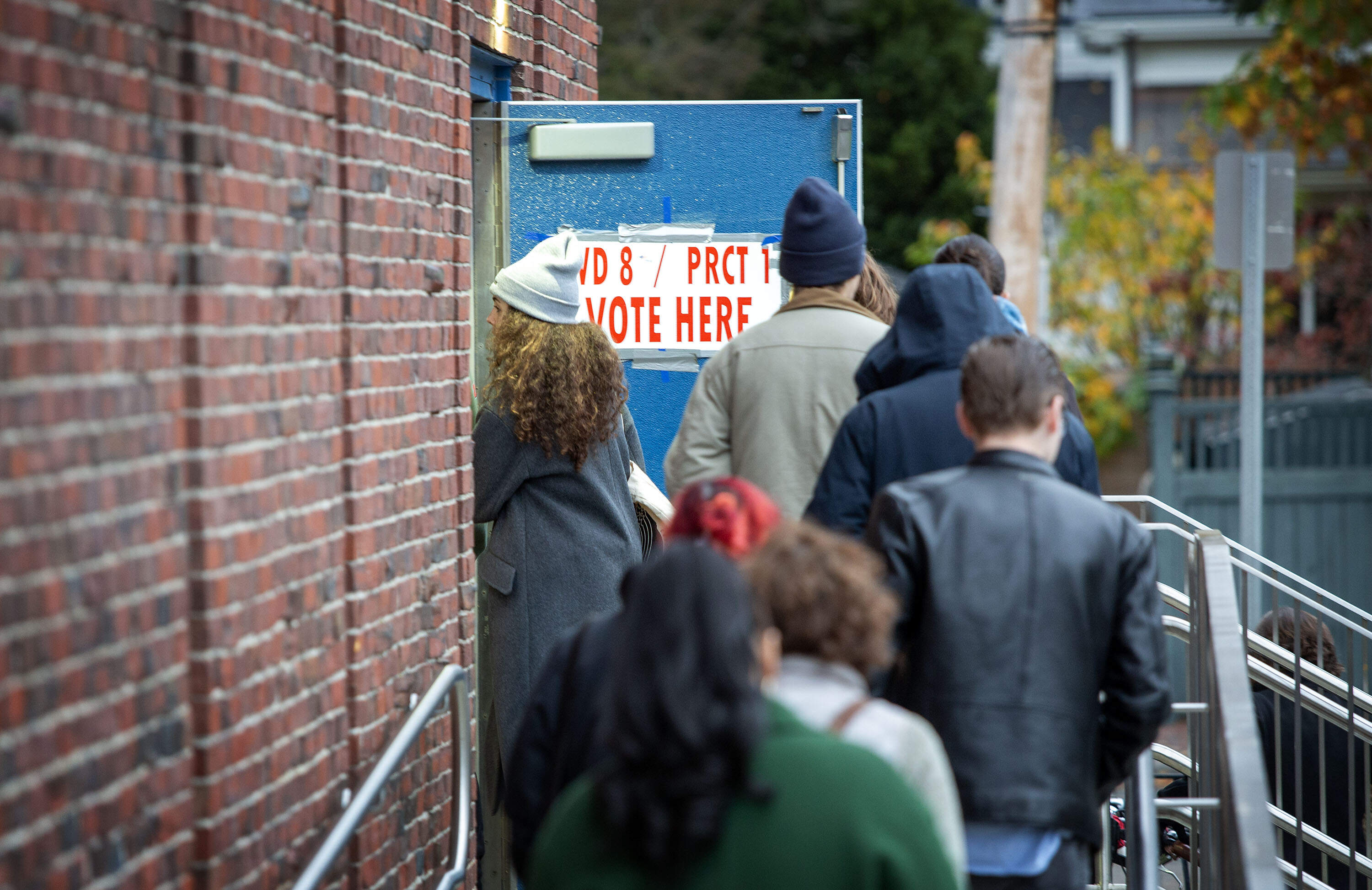
Human error led to ballot shortages that left voters waiting in long lines for hours across Boston on Election Day, officials said at a city council hearing Friday.
The city received enough ballots from the state, but didn't send all of them to polling locations. Election officials determined an 80% turnout would be sufficient for the presidential election, according to Sabino Piemonte, the city's head assistant registrar of voters.
"Of course, that wasn't the case. In some precincts they voted a little bit higher than 80%," he said.
Piemonte said the department used a formula to determine the number of ballots to send, which also factored in their estimated voter turnout and early voting. But the number of early voting ballots was subtracted twice in "error," leading to the shortages, according to Piemonte.
Piemonte said the formula mishap was his mistake.
"I'll take full responsibility for it," he told city councilors.
In the future, the city will send out 100% of its ballots to every precinct, Piemonte said.
State law requires election departments to deliver enough ballots for all registered voters, according to Secretary of State William Galvin. The state also sent a reminder about properly supplying ballots before the election.
Election commissioner Eneida Tavares said the election department held back ballots due to capacity concerns with ballot boxes in each precinct.
"Moving forward we will adjust some other things to ensure that we're sending a 100% of the ballots in the ballot box in the morning," Tavares said.
A WBUR analysis of complaints and records found at least 14 Boston precincts ran out of ballots — more than officials previously disclosed. The ballot problems occurred in Charlestown, the South End, Hyde Park, Roslindale, West Roxbury, Jamaica Plain and Dorchester.
During the hearing, Tavares confirmed that 14 polling places ran out of ballots and said more locations may have run low on ballots.
Some places ran out of ballots early on Election Day, but poll workers struggled to reach anyone in the election department.
"We received over 15,000 calls," Tavares said. "And we experienced a large number of machine breakdown issues. So the machine breakdown issues, coupled with the ballot issues, just caused a large influx of calls on Election Day, which led to the call issues."
Ballots were eventually replenished at polling places after Galvin ordered the city to deliver more with the help of police escorts.
Galvin is investigating the ballot problems, and has suggested he may put a receiver in place to oversee the election department.
The city is cooperating with that investigation. And Tavares said Friday that the department is already doing its own review and will work with a consultant early next year "to evaluate the department's structure, procedures and resources."
City council president Ruthzee Louijeune said the goal of Friday's hearing wasn't to "place blame" but to "learn how to address these challenges."
"Elections can be difficult to administer, but it's important that we hold the public trust as paramount, and that we make sure that our elections operate under complex and demanding conditions to support a fair and accessible voting process," she said.
