Support WBUR
A New England folk quartet reimagines centuries-old Christmas carols
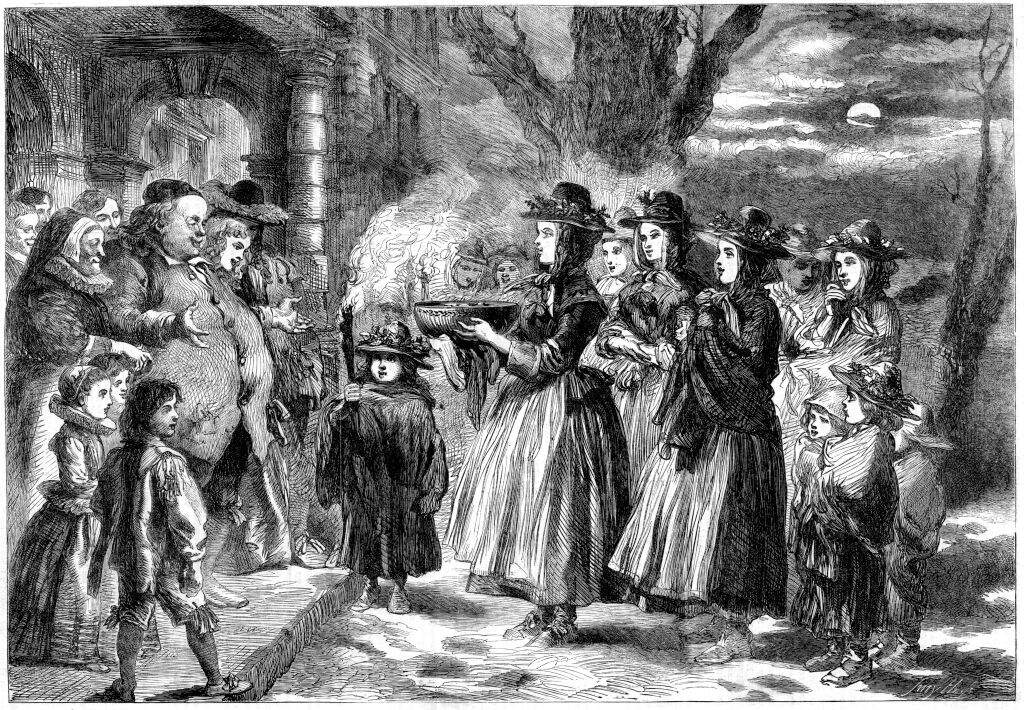
The first song on Windborne’s album “To Warm the Winter Hearth” is an old English classic called “Here We Come A-Wassailing.” Windborne’s four singers deliver the song’s jaunty melody in forthright four-part harmony. They begin with an expression of goodwill – “We wish you, send you, a happy new year” – before making a request: “Give us hungry wassailers a bit of bread and cheese.”
“Here We Come A–Wassailing” describes a centuries-old English custom in which people would go door to door in their village and offer a song or performance in exchange for a drink or money. It is believed that “wassail” comes from an Anglo-Saxon toast, “waes hael,” meaning “good health.” “Wassail” also referred to the alcoholic drink imbibed at the event, which became sloppier as the night wore on. Sometimes, the people in the houses would join the wassailers as they traveled to the next house, a growing band of rowdy revelers.
“The thing that I love about wassail is that it’s a little bit wild. It's a little bit ragged,” Windborne singer Jeremy Carter-Gordon said. “People are less rehearsed. They're not trained singers.”
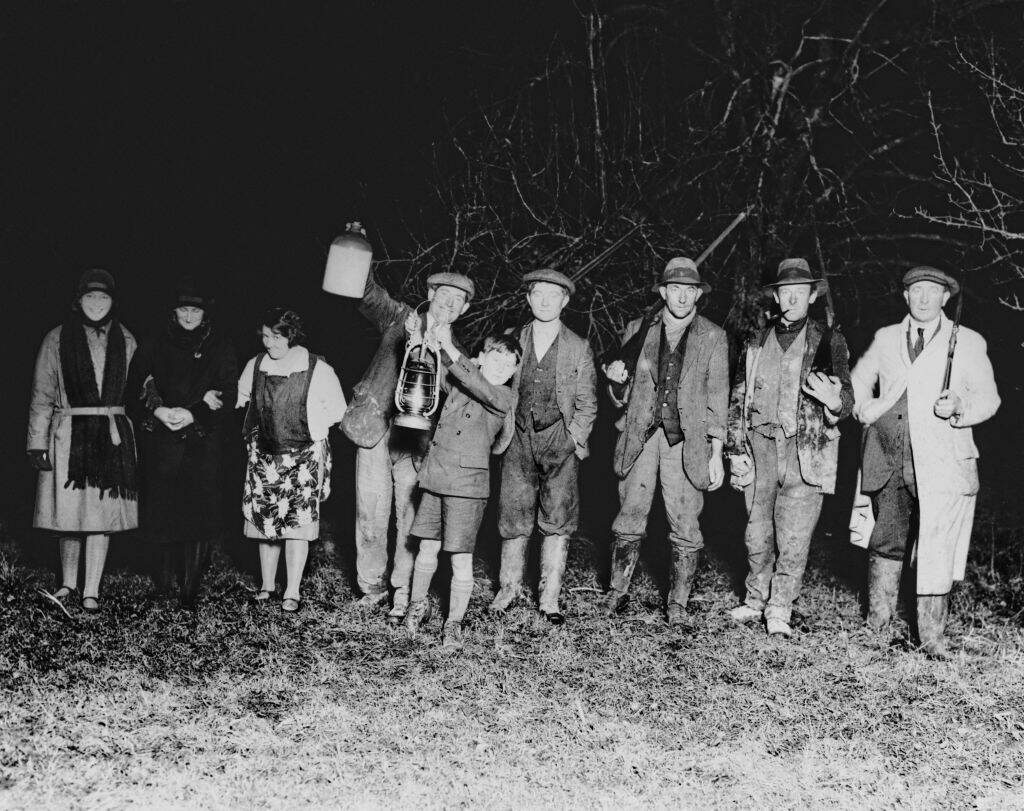
There are several wassailing songs on “To Warm the Winter Hearth,” which draws its yuletide repertoire from harmony singing traditions across Europe. Many of the songs are rooted in pre-Christian customs, like wassailing, that connect more to the cycles of the year than to Christmas. (A yet third meaning of “wassail” involves pouring wassail onto the roots of apple trees to ensure a bountiful harvest.) Other songs on the album offer an esoteric take on classic Christmas tales, like a pair of 16th century French carols that tell the nativity story from the perspective of Satan. Windborne offers this translation for one of the lyrics: “Poor Satan, he’s cooked like a chicken! He looks like a sad fish.”
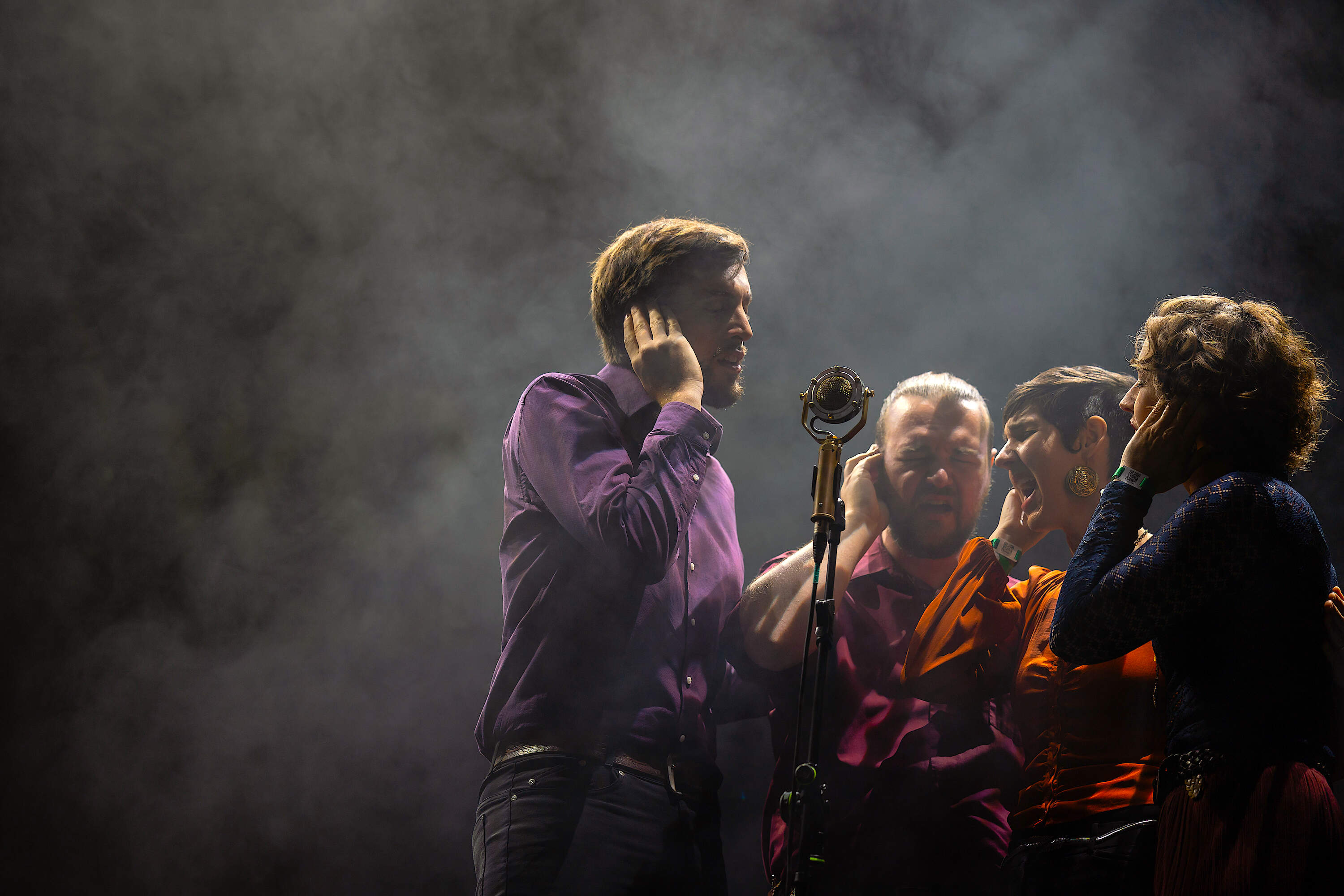
Windborne is a vocal quartet based in Massachusetts. Its members – Carter-Gordon, Lauren Breunig, Lynn Rowan and Will Rowan – cut their teeth as young singers in Vermont’s Village Harmony, a community choir focused on choral folk traditions from around the world. Windborne started out as a hobby for its members, but after a video of the quartet singing a protest song in front of Trump Tower in 2017 blew up on social media, the group decided to make a go of it full time. On TikTok, videos of Windborne singing in resonant environments, like churches and caves, can rack up tens of thousands of views.
“I think there's a lot more people that respond to the sound of harmony singing than would self identify as people that like harmony singing,” Breunig said. “It's the voice being an instrument that we all carry. It's also such a personal and vulnerable thing.”
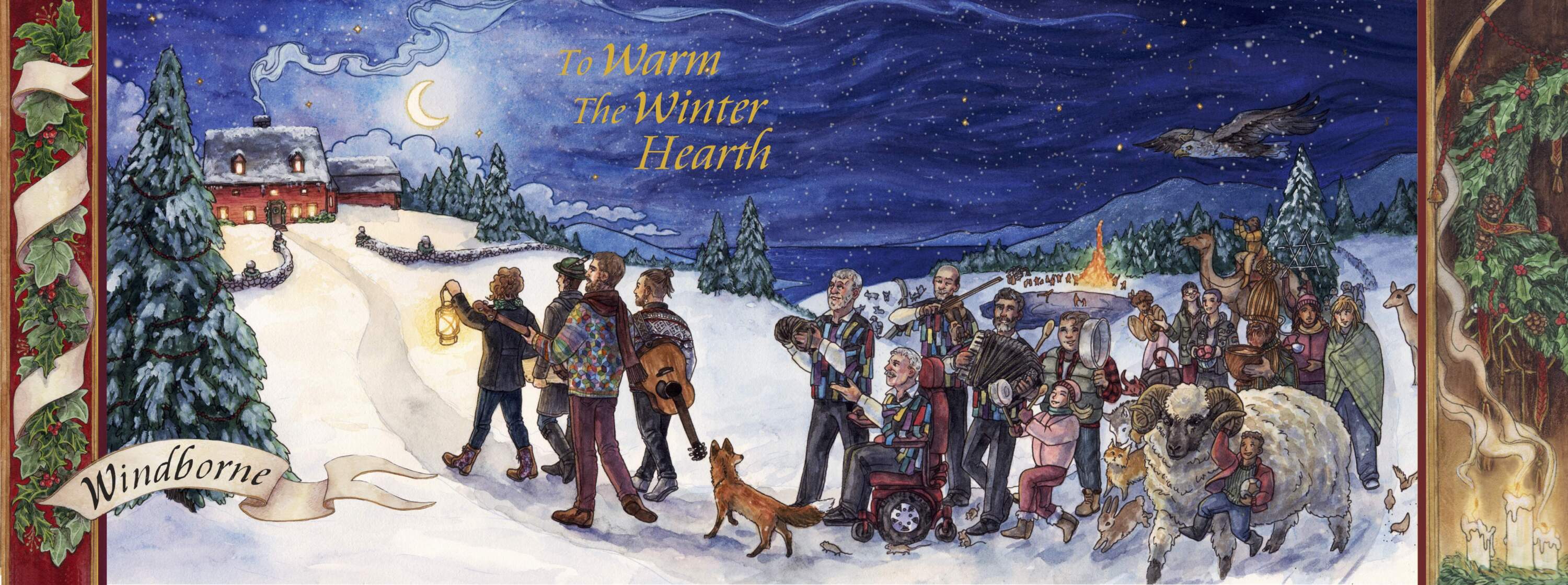
Until now, Windborne’s repertoire has been focused on songs of labor and social movements. But the group’s foray into holiday music seems to be striking a chord. An online fundraising campaign to support the new album raised $400,000, far surpassing the band’s original goal. Fans donated an average of $50 apiece to receive a CD with an illustrated booklet of liner notes (as well as QR code to download the songs). Windborne celebrates its release with a concert at City Winery in Boston on Dec. 15.
In many ways, “To Warm the Winter Hearth” is a tribute to the holiday folk music Windborne’s four members grew up on. Carter-Gordon’s parents used to host an annual Christmas caroling party in his hometown of Concord that included wassails and “weird carols that no one had ever heard of.” For Breunig, the connection to Christmas folk music is even more personal. Her father, Fred Breunig, was a member of Nowell Sing We Clear, a Vermont group founded in the ‘70s that became a cult favorite for its rousing, often humorous, renditions of English and American midwinter folk songs. Nowell Sing We Clear’s albums evoke a bygone, somewhat mythical era of obscure rituals and community music-making.
“The soundtrack of the holiday season for me, and really for all of us in Windborne, was just not the songs that most people were listening to,” Breunig said. “It was all of these songs that have so much connection to tradition and talk about the cycles of nature and the cycles of the year in a really different way than a lot of commercial music does.”
The DNA of “To Warm the Winter Hearth” owes much to the distinctive voices and harmonies of groups like Nowell Sing We Clear and the famed English folk quartet The Watersons. Windborne also draws on polyphonic singing traditions from Lithuania, the south of France, and Corsica, where an improvisatory form of harmony singing has flourished. Windborne arranges songs by ear, making up harmonies and slowly refining them. The end result is fairly polished, veering occasionally into unexpected harmonic territory.
Still, the essence of the songs on “To Warm the Winter Hearth” is singability.
“The thing that makes them folk custom is the ease of participation,” said Andy Davis, a musician from Brattleboro, Vermont, and a member of Nowell Sing We Clear. “A song begins and immediately there's some line or some role that you can play, in that song, from your seat in the audience. And in a way, that so-called wall between the performer and the audience disappears.”
That was certainly the case at a concert in Brattleboro in early December that featured Windborne and members of Nowell Sing We Clear. For decades, Nowell Sing We Clear’s annual hometown show has drawn hundreds of fans to Brattleboro’s Latchis Theater; since the band’s ringleader, Tony Barrand, died in 2022, Windborne has helped pick up his mantle. At the show, Windborne led the audience in a tricky arrangement of the English carol “Malpas Wassail.” The crowd learned it easily, filling the hall with song.
Carter-Gordon thinks this is why Windborne's music resonates with people — because it connects them with each other, and to generations past.
“Here is tradition. Here [are] roots. Here are ways that people used to, and still do, interact with each other and celebrate and keep joy and hope and warmth in the darkest time of the year,” he said. “I think people want that.”