Support WBUR
Winter Classical Music Guide
A guide to Greater Boston's numerous winter classical music events
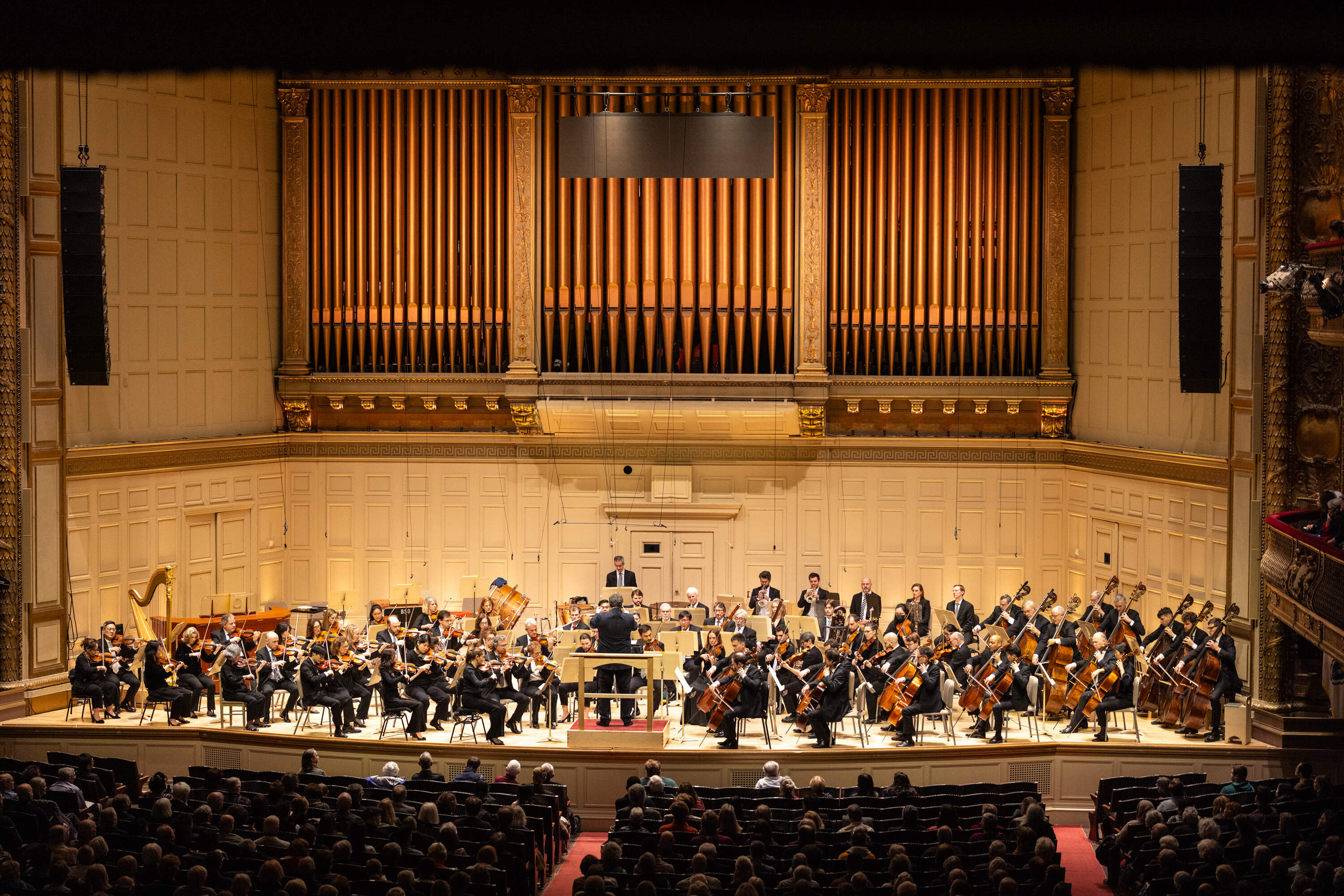
Many years ago, when I first moved to Boston as a graduate student, the Wellesley College rare book librarian took me under her wing. She had a longtime subscription to the Boston Symphony. But when the winter weather got too bad for her to come into the city, she let me have her ticket: Row B on the left aisle of the second balcony. The sound was glorious, and often, so were the programs. What could be a better escape from the winter weather than the warmth of Symphony Hall (or any concert hall), with admirable performances by the amazing local musicians warming your spirits?
The prices have gone up quite a bit since my student days, but those second balcony seats at Symphony Hall are still a bargain. And there are numerous free concerts at the many schools, conservatories and churches as well, including the New England Conservatory’s First Mondays series and the Lindsey Chapel Series at Emmanuel Church, which features six different harpsichord artists this season. Also worth exploring are early music groups, like Seven Times Salt and the period instrument ensemble Musicians of the Old Post Road. There’s much to hear and see. Here’s a selection of the numerous upcoming classical music events of the winter season.
SYMPHONY ORCHESTRAS | VISITING ARTISTS | OPERA | CHORAL MUSIC | SOLO & CHAMBER MUSIC | EARLY MUSIC | CONTEMPORARY MUSIC
SYMPHONY ORCHESTRAS
Boston Symphony Orchestra
Symphony Hall | Jan. 8-March 16
I wish our greatest orchestra had something fresher to offer during January than to celebrate the first decade of performances by music director Andris Nelsons with a run of all nine of Beethoven’s symphonies (Jan. 8-25). I suspect that if you’re looking for revelations (as I am), you’re not likely to find many here. But if you simply want to sit back and enjoy well-played, familiar music without looking for original interpretations, these performances might be just the pieces of strudel you’d like to bite into. Of more interest to a jaded critic like myself will be the rare performance of Erich Korngold’s most famous opera, “Die tote Stadt (The Dead City),” with celebrated Metropolitan Opera Wagnerian soprano Christine Goerke unspooling Korngold’s more beloved aria, the gorgeous “Marietta’s Lied” (Jan. 30 and Feb. 1).
February marks two notable BSO debuts: French conductor Nathalie Stutzmann and German violinist Veronika Eberle in a colorful program with the Beethoven Violin Concerto, Ravel’s “Alborada del gracioso” and Stravinsky’s magical suite from his first unqualified masterpiece, “The Firebird” (Feb. 6-8). The following week marks the very welcome return of 97-year-old conductor Herbert Blomstedt, whose warmth and musicality will surely inform the rare performance of Schubert’s lesser-known but marvelous Symphony No. 6 and the great Brahms First Symphony (Feb. 13-15). Then conductor Alan Gilbert returns with violinist Isabelle Faust in a later Stravinsky masterpiece, his Violin Concerto, bracketed by an early and a late Haydn symphony, numbers 48 and 99 (Feb. 20-22).
Nicaraguan-born Costa Rican conductor Giancarlo Guerrero, music director of the Nashville Symphony, leads the exciting Mexican composer Gabriela Ortiz’s ballet score “Revolución diamantina” (with the choral group The Crossing). Tchaikovsky’s Variations on a Rococo Theme, with cello soloist Alban Gerhardt, and passionate tone poem “Francesca da Rimini” complete the program (Feb. 27-March 1). The BSO winter season ends with the debut of South Korean conductor Eun Sun Kim leading celebrated pianist Inon Barnatan in Bartók’s haunting (and unfinished) late Piano Concerto No. 3 and a pair of Russian works by Liadov and Rachmaninoff (March 6-8) and Louisville Orchestra’s award-winning Teddy Abrams leads award-winning violinist (and social media superstar) Ray Chen in the famous Tchaikovsky Violin Concerto, baritone Dashon Burton in Michael Tilson Thomas’ “Whitman Songs” and Bernstein’s Symphonic Dances from “West Side Story” (March 13-16).
Boston Philharmonic Orchestra & Youth Orchestra
Symphony Hall | Feb. 16 & March 2
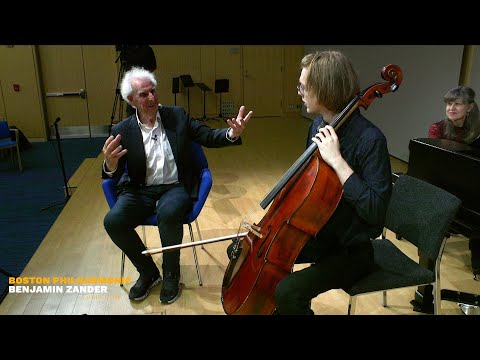
Benjamin Zander returns to his beloved Mahler with the most intimate and touching of Mahler’s symphonies, the Fourth, which concludes with one of the most literally heavenly pieces of music for soprano — a song describing everyday life in heaven. The wide-ranging British soprano Claire Booth is the vocal soloist, who will begin the concert with Richard Strauss’ late “Four Last Songs” — also heavenly, though in a more earthly way (Feb. 16).
Zander leads more Mahler with the Boston Philharmonic Youth Symphony, this time the powerful and tragic Symphony No. 6 — a huge challenge for any player, but if any youth orchestra can pull it off, it’s this one (March 2).
Bach, Beethoven, & Brahms Society
Faneuil Hall | March 2
Steven Lipsitt’s BB&B returns home to Faneuil Hall for a concert that’s full of surprises. The investigation into music by women, after centuries of women not being taken seriously as composers, has turned up some treasures. One of them may be this Overture in C major by Marianna Martines, a Viennese composer who was a student of Hadyn. At the opposite end of the calendar is the Concerto for Double Bass and String Orchestra from 2018 by the contemporary Spanish composer Simón García. This is its Boston premiere, with Boston Pops principal bassist Susan Hagen, who played the world premiere. The concert ends with what I would call the greatest piece of music written in C major, Mozart’s “Jupiter” Symphony (March 2).
New England Philharmonic
Tsai Performance Center, Boston University | March 2
Music director Tianhui Ng devotes this winter’s New England Philharmonic program to living composers (Yehudi Wyner, Chaya Czernowin, Keeril Makan, Marti Epstein, and this year’s Call for Scores winner Bobby Ge), most of whom live in New England (Makan and Ge, a graduate student at Princeton, both live in New Jersey; Czernowin was born in Israel but teaches at Harvard). The pièce de résistance is surely Wyner’s “Prologue and Narrative,” his 1994 cello concerto played in celebration of his 95th birthday. The cellist is Sam Ou (March 2).
VISITING ARTISTS
Celebrity Series of Boston
Multiple locations | Jan. 15-March 7
Celebrity Series of Boston, our major importer — but not our only importer — of visiting artists brings a number of brilliant musicians to area stages. Chopin Piano Competition gold-medalist Yulianna Avdeeva makes her Celebrity Series debut in an unusual program of short pieces by Liszt and Beethoven’s monumental “Hammerklavier” Sonata (Jan. 15-16). Metropolitan Opera mezzo-soprano Jamie Barton is joined by violist Matthew Lipman and pianist Tamar Sanikidze in an unusual evening of music by Clara Schumann, Brahms and a new, still-untitled commission by composer Joel Thompson (Jan. 25).
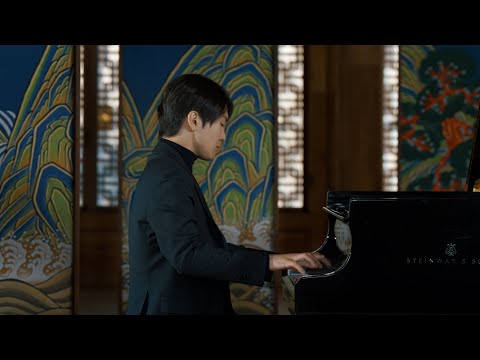
Pianist Seong-Jin Cho returns with a phenomenally ambitious program: The complete solo piano works of Maurice Ravel, which include some of the most ravishing as well as some of the most challenging music ever written for the piano (Feb. 2). Two programs promise some adventurous string playing at the hands of the unusual string quartet Owls (violin, viola and two cellos) on Feb. 12 followed by cellist Seth Parker Woods on Feb. 13. The more traditional but still outstanding Dover Quartet plays Schumann, Tchaikovsky and Dvořák on Feb. 14. Inward-looking Víkingur Ólafsson and extroverted Yuja Wang make an unusual and possibly unforgettable couple in an evening of pieces for duo piano and piano four-hands (Feb. 21). Perhaps the world’s most popular piano player, Lang Lang plays music that requires a mixture of tremendous delicacy as well as dazzling virtuosity: Fauré’s Pavane, a selection of Chopin’s Mazurkas and the F-sharp-minor Polonaise, and Schumann’s mysterious “Kreisleriana” (Feb. 28).
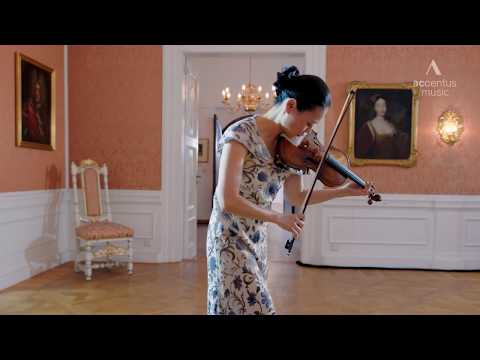
On March 1, the wind players from Castle of Our Skins perform a free concert that includes a new work in partnership with composer Brian Rafael Nabors in the series called “Solos (Together),” along with wind ensembles by Damien Geter, Mason Bynes and Fred Onovwerosuoke. Violinist Leonidas Kavakos and pianist Daniil Trifonov will be playing, according to the Celebrity Series website, “Beethoven, Bartók and more” (March 5). The beloved violinist with the single name, Midori, performs with the Turkish American pianist Özgür Aydin. The major work is Poulenc’s Sonata for Piano and Violin, dedicated to the memory of Federico García Lorca. Also on the program are Brahms’s youthful and soulful Sonata No. 1, Ravel’s “Kaddish” and “Tzigane,” and a new work by Che Buford called “Spirituals” (March 6-7).
OPERA
Boston Youth Symphony Orchestras
Sanders Theatre | Jan. 26
Federico Cortese, once an assistant conductor of the Boston Symphony Orchestra, has made a name for himself as one of our most ambitious, stylish and profound opera conductors. I look forward immensely to his annual concert performances with his superb youth orchestra and smart semi-staging by Joshua Major. This year’s opera is Verdi’s late tragic epic about the Inquisition, “Don Carlo,” with no less than six leading roles. The cast includes tenor Bruce Sledge in the title role, soprano Raquel González as Elisabetta di Valois, mezzo-soprano Maire Therese Carmack as the tragically vain Princess Eboli, baritones Nathan Berg as King Philip and Markus Werba as the political idealist Posa, and bass-baritone Andrea Mastroni as the ruthless Grand Inquisitor. The story is harrowing and heartbreaking and the music is both sublime and in exceptionally good hands.
Boston Opera Collaborative
First Church, Jamaica Plain | Jan. 31-Feb. 1
The feisty Boston Opera Collaborative has announced an evening wittily called “Missed Connections” consisting of two operas about phone calls: Gian Carlo Menotti’s comic two-character “The Telephone” and Francis Poulenc’s melodramatic monodrama “Le voix humaine,” a 40-minute “tragédie lyrique” based on Jean Cocteau’s famous one-act play about a woman on the phone desperately trying to convince her lover to return.
Boston Modern Orchestra Project
NEC's Jordan Hall | Feb. 15
Gil Rose’s Boston Modern Orchestra Project is one of the rare ensembles devoted exclusively to modern and contemporary music. One of the highlights of last season was, in collaboration with Odyssey Opera, their double bill of George and Ira Gershwin’s two political satires from the 1930s, “Of Thee I Sing” (a Pulitzer Prize-winning hit show) and its sequel “Let ‘Em Eat Cake” (as they say in Broadway parlance, a turkey). This winter, BMOP returns with an opera, Mark Adamo’s “Lysistrata, or the Nude Goddess” (2005). Adamo’s best-known opera is “Little Women,” and “Lysistrata” is almost the diametrical opposite in terms of source material (Aristophanes’ 5th century BCE satire on sex and war). The impressive cast includes Anya Matanovič in the title role, tenor David Portillo as Lysistrata’s political and sexual adversary Nico, and such Boston favorites as Kevin Deas, Neal Ferreira, Kristen Watson, Sandra Piques Eddy and Dana Whiteside.
Boston Lyric Opera
Emerson Paramount Center | March 12-16
Sometimes for better, sometimes for worse, this is our premiere opera company. BLO’s next production, “The Seasons,” looks fascinating on paper. Librettist-playwright Sarah Ruhl, working with countertenor superstar Anthony Roth Costanzo (who will also be singing one of the leading roles, the Poet), uses the music of Vivaldi’s thrice-familiar “Four Seasons” to create a kind of allegorical meditation on our human, internal weather. The music, including other vocal and orchestral works by Vivaldi, will be conducted by Boston Early Music Festival co-director Stephen Stubbs. Zack Winokur directs, with choreography by Pam Tanowitz.
CHORAL MUSIC
Emmanuel Music
Emmanuel Church | Jan. 19-March 16
Emmanuel Music’s weekly Bach cantatas are an essential spiritual center of musical life in Boston. Though the cantatas are actually part of the 10 a.m. church service, the public is welcome to arrive at 11 a.m. just to hear the cantatas. Music director Ryan Turner leads most of them, and the illuminating notes on the cantatas by the late Craig Smith, Emmanuel Music’s founding music director (with additions by Turner), are very much worth reading.
Cantata Singers
Sanders Theatre | March 14
Music director Noah Horn leads one of the Cantata Singers’ most ambitious programs — the world premiere of an evening-length work commissioned by the Cantata Singer. The new work is “A Map to the Next World” by composer Scott Perkins, not a name familiar to me. (His website says that he was born in Connecticut and is currently the associate director of the Sacramento State School of Music, where he is also head of music theory and musicianship.) This new piece suggests that he is deeply concerned with the environment, which he expresses in his choice of texts, drawing on Indigenous American folklore as well as on the words of such estimable poets, environmentalists, activists and anthropologists as former Poet Laureate Joy Harjo, celebrated environmentalist Rachel Carson and Tamiko Beyer, Harold Courlander, Rachel Morgan, Jay Parini and Judith Wright.
SOLO & CHAMBER MUSIC
Weekend Concert Series at the Gardner
Isabella Stewart Gardner Museum | Jan. 26-March 16
The Gardner Museum weekly concert series just seems to get better and better with each season. The Claremont Trio starts the new year off (Jan. 26) with music by Robert Schumann, Rebecca Clarke and Charlotte Sohy (if you don’t yet know this turn-of-the-century French composer, you surely soon will).
The extraordinary pianist Marc-André Hamelin makes his long overdue Gardner debut with a recital that shows of his wide spectrum of interests, which range from his masterful Haydn to Medtner, Rachmaninoff, Wolpe, and Frank Zappa (Feb. 2). And Brooklyn Rider, maybe the most adventurous of current string quartets, makes its Gardner debut with a typically surprising program beginning with Henry Purcell’s 1680 Fantasia upon One Note and ending with Betsy Jolas’s Third String Quartet “9 Etudes,” her homage to Purcell. In between we’ll get Mozart’s magnificent “Dissonance” Quartet, Brahms’s First Quartet, and Arvo Pärt’s “Solfeggio” (Feb. 9).
Up next is the unusual two-pianist/two percussionist quartet Yarn/Wire, with soprano Nicoletta Berry (Feb. 23). The earliest piece on this program is Tyondai Braxton’s Music for Ensemble and Pitch-Shifter Delay (2012) and the most recent is the world premiere of Phil Kline’s “ghost story,” a Gardner Museum commission inspired by the life of Isabella Stewart Gardner.
Winter draws to a close with the Gardner debut of violinist Simone Porter and pianist Pallavi Mahidhara playing Beethoven, Strauss, Lili Boulanger, George Antheil and early Stravinsky at his least threatening (March 2). The period-instrument ensemble ACRONYM, with Boston-based countertenor Reginald Mobley, plays a program of rare early music you won’t hear anywhere else (March 9). And spring is on the way with the Boston debut of 24-year-old Swedish-Norwegian violin virtuoso Johan Dalene, with pianist Sahun Sam Hong, playing Robert Schumann, Grieg, Lili Boulanger, Ravel, Bacewicz and Lutosławski (March 16).
Music for Food
NEC Williams Hall | Jan. 26
You can hear great music and also help those in need by attending a concert in the Music for Food series, now in its 15th year, thanks to its founder, stellar violist Kim Kashkashian, who will be joining the Terra String Quartet in Dvořák’s magnificent String Quintet. The program for this concert, called “The New World,” also includes Dvořák’s String Quartet, Opus 51, and the Charles Ives Trio for Violin, Cello, and Piano, and the other distinguished players are violinists Miriam Fried, Paul Biss and Lilit Hartunian, violist Nicholas Cords, cellists Yeesun Kim and David Russell, and pianist (and Ives advocate) Stephen Drury. Admission is free, but anything you donate will support Women’s Lunch Place.
Pro Arte Chamber Orchestra of Boston
War Memorial Hall, Newton City Hall | Jan. 26
Pro Arte, now in its 47th season, is a chamber ensemble that consists of some of Boston’s finest freelancers. Its winter concert, called “Musical Super Heroes,” led by conductor emerita Gisèle Ben-Dor, is fit for both children and adults. It begins with Poulenc’s “The Story of Babar” and ends with Leopold Mozart's delightful “Toy Symphony.” In between come the finale of a Haydn Cello Concerto, with young soloist Sofia Hernandez-Wiliams, and “Sensemayá,” a depiction of an Afro-Caribbean snake ritual by Mexican composer Silvestre Revueltas.
A Far Cry
NEC's Jordan Hall & St. John’s Church, Jamaica Plain | Jan. 31 & March 1
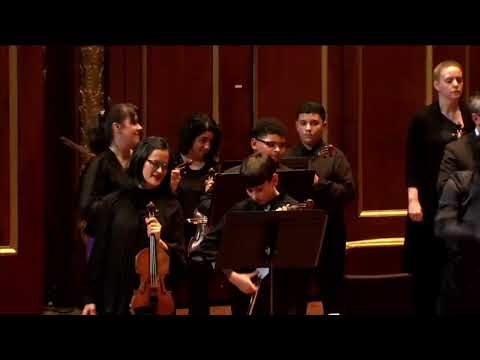
A Far Cry is a much-admired conductorless chamber music collective in which members of the group are also the curators of the individual concerts. The winter programs begin appropriately with “Daybreak” (Jan. 31) — a program that includes Quinn Mason’s “Svítání” (the Czech word for daybreak) and Beethoven’s “Pastoral” Symphony adapted for string orchestra from a version for string sextet. The performance features members of Project STEP’s Honors Quartet and student winners from the New England Conservatory Fellows competition. This will be followed by a witty program curated by Crier Francesca McNeeley called “One Fish, Two Fish,” in which Schubert’s famous “Trout” Quintet is paired with Kevin Puts’ “The Red Snapper Quintet” (March 1).
Mistral Music
West Parish Church, Andover & St. Paul’s Church, Brookline | Feb. 8 & 9
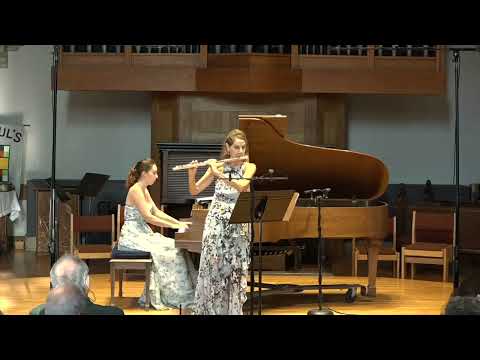
Mistral’s co-founder and director Julie Scolnik, a superb flute player, offers “Sense and Sensibility II” (Feb. 8 in Andover; Feb. 9 in Brookline) — a concert that claims to bring together the Age of Reason with the Romantic Era. Except for the Beethoven Quintet, which might be said to combine both periods, the other pieces on this attractive program — Dvořák’s Sextet, Puccini’s adorable string quartet “Crisantemi” (“Chrysanthemums”), and the young African American composer Jessie Montgomery’s “Strum” — don’t seem to have much to do with either historical period. History will just have to take a back seat to good music.
Boston Chamber Music Society
Sanders Theatre | Feb. 16 & March 9
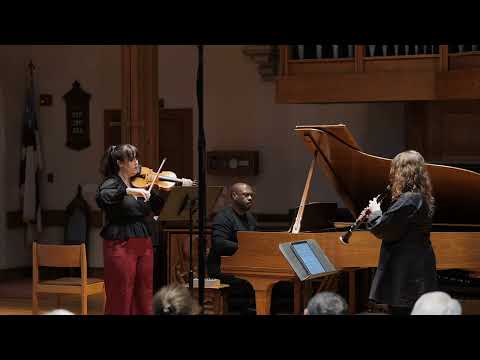
Violist Marcus Thompson is the director of the Boston Chamber Music Society, which includes among its members some of the best instrumentalists in Boston. The first of the group’s two remaining winter concerts includes an early Beethoven clarinet trio, with clarinetist Romie de Guise-Langlois, cellist Raman Ramakrishnan and pianist Max Levinson; Brahms’s late C-minor Piano Trio with Levinson, Ramakrishnan and violinist Stefan Jackiw; and Schoenberg’s moving “Verklärte Nacht” with violinists Jackiw and Alyssa Wang, violists Wenting Kang and Thompson, cellist Ramakrishnan and double bassist Thomas Van Dyck (Feb. 16).
This stellar concert will be followed by a program featuring Michi Wiancko’s “Tyranny of Coordinates” (a 2022 BCMS commission), with violinists Jennifer Frautschi and Yura Lee joining Thompson, Ramakrishnan and Levinson on a program with two French masterpieces, Fauré’s Violin Sonata No. 1, with Frautschi and Levinson, and Ravel’s Piano Trio, with Lee, Ramakrishnan and Levinson (March 9).
Boston Symphony Chamber Players
NEC's Jordan Hall | Feb. 16
The BSO Chamber Players consist primarily of Boston Symphony Orchestra principal players, which means they include some of the best orchestral players in the world. But sometimes that’s a problem, because symphonic music requires a set of talents different from the intimacy required of chamber music. On occasion, I’ve been disappointed by a certain inflexibility of phrasing and dynamics. But I live in hope. For some of the music in this winter’s concert, I’m not sure how much this issue will be a problem. The first half of the program includes Ravel’s luxurious “Chansons madécasses” and Osvaldo Golijov’s “Laika,” both with the opulent Metropolitan Opera mezzo-soprano J’Nai Bridges (the Golijov piece will be conducted by BSO assistant conductor Samy Rachid). The rest of the program, Schubert’s “Notturno” in E flat and the big Brahms String Sextet No. 1, without a conductor, may be dicey. This might also be a good opportunity to hear the BSO’s new concertmaster, Nathan Cole, up close and personal.
Glissando
First Church Boston | Feb. 28
Glissando, the extraordinary pianist Sergey Schepkin’s concert series, returns with a celebration of Bach’s 340th and Ravel’s 150th birthdays. Schepkin, a particular master of Bach, begins this concert with two brilliant Partitas, No. 4 and No. 5, then joins with Deborah Boldin (flute) and Rafael Popper-Keizer (cello) and mezzo-soprano Gigi Mitchell-Velasco in Ravel’s sensual “Chansons madécasses (Madacascan Songs).” The concert concludes with Erin Lindsey and Ian Lindsey playing the two-piano versions of Ravel’s “Rapsodie espagnole” and the hair-raising “La Valse.”
Winsor Music
St. Paul’s Church, Brookline | March 1
Winsor Music’s “Lineage: The Bach Connection” is a concert you don’t want to miss. It begins with Winsor founder, oboist Peggy Pearson, one of Boston’s most sublime musicians, playing one of Bach’s most sublime orchestral works, his “Concerto for Oboe d’amore.” The rest of the program deals with music in which you can hear Bach’s influence — works by both Felix Mendelssohn and his sister Fanny Mendelssohn-Hensel, and Robert and Clara Schumann, and what Winsor is calling “a new adaptation” of Shaw Pong Liu’s “From the Gut.” And since Winsor is a serious educational institution as well as a giver of memorable concerts, the finale of the concert will be a new piece from the students in Winsor’s Opus 1 project.
Sarasa Ensemble
Multiple locations | March 7-9
Sarasa’s one winter program is called “Night at the Opera” and consists of string quartets by Mozart and two of his contemporaries, Hyacinthe Jadin and Carlo Monza, including the latter’s rarely performed “The Rival Lovers.” The story of this concert, using Mozart as a role model, is that purely instrumental music can include “dramatis personae.” I would love to see more performers following Sarasa’s example. The ensemble will perform two nights in Massachusetts, at Cambridge’s Friends Meeting House and the Follen Community Church in Lexington, and one night in Vermont at the Brattleboro Music Center.
Radius Ensemble
Longy’s Pickman Hall | March 8
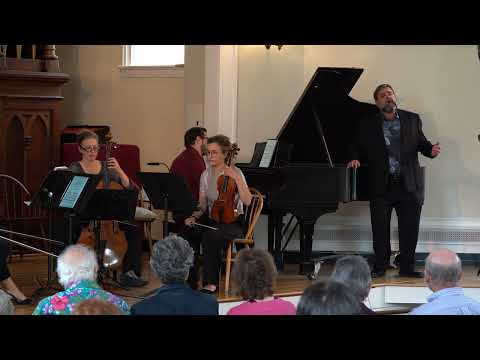
Under the direction of Jennifer Montbach, Radius Ensemble (in residence at the Longy School) delivers excitingly — even wildly — varied concerts. The upcoming program, titled “Howl,” includes work by Kaija Saariaho, Sean Kisch, David Lang, Kenji Bunch, and Beethoven’s “Duet for Two Obligato Eyeglasses” for viola and cello.
Concord Chamber Music Society
Maxwell Auditorium, Lexington | March 9
This is the 25th anniversary of the CCMS and the final season for its founding director, BSO violinist Wendy Putnam. She will perform with pianist Vytas Baksys, a frequent keyboardist with the BSO (when a piano is called for as a member of the orchestra) and one of the busiest freelancers in the Boston area. The program begins with P.D.Q. Bach’s “The Short-Tempered Clavier” and includes work by Aaron Copland, Florence Price and Henri Vieuxtemps.
EARLY MUSIC
Handel + Haydn Society
NEC's Jordan Hall & Sanders Theatre | Jan. 17-Feb. 23
The Handel + Haydn Society gave its first performance in 1815 and is known for its performances of early music on period instruments. But H+H begins this winter season with a work that’s only two years old. Returning by popular demand is “Crossing the Deep,” co-created by countertenor Reginald Mobley and conductor Anthony Trecek-King, and featuring beloved spoken word artist Regie Gibson and soprano Brianna Robinson. The “choral drama” juxtaposes music of Handel with contemporaneous Negro spirituals that are sometimes settings of the same texts (Jan. 17 and 19, NEC’s Jordan Hall).
“Love, Handel” (get it?) is a program of three Handel cantatas about the vicissitudes of love. H+H music director — and storyteller — Jonathan Cohen is joined by soprano Joélle Harvey (Feb. 7 and 9, NEC’s Jordan Hall). Then, H+H’s concertmaster Aisslinn Nosky and principal keyboardist Ian Watson team up for three performances of Bach’s six magical and exhilarating “Brandenburg Concertos” (Feb. 21-23, NEC’s Jordan Hall and Sanders Theatre).
The Boston Camerata
Trinity Church | Jan. 19
The Boston Camerata is celebrating its 70th season! Its press release calls “The Play of Daniel” “the greatest musical play from the French Middle Ages,” and who am I to disagree about this miracle of music-making dating from 1310? If I’m not mistaken, it was a Camerata production decades ago that introduced me to my first live performance. Music director Anne Azema’s state-of-the-art take, titled “Daniel: A Medieval Masterpiece Revisited,” sounds terrifically exciting, and I already know that the Camerata is the go-to company for this masterpiece.
Blue Heron
First Church, Cambridge | Feb. 1 & March 1
In a concert called “The Armed Angel,” Boston’s favorite early-music vocal ensemble, directed by Scott Metcalfe, warms the winter with what is purported to be the very first setting of one of the most popular songs of the Renaissance, “L’homme armé,” Johannes Regis’ Mass based on that very song, composed in 1462 for the feast of St. Michael at Cambrai Cathedral. We are promised a musical tour de force. Blue Heron’s March program is called “A more subtle art: the late 14th-century Ars subtilior," which features what Blue Heron is calling “stories of mythological characters and deities set to jazzy, intoxicating polyphony.”
Boston Early Music Festival
First Lutheran Church, Boston & First Church, Cambridge | Feb. 8 & 14
2025 is an odd-numbered year, which means the big Boston Early Music Festival, with its grand bi-annual opera production will be back in June. While we’re waiting, our major early-music concert series will offer two enticing events. The celebrated Italian keyboard artist Francesco Corti will be playing a program dedicated to Handel solos and concertos for harpsichord and organ, with Robert Mealey conducting the BEMF Chamber Ensemble (Feb. 8).
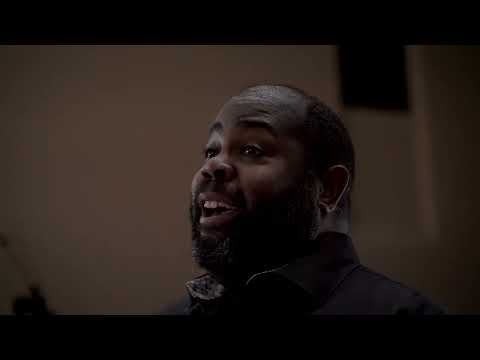
Then, appropriate for Valentine’s Day, the outstanding countertenor Reginald Mobley will be joining the San Francisco-based group Agave in what promises to be a boisterous program called “Rum and Rebellion,” featuring works by 18th-century Black British composer, rum merchant and abolitionist Ignatius Sancho, Brazilian composer-priest José Mauricio Nuñes hot, Cuban composer (and music historian) Esteban Salas, and a setting by Jean-Jacques Rousseau of what seems to be the earliest published text in Haitian Creole.
Boston Baroque
NEC's Jordan Hall & GBH Calderwood Studio | March 21-22
Martin Pearlman leads “North America’s first permanent Baroque orchestra” in two appealing staples of the classical repertoire, Mozart’s energetic “Haffner” Symphony and Beethoven’s inventive Symphony No. 2. But the real star of the show is sure to be Metropolitan Opera’s delightful coloratura soprano Erin Morley singing an as-yet-unknown number of Mozart concert arias — important works that don’t get performed as much as they should.
CONTEMPORARY MUSIC
Collage New Music
Goethe-Institut Boston | March 2
Many classical groups in Boston include contemporary music. But very few are devoted entirely to new music. Collage has been a groundbreaker in that respect. And it continues in that mode under its new director, composer Eric Nathan. The next concert, “Between Words and Worlds,” begins and ends with vocal pieces, with soprano and new-music superstar Tony Arnold, who actually sings words. Opening the program is Kareem Roustom’s “Xarja” (2017) for voice and percussion and closing will be Jörg Widmann’s “Sieben Abgesänge auf eine tote Linde (Seven Eulogies for a Dead Linden Tree)” from 1997, making it the oldest piece of the program. In between will come Olga Neuwirth’s 2018 “Magic Flu-Idity” for flute and typewriter/wine glasses, the exciting Gabriela Ortiz’s 2005 “El águila bicéfala (The Double-headed Eagle),” Gabriella Smith’s 2018 “Anthozoa,” and a brand-new work by Collage Fellow Jingmian Gong. The playing is sure to be terrific. This concert marks the Boston debut of German-Columbian conductor Anna Handler, who was last year’s Dudamel Fellow with the LA Philharmonic and is the new assistant conductor of the BSO.