Saving eelgrass, the most important plant you’ve likely never heard of
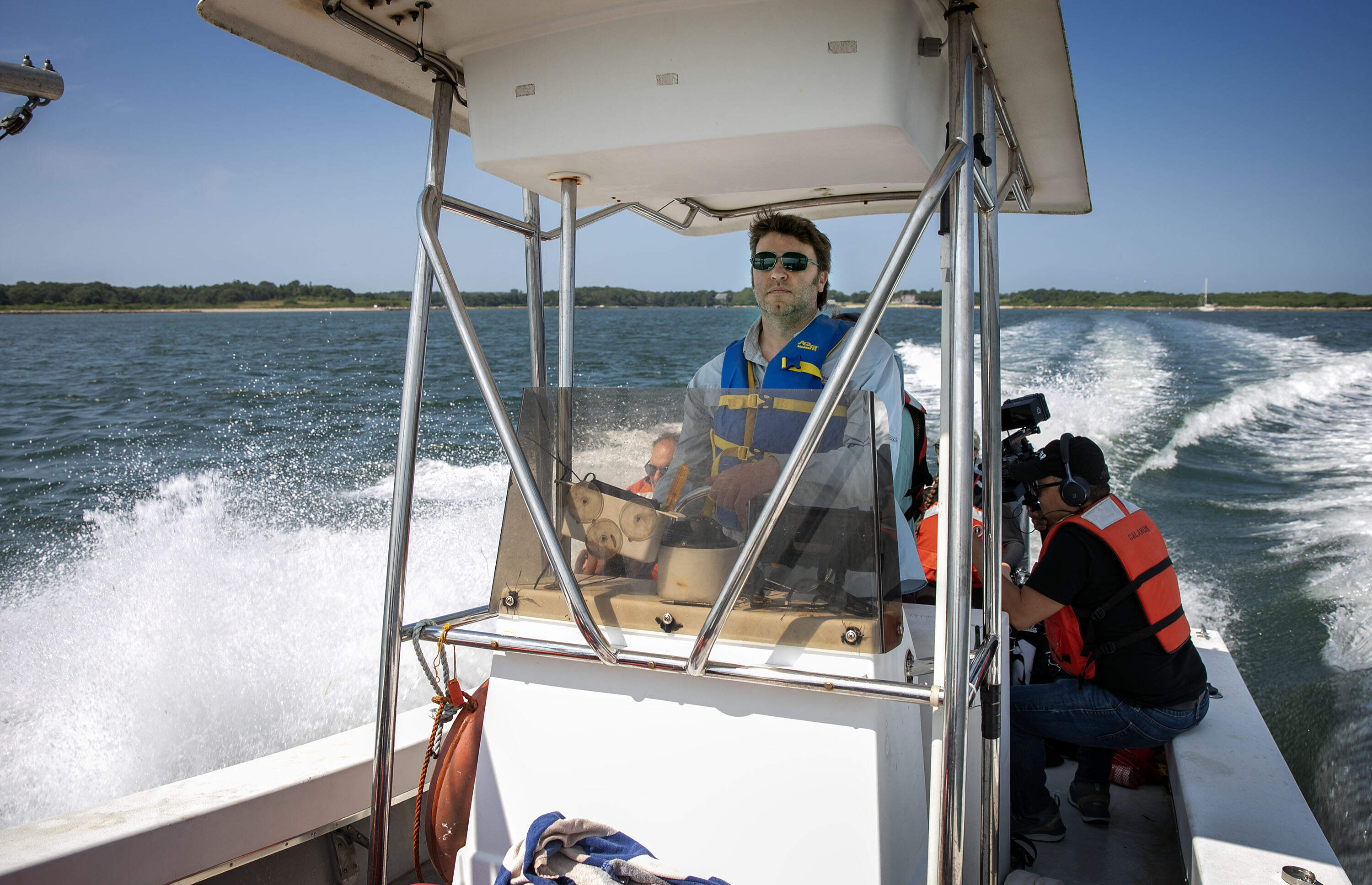
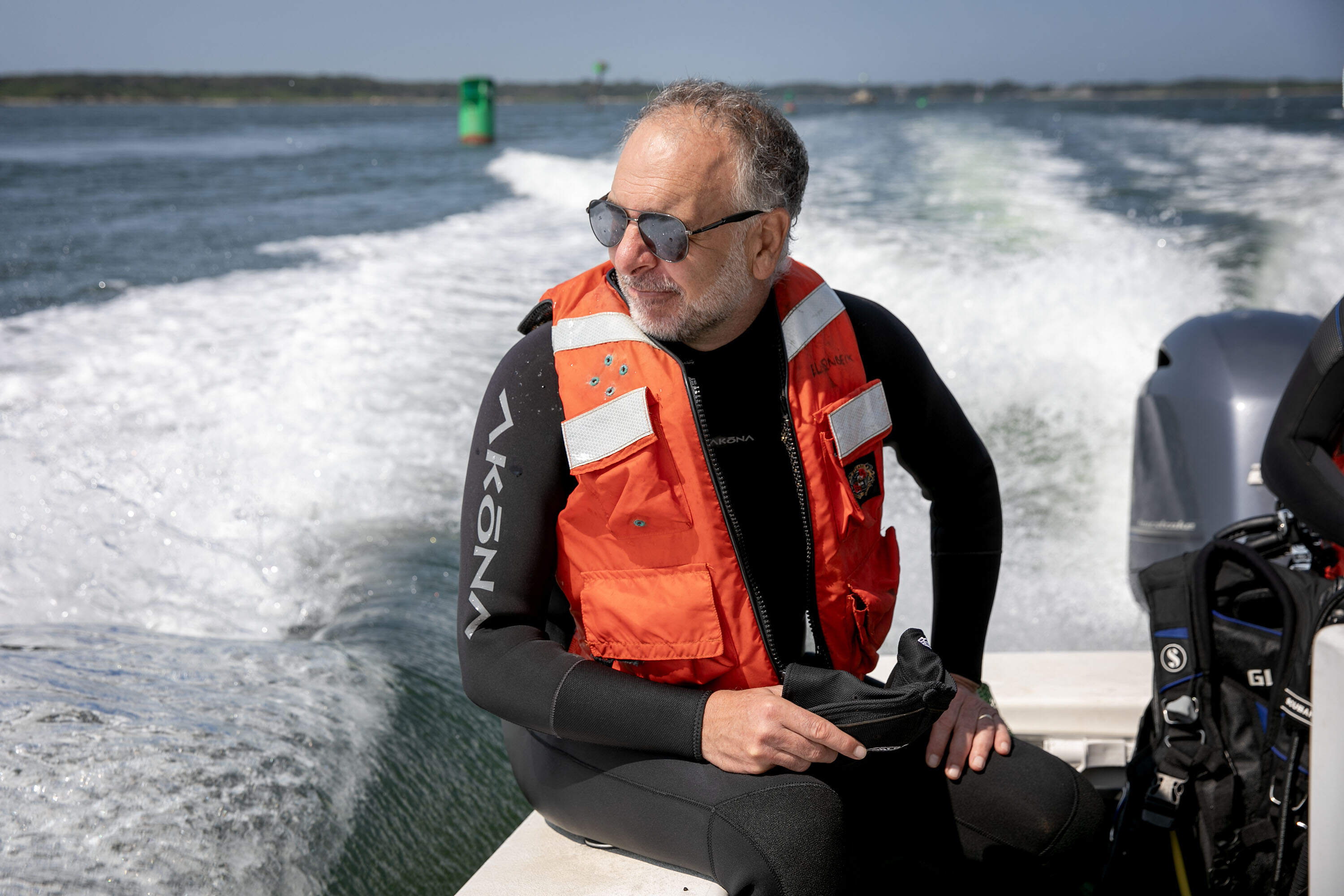
Matthew Long peers over the side of the research boat Calanus, into the dark water of Hadley Harbor, about 2 miles from Woods Hole.
There's a meadow down there, according to Long, a marine chemist at the Woods Hole Oceanographic Institution. Acres of a willowy green plant called eelgrass.
Eelgrass is the dominant species of seagrass in New England, but it's little-known and largely unsung. And no wonder — it's impossible to see from shore and barely visible from the boat.
But Long assures me it's there. As his colleagues put on scuba gear to collect samples, he ticks off the reasons why healthy eelgrass meadows are critical for the New England coast.
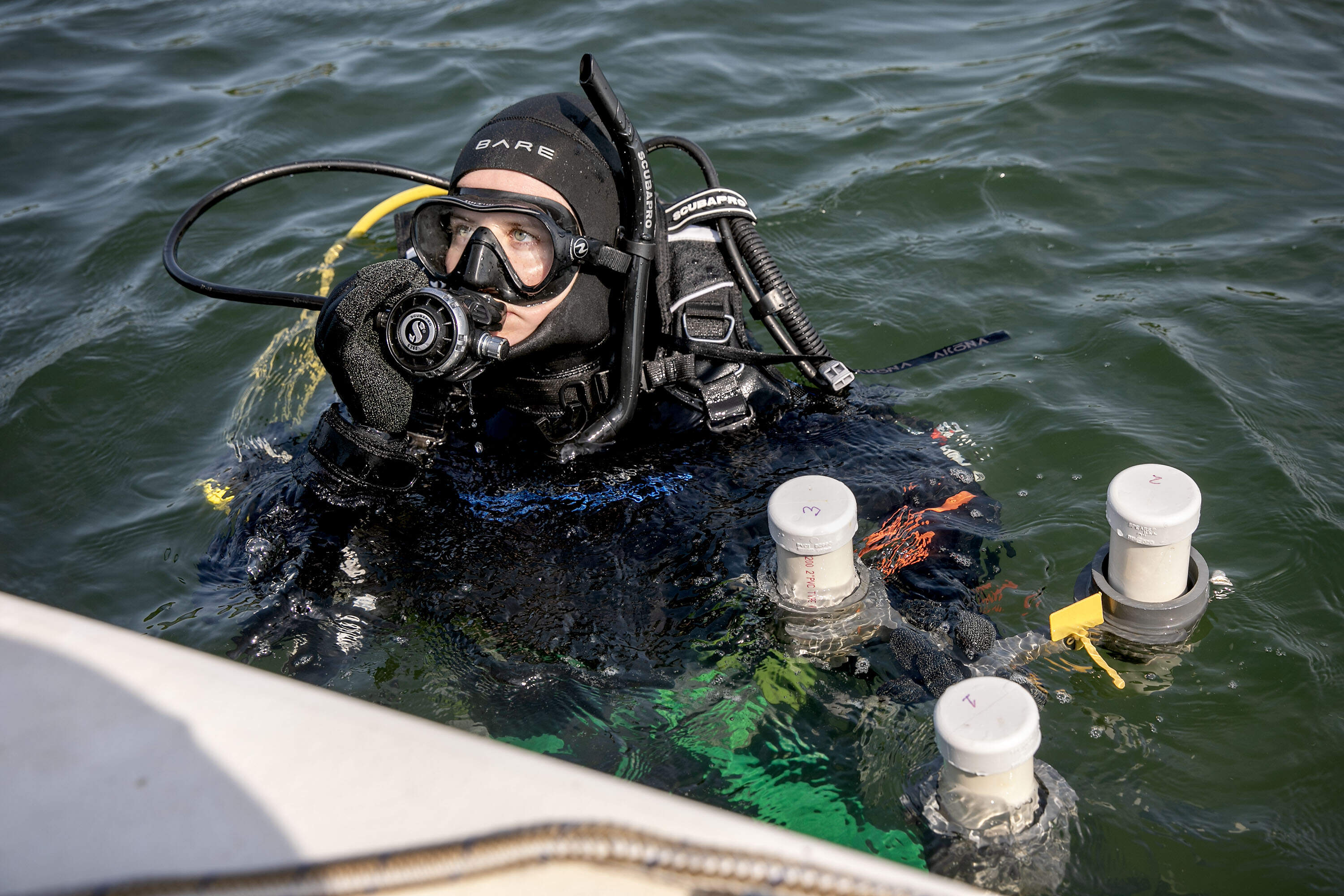
“They're a nursery habitat — a lot of young fish and crustaceans and other organisms grow up in them,” he said. “If we don't have seagrasses, we don't have bay scallops at all in these ecosystems.”
Eelgrass also protects against coastal erosion, Long said. The meadows absorb some of the energy from waves before they hit the coast, and the plants' roots help stabilize mud and sand in coastal bays. Plus, they help keep climate-changing carbon out of the atmosphere by storing it in sediment.
But this critical plant is in decline. If scientists can't find a way to help eelgrass flourish, the results could hurt fishermen and coastal communities.
Why seagrasses are vanishing
In the 1930s, a disease killed almost all of the eelgrass along the East Coast. The bay scallop fishery collapsed. The meadows took decades to recover.
Now eelgrass faces more threats from pollution, development and climate change.
Eelgrass thrives with lots of sunlight and relatively cool water. Along much of the East Coast, the water is growing warmer because of climate change and murky from pollution. The pollution comes primarily from untreated sewage and fertilizer runoff that feeds algae overgrowth, a problem worsening with climate change.
Traditional block-and-chain boat moorings present another threat. They scar eelgrass beds as the chains drag along the sea floor.
Globally, nearly 30% of seagrass habitat has vanished since the 1800s, according to the National Park Service. Massachusetts has lost about half its eelgrass in the last 20 years. Now, scientists' best estimate is that about 19,000 acres remain.
“Seagrasses are one of the most threatened ecosystems on Earth, on par with coral reefs [and] mangroves,” said Long. “We need to preserve these ecosystems.”
‘You only protect what you love’
Long is one of a few dozen local scientists working to preserve — and potentially restore — New England's diminishing eelgrass meadows.
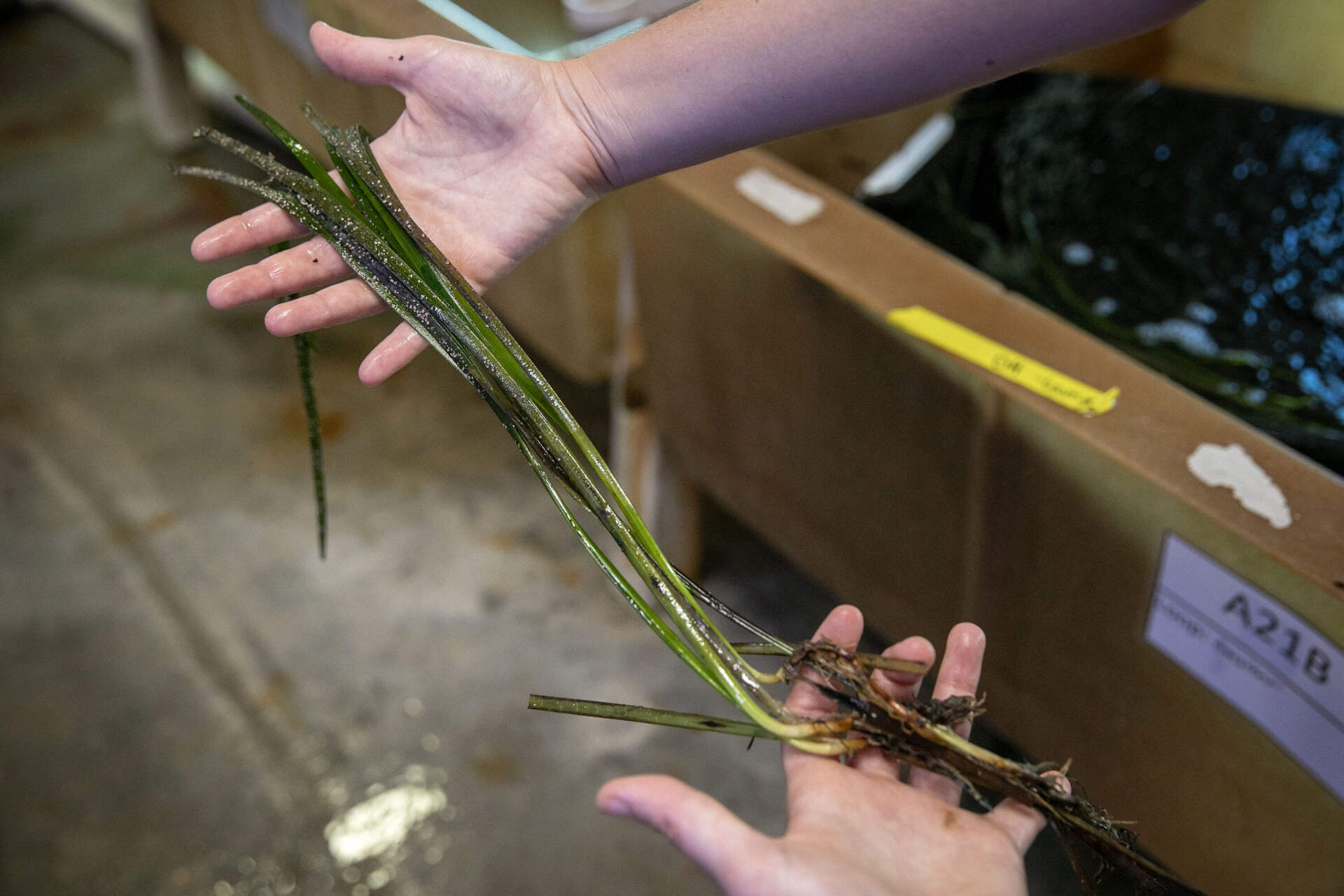
One of Long’s colleagues, Environmental Protection Agency marine biologist Phil Colarusso, pops up to the surface in his scuba gear with a handful of eelgrass shoots. They look like long, flat blades of grass.
“It grows pretty much like the grass on your lawn, except it can get much, much larger,” he said — up to 6 feet tall in some places.
Colarusso has been studying eelgrass in New England for some 35 years and is something of a legend among local seagrass scientists. On this trip, he’s gathering data to better understand eelgrass growth patterns and life cycles. He’ll combine that information with other data to gauge the overall health of the meadow.
“Seagrasses are one of the most threatened ecosystems on Earth, on par with coral reefs [and] mangroves.”
Matthew Long
Colarusso said the general understanding of this habitat has dramatically increased — at least among scientists and coastal engineers — since he began studying it in the 1980s. But among the public, eelgrass has a bit of a branding problem; it lacks the color of coral reels or the eerie charisma of mangrove swamps.
Which is why Colarusso has a second, unofficial job as an eelgrass cheerleader. He hosts public events aimed at making people care about this rarely-seen underwater plant.
“You only protect what you love, and you only love what you understand,” he said.
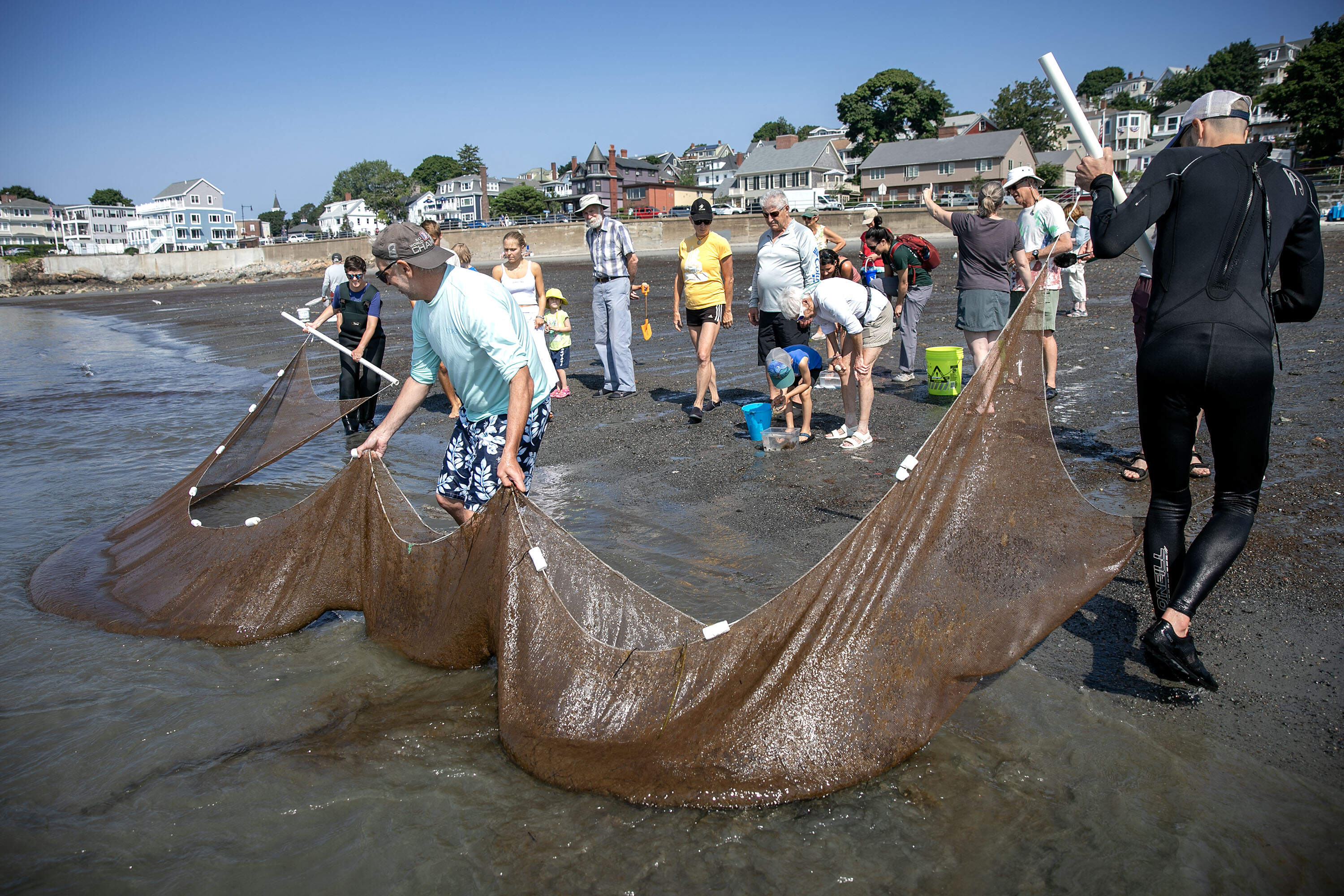
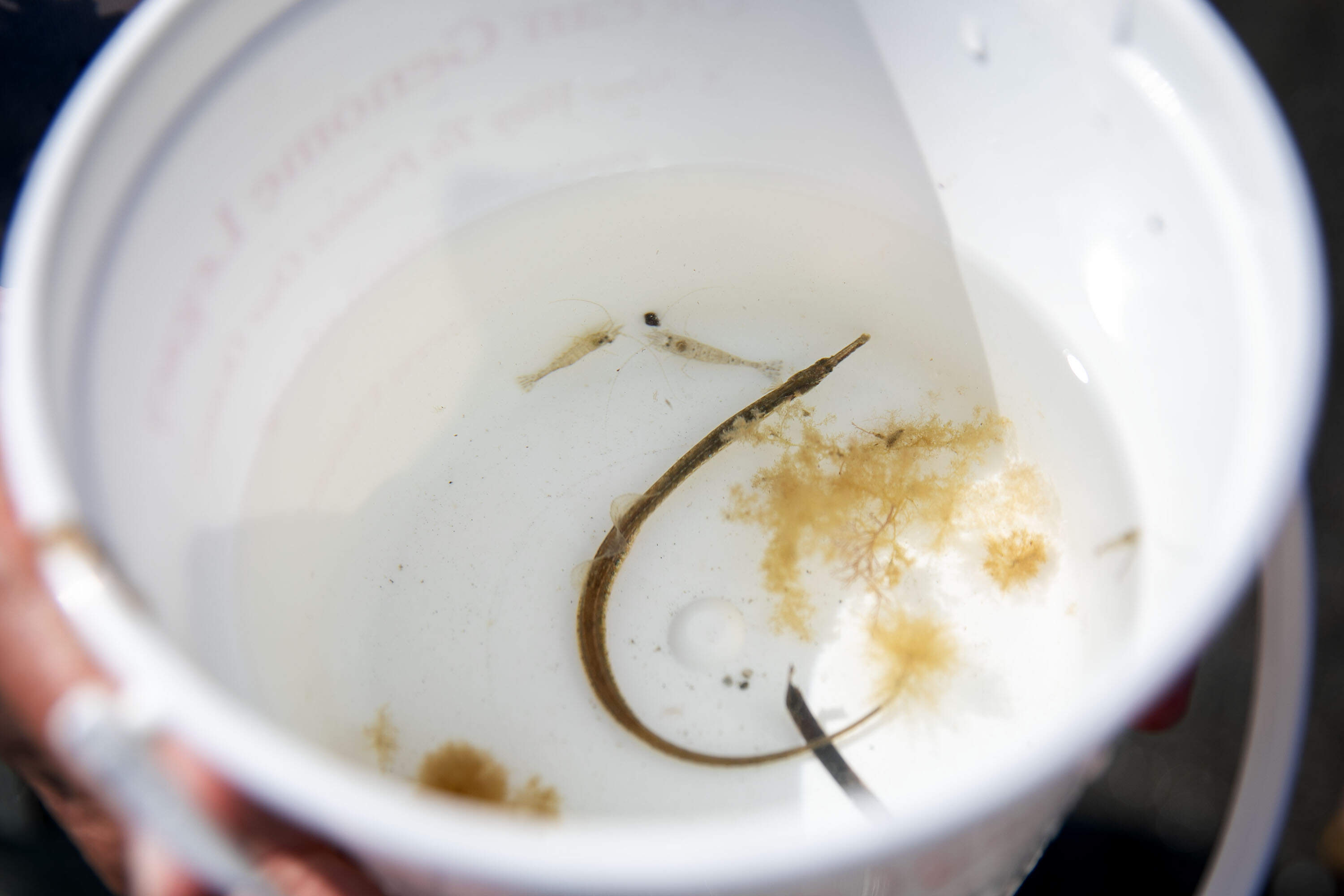
At one of these events in Swampscott last summer, Colarusso and his colleagues dragged a huge net through an underwater meadow just offshore, then spread the net out on the beach, so people could see what lives in the eelgrass. About a dozen kids and their grownups gathered around. The kids squealed with delight as they spotted baby fish and crabs.
Swampscott resident Amy Mastrogiacomo said she was surprised to learn her town has one of the largest intact eelgrass meadows on the North Shore.
“My kids are like, ocean animal fanatics, and my son Mateo is literally a crab whisperer,” she said. As if on cue, Mateo ran by holding a crab as big as his hand.
Nearby, Mastrogiacomo's 7-year-old cousin Valentina Cruz knelt on the sand and gently scooped a baby fish into a bucket. “I love fish,” she said. “They're nice.”
Northeastern University marine science professor Randall Hughes stood nearby, answering questions. She's pushing an effort to get eelgrass named the official marine flora of Massachusetts.
“Eelgrass is very underappreciated — people just aren't familiar with it,” she said.
Precious diamonds
Swampscott’s large meadow has followed the trend of many eelgrass expanses around the state, becoming smaller and more fragmented in recent decades. "There's a lot of work to restore areas where it used to be, and just conserve what we have left,” said Hughes.
Once eelgrass is lost, restoring it is tricky. Historically, divers have transplanted individual shoots by hand. It’s painstaking work that requires specially-trained divers, and it hasn’t been very effective.
“There are certain things you can't control, and so the success rate is not great,” Colarusso said.
He recalled a week in Rhode Island in 2017, moving plants from Newport to Greenwich Bay.
“We moved 16,000 shoots, one shoot at a time. And three weeks after we did that, a tropical storm came up the coast and washed everything away,” Colarusso said.
Even when there isn’t a natural disaster, the plants often fail to thrive, said Long, the Woods Hole scientist.
He’s working on a project on Cape Cod to grow eelgrass seedlings on platforms floating just below the water's surface. There, they get more light, giving the plants a better shot at survival. But the fragile shoots will still have to contend with pollution and climate change once transplanted, Long said.
“It’s really important to address the underlying stressors that prevented them from growing there,” he said. “Unless you address those factors, the seagrass isn't going to come back no matter how hard you [work to] restore them.”
There's been some progress: Massachusetts recently enacted new regulations meant to reduce pollution from nitrogen, which causes murky water, and is working with MassBays to test seagrass-friendly boat moorings. The state also has an eelgrass monitoring and restoration program.
Still, because of human-caused pollution, development and climate change, the eelgrass meadows are unlikely to recover on their own. So researchers are working on new ways to give the plants a fighting chance.
The most successful restoration project so far took place in Virginia. There, scientists used eelgrass seeds instead of plants. But this would be difficult to scale up because restoring a meadow can take millions of seeds, year after year.
Scientists simply don’t have that many seeds. Yet.
“One of the research projects right now is to try to understand, can our natural beds handle us collecting that many seeds?” said Hughes, of Northeastern. Scientists don’t want to wreck one meadow to restore another.
Another concern, Hughes said, is making sure the seeds will grow into thriving plants, especially as water temperatures continue to rise. Her lab is studying a concept called “assisted gene flow,” looking at whether seeds from southern plants, which are better adapted to heat, could be used in New England. Other groups, including the EPA and the National Park Service, are pursuing similar projects with both plants and seeds.
“It sounds great and it makes sense, but we don't actually have a lot of tests of whether it works or not," Hughes said. "And there's the chance that we could move unintentional things with the seeds, like pathogens."
Ecologist Mirta Teichberg is tackling the same problem at the Marine Biological Laboratory in Woods Hole. She shows off rows of fish tanks filled with green shoots and labeled with names like “Wings Cove” and “The Knob,” after the saltwater ponds and estuaries around Massachusetts where the eelgrass samples were collected.
Teichberg holds up a glass jar half full of thick brown water.
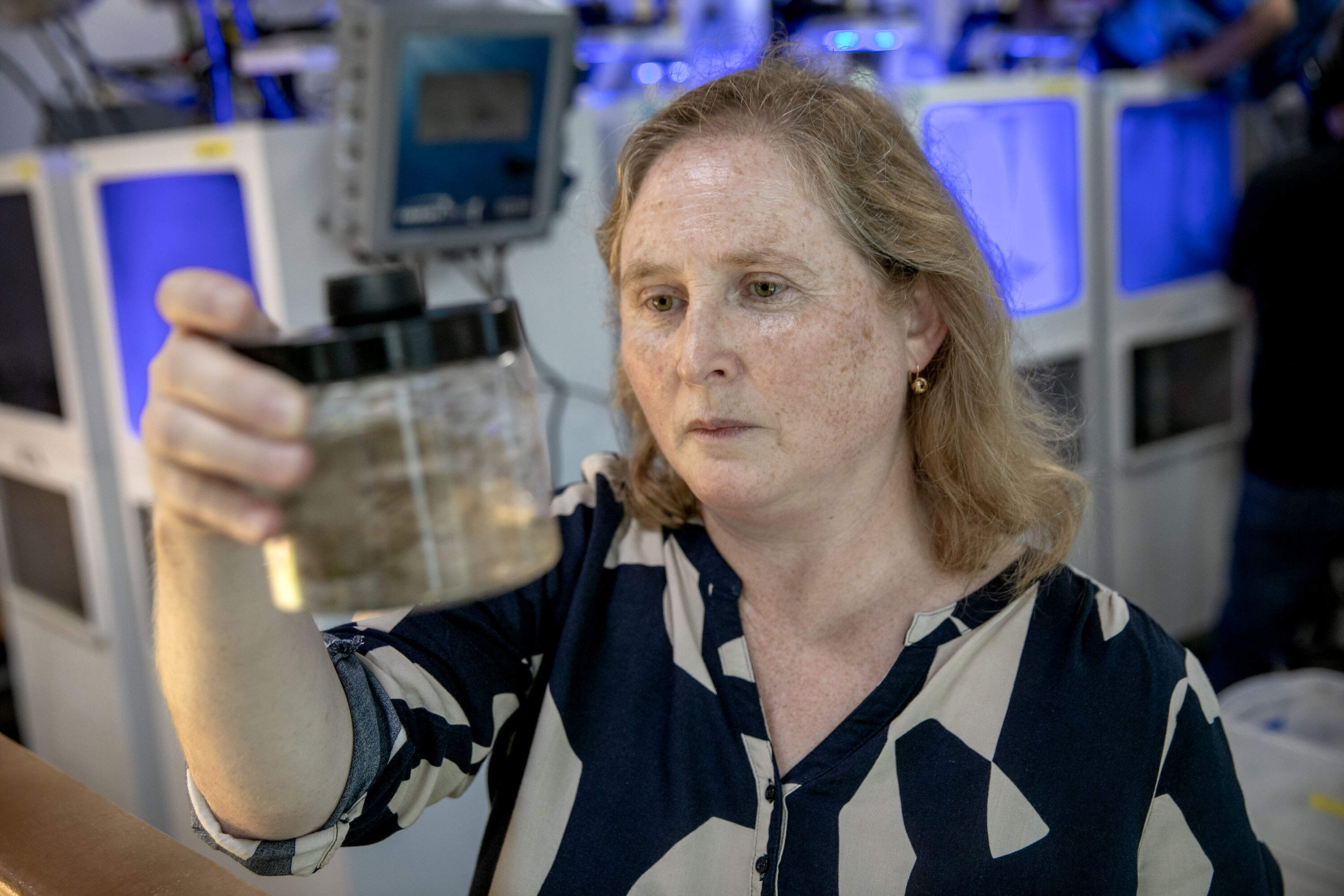
"In this jar there's probably about 100 to 200 seeds that we collected from the bottom of the tank,” she said, calling the seeds “precious diamonds.”
Teichberg and her team will study the seeds to see which sprout most reliably, and which may be able to endure warmer water.
“If we find populations that are resilient, we can propagate them in the laboratory,” she said. “If we can get them to grow really well under certain conditions, then maybe we can learn something about what they need to grow well. And then we can plan for restoration.”
Teichberg said she tries to "think like a seagrass," imagining how to help the unheralded plants overcome obstacles in a hostile environment.
"Every step of the way, we're trying to think, 'What can we do to give them the best chance of surviving?'”
This is the second of two stories on challenges facing the New England fishing industry. Find the first installment here.
This segment aired on January 16, 2025.