Support WBUR
Boston's Morning Newsletter
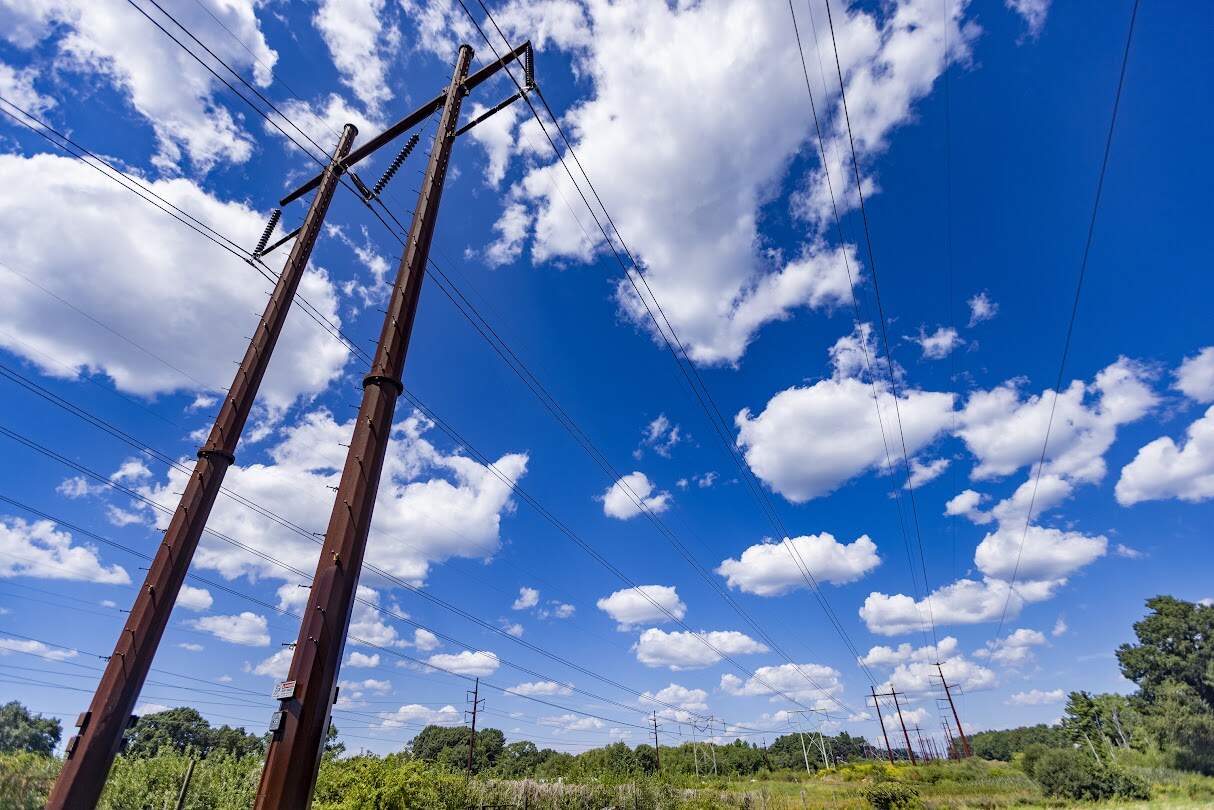
How Trump's tariffs could hit Massachusetts electric bills
Editor's Note: This is an excerpt from WBUR's daily morning newsletter, WBUR Today. If you like what you read and want it in your inbox, sign up here.
We made it to Friday. There’s a crisp, blue-sky weekend ahead, as we slowly get a little more sunlight back in our lives. But first, the news:
Gov. Maura Healey is not very amped about the potential effect President Trump’s promised tariffs may have on Bay Staters’ electric bills. During a speech yesterday to local business leaders, Healey said the 25% tariffs that Trump says he will put on “all products” from Canada would cause electricity costs in Massachusetts to soar by “as much as $200 million” a year, harming residents and companies alike.
- Why? According to Healey’s office, about 5% to 10% of electricity consumed in New England is imported from Canada — primarily hydropower from Quebec. If that gets hit by Trump’s tariffs, Massachusetts, a state already grappling with high energy costs, could see an increase estimated between $100 million and $200 million. (New England as a whole would see its electricity bill rise by $200 million to $320 million in most years, state officials said.)
- Who would foot the bill? Healey’s office says half of that increase would fall on residential customers, while the other half would hit businesses and government entities.
- What’s next: Trump said Monday that he expects to instate the 25% tariffs on Canada and Mexico next weekend, Feb. 1. During her speech, Healey called on business leaders to “speak with one voice” to lobby the Republican president to reconsider. “They will harm our entire economy,” she said. “That is very concerning to me, and I know it is to you. The stakes are high.”
- Go deeper: State House News Service has full coverage of Healey’s speech and the other ways she says Canadian tariffs could hurt the local economy, such as increasing the price of lumber needed to build homes.
Chelsea officials are trying to ease local anxiety. As WBUR’s Jesús Marrero Suárez reports, many residents are on edge after federal immigration officers mobilized in Chelsea and East Boston on Wednesday, making several arrests. (An image of several ICE outside the Chelsea Market Basket went viral Wednesday night.) City Manager Fidel Maltez said, to their knowledge, no Chelsea residents were arrested. City Council President Norieliz DeJesus urged residents to check on family, neighbors and friends.
- The arrests came days after the Department of Homeland Security changed its policy to allow ICE agents to enter schools, hospitals and churches. However, school officials in Chelsea reiterated yesterday that agents will not be allowed to enter schools or speak to students without a warrant or subpoena.
- The latest: A federal judge temporarily blocked Trump’s executive order to roll back birthright citizenship yesterday.
Now approaching: Faster trains. MBTA officials say they will start running Red Line trains between Braintree and JFK/UMass at up to 50 mph in the next week or two. It would be the first time in decades that any MBTA subway train has been allowed to go that fast, thanks to track work on the branch last September. (Currently, the rest of the subway system has a maximum speed of 40 mph.)
- Wait, there’s more: MBTA General Manager Phil Eng also revealed yesterday they’re planning to get Orange Line trains up to highway speeds — as fast as 55 mph — between Oak Grove and Assembly Square. But that may take a few more months.
- Heads up: Before we can enjoy that faster future, we do have a series of weekend diversions on those branches to contend with. Shuttles will replace service between JFK/UMass and Braintree this weekend, as well as two weekends in February. Shuttles will also replace Orange Line service between Oak Grove and North Station on two weekends in February. More details here.
UMass Lowell is banning the charging of electric scooters in all campus buildings, after one caught fire while charging in a dorm Wednesday. No one was injured, but UMass Lowell joins a number of colleges that have moved to restrict the popular scooters over concerns about road safety and fires. Some — including Boston College — have gone as far as completely banning them on campus. (UMass Lowell says they’ll work to provide outdoor charging options.)
- Go deeper: Read more on why lithium battery scooters can suddenly burst into flames and how to keep yourself safe.
P.S.— Healey recently proposed the so-called BRIGHT Act. Do you know what it would do? Take our Boston News Quiz and test your knowledge of the stories we covered this week.