Support WBUR
Boston's Morning Newsletter
Here's who's praising Trump's new metal tariffs in Mass. — and who isn't
Editor's Note: This is an excerpt from WBUR's daily morning newsletter, WBUR Today. If you like what you read and want it in your inbox, sign up here.
The Green Line has resumed normal service in Somerville, following the trolley crash over the weekend.
Now to the news:
Testing their metal: How are President Trump’s new tariffs on steel and aluminum being received in Massachusetts? It depends on who you ask. As promised, Trump announced a blanket 25% tariff yesterday on all steel and aluminum imported into the United States. And unlike his already-imposed 2018 tariffs on the two metals, this latest chapter of Trump’s ongoing trade wars includes no carve-outs for Canada — the biggest importer of steel and aluminum to the U.S.
- Who it helps: Steel fabricators. Steel is among Massachusetts’ top imports from Canada — a sore spot for local steel manufacturers. Dennis Scanell, president of the Lowell Iron and Steel Company, says it’s “impossible” to compete with Canadian peers — even on local projects — due to cheaper labor costs north of the border. ”The tariffs, thank God they’re coming,” Scannell told WBUR’s Steph Brown. “Maybe this evens the playing field for us. But this hits right at home. There’s no way we can compete with Canada.”
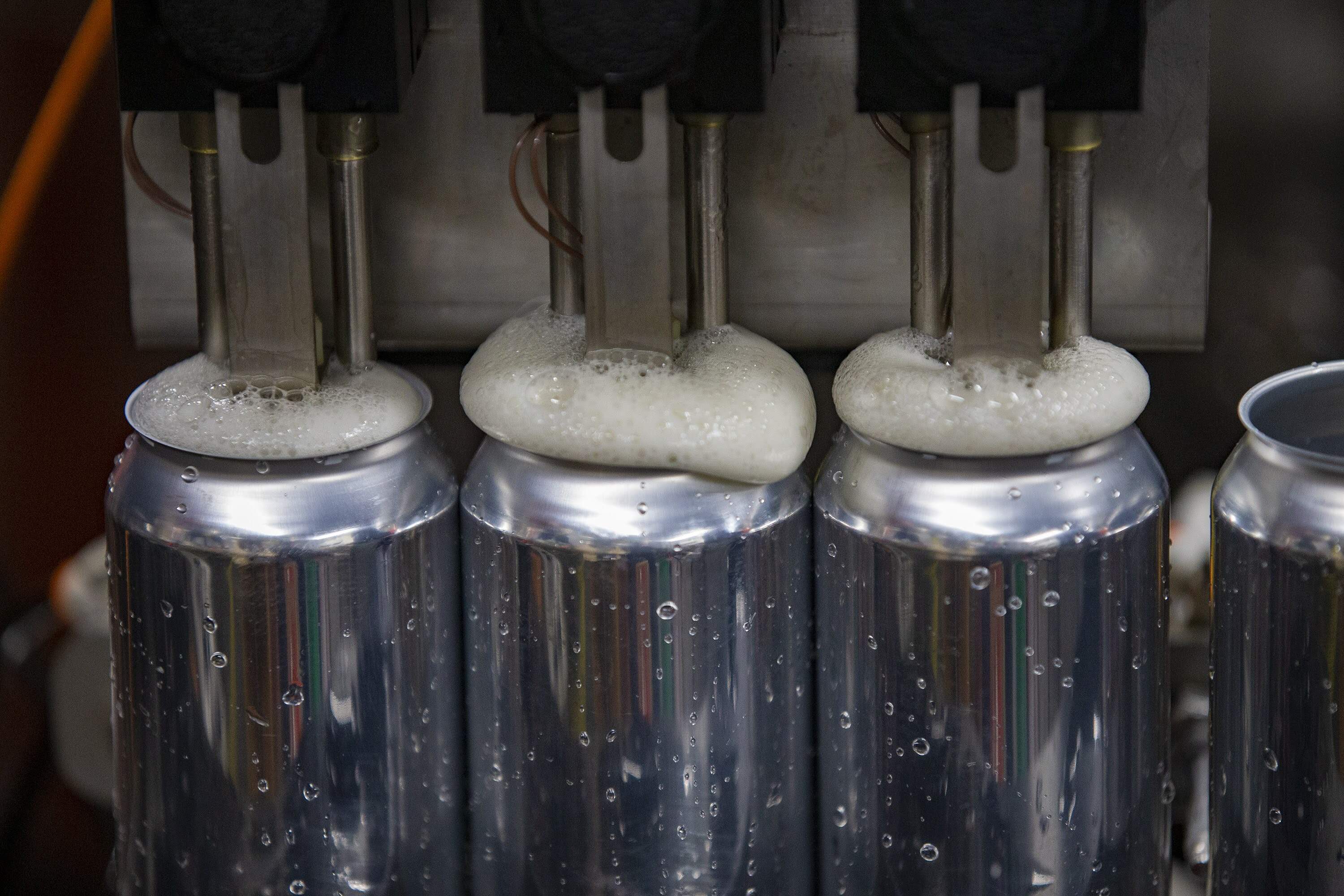
- Who it hurts: Craft brewers. Aluminum cans account for over 60% of Massachusetts breweries’ packaged beer sales, according to Katie Stinchon, the executive director of the Mass Brewers Guild. And much of that aluminum is sourced from Canada. Stinchon said yesterday breweries were already receiving notices from vendors about price increases due to these tariffs. “Our smallest breweries will be hit hardest,” she said. “They don’t have the capital or storage space to buy aluminum in bulk at lower prices. They already operate on thin margins and compete against multinational beer corporations that can absorb these cost increases.” She added the tariffs will likely lead to higher prices for consumers and threaten the “survival” of smaller breweries in an industry already facing headwinds.
Meanwhile at the Moakley Courthouse: A federal judge in Boston has, at least temporarily, blocked the Trump administration’s funding limit on NIH grants. U.S. District Judge Angel Kelley issued the temporary restraining order hours after 22 Democratic state attorneys general — including Massachusetts’ own Andrea Campbell — filed a lawsuit yesterday to block the funding limit. Trump’s policy would cap the amount of funding universities and other research institutions get for “indirect costs” — such as support staff and other overhead expenses — at 15%. The case will return to court Feb. 21.
- On what grounds? Trump’s administration argued the change brings NIH grants in line with how private foundations fund research. However, Campbell and company say it violates the Administrative Procedure Act, a decades-old law intended to protect against agency overreach. (NPR has more on the law — which has been at the center of a lot of lawsuits lately — here.)
- Quote of the day: “You don’t need to be a brain surgeon to understand that, in order to conduct medical research, institutions need laboratories and clinical trials,” Campbell said. “They need specialized staff and technology support, just as any of our workplaces do, except at an even higher level because the medical research involved is cutting edge and world leading.”
- Go deeper: WBUR’s Tiziana Dearing spoke to former Harvard Medical School dean Jeffrey Flier about what the funding cap would mean for Massachusetts, if allowed to take effect.
Speaking of overhead cuts: The state’s largest private employer, Mass General Brigham, is warning mass layoffs are around the corner, as it grapples with a two-year budget gap of $250 million. MGB say the cuts will mostly affect “certain management and administrative positions” — not clinical or patient-facing roles.
- How many? MGB declined to say. But according to The Boston Globe, hundreds of jobs could be cut in the next two months.
Cambridge is saying goodbye to exclusionary zoning. Last night, the City Council voted 8-1 to allow property owners to build four-story residential buildings as-of-right across the city. The new up-zoning ordinance also bans single- and two-family zones across Cambridge and allows buildings up to six stories on larger lots, as long as they include at least two stories of all-affordable units.
- The overhaul is intended to make it easier to build more housing and ease costs in one of Massachusetts’ most expensive cities. The Harvard Crimson has more details on the landmark policy here.
P.S.— For the 32nd time, Boston University is your men’s Beanpot champion. The Terriers upset top-ranked Boston College last night at TD Garden, 4-1. You can watch the highlights here.